BoomBots
A claymation fighting game that failed critically and commercially.

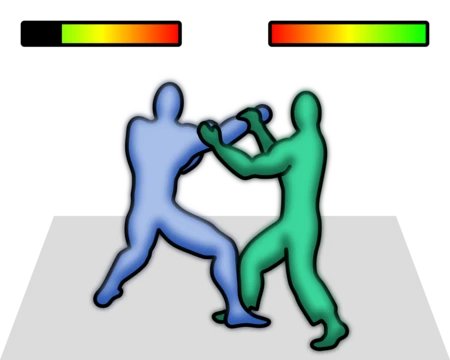
BoomBots is a 3D arena fighting game that came out for the PlayStation in 1999. Doug TenNapel created it, The Neverhood, Inc. developed it, and SouthPeak Interactive published it. The game stands out for its claymation look and its heavy use of toilet humor, but it flopped with both critics and in sales. It was the third and final title from The Neverhood, Inc., which shut down in 1999 after the game’s release.
In the game, players choose from ten robot characters, called boombots, to fight in single-player or multiplayer modes. Single-player involves beating recolored versions of the ten boombots—including a recolor of your own if you aren’t using a secret one—to move through the story and win. If you go undefeated, you unlock secret boombots and stages by fighting recolors of them in hidden levels. Altogether, the game has 15 boombots and 15 stages. Multiplayer works the same way, but you face a human opponent instead of an AI, and you can pick the stage.
The plot is set in the year 15 million (or 2033 on Earth). A spaceship interrupts picnickers in an American park. It belongs to cat-like aliens called the Feline Alien Research Troop (FART), led by Mandu. They start abducting Earth’s house cats using Boombots, nearly destroying the planet. To prevent total destruction, scientists Dr. Doe, Dr. Pick, and Dr. Newton decide to send the cats to the aliens in a giant rocket. But humans don’t realize the cats have been protecting them from another race, the United Rat Infestation Nation. To bring the cats back and stop the rats, humans team up with a feline-alien double agent named Paul to form the Boombots Underground Technology Team.
Development began in January 1998, when Doug TenNapel designed ten of the robots. In March 1998, he showed the designs to Steven Spielberg of DreamWorks Interactive, who approved The Neverhood, Inc. to develop the game with DreamWorks. By February 1999, SouthPeak Interactive showed interest in publishing it. The game was shown as a playable demo at the May 1999 E3 trade show, where it generated buzz, leading SouthPeak to officially announce it would publish the game. The alpha and beta dates are not canonically documented, but the game was released in the US that December.
According to the review site GameRankings, the game got mixed reviews.
Quick Facts
- Title
- BoomBots
- Developer
- The Neverhood, Inc.
- Publisher
- SouthPeak Interactive
- Designer
- Doug TenNapel
- Released
- NA · December 1, 1999
- Genre
- Fighting
- Modes
- Single-player, multiplayer
- Platforms
- PlayStation
Facts from the source article.
Lore & Background
BoomBots was developed starting in January 1998, when Doug TenNapel designed ten robots. In March 1998, TenNapel showed the designs to Steven Spielberg of DreamWorks Interactive, who approved development alongside DreamWorks. SouthPeak Interactive showed interest in publishing in February 1999, and after the game was shown as a playable demo at the May 1999 E3 trade show, SouthPeak officially announced publication. The alpha and beta dates are not canonically documented; the game was released in the US in December 1999.
The plot is set in the year 15 million (alternatively on Earth in 2033). Alien cats called the Feline Alien Research Troop (FART), led by Mandu, abduct Earth's household cats using Boombots. Scientists Dr. Doe, Dr. Pick, and Dr.
Reader's Guide
BoomBots is significant as the final game from The Neverhood, Inc., a studio known for its claymation style. The game received mixed reviews on GameRankings, with praise for its clay animation cutscenes but criticism for graphical graininess, lack of detail, and limited replay value due to repetitive character movesets and stages. Jeff Lundigan of NextGen compared it unfavorably to Power Stone, calling it 'frustrating as hell.' The game's commercial failure contributed to the studio's closure in 1999. Its legacy is as a niche title remembered for its unusual premise and visual style, but it failed to achieve lasting impact in the fighting game genre.
Did You Know?
- The game's plot involves alien cats called the Feline Alien Research Troop (FART).
- BoomBots was shown to Steven Spielberg of DreamWorks Interactive during development.
- The game features 15 boombots and 15 stages, including secret characters and stages.
- It was the third and final game made by The Neverhood, Inc. before the company folded in 1999.
Development & Production
Development on BoomBots began in January 1998, when creator Doug TenNapel sketched out the ten robot characters that would populate the game. By March of that year, he had secured a crucial endorsement: Steven Spielberg of DreamWorks Interactive reviewed the designs and gave The Neverhood, Inc. the green light to develop the title in partnership with DreamWorks. The publishing path took a different turn in February 1999, when SouthPeak Interactive expressed interest in handling distribution. Momentum built through the spring, and at the May 1999 E3 trade show, the game generated enough buzz for SouthPeak to formally commit to publishing. The production timeline then compressed rapidly: alpha stage was reached on July 15, 1999, followed by beta on August 15, before the title shipped in North America that December. For The Neverhood, Inc., this project carried enormous weight—it was the studio's third and final game before the company dissolved in 1999, making BoomBots both its swan song and, as events would prove, a posthumous marker of a short-lived creative enterprise.
Gameplay & Structure
BoomBots operates as a three-dimensional arena fighter built around a roster of ten selectable robot characters, with a total of fifteen boombots and fifteen stages available across the game. In single-player mode, players work through a story by defeating recolored versions of all ten boombots, including a recolor of their own chosen character unless they have selected a secret one. Maintaining an undefeated record unlocks secret stages where recolors of the hidden boombots await; beating them grants access to those characters and stages. The multiplayer mode mirrors the single-player structure but pits two human opponents against each other in a single round, with the added freedom of choosing which stage hosts the bout. The game supports both single-player and multiplayer sessions, and its ten-character selection forms the core of the competitive experience. Despite the variety in character theming and stage design that reviewers noted, the movesets themselves were criticized for lacking sufficient internal variety, and the stages were described as sparse in interactive gameplay elements, which together limited the sense of depth available in extended play sessions.
Plot & Narrative
The story of BoomBots is set in the year 15 million, a point in time that corresponds to 2033 on Earth. The narrative opens when a spaceship crashes into a routine American park picnic, revealing its crew: the Feline Alien Research Troop, a group of cat-like extraterrestrials commanded by an alien cat named Mandu. The FART begins abducting ordinary household cats from across the planet using robotic agents called Boombots, and in the process nearly destroys Earth. Three scientists—Dr. Doe, Dr. Pick, and Dr. Newton—propose a solution: launch all the stolen cats back to their alien captors aboard a giant rocket. However, the humans are unaware of a critical secret: those cats have been quietly protecting humanity from a rival species, the United Rat Infestation Nation. To retrieve the cats and prevent the rats from seizing control, humanity teams up with Paul, a feline-alien double agent, to form the Boombots Underground Technology Team. The narrative is delivered through claymation cutscenes interspersed with gameplay, though reviewers noted these sequences told little coherent story and felt only loosely connected to the on-screen action.
Reception & Legacy
BoomBots landed on the PlayStation in December 1999 to a reception that was, by most accounts, disappointing. GameRankings aggregated the reviews into a mixed overall score, and the specific criticisms were consistent across outlets. The claymation cutscenes drew praise for their visual distinctiveness, but the in-game graphics were widely panned for grainy textures and a general lack of detail in both characters and stages. While the thematic variety of the roster and arenas was acknowledged as a strength, reviewers found the combat itself repetitive: character movesets lacked internal diversity, stages offered few interactive gameplay elements, and the story progression felt circular. Jeff Lundigan of NextGen delivered perhaps the most memorable verdict, comparing the experience to a stripped-down Power Stone with wacky robots and cutscenes that told no story, calling the result frustrating. The commercial performance matched the critical one, and the failure proved fatal for The Neverhood, Inc., which folded in 1999 after the game's release, making BoomBots the last project the studio ever shipped.
Frequently Asked Questions
What is BoomBots and when was it released?
BoomBots is a 3D arena fighting game that launched in 1999 as a PlayStation exclusive. Players pick one of ten robot characters, known as boombots, to battle in either single-player or multiplayer matches.
Who made BoomBots?
Doug TenNapel is credited as the creator, The Neverhood, Inc. handled development, and SouthPeak Interactive served as the publisher.
What art style does BoomBots use?
The entire game is rendered in a claymation aesthetic, giving every bot and arena a stop-motion, handcrafted feel. It also leans hard into toilet humor as a comedic running gag throughout the bouts.
How does single-player progression work in BoomBots?
You fight through a gauntlet of recolored variants of the ten boombots to advance. Multiplayer mode lets you face off directly against another player instead.
What happened to The Neverhood, Inc. after BoomBots shipped?
BoomBots was the studio's third and final title, and the company folded in 1999 after the game underperformed both critically and commercially.
More in 3D fighting games 1-24
Spotted an error? Know more?
Reader corrections go straight into our review queue. Suggest an edit · How this site is sourced