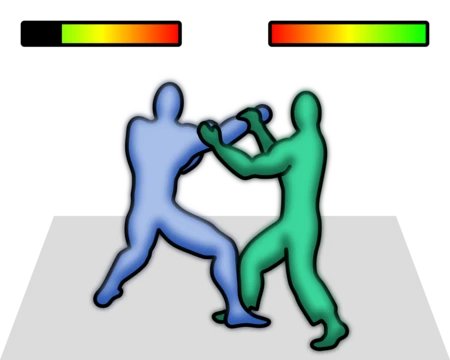
Bio F.R.E.A.K.S.
A canceled arcade fighter released on home consoles in 1998.

Bio F.R.E.A.K.S. is a 3D fighting video game released by Midway in 1998. Originally planned for arcades, prototypes were tested at arcades but the final arcade release was canceled, though a ROM image of the prototype was eventually dumped and works in MAME. The game was later released for the PlayStation, Nintendo 64, and Microsoft Windows.
Quick Facts
- Title
- Bio F.R.E.A.K.S.
- Developer
- Midway Studios San DiegoNintendo 64 version developed by Saffire.
- Publisher
- NA · Midway · PAL · GT Interactive
- Director
- Dave Simon
- Producer
- Michael Gollieb
- Programmer
- Dave Wagner
- Released
- Playstation, Nintendo 64 / NA · May 19, 1998 · PAL · September 1998Windows / NA · August 1998
- Genre
- Fighting
- Modes
- Single player, multiplayer
- Platforms
- PlayStation, Nintendo 64, Windows
Facts from the source article.
Lore & Background
Set in the near future, rapid advances in technology and bio-engineering in the United States lead to massive conflict and espionage between giant corporations known as GI-Corps. The resulting Techno-Industrial Civil Wars tear the country apart and cause the economy to collapse, with states declaring federal independence. The government bankruptcy and ongoing takeover by the GI-Corps lead to the rise of Neo-Amerika. To prevent further conflict, the Secret Games Commission (SGC) organizes a fighting tournament where each GI-Corp chooses a champion, with the winner's corporation gaining ownership of all the loser's states, ultimately deciding which GI-Corp controls Neo-Amerika.
Reader's Guide
Bio F.R.E.A.K.S. uses a fully polygonal fighting engine with a mix of hand-to-hand and long range combat. Each character has special attacks and finishing moves similar to Mortal Kombat's Fatalities, some of which can remove limbs. Damage from powerful attacks can also destroy limbs. The game takes place in 3D arenas with emphasis on mobility, giving dashes great range in multiple directions. Face buttons are assigned to specific limbs, and shoulder buttons are used for dodging, flying, and basic long range attacks. The Nintendo and PlayStation versions received mixed or average reviews according to GameRankings. Its significance lies in its canceled arcade origins and its attempt to blend limb-dismemberment mechanics with 3D fighting, though it did not achieve major commercial or critical success.
Did You Know?
- The game was originally planned for arcades but the final arcade release was canceled.
- A ROM image of the arcade prototype was dumped and works in MAME.
- The game's story involves a fighting tournament to settle disputes between GI-Corps in Neo-Amerika.
- Some finishing attacks can remove limbs, similar to the game Time Killers.
Development & Release Journey
Bio F.R.E.A.K.S. was developed by Midway and shipped in 1998, but its path to market was anything but straightforward. The title was originally conceived as an arcade game, and working prototypes were actually installed and tested in real arcade locations. Despite that groundwork, the final arcade release was ultimately canceled, leaving the game without the venue it was designed for. The title instead found its audience through home releases on the PlayStation, Nintendo 64, and Microsoft Windows. A remarkable footnote to this story is that a ROM image of the arcade prototype was eventually dumped and remains fully functional inside MAME, the popular arcade emulator. This means players can still load and play a build of the game that was never officially released to the public in its intended setting. For a Midway fighting title, the experience of being built for coin-op cabinets yet never actually launching there gives Bio F.R.E.A.K.S. a uniquely bitterscripted development history.
World-Building & Narrative
The story unfolds in a near-future United States where rapid advances in technology and bio-engineering have ignited massive conflict and espionage between giant corporate entities known as GI-Corps. The resulting struggle, called the Techno-Industrial Civil Wars, tears the nation apart and collapses the economy. Individual states declare federal independence to avoid being annexed by a single GI-Corp, and the combination of government bankruptcy and ongoing corporate takeover gives rise to a new region called Neo-Amerika. To prevent further bloodshed and hopefully reunite the country, the Secret Games Commission is formed, partnering with remaining government members to stage a fighting tournament. Each GI-Corp selects a champion, and the winning corporation gains ownership of every state the loser held, ultimately deciding which entity controls all of Neo-Amerika. Those champions are the Bio F.R.E.A.K.S.—Biological Flying Robotic Enhanced Armored Killing Synthoids. Tellingly, several of the FREAKs resent their corporate masters and organize an underground resistance movement to fight for their equal rights.
Combat & Gameplay Design
Bio F.R.E.A.K.S. runs on a fully polygonal fighting engine and fields eight playable fighters alongside two boss characters. The combat system weaves together hand-to-hand melee and long-range attacks, equipping each character with a varied arsenal of special moves at both close and extended range. A signature element is the finishing-attack system, which borrows clear inspiration from the Fatalities in Mortal Kombat and the limb-removal mechanics of Time Killers. These moves can execute an opponent outright, while accumulated damage from powerful strikes can also cause individual limbs to be destroyed. The action takes place in three-dimensional fighting arenas, and the design philosophy places heavy emphasis on mobility—dashes cover significant distance and can be performed in multiple directions. The control scheme is distinctive: face buttons are mapped to specific limbs, while shoulder buttons handle dodging, flying, and basic long-range attacks, creating a tactile, body-part-specific combat feel that sets the game apart from more abstract button-mashing fighters.
Reception & Preservation
The home console versions of Bio F.R.E.A.K.S. for the Nintendo 64 and PlayStation earned mixed to average reviews, as reflected on the review aggregation site GameRankings. The game did not achieve a strong critical consensus, and its reception appears to have been middling at best. Nevertheless, the title's legacy stretches well beyond its initial commercial and critical performance. The canceled arcade prototype, which was tested in actual arcade locations before the release was scrapped, has survived in the form of a dumped ROM image that functions within MAME. This means a version of the game that was never officially released to the public in its intended format remains accessible to preservationists and enthusiasts. The title is also catalogued on the Killer List of Videogames and MobyGames, ensuring it retains a documented place in video game history databases. For a 1998 fighting game that never reached the arcades it was designed for, Bio F.R.E.A.K.S. has maintained a niche presence through emulation and gaming archives.
Frequently Asked Questions
What is Bio F.R.E.A.K.S.?
Bio F.R.E.A.K.S. is a 3D fighting game developed by Midway and shipped in 1998. It puts a roster of eight selectable fighters plus two boss characters into arena-style combat.
Was Bio F.R.E.A.K.S. ever actually in arcades?
Midway built and arcade-tested prototypes with the intent of a full cabinet rollout, but that launch was ultimately scrapped. A ROM image of the prototype was later dumped and runs in the MAME emulator, so the arcade build is technically playable.
What platforms is Bio F.R.E.A.K.S. available on?
The finished product shipped for PlayStation, Nintendo 64, and Microsoft Windows in 1998. No other first-party home or PC ports were released.
How big is the Bio F.R.E.A.K.S. roster?
There are eight playable fighters in the main roster, with two additional boss characters that appear as end-of-match opponents.
Why is Bio F.R.E.A.K.S. often described as a cancelled arcade game?
Because Midway's original plan was a dedicated arcade cabinet, and prototypes were physically tested in arcades before the project was redirected to home consoles and PC. That aborted arcade window is what gives the title its niche reputation among collectors and emulator enthusiasts.
More in 3D fighting games 1-24
Spotted an error? Know more?
Reader corrections go straight into our review queue. Suggest an edit · How this site is sourced