Battle Raper
Eroge fighting game notorious for simulating rape.

Rijksmuseum · CC0
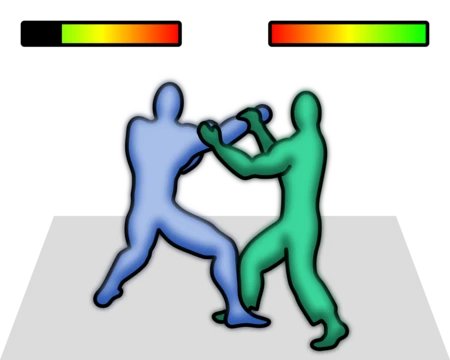
Battle Raper (バトルレイパー) is an eroge fighting game developed and published by Illusion Soft in 2002. It gained notoriety and controversy for its simulation of rape, which was removed in its 2005 follow-up, Battle Raper II: The Game. The game is a hand-to-hand combat 3D fighting game featuring female characters who can lose their clothes as they take damage, with special moves including sexually explicit grapple attacks.
Quick Facts
- Title
- Battle Raper: Hyper Realaction
- Developer
- Illusion
- Released
- WW · April 19, 2002
- Genre
- Eroge, fighting game
- Modes
- Single-player, multiplayer
- Platforms
- Windows
Facts from the source article.
Lore & Background
Battle Raper is a 3D hand-to-hand combat fighting game. Its gameplay system includes power-ups that can be picked up in the arena. Female characters can lose their clothes as they take damage, and special moves include sexually explicit grapple attacks. Besides single- and multiplayer modes, including Story mode, the game features an Extra mode for unlockable content, allowing the player to see unlockable artwork and animations, as well as an option to freely molest any of the four female fighters: Mai Kisaragi, Suzume Hachisuka, Fa Taolee, and Chihaya Kagami. The only male fighter is Zennon.
Reader's Guide
Battle Raper has gained notoriety because of its forced sex elements and was credited as one of the Japanese adult games that not only resulted in 'a widely publicised outcry in the West which only started years after the fact' but also led to the establishment of the Ethics Organization of Computer Software in 2009. The game was included on GamesRadar's lists of the seven 'most evil' video games in 2007 and the 12 weirdest fighting games in 2008. The Washington Post included it among the 15 most morally controversial video games. The game was banned on the streaming video service Twitch. Its sequel, Battle Raper II: The Game, released in 2005, removed the rape element but still includes consensual sex and focuses more heavily on fighting mechanics.
Did You Know?
- The game features four female fighters and one male fighter named Zennon.
- It is often mistakenly credited with leading to the establishment of the Ethics Organization of Computer Software (EOCS), which was actually founded in 1992.
Gameplay & Design of the Original
Battle Raper, released by Illusion Soft in 2002, is a three-dimensional hand-to-hand combat fighting game that blends arena brawling with provocative adult content. The core loop centers on collecting power-ups scattered across the fighting stage while landing hits on opponents. A defining mechanical feature is that female fighters progressively lose their clothing as they accumulate damage, and the special-move roster includes sexually explicit grapple attacks. Beyond the standard single-player and multiplayer options, the game offers a Story mode and an Extra mode that unlocks additional artwork, animations, and a controversial free-interaction option with the four female fighters—Mai Kisaragi, Suzume Hachisuka, Fa Taolee, and Chihaya Kagami. The sole male character in the roster is Zenon. The title was developed and published entirely by Illusion Soft, positioning it squarely within the Japanese eroge fighting-game niche of the early 2000s.
Controversy & Cultural Impact
The original Battle Raper became one of the most cited examples of Japanese adult gaming crossing a line in Western consciousness. Its simulation of non-consensual sexual acts sparked a widely publicized Western backlash that, notably, did not surface until several years after the game's initial launch. The title is credited as a contributing factor in the 2009 establishment of the Ethics Organization of Computer Software, a body created to address the distribution of extreme adult content. Western gaming media repeatedly flagged the game: GamesRadar placed it on both its 2007 list of the seven most evil video games and its 2008 roundup of the twelve weirdest fighting titles, while The Washington Post included it among fifteen of the most morally controversial games ever made. The game was also banned from the streaming platform Twitch, underscoring how its content continued to provoke institutional responses long after its initial release window.
The Sequel: Battle Raper II
Released exclusively in Japan on April 22, 2005, Battle Raper II: The Game marked a deliberate tonal shift from its predecessor. The sequel is a weapon-based 3D fighter in which every character possesses an unlimited guard move and a super attack, and players can customize models with alternative clothing and weapons. Crucially, the non-consensual content was removed; any sexual interaction is framed as consensual, with a post-fight healing sequence and a Replay mode. The Story mode follows Yuuki Kukami, a young treasure-hunter swordsman accompanied by a shapeshifting bat-winged fairy named Eliza, as he battles undead monsters and rival female fighters across an island set in the year 20XX. The roster includes Setsuna Yagami, a purple-haired ninja; the Kamishiro sisters Yura and Sara, members of the Arcana artifact-hunting clan; and Yayoi Mibu and Elferris Kyougoku of the Eisen Kreuz guild. Two add-ons—Sexy Raper and CapRaper—added a photo mode and crossover characters drawn from other Illusion titles.
Legacy & Critical Reception
Battle Raper's afterlife in gaming discourse is defined less by its combat mechanics than by the moral arguments it ignited. GamesRadar's 2007 entry observed that the initial clothing-stripping brawls carried a twisted amusement that evaporated the moment the rape sequences began, dismissing the title as a sick piece of hentai that killed any humor. The 2008 follow-up list was blunter, describing the package as one of shame and calling it a sick idea. In 2005, Something Awful's Zack Parsons offered a satirical take on the sequel, half-joking that removing rape from a game with rape in the title was a missed opportunity. By 2010, Machinima.com's Steve and Larson ranked Battle Raper II as the fourth most offensive game ever made. Together, these reviews illustrate how the franchise became a recurring touchstone in Western conversations about the boundaries of adult gaming, the ethics of depicting non-consent in interactive media, and the lag between a game's domestic release and its eventual international notoriety.
Gallery

Frequently Asked Questions
What is Battle Raper?
Battle Raper (バトルレイパー) is a 3D hand-to-hand combat fighting game released in 2002 by Illusion Soft. It falls under the eroge subgenre and features female fighters whose outfits are stripped away as they accumulate damage, along with sexually explicit grapple-based special moves.
Why is Battle Raper so controversial?
The game became notorious for including a rape simulation mechanic, which drew significant backlash and media attention in the early 2000s. This element is the primary reason the title is discussed in gaming-history and ethics contexts rather than in standard fighting-game circles.
What changed in Battle Raper II: The Game?
The 2005 sequel, Battle Raper II: The Game, removed the rape-simulation content that had defined the original. The follow-up retained the core 3D combat structure but dropped the most widely criticized mechanic.
Who developed and published Battle Raper?
Both development and publishing were handled by Illusion Soft, a Japanese studio. The title shipped in 2002 as a single-platform release.
Did Battle Raper cause the creation of the Ethics Organization of Computer Software (EOCS)?
No. EOCS was actually established in 1992, a full decade before Battle Raper's 2002 release, so the game could not have been a catalyst for its founding. The misattribution circulates in fan discussions but is chronologically impossible.
More in 3D fighting games 1-24
Spotted an error? Know more?
Reader corrections go straight into our review queue. Suggest an edit · How this site is sourced