Bushido Blade 2
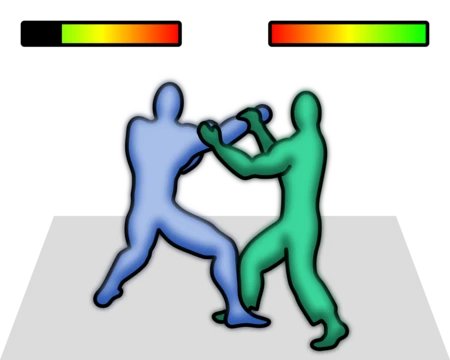
Sequel to Bushido Blade, featuring sword combat and two opposing schools.

Bushido Blade 2, a fighting game for the PlayStation, came out in 1998. It was developed by Lightweight and published by Square, following up on the original Bushido Blade from the year before. Sony later made it available again on the PlayStation Network in 2008.
The gameplay builds on some ideas from the first game while cutting back or removing others. Instead of one large, connected level, the story mode is split into a series of smaller fights, each on a different map. Players can now attack with two swords at once. The playable characters belong to one of two rival schools of assassins: the Shainto or the Narukagami. They use various swords or polearms. During a game, support characters appear alongside the chosen fighter. If you finish a stage while controlling a support character, that character becomes playable in all modes.
Fights track the progress of your chosen character, who either tries to reclaim a legendary sword or destroy the opposing school, depending on the character. Each level follows a pattern: you fight several generic ninja, then a boss who is a playable character from the other school. Two characters, Tsubame and Katze, are exceptions because they carry guns. Tsubame wields a revolver, while Katze uses a different firearm. They have sworn loyalty to different schools, and fighting them is a unique challenge. You can block their bullets with melee weapons.
Most weapons return from the first game, but the M16 is not present—Tsubame's firearm is a revolver, not an M16. The yari is actually included in the game as a weapon for certain characters. The yugiri—a sword similar to the nodachi but used like a katana, originally wielded by the final boss Hanzaki—is only usable by the player character in the final battle, not against an unarmed opponent in a general sense. Some weapons from the original are missing: the rapier (which only appears in Highwayman's two-sword stance when he has the long sword equipped), the sledgehammer, the ninjato, and the boss-specific "Double-Bladed Sword-Staff" and "Special Sabre." Weapons usable by both schools, like the katana, look slightly different depending on the school. When you play as a character, you can choose any weapon, but when they appear as a boss, they use a specific one. The yari is exclusive to the Shainto school, and the naginata is exclusive to the Narukagami school.
Quick Facts
- Title
- Bushido Blade 2
- Developer
- Lightweight
- Publisher
- JP · Square · NA · Square Electronic Arts
- Director
- Kunihiko Nakata
- Producer
- Tetsuhisa Tsuruzono
- Composer
- Ryuji Sasai
- Platforms
- PlayStation
- Released
- JP · March 12, 1998 · NA · October 29, 1998
- Genre
- Fighting
- Modes
- Single-player, multiplayer
Facts from the source article.
Lore & Background
Bushido Blade 2 expands on some aspects of its predecessor while limiting or removing others. The story mode is changed from one large connected level to a series of skirmishes, each set on a different map. Dual sword attacks have been added. Playable characters are chosen from groups representing two opposing schools of assassins, the Shainto and Narukagami, and are armed with swords or polearms of varying types. In addition to the chosen character, the player encounters support characters during each game. Completing a stage while playing as a support character unlocks that support character for play in all modes.
The fights mark the progress of the chosen character who—depending on the character—either fights to regain a legendary sword, or to destroy the opposing school. Levels involve a pattern of fighting several generic ninja followed by a boss, who is one of the playable characters from the opposing school. Two characters, the gun-wielding Tsubame and Katze, are exceptions; they have sworn loyalty to opposing schools, and battles involving them provide a different kind of challenge. The player can defend against the firearms with melee weapons.
Most weapons are straight from the first game, excluding the yari and the M16. The yugiri, a sword similar to the nodachi but wielded like the katana, is now selectable but only accessible in the final battle versus the unarmed 'last member of the Kagami clan'. Some weapons from the original game have been eliminated. The yari is exclusive to characters from the Shainto school, and the naginata is exclusive to characters from the Narukagami school.
Reader's Guide
Bushido Blade 2 is significant as a sequel that refined the unique one-hit-kill combat system of its predecessor while introducing new mechanics like dual sword attacks and a revised story mode structure. The game's emphasis on realistic sword fighting, where a single well-placed strike can end a battle, set it apart from other fighting games of the era. Its character unlocking system, which requires players to complete stages with temporary support characters, added replay value. The inclusion of gun-wielding characters Tsubame and Katze introduced a new tactical element, as players could defend against firearms with melee weapons. The game's legacy lies in its niche appeal among fans of weapon-based fighting games, and its re-release on PlayStation Network in 2008 helped preserve it for a new generation. Though it did not achieve mainstream commercial success, it remains a cult classic for its atmospheric setting and innovative combat.
Did You Know?
- The game was re-released in 2008 for PlayStation Network.
- Two characters, Tsubame and Katze, are gun-wielding exceptions to the typical opponent roster.
- The yugiri sword, used by the original Bushido Blade's final boss Hanzaki, is selectable only in the final battle.
Combat Philosophy & the Two-School Structure
Bushido Blade 2 reorganized its combat around two rival assassin schools, the Shainto and the Narukagami, giving the player a factional identity the first game lacked. Fighters are armed with swords or polearms, and the sequel introduced dual-sword attacks as a new offensive option. The story mode shifted away from one sprawling connected level into a series of discrete skirmishes, each staged on its own map. A clear pattern emerges across stages: the player battles waves of generic ninja before confronting a boss drawn from the opposing school's roster. Beyond the chosen protagonist, support characters appear during each game, and completing a stage while controlling one of them unlocks that character for every mode. The weapon roster carried over most arms from the original, though the yari and M16 were dropped, and several earlier options such as the rapier, sledgehammer, and ninjato were removed entirely. The yugiri, once exclusive to the first game's final boss Hanzaki, became selectable but only in the climactic fight against the unarmed last member of the Kagami clan.
The Eight-Hundred-Year Feud
The narrative backbone of Bushido Blade 2 stretches back to the thirteenth century on Konoshima, an island in Japan's Inland Sea. Two feudal clans, the Kagami and the Sue, once served the same Daimyō in peace. When mainland war destroyed their lord, the Kagami pledged loyalty to a new master while the Sue remained faithful to their fallen one. The Kagami then lured the Sue off the island into battle, defeating them and seizing their sacred sword, the Yugiri. For centuries afterward, the two bloodlines waged quiet, secretive skirmishes—fierce but never large-scale. Eight hundred years later, the Shainto school, descended from the Sue, launches a full assault on the Narukagami Shintoryu dojo at the Meikyokan. Their twin goals are to reclaim the Sacred Sword Yugiri and to annihilate the last Kagami descendant. The opening FMV depicts this raid, and the story mode later unfolds it in greater detail, with each playable character's arc centered either on recovering the legendary blade or on destroying the rival school.
Roster, Unlocks & the Gunman Exception
Most of the first game's cast returned for the sequel, including Red Shadow, Mikado, Kannuki, Tatsumi, Utsusemi, and Black Lotus (renamed Highwayman). With the exception of Highwayman, all remain members of the Narukagami clan. Kannuki, Mikado, and Tatsumi form the starting roster and appear in the opening cinematic alongside Shainto fighters Kaun, Gengoro, and Jo, while Red Shadow, Utsusemi, and Highwayman must be unlocked. Several non-playable characters from the original—Sazanka, Tsubame, Katze, and Hongou—were promoted to playable status. The game also introduced an unusual unlocking method: during Story Mode, each protagonist faces two bonus battles where the player temporarily controls a new character for one stage. If that character falls, the main fighter steps in and the story continues normally; but if the player completes the stage with the new character and then finishes their own story, that character joins the permanent roster. Additionally, each school hides a secret clown character unlockable through specific requirements, and the gun-wielding Tsubame and Katze present a distinct challenge since the player must defend against firearms with melee weapons.
Development, Release & Digital Afterlife
Bushido Blade 2 was developed by Lightweight and published by Square for the PlayStation in 1998, arriving as a direct sequel to Bushido Blade, which had hit shelves the previous year. The game represented Square's foray into the fighting genre on Sony's hardware, leveraging Lightweight's design expertise to expand and refine the original's combat framework. While the sequel added new mechanics like dual-sword attacks and the two-school faction structure, it also trimmed the original's scope—removing certain weapons and restructuring the story mode from a single connected level into discrete encounters. The PlayStation-exclusive release in 1998 placed it squarely in the era of 3D fighting titles, and its re-release on PlayStation Network in 2008 gave a new generation of players access to the title nearly a decade after its initial launch. That digital reissue ensured the game remained part of the PlayStation ecosystem well beyond its original hardware lifecycle, preserving a niche entry in the broader fighting-game landscape.
Frequently Asked Questions
What is Bushido Blade 2?
It is a 3D sword-combat fighting game released for the PlayStation in 1998, developed by Lightweight and published by Square. It serves as the direct sequel to the original Bushido Blade from 1997.
How does Bushido Blade 2's story mode work?
Rather than taking place in a single large arena like its predecessor, the campaign is structured as a sequence of individual duels, each set on a separate map. Players also gain the option to fight with two swords simultaneously.
What are the two factions in Bushido Blade 2?
Every playable fighter is affiliated with one of two rival assassin schools, and the core of the game revolves around clashes between these two opposing groups.
Can I still play Bushido Blade 2 today?
After its original 1998 PlayStation release by Square, Sony made the title available again as a digital download through the PlayStation Network in 2008.
Who developed and published Bushido Blade 2?
The game was created by the studio Lightweight and brought to market by Square for the PlayStation platform in 1998.
More in 3D fighting games 1-24
Spotted an error? Know more?
Reader corrections go straight into our review queue. Suggest an edit · How this site is sourced