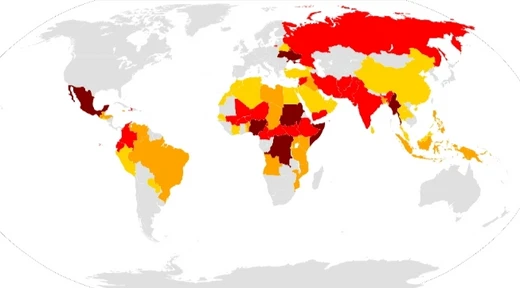
Second Congo War
A major conflict drawing nine African nations and 25 armed groups.

The Second Congo War, often referred to as Africa’s World War or the Great War of Africa, was a large-scale conflict that started on 2 August 1998 in the Democratic Republic of the Congo (DRC), a little more than a year after the First Congo War had ended. It began when President Laurent-Désiré Kabila broke with Rwanda and Uganda, the allies who had previously helped him take power. In response, Kabila assembled a coalition of other nations to defend his government, and the fighting eventually involved nine African countries and roughly 25 armed groups, ranking it among the largest wars ever fought on the continent.
Although a peace agreement was reached in 2002, and the war officially concluded on 18 July 2003 with the creation of the Transitional Government of the Democratic Republic of the Congo and the raising of the DRC’s flag in Goma—a city that had been under rebel control—violence has continued in many areas, especially in the east. Ongoing conflicts like the Lord’s Resistance Army insurgency and the Kivu and Ituri conflicts have kept the region unstable.
According to a 2008 report from the International Rescue Committee, the Second Congo War and its aftermath caused roughly 5.4 million deaths, mostly from disease, malnutrition, and war crimes. This makes it the deadliest conflict since World War II. The war also forced about 2 million people to leave their homes, either fleeing within the country or seeking asylum elsewhere. The trade in conflict minerals heavily influenced and funded the war, and that trade continues to drive violence in the region today.
- location
- Democratic Republic of the Congo
- participants
- 9 African nations, approximately 25 armed groups
- estimated_deaths
- 5.4 million (primarily due to disease, malnutrition, and war crimes)
- displaced_people
- approximately 2 million
- also_known_as
- Africa's World War, Great War of Africa
Lore & Background
The Second Congo War, often called Africa’s World War, began on 2 August 1998 in the Democratic Republic of the Congo, just over a year after the First Congo War. It erupted when President Laurent-Désiré Kabila turned against his former allies from Rwanda and Uganda, who had helped him seize power. The conflict rapidly expanded as Kabila assembled a coalition of other nations for his defense, ultimately drawing in nine African countries and approximately 25 armed groups, making it one of the largest wars in African history. The war was heavily influenced and funded by the trade of conflict minerals, a factor that continues to fuel violence in the region. Although a peace agreement was signed in 2002 and the war officially ended on 18 July 2003 with the establishment of a Transitional Government and the raising of the DRC’s flag in the rebel-held city of Goma, violence has persisted, particularly in the east, through ongoing conflicts such as the Lord’s Resistance Army insurgency and the Kivu and Ituri conflicts. The war and its aftermath caused an estimated 5.4 million deaths, primarily from disease, malnutrition, and war crimes, making it the deadliest conflict since World War II according to a 2008 International Rescue Committee report. Approximately 2 million people were displaced, forced to flee their homes or seek asylum in neighboring countries.
Reader's Guide
The Second Congo War began when President Laurent-Désiré Kabila turned against the Rwandan and Ugandan allies who had helped him seize power just over a year earlier, triggering a conflict that drew in nine African nations and approximately twenty-five armed groups. Kabila rallied a coalition of other countries to his defense, and the fighting expanded across the vast territory of the Democratic Republic of the Congo. The war was heavily influenced and funded by the trade of conflict minerals, a dynamic that continues to fuel violence in the region. An estimated 5.4 million people died, primarily from disease, malnutrition, and war crimes, making it the deadliest conflict since World War II according to a 2008 report. Approximately two million people were displaced, fleeing their homes or seeking asylum in neighboring countries. Although a peace agreement was signed in 2002 and the war officially ended in July 2003 with the establishment of a transitional government, violence has persisted, particularly in the east, through ongoing conflicts such as the Lord’s Resistance Army insurgency and the Kivu and Ituri conflicts. The war’s legacy includes demonstrating the devastating impact of regional military intervention and the exploitation of natural resources in fueling large-scale, protracted conflict.
Did You Know?
- The war drew in nine African nations and approximately 25 armed groups.
- An estimated 5.4 million deaths occurred, primarily due to disease, malnutrition, and war crimes.
- The war was heavily influenced and funded by the trade of conflict minerals.
Frequently Asked Questions
What is the Second Congo War?
The Second Congo War was a massive armed conflict centered in the Democratic Republic of the Congo that pulled in nine different African nations and roughly 25 separate armed factions. It is sometimes referred to as "Africa's World War" or the "Great War of Africa" due to its enormous scale.
How did the Second Congo War begin?
The fighting kicked off after President Laurent-Désiré Kabila, who had been brought to power with help from Rwanda and Uganda, suddenly turned against those former backers. His decision to push them out and assemble a broader regional coalition of allies quickly escalated what might have been a localized dispute into a continent-wide conflict.
How big was the Second Congo War in terms of participants?
The conflict involved nine African nations and an estimated 25 armed groups, making it one of the largest multi-state wars ever fought on the African continent. This sheer number of belligerents is why fans and historians often compare its scope to a world war.
What was the human cost of the Second Congo War?
Around 5.4 million people are estimated to have lost their lives, with the majority of deaths caused by disease, starvation, and atrocities rather than direct combat. An additional roughly 2 million people were forced to flee their homes as refugees or internally displaced persons.
Why is the Second Congo War considered so important?
It stands out as one of the deadliest and most geographically sprawling conflicts in modern African history, reshaping the political landscape across the entire Great Lakes region. Its legacy of instability, armed groups, and humanitarian crisis continues to influence the region long after the fighting officially ended.
More in Wars & Conflicts 1-20
Spotted an error? Know more?
This is a living reference — every entry is fact-audited, and reader corrections feed straight into our audit queue. Suggest an edit · See this site's audit record