Russo-Turkish War (1877–1878)
War that freed Balkan states and shifted Black Sea power.

Unknown author · Public domain
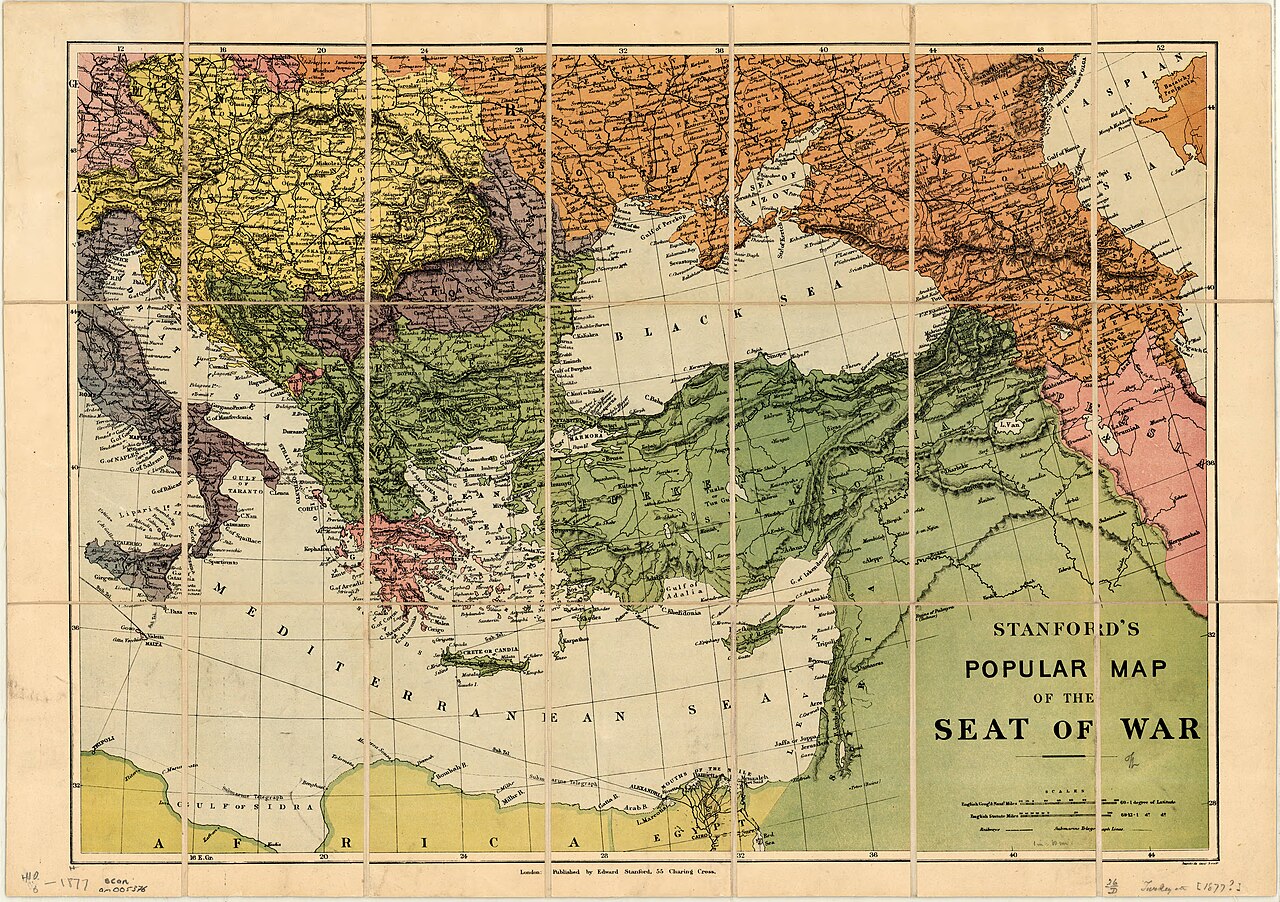
The Russo-Turkish War of 1877–1878 was fought between the Ottoman Empire and a coalition led by the Russian Empire, which also included Romania, Serbia, and Montenegro. A key Russian objective was to reverse the territorial and strategic losses imposed by the Crimean War (1853–1856). The 1856 Paris Peace Treaty had forced Russia to destroy its Black Sea Fleet and fortifications, and Russian foreign policy subsequently focused on regaining its naval presence in the Black Sea. Another major driver was Russian support for Balkan nationalist movements seeking liberation from Ottoman rule. The conflict was also shaped by a shifting European balance of power. The Concert of Europe had fractured after the wars of German unification, with Prussia under Otto Bismarck defeating Austria in 1866 and France in 1870. Bismarck, seeking to avoid a war over the Ottoman Empire’s collapse, formed the Three Emperors' League with Russia and Austria-Hungary. Meanwhile, the Ottoman Empire itself was in decline, burdened by heavy foreign debts and the costly resettlement of over 600,000 Muslim Circassians expelled from the Caucasus. Tensions had also been inflamed by the 1860 crisis in Lebanon, where a Maronite peasant revolt against Druze overlords escalated into a civil war, resulting in about 10,000 Maronite deaths. Although the Ottoman foreign minister Mehmed Fuad Pasha restored order and executed agitators, European powers—France and Britain—intervened, forcing the Sultan to appoint a Christian governor for Lebanon. The Russian-led coalition ultimately won the war, pushing Ottoman forces back to the outskirts of Constantinople. This prompted Western European great powers to intervene diplomatically. As a result, Russia annexed the Caucasian provinces of Kars and Batum, as well as the Budjak region. Romania, Serbia, and Montenegro, which had long enjoyed de facto sovereignty, formally declared independence. Bulgaria, after nearly five centuries of Ottoman rule, emerged as an autonomous state with Russian backing. Greece also gained territory, annexing parts of Thessaly and Arta.
- Belligerents
- Ottoman Empire vs. Russian Empire, Romania, Serbia, Montenegro
- Outcome
- Russian-led coalition victory
- Territorial changes
- Russia gained Kars, Batum, and Budjak; Romania, Serbia, Montenegro gained independence; Bulgaria became autonomous; Greece annexed parts of Thessaly and Arta
- Key precipitating factor
- Russian desire to recover Crimean War losses and support Balkan liberation
Lore & Background
The Russo-Turkish War (1877–1878) was fought between the Ottoman Empire and a coalition led by the Russian Empire, which also included Romania, Serbia, and Montenegro. The conflict arose from Russia’s desire to recover territories lost in the Crimean War, reassert its presence in the Black Sea, and support Balkan nationalist movements seeking independence from Ottoman rule. The Russian-led coalition achieved a decisive victory, pushing Ottoman forces back to the outskirts of Constantinople, which prompted intervention by Western European great powers. As a result, Russia annexed the Caucasian provinces of Kars and Batum, as well as the Budjak region. Romania, Serbia, and Montenegro, which had long exercised de facto sovereignty, formally declared independence. Bulgaria, after nearly five centuries of Ottoman domination, emerged as an autonomous state with Russian support. Greece also gained Thessaly and Arta. The war’s background included the decline of Ottoman power after the Crimean War, financial strain from foreign loans and the influx of Circassian refugees, and the rise of Pan-Slavic ideas. The Ottoman Empire’s internal reforms, such as the 1856 edict granting equality to Christians and abolishing the jizya tax, failed to prevent unrest, exemplified by the 1860 Maronite-Druze conflict in Lebanon, which led to European intervention and the appointment of a Christian governor. The shifting European balance, marked by Prussia’s rise under Bismarck and the formation of the Three Emperors’ League, further isolated the Ottomans. Russia, under Chancellor Gorchakov, relied on Prussian support to pursue its revanchist goals.
Reader's Guide
The war was precipitated by Russia’s desire to reverse its losses from the earlier Crimean conflict, reassert its presence in the Black Sea, and back Balkan movements seeking liberation from Ottoman rule. The Russian-led coalition—including Romania, Serbia, and Montenegro—decisively defeated the Ottoman forces, pushing them back to the outskirts of Constantinople. This advance prompted intervention by Western European great powers, who feared a complete Ottoman collapse. As a result, Russia annexed the Caucasian provinces of Kars and Batum, along with the Budjak region. Romania, Serbia, and Montenegro, which had long exercised de facto sovereignty, formally declared independence. Bulgaria, after nearly five centuries of Ottoman domination, emerged as an autonomous state under Russian sponsorship. Greece also gained Thessaly and Arta. The war underscored the Ottoman Empire’s deepening fragility, as it struggled under financial strain from foreign loans and the resettlement of hundreds of thousands of Circassian refugees from the Caucasus. The conflict also highlighted the shifting European balance: the Concert of Europe had fractured after the wars of German unification, with Prussia under Bismarck now dominant. Russia, allied with Prussia and Austria-Hungary in the Three Emperors’ League, sought to advance Pan-Slavic unity by weakening both the Ottoman and Habsburg empires. France, isolated on the continent, encouraged nationalist revolts in the Balkans to counter the three emperors. The war’s outcome ultimately forced a European congress, which limited Russian gains and reaffirmed the great powers’ competing interests in the region.
Did You Know?
- The Russian-led coalition pushed Ottoman forces back to the gates of Constantinople.
- Russia annexed the Budjak region and the Caucasian provinces of Kars and Batum.
- Bulgaria emerged as an autonomous state after almost five centuries of Ottoman domination.
- Greece annexed parts of Thessaly and Arta as a result of the war.
The Longest Rivalry in European History
The pattern across those centuries was remarkably consistent: with the exception of just four engagements, the Ottoman Empire emerged on the losing side, a reflection of its broader period of stagnation and decline. In stark contrast, the Russian Empire's trajectory pointed upward, particularly after Peter the Great drove sweeping modernization reforms in the early eighteenth century, transforming Russia into a formidable European power. The rivalry's final chapter was sealed not by a decisive battlefield victory but by the mutual collapse of both empires in the wake of World War I.
Blood on the Volga: The First Clash
The campaign ended in catastrophic failure for the Ottoman forces: they failed to capture the city, and the army nearly perished entirely in the open steppes. To compound the disaster, the Ottoman fleet was destroyed by a storm in the Sea of Azov. The resulting peace treaty solidified Russian control over the Volga region, though it did grant the Ottomans certain commercial privileges. The conflict did not end cleanly, however. Yet the following year, at the Battle of Molodi, the Crimean forces were decisively defeated, halting their advance for good.
Ukraine: The Contested Frontier
The seventeenth-century phase of the Russo-Turkish rivalry was defined by a bitter struggle over Ukrainian territory.
Peter's Gambit and the Caucasus Question
A different kind of cooperation emerged in the 1720s, as Russia and the Ottomans jointly carved up the declining Safavid Persian Empire, with Russia taking Dagestan, Azerbaijan, and Northern Iran, and the Ottomans claiming Armenia and parts of Eastern Anatolia.
Gallery
Frequently Asked Questions
What was the Russo-Turkish War (1877–1878)?
It was a major conflict in which a Russian-led coalition—comprising Romania, Serbia, and Montenegro—fought the Ottoman Empire over Balkan sovereignty and control of the Black Sea region.
Who were the main belligerents in the Russo-Turkish War (1877–1878)?
The Ottoman Empire stood on one side, while the opposing alliance was headed by the Russian Empire and included Romania, Serbia, and Montenegro as co-belligerents.
How did the Russo-Turkish War (1877–1878) end?
The Russian-led coalition won decisively, driving Ottoman forces to the very gates of Constantinople before Western European powers intervened to force a diplomatic settlement.
What territorial changes came out of the Russo-Turkish War (1877–1878)?
Russia recovered Kars, Batum, and Budjak; Romania, Serbia, and Montenegro won full independence; Bulgaria was granted autonomy; and Greece annexed Thessaly and Arta.
Why did Russia launch the Russo-Turkish War (1877–1878)?
Moscow wanted to undo the restrictions it suffered after the Crimean War, reassert naval dominance in the Black Sea, and back the nationalist liberation movements sweeping through the Balkans.
More in Wars & Conflicts 1-20
Spotted an error? Know more?
This is a living reference — every entry is fact-audited, and reader corrections feed straight into our audit queue. Suggest an edit · See this site's audit record