Peloponnesian War
A Greek war for hegemony between Athens and Sparta.

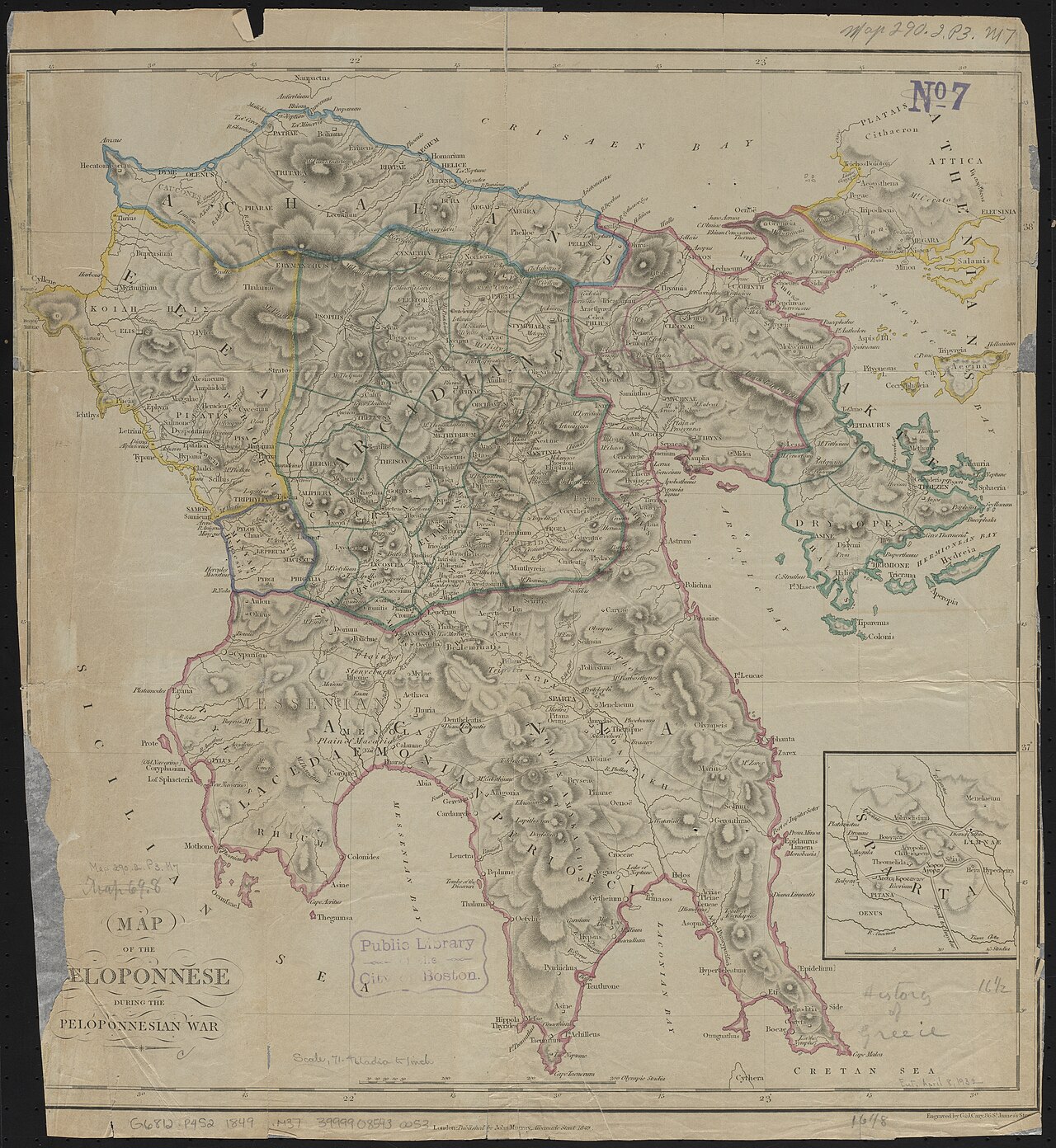
G. & J. Cary, John Murray · Public domain
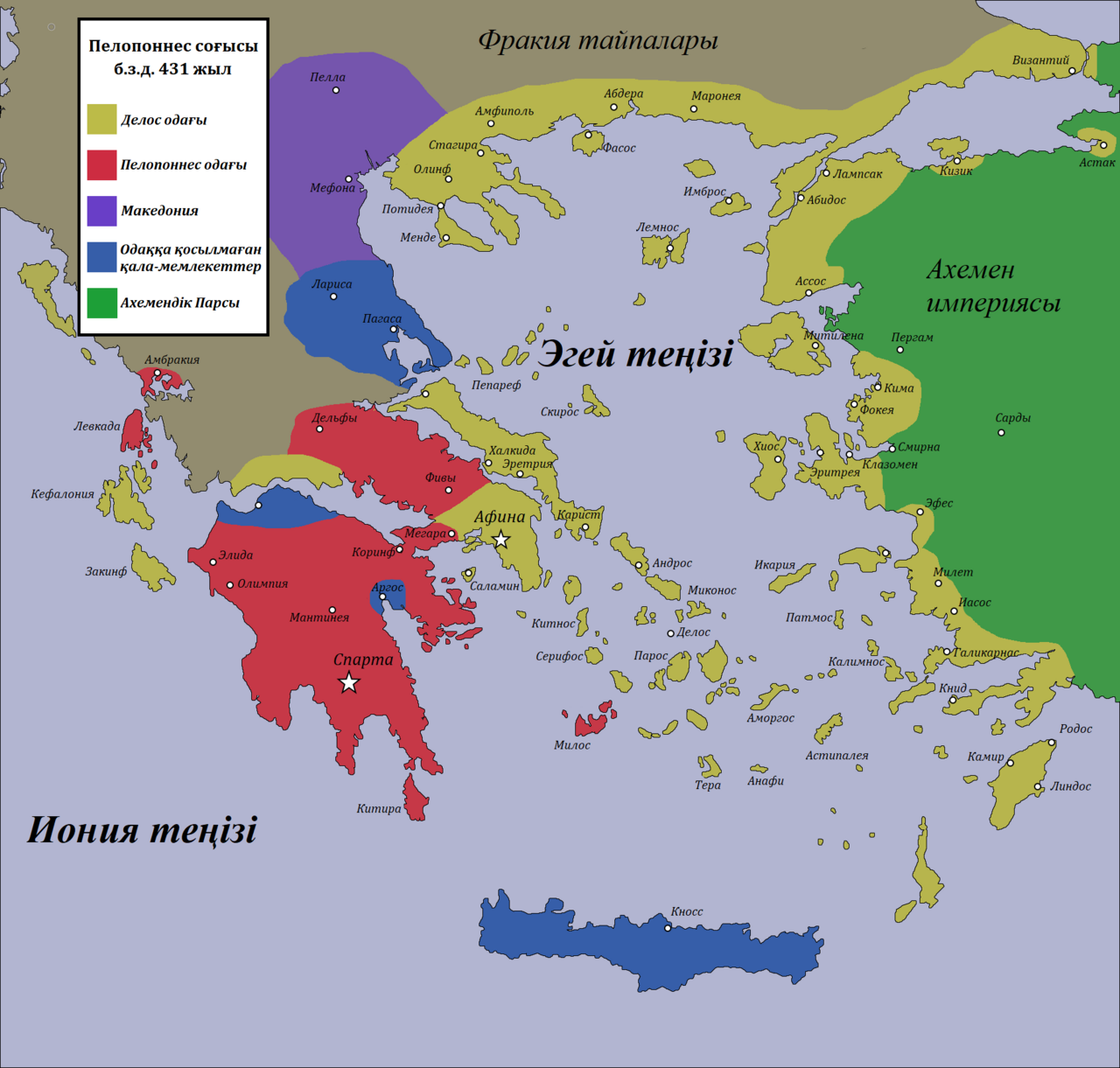
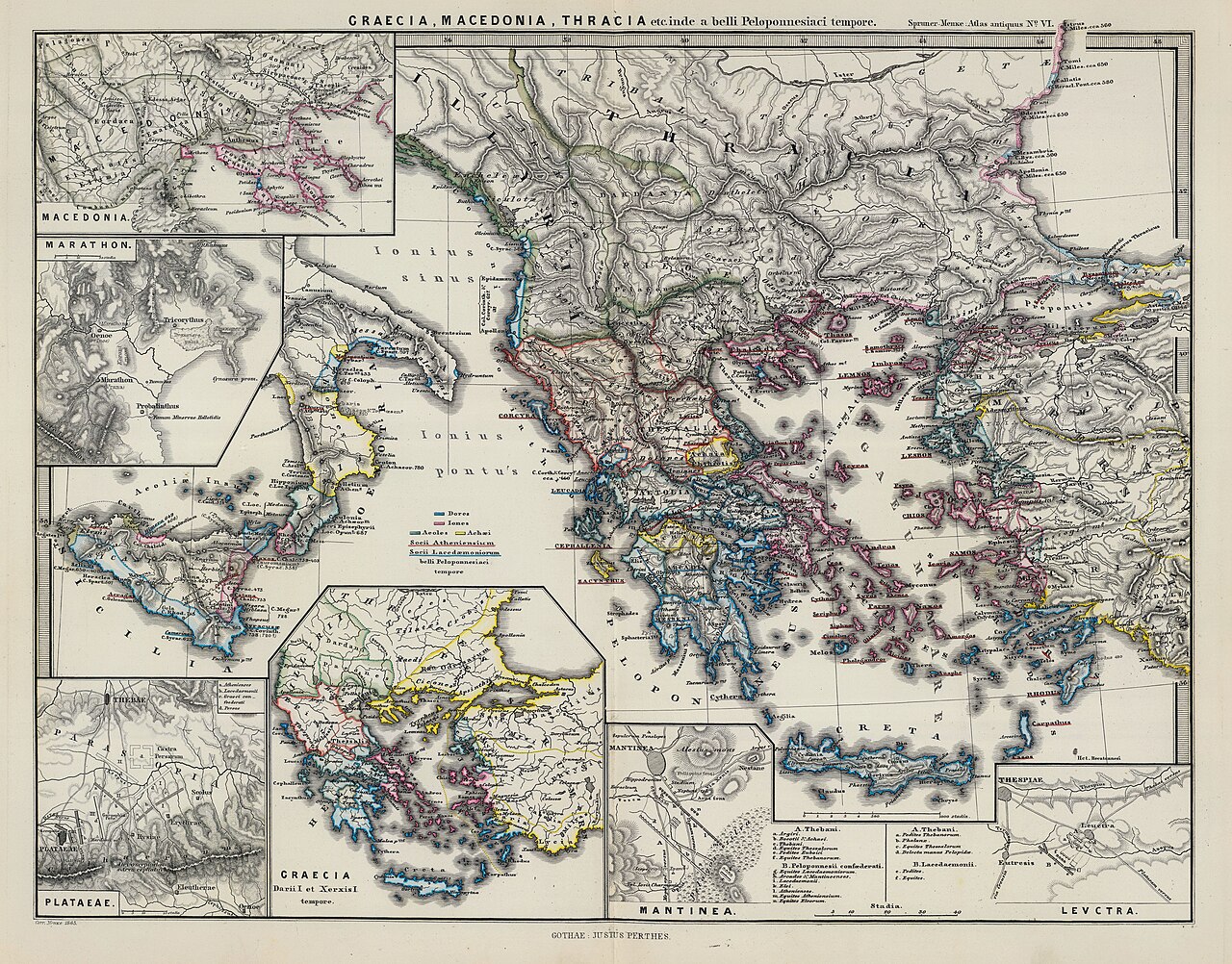
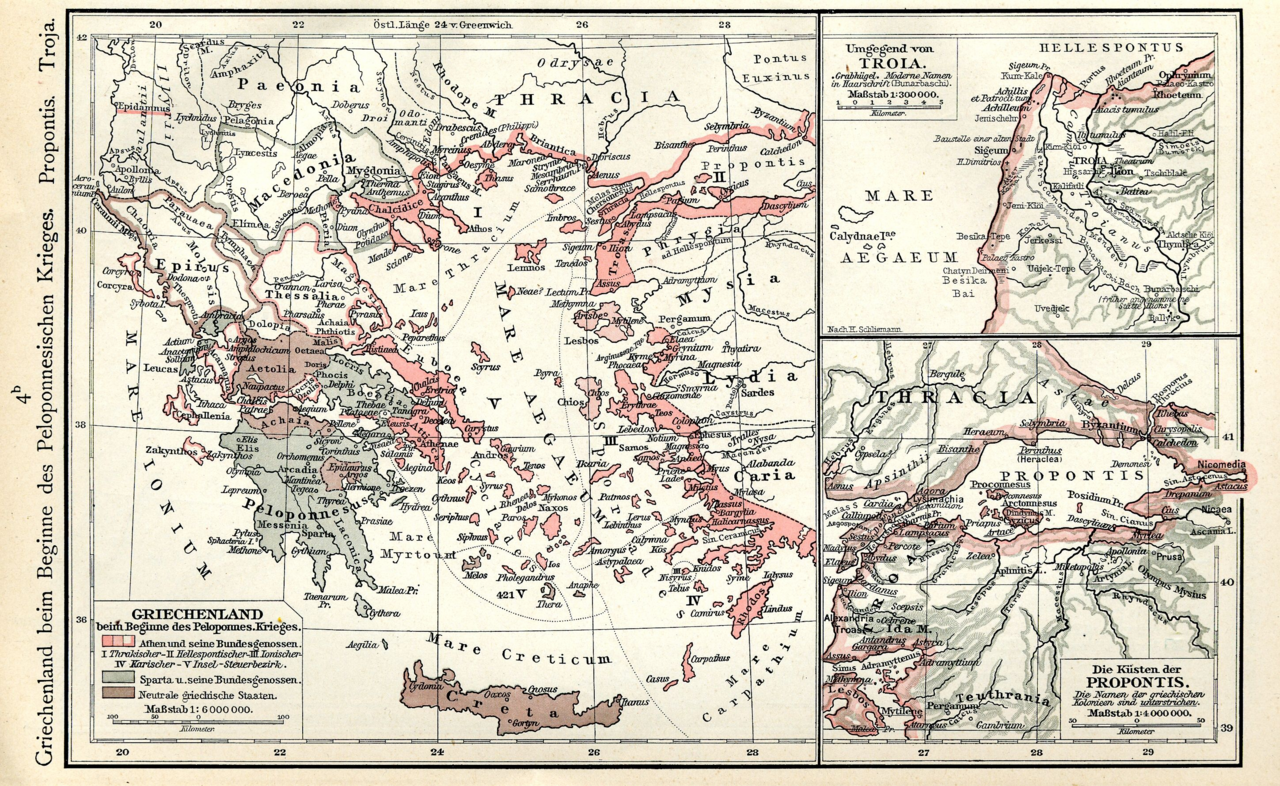
The Peloponnesian War was a protracted conflict fought in the Eastern Mediterranean between the Athenian-led Delian League and the Spartan-led Peloponnesian League, lasting from 431 to 404 BC. The struggle was for hegemony over Ancient Greece. The war is traditionally understood as comprising four related conflicts. The opening phase, known as the Ten Years' War or Archidamian War, began when the Spartan king Archidamus II invaded Attica. This period featured repeated Spartan invasions of Athenian territory and Athenian naval raids on the Peloponnese. Athens gained a significant advantage at Sphacteria in 425 BC, but suffered a major defeat at Delium in 424 BC. Both alliances faced internal rebellions, and exhaustion led to the Peace of Nicias in 421 BC. The second phase, the Argive War, was a proxy conflict between Sparta and its Peloponnesian rivals, led by Argos with Athenian support; this ended with a Spartan victory at Mantinea in 418 BC. The third phase, the Sicilian Expedition, saw Athens attempt to conquer Syracuse, an ally of Sparta. Fought from 415 to 413 BC, this campaign ended in catastrophic defeat for Athens, with the destruction of most of its navy. Following this failure, Sparta, now allied with the Persian Empire, broke the peace in 413 BC and began the final phase, the Decelean or Ionian War. Persia captured Athenian cities in Asia Minor, while Sparta, under Lysander, built a Persian-financed fleet. Sparta won the decisive battle of Aegospotami in 405 BC, breaking the power of the Delian League. Athens fell the following year, and the League was dissolved. Its democracies were replaced with Spartan-style oligarchies, most notably the Thirty Tyrants in Athens. Spartan hegemony proved short-lived; Athens regained independence a decade later during the Corinthian War. The war devastated the Greek world: Athens lost its Aegean empire and maritime dominance, while widespread poverty resulted from the destruction of cities and countryside. The conflict transformed Greek warfare from a limited, formalized practice into total war between competing political ideologies, making civil war common and ultimately contributing to foreign domination and the end of Greece's golden age.
- Conflict
- Peloponnesian War
- Location
- Eastern Mediterranean (Ancient Greece)
- Belligerents
- Athenian-led Delian League vs. Spartan-led Peloponnesian League
- Outcome
- Spartan victory; dissolution of the Delian League; Spartan hegemony
Lore & Background
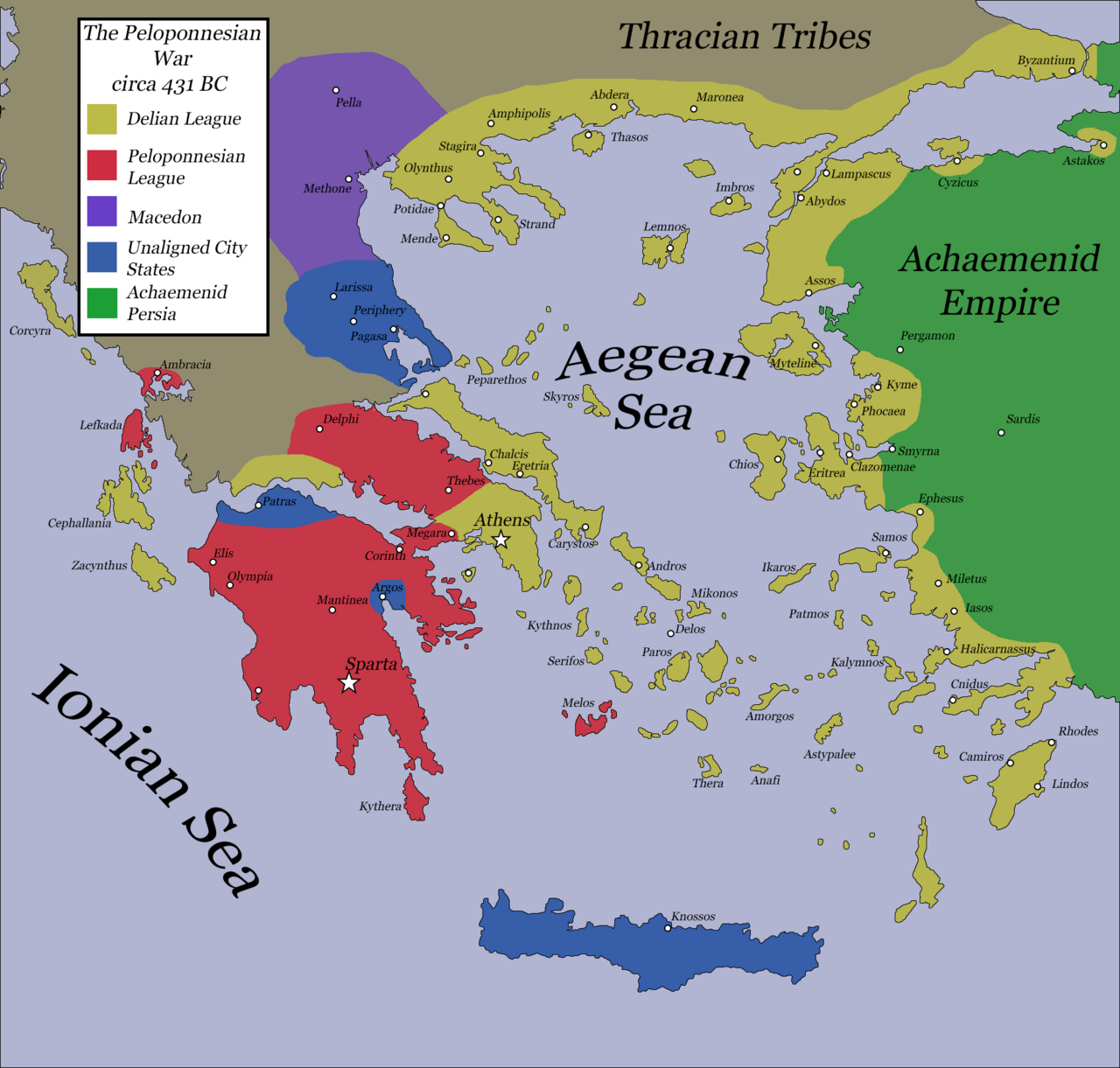
The Peloponnesian War was fought across the Eastern Mediterranean, primarily in mainland Greece, the Aegean Sea, and Asia Minor. Its defining characteristic was a protracted, multi-phase conflict between the Athenian-led Delian League, a maritime empire of democracies, and the Spartan-led Peloponnesian League, a land-based alliance of oligarchies. The war began with the Spartan king Archidamus II invading Attica, leading to a pattern of Spartan land raids and Athenian naval counter-raids. A key turning point was Athens gaining the upper hand at Sphacteria, followed by a major defeat at Delium. Both alliances faced internal rebellions. After a period of exhaustion, a peace was signed, but conflict resumed as a proxy war in the Peloponnese, where Sparta defeated an Argive alliance at Mantinea. The war then expanded dramatically with Athens’s failed Sicilian Expedition against Syracuse, which destroyed much of its navy. This failure prompted Sparta, now allied with the Persian Empire, to build a new fleet and break the peace, beginning the final phase. Persia captured Athenian cities in Asia Minor, while Sparta, under Lysander, won the decisive naval battle of Aegospotami, breaking Athenian naval power. Athens fell the following year, and the Delian League was dissolved, with its democracies replaced by Spartan-style oligarchies, such as the Thirty Tyrants in Athens. The war transformed Greek society from limited, formalized warfare into total war between political ideologies, causing widespread poverty, economic devastation in Athens, and frequent civil wars, ultimately leading to foreign domination and the end of Greece’s golden age.
Reader's Guide
The Peloponnesian War transformed the ancient Greek world. Athens lost its Aegean empire and maritime dominance, while Sparta became the leading power, though its hegemony was short-lived. The war caused widespread poverty in the Peloponnese and economic devastation in Athens, which never regained its pre-war prosperity. The conflict also shifted Greek warfare from limited, formalized engagements to total war between competing political ideologies (democracy vs. oligarchy), making civil war common. The divisions and destruction helped lead to foreign domination and the end of Greece's golden age. The main historical source is Thucydides' incomplete account, continued by Xenophon, with additional information from Diodorus Siculus, Plutarch, and limited archaeological evidence.
Did You Know?
- The war is traditionally divided into four related conflicts: the Ten Years' War, the Argive War, the Sicilian Expedition, and the Decelean War.
- After the war, the Delian League's democracies were replaced with Spartan-style oligarchies, including the Thirty Tyrants in Athens.
Gallery
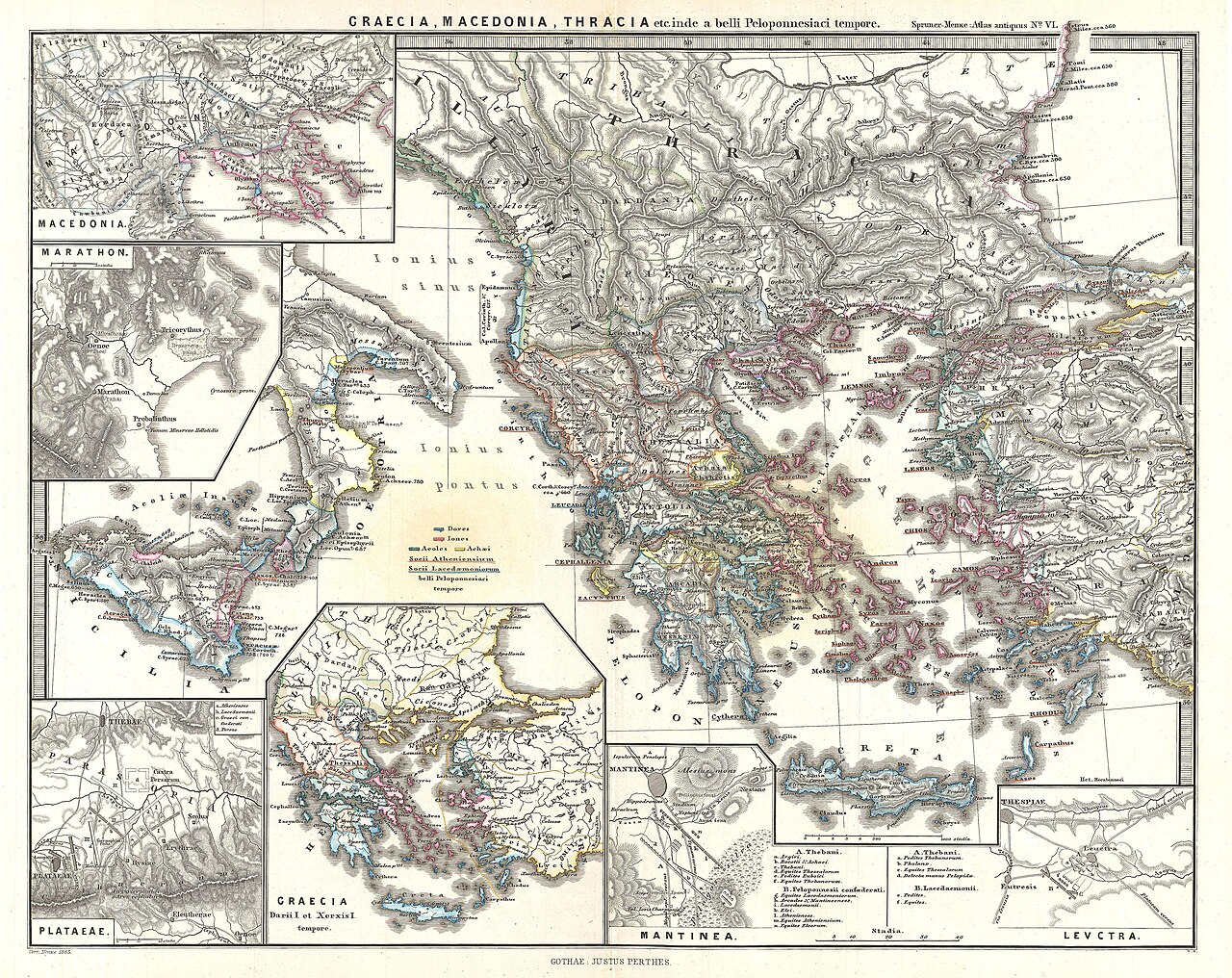
Frequently Asked Questions
What was the Peloponnesian War?
It was a prolonged struggle for dominance in the Greek world, pitting the Athenian-led Delian League against the Spartan-led Peloponnesian League. The conflict unfolded across the Eastern Mediterranean during the 5th century BCE and is commonly described as a war for hegemony between two rival powers.
Who were the main belligerents in the Peloponnesian War?
The two principal sides were Athens and its allied city-states organized under the Delian League, versus Sparta and the coalition known as the Peloponnesian League. Athens relied heavily on its navy while Sparta drew on superior land forces, and both sides pulled in numerous Greek poleis as allies.
What were the major phases of the Peloponnesian War?
Historians typically break the conflict into four connected stages: the Ten Years' War (also called the Archidamian War), the Argive War, the disastrous Sicilian Expedition, and the Decelean War (or Ionian War). Each phase shifted the balance of power between the two leagues before the final resolution.
How did the Peloponnesian War end?
Sparta ultimately prevailed, resulting in the defeat of Athens and the dissolution of the Delian League. A brief period of Spartan hegemony over the Greek world followed, though that dominance proved short-lived.
Why is the Peloponnesian War considered important?
It marked a decisive turning point in Greek history, ending Athens' era of cultural and naval supremacy. The outcome reshaped the political landscape of the Eastern Mediterranean and set the stage for the later conflicts that eventually left Greece vulnerable to Macedonian conquest.
More in Wars & Conflicts 1-20
Spotted an error? Know more?
This is a living reference — every entry is fact-audited, and reader corrections feed straight into our audit queue. Suggest an edit · See this site's audit record