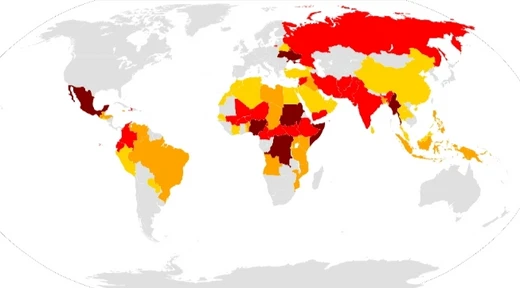
Nigerian Civil War
A war of secession, starvation, and global television.

Clyde H. Mapping · CC BY-SA 4.0
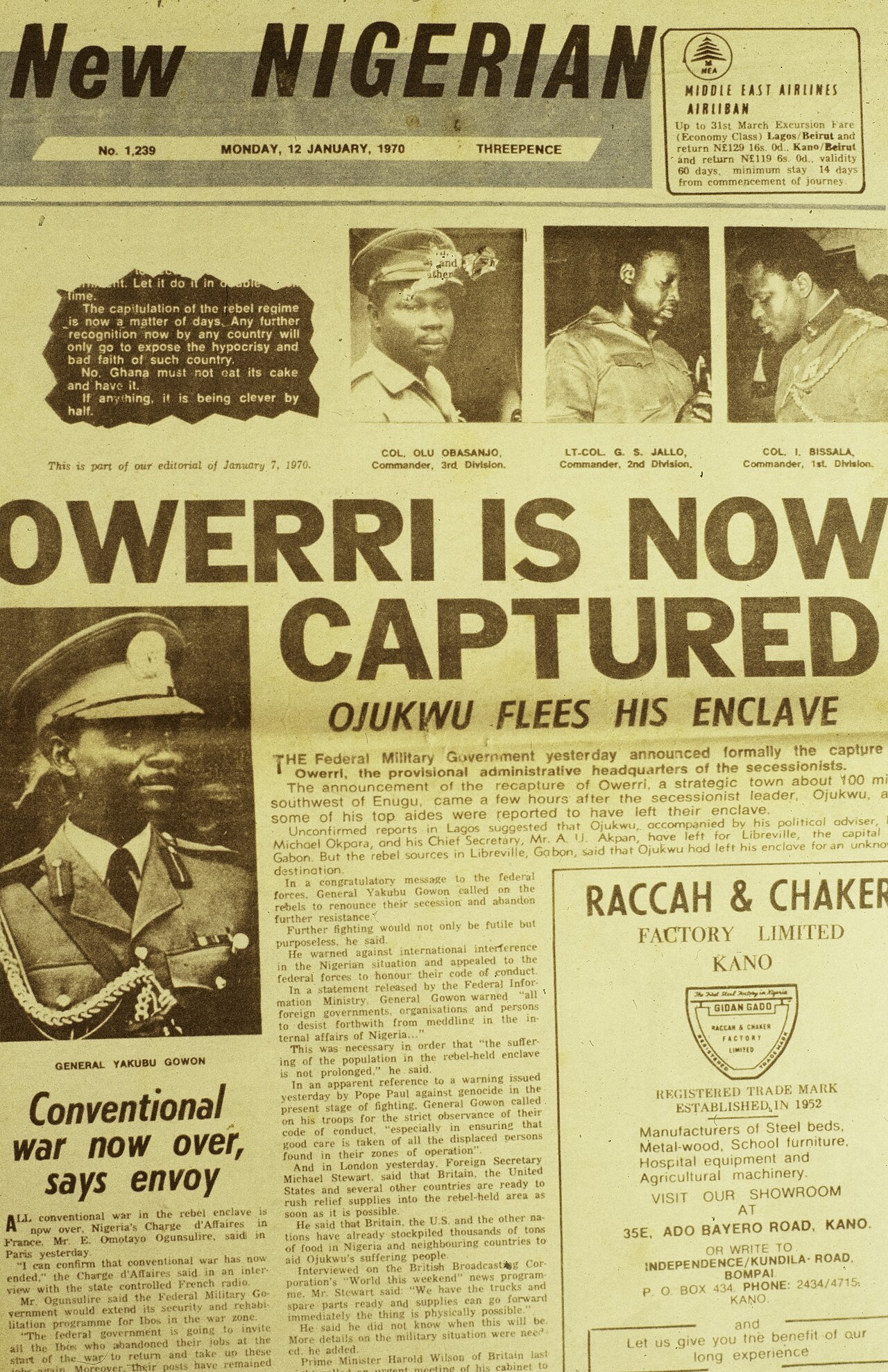
Between July 1967 and January 1970, Nigeria fought a civil war against the breakaway Republic of Biafra, which had declared itself independent earlier that year. On the Nigerian side, General Yakubu Gowon was the head of state; Lieutenant Colonel Chukwuemeka Odumegwu Ojukwu led Biafra. The roots of the conflict lay in political, ethnic, cultural, and religious strains that predated Britain’s formal withdrawal from Nigeria between 1960 and 1963. What set off the war directly were a military coup in 1966, a counter-coup, and then pogroms targeting Igbo people in the Northern Region. After those attacks, surviving Igbos fled en masse to the Eastern Region, whose leadership decided that the federal government could not—or would not—protect them. Their conclusion was that setting up a separate, sovereign state called Biafra was the only way to keep their people safe.
Within a year, Nigerian forces had surrounded Biafra, capturing the oil facilities at Port Harcourt and the city itself. The blockade that followed was a deliberate strategy during the stalemate, and it caused mass starvation among Biafran civilians. Over the war’s two and a half years, about 100,000 soldiers died on both sides, while civilian deaths from starvation in Biafra ranged from 500,000 to 2 million.
Alongside the Vietnam War, this was one of the first conflicts broadcast on television worldwide. By mid-1968, images of starving Biafran children filled Western media. The suffering became a global cause, boosting funding and visibility for international NGOs. The Biafran airlift, a civilian humanitarian effort, later inspired the founding of Doctors Without Borders. The United Kingdom and the Soviet Union backed the Nigerian government; France, Ivory Coast, and Gabon supported Biafra. The United States officially stayed neutral, calling Nigeria “a responsibility of Britain,” though its refusal to recognise Biafra was seen by some as favouring Nigeria.
The war exposed difficulties in pan-Africanism during the early independence era, showing that Africa’s diversity could hinder unity. It also revealed early flaws in the Organization of African Unity. After the war, the Igbo people were politically marginalised: no Igbo has become president of Nigeria since, leading many Igbo to feel they are being punished. Igbo nationalism has grown, along with neo-Biafran secessionist groups like the Indigenous People of Biafra and the Movement for the Actualization of the Sovereign State of Biafra.
**Background**
**Ethnic division** The war’s roots go back to the 1914 British amalgamation of the Northern Protectorate, Lagos Colony, and Southern Nigeria Protectorate. This was meant to simplify administration, but it ignored the different cultures and religions of each area. Competition for political and economic power made things worse.
Nigeria became independent on 1 October 1960, with 45.2 million people from over 300 ethnic groups. The three largest were the Igbo (60–70% of the southeast), the Hausa-Fulani of the Sokoto Caliphate (about 67% of the north), and the Yoruba (about 75% of the southwest). Though each group had its homeland, by the 1960s they were spread across the country, with all three present in major cities. When war broke out in 1967, over 5,000 Igbos still lived in Lagos.
In the north, the Hausa-Fulani were semi-feudal and Muslim, ruled by a conservative Islamic hierarchy of emirs who answered to the Sultan of Sokoto, the ultimate source of political and religious authority. Another large Muslim group, the Kanuri, made up about 5% of Nigeria’s population and dominated the northeast. They had resisted the Sokoto Caliphate in the 19th century through their ancient Kanem-Bornu empire. The southern part of the north, called the Middle Belt, had many Christians and Animists. Missionary work and a regional “Northernisation” policy gave this sub-region a significant number of Eurocentric-educated people. Several senior Nigerian military and political commanders, including Yakubu Gowon and Theophilus Danjuma (both Christians), came from the Middle Belt.
The Yoruba in the southwest also had monarchs, called Obas, but these rulers were less autocratic than those in the north.
- belligerents
- Nigeria vs. Republic of Biafra
- key_leaders
- General Yakubu Gowon (Nigeria), Lieutenant Colonel Chukwuemeka Odumegwu Ojukwu (
Verified Timeline
Lore & Background
The Nigerian Civil War was fought between Nigeria, led by General Yakubu Gowon, and the Republic of Biafra, led by Lieutenant Colonel Chukwuemeka 'Emeka' Odumegwu Ojukwu. The leadership of the Eastern Region concluded that the Nigerian federal government was unwilling or unable to guarantee protection for Igbos, leading to the establishment of Biafra as a sovereign state. Within a year, Nigerian troops surrounded Biafra, capturing coastal oil facilities and Port Harcourt, and imposed a blockade that caused mass starvation of Biafran civilians. During the 2+1⁄2 years of war, there were approximately 100,000 overall military casualties, while between 500,000 to 2 million Biafran civilians died of starvation.
Reader's Guide
The Nigerian Civil War was one of the first wars in human history to be televised globally, alongside the concurrent Vietnam War. In mid-1968, images of malnourished and starving Biafran children saturated Western mass media. The plight of starving Biafrans became a cause célèbre, enabling a significant rise in the funding and prominence of international NGOs. The Biafran airlift, a civilian humanitarian operation, inspired the formation of Doctors Without Borders after the war. The United Kingdom and the Soviet Union supported Nigeria; France, Ivory Coast, and Gabon supported Biafra. The United States maintained neutrality, considering Nigeria 'a responsibility of Britain.' The war highlighted challenges within pan-Africanism and initial shortcomings of the Organization of African Unity. It resulted in political marginalization of the Igbo people, with no Igbo president since the war, and spurred Igbo nationalism and neo-Biafran secessionist groups such as the Indigenous People of Biafra and Movement for the Actualization of the Sovereign State of Biafra.
Did You Know?
- During the 2+1⁄2 years of war, there were approximately 100,000 overall military casualties, while between 500,000 to 2 million Biafran civilians died of starvation.
- The Biafran airlift, a civilian humanitarian operation, directly inspired the formation of Doctors Without Borders after the war.
- In mid-1968, images of malnourished and starving Biafran children saturated the mass media of Western countries, making the plight a cause célèbre.
- The United Kingdom and the Soviet Union were the main supporters of the Nigerian government, while France, Ivory Coast, and Gabon supported Biafra.
- Nigeria has not had another Igbo president since the end of the war, leading some Igbo people to believe they are being unfairly punished.
Roots in Colonial Amalgamation and the Road to Secession
The civil war can be connected to the colonial amalgamation in 1914 of the British Northern Protectorate, Lagos Colony, and Southern Nigeria Protectorate, intended for better administration but ignoring differences in culture and religion. Nigeria gained independence on 1 October 1960 with a population of 45.2 million and over 300 ethnic groups. The three largest were the Igbo (60–70% of the southeast), the Hausa-Fulani (about 67% of the north), and the Yoruba (about 75% of the southwest). The semi-feudal, Muslim Hausa-Fulani were ruled by a conservative Islamic hierarchy of emirs owing allegiance to the Sultan of Sokoto. The Kanuri, another dominant Muslim group, made up about 5% of the population and had historically resisted the Sokoto Caliphate. The Middle Belt had large Christian and Animist populations; several senior Nigerian military commanders like Yakubu Gowon and Theophilus Danjuma were Christians from this sub-region. The Yoruba political system consisted of monarchs, the Obas, but was less autocratic than the north. Igbos in the southeast lived in autonomous, democratically organised communities where decisions were made by a general assembly including men and women. The differing systems produced divergent values: Hausa-Fulani commoners did not view political leaders as amenable to influence, while Igbos participated directly in decisions affecting their lives. The colonial government ruled the north indirectly through emirs, excluding Christian missionaries, while Igbos often sent sons to British universities. At independence, the north had an English literacy rate of 2%, compared to 19.2% in the east. The west, first to have contact with Western education, established free primary education under the pre-independence Western Regional Government.
The Siege, the Blockade, and a Devastating Human Toll
Within roughly a year of the war's outbreak, Nigerian government forces had encircled the bulk of Biafran territory, seizing key coastal oil installations and the strategic port city of Port Harcourt. What followed was a deliberate blockade imposed by the federal military during the ensuing stalemate—a policy that proved catastrophic for the civilian population trapped inside. The far greater tragedy, however, was the mass starvation that engulfed Biafran civilians as the blockade strangled food supplies. During the 2+1⁄2 years of war, there were approximately 100,000 overall military casualties, while between 500,000 to 2 million Biafran civilians died of starvation. General Yakubu Gowon, who served as Nigeria's head of state throughout the conflict, oversaw the federal military campaign, while Lieutenant Colonel Chukwuemeka Odumegwu Ojukwu led the secessionist state from its inception.
A War Broadcast to the World and the Birth of Modern Humanitarianism
Alongside the Vietnam War, the Nigerian Civil War stands as one of the first conflicts in human history to be broadcast live to a global television audience. In mid-1968, images of malnourished and starving Biafran children saturated the mass media of Western countries. The plight of the starving Biafrans became a cause célèbre in foreign countries, enabling a significant rise in the funding and prominence of international non-governmental organizations. Civilians around the world organized the Biafran airlift, a remarkable humanitarian operation that delivered desperately needed aid to the blockaded territory. The moral urgency of that crisis directly inspired the founding of Doctors Without Borders in the war's aftermath. On the diplomatic front, the conflict drew sharp international alignments: the United Kingdom and the Soviet Union backed the Nigerian federal government, while France, Ivory Coast, and Gabon extended support to Biafra. The United States maintained an official stance of neutrality, framing Nigeria as essentially 'a responsibility of Britain,' though its refusal to recognize Biafran sovereignty was widely read as a quiet tilt toward Abuja.
Unhealed Wounds: Pan-Africanism, Marginalization, and the Persistence of Biafran Identity
The Nigerian Civil War exposed deep fractures within the broader project of pan-Africanism during the fragile early years of post-colonial independence. The conflict suggested that the extraordinary ethnic and cultural diversity of the African continent could itself become an obstacle to the shared unity that liberation movements had envisioned. It also laid bare the initial institutional shortcomings of the Organization of African Unity, which struggled to mediate or prevent the crisis. The war resulted in the political marginalization of the Igbo people, as Nigeria has not had another Igbo president since the end of the war, leading some Igbo people to believe they are being unfairly punished for the war. This sense of grievance has given rise to a robust Igbo nationalism and to a constellation of neo-Biafran secessionist movements, including the Indigenous People of Biafra and the Movement for the Actualization of the Sovereign State of Biafra.
Gallery
Frequently Asked Questions
What is the Nigerian Civil War?
The Nigerian Civil War (1967–1970) was a devastating armed conflict fought between the federal government of Nigeria and the secessionist state of Biafra in the country's southeast. It is one of the most significant post-colonial wars in African history, marked by a brutal siege and widespread famine.
Who were the main belligerents in the Nigerian Civil War?
The two primary combatants were the Federal Republic of Nigeria, led by General Yakubu Gowon, and the breakaway Republic of Biafra, headed by Lieutenant Colonel Chukwuemeka Odumegwu Ojukwu. The war pitted the central government's military and allied forces against Biafra's smaller but determined armed forces.
How did the Nigerian Civil War end?
The conflict concluded in January 1970 when Biafran forces, exhausted by a prolonged federal blockade and sustained military pressure, surrendered to Nigerian troops. Ojukwu had by then left the front lines, and the secessionist state was formally reintegrated into Nigeria.
Why is the Nigerian Civil War considered so important?
It reshaped Nigeria's political landscape, deepened ethnic and regional tensions, and caused an estimated one to three million deaths, largely from starvation and disease during the siege. The war also drew international attention to the ethics of blockades and the treatment of civilian populations in internal conflicts.
What role did key leaders play in the Nigerian Civil War?
General Yakubu Gowon commanded the federal war effort and pursued a strategy of encirclement and blockade to force Biafra's surrender. On the other side, Lieutenant Colonel Chukwuemeka Ojukwu declared Biafran independence and initially directed its military resistance before eventually departing the country in 1968.
More in Wars & Conflicts 1-20
Spotted an error? Know more?
This is a living reference — every entry is fact-audited, and reader corrections feed straight into our audit queue. Suggest an edit · See this site's audit record