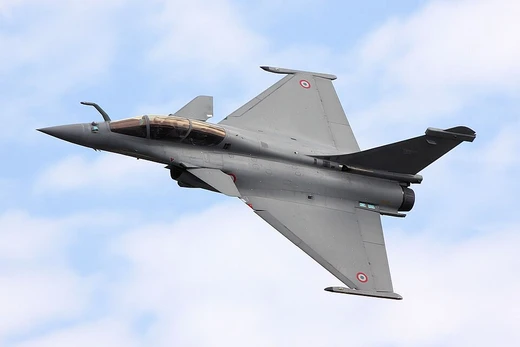
C-130 Hercules
A versatile four-engined turboprop military transport aircraft.

The Lockheed C-130 Hercules is a four-engine turboprop military transport built by Lockheed (now Lockheed Martin). It can take off and land on rough, unpaved runways and was originally designed to carry troops, cargo, and medical evacuation patients. Its adaptable airframe has been used for many other roles, including the AC-130 gunship, airborne assault, search and rescue, scientific research, weather reconnaissance, aerial refueling, maritime patrol, and firefighting. It serves as the primary tactical airlifter for many nations, with over 40 variants—including the civilian L-100—operating in more than 60 countries. The C-130 entered U.S. service in 1956, followed by Australia and many other nations. Over its career, it has taken part in countless military, civilian, and humanitarian missions. In 2007, it became the fifth aircraft to mark 50 years of continuous service with its original primary customer, the U.S. Air Force. As of 2024, it is the longest continuously produced military aircraft, with 70 years of production. The Korean War revealed that World War II-era piston-engine transports like the C-119, C-47, and C-46 were no longer sufficient. On 2 February 1951, the U.S. Air Force issued a requirement for a new transport to several companies. The new aircraft needed to carry 92 passengers, 72 combat troops, or 64 paratroopers in a cargo compartment roughly 41 feet long, 9 feet high, and 10 feet wide. Unlike passenger-derived transports, it was designed specifically for combat, with a rear hinged loading ramp. A key innovation was the Allison T56 turboprop engine, developed for the C-130, which offered greater range than turbojets due to lower fuel consumption and more power per weight than piston engines. However, the T56’s design—connecting the propeller to the compressor—could cause structural failure if an engine failed, so safety devices were added to reduce drag from a windmilling propeller. The Hercules resembles a larger, four-engine version of the Fairchild C-123 Provider, with a similar wing and rear ramp layout. The C-123 evolved from the Chase XCG-20 Avitruc, first flown in 1950. The Boeing C-97 Stratofreighter had rear ramps for driving vehicles aboard, and the C-130’s ramp was also used for airdropping cargo, including a low-altitude parachute-extraction system for Sheridan tanks and large improvised “daisy cutter” bombs. The new Lockheed transport had a range of 1,100 nautical miles and could operate from short, unprepared strips. Fairchild, North American, Martin, and Northrop declined to compete. The remaining five companies submitted ten proposals: Lockheed two, Boeing one, Chase three, Douglas three, and Airlifts Inc. one. The competition narrowed to a close contest between Lockheed’s lighter submission—the preliminary L-206 project—and a four-turboprop design from Douglas. Lockheed’s team, led by Willis Hawkins, began with a 130-page proposal for the L-206. Hall Hibbard, Lockheed’s vice president and chief engineer, showed it to Kelly Johnson, who disliked the slow, unarmed aircraft and warned, “If you sign that letter, you will destroy the Lockheed Company.” Both Hibbard and Johnson signed, and Lockheed won the contract for the Model 82 on 2 July 1951. The first YC-130 prototype flew on 23 August 1954 from Lockheed’s Burbank, California plant. This aircraft, serial number 53-3397, was the second prototype but the first to fly. Pilots Stanley Beltz and Roy Wimmer flew it for 61 minutes to Edwards Air Force Base, with flight engineers Jack Real and Dick Stanton. Kelly Johnson flew chase in a Lockheed P2V Neptune. After the two prototypes, production moved to Marietta, Georgia, where over 2,300 C-130s had been built by 2009. The initial production model, the C-130A, used Allison T56-A-9 turboprops with three-bladed propellers and the prototypes’ blunt nose. Deliveries began in December 1956 and continued until the C-130B model arrived in 1959. Some A-models were fitted with skis and redesignated C-130D. As the C-130A entered service, its limited range became apparent, so wing pylon-mounted fuel tanks were added outboard of the engines, increasing capacity by 6,000 pounds to a total of 40,000 pounds. Lockheed named the C-130 “Hercules” after the Greek mythological hero known for strength, courage, and perseverance. The name also matches a constellation, continuing the company’s tradition of celestial names like the P-2V Neptune and P-3 Orion. U.S.
- Manufacturer
- Lockheed (now Lockheed Martin)
- Nationality
- American
- Primary user
- United States Air Force
Lore & Background
The Korean War showed that World War II-era piston-engined transports were no longer adequate. The new transport was to have a capacity of 92 passengers, 72 combat troops, or 64 paratroopers, with loading from a rear hinged ramp. A notable advance was the introduction of a turboprop powerplant, the Allison T56, which gave greater range than a turbojet and more power for its weight than piston engines. The aircraft was piloted by Stanley Beltz and Roy Wimmer. Production began in Marietta, Georgia. The initial production model, the C-130A, was powered by Allison T56-A-9 turboprops with three-bladed propellers. The C-130B model introduced increased fuel capacity, four-bladed propellers, and higher hydraulic pressure.
Reader's Guide
Its ability to operate from short, unprepared runways made it indispensable for tactical missions, including troop transport, medical evacuation, and cargo delivery. The airframe's versatility led to numerous variants, such as the AC-130 gunship, aerial refueling tankers, and search-and-rescue platforms. Its design, including the rear loading ramp and turboprop engines, set a standard for tactical airlifters worldwide. The aircraft’s turboprop powerplant, the Allison T56, was a notable advance for large aircraft, providing greater range than turbojets by using less fuel while producing significantly more power for its weight than piston engines. However, the specific turboprop configuration, which connected the propeller to the compressor, risked structural failure if an engine failed, requiring safety devices to reduce drag from a windmilling propeller. The rear loading ramp was used not only for driving vehicles aboard but also for airdropping cargo, including a low-altitude parachute-extraction system for Sheridan tanks and large improvised bombs. The C-130 entered service with the United States in 1956, and by 2007 it became the fifth aircraft to mark fifty years of continuous service with its original primary customer, the U.S. Air Force. It is the longest continuously produced military aircraft, having achieved seventy years of production in 2024. Over forty variants, including civilian versions marketed as the Lockheed L-100, operate in more than sixty nations.
Did You Know?
- The C-130 was named 'Hercules' after the Greek mythological hero, fitting the company's tradition of naming aircraft after constellations.
- The C-130B model tested a 'blown controls' system that reduced landing speed to 63 knots, but it never entered service.
Common Misconceptions (Editorial)
Some people think the C-130 Hercules was named after a constellation, but it was actually named after the Greek mythological hero Hercules, breaking from Lockheed’s tradition of using constellation names. Another common mistake is believing the C-130 was originally designed for use only from paved runways; in fact, it was specifically designed to use unprepared runways for takeoffs and landings.
Why It Matters (Editorial)
The C-130 Hercules endures because it filled a critical post-Korean War need for a rugged, versatile turboprop transport capable of operating from rough airstrips, a role that remains vital for military logistics and humanitarian missions worldwide. Its adaptable airframe has allowed it to evolve into specialized variants like the AC-130 gunship and aerial firefighting platforms, ensuring its relevance across decades and conflicts.
Frequently Asked Questions
Who is C-130 Hercules?
C-130 Hercules is an American four-engined turboprop military transport aircraft designed and built by Lockheed, now Lockheed Martin. It serves as the backbone tactical airlifter for dozens of air forces worldwide, with the U.S. Air Force as its primary operator.
What are C-130 Hercules's powers and role?
The Hercules can operate from short, unprepared strips, making it ideal for troop drops, medical evacuation, and cargo delivery in austere environments. Its adaptable airframe has also been turned into an AC-130 gunship, an aerial firefighting platform, a weather-reconnaissance craft, and an aerial refueling tanker.
Why is C-130 Hercules important to the warplane world?
It proved that one versatile turboprop airframe could fill an enormous range of tactical roles that rigid-jet transports simply cannot handle. Its ability to land on rough, unimproved strips made it the go-to workhorse for every military that needed reliable short-field lift.
More in Warplanes 1-22
Spotted an error? Know more?
This is a living reference — every entry is fact-audited, and reader corrections feed straight into our audit queue. Suggest an edit · See this site's audit record