B-29 Superfortress
American heavy bomber that delivered atomic bombs in combat.

NASA Glenn Research Center · Public domain
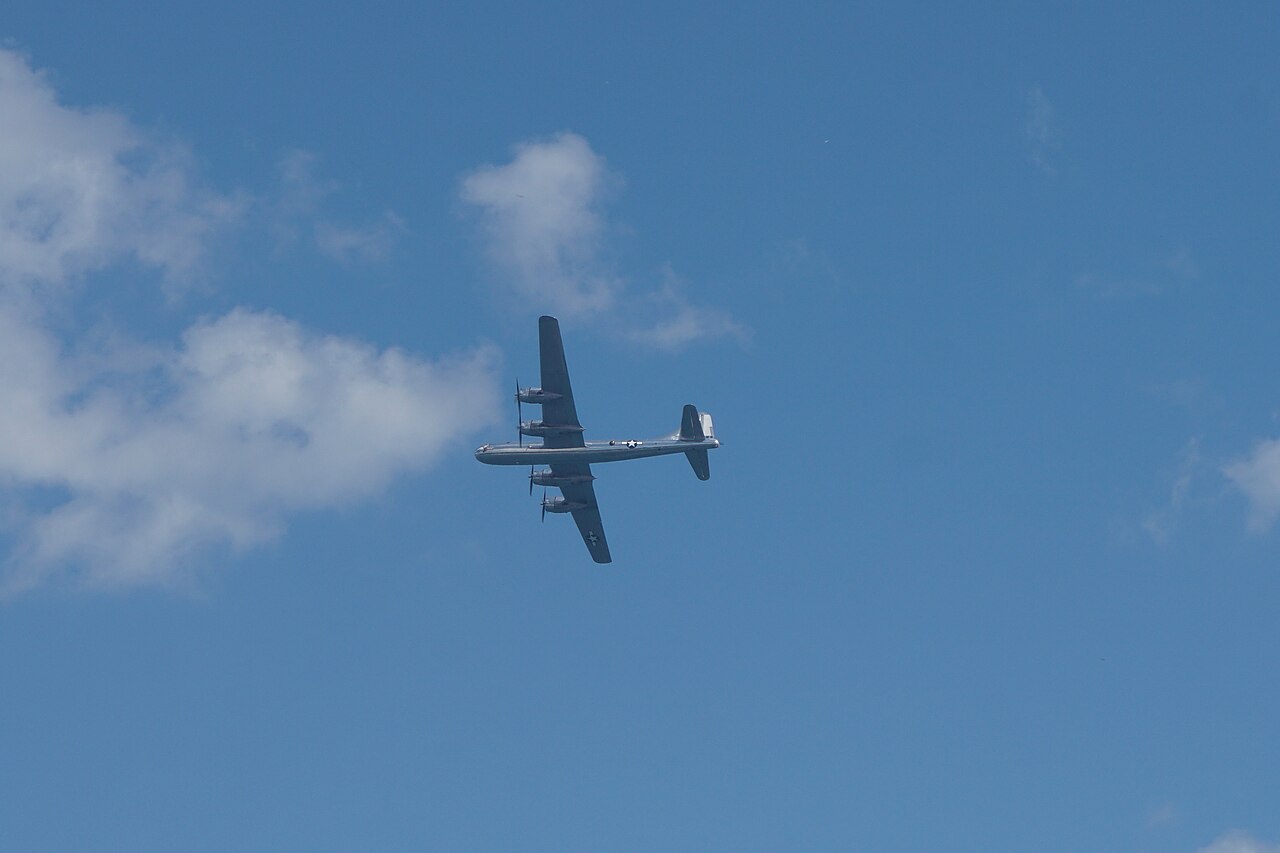
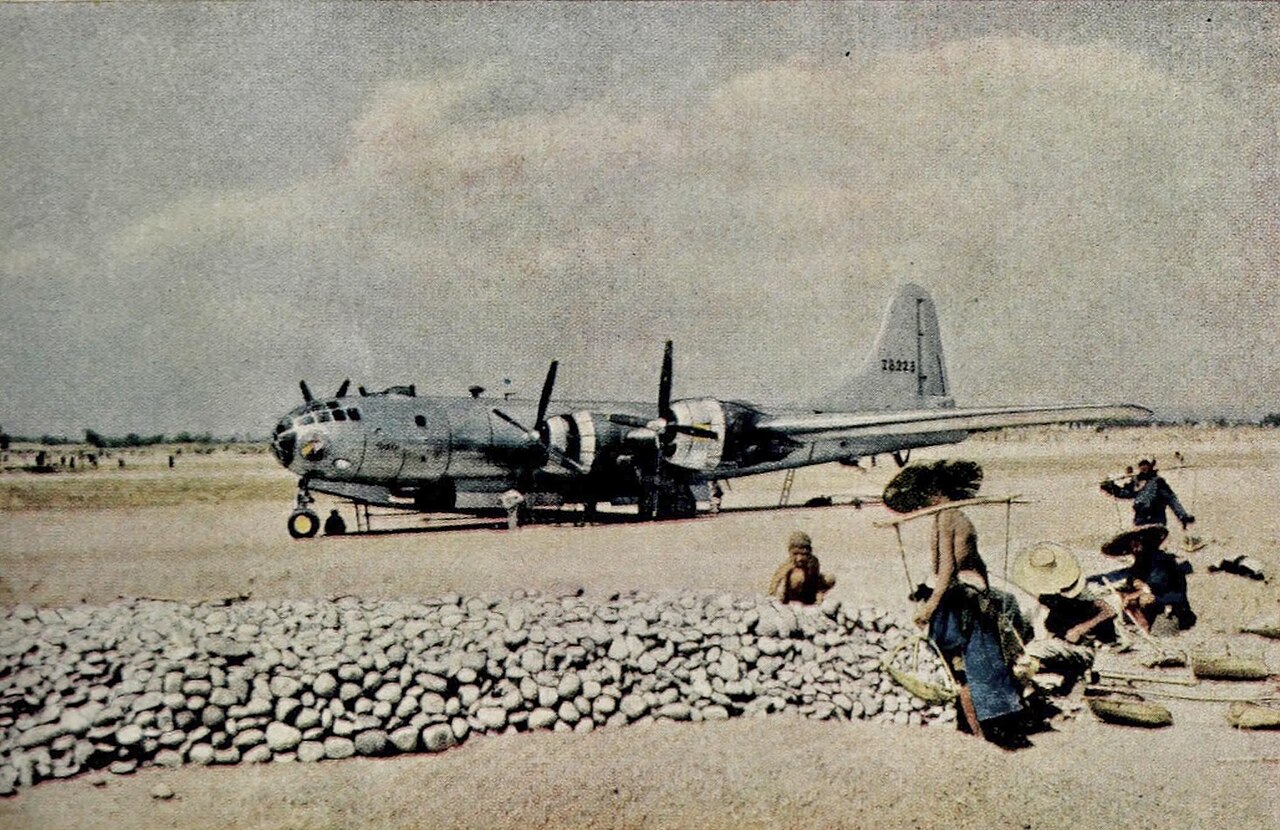
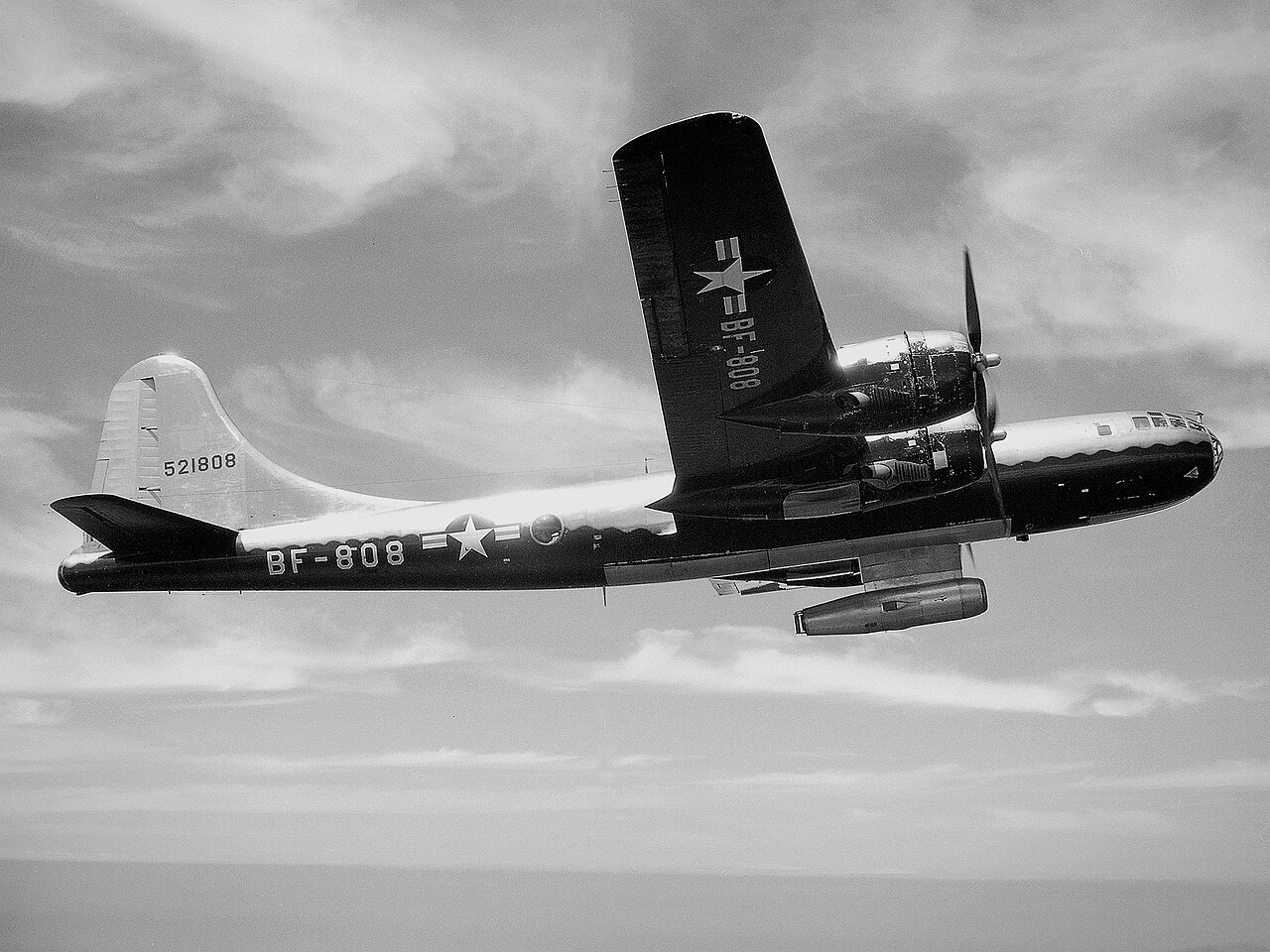
The Boeing B-29 Superfortress was a four-engine, propeller-driven heavy bomber built by Boeing for the U.S. Army Air Forces and later the U.S. Air Force, serving in World War II and the Korean War. Its name played off the earlier B-17 Flying Fortress. Though intended for high-altitude strategic bombing, it also proved effective at low-altitude night incendiary raids and dropping naval mines to blockade Japan. Specially modified "Silverplate" B-29s carried out the atomic bombings of Hiroshima and Nagasaki, making them the only aircraft ever to deliver nuclear weapons in combat.
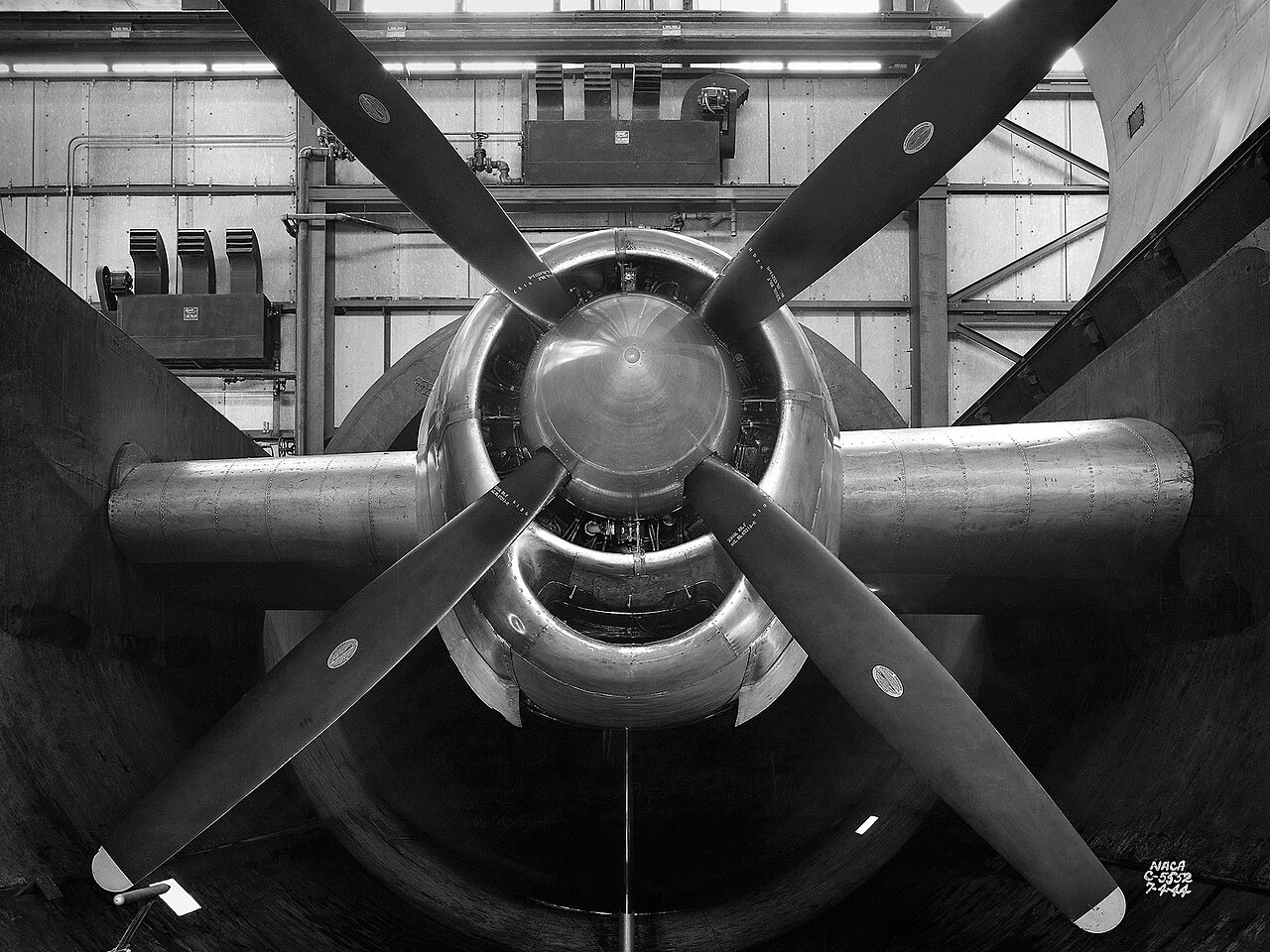
Among the largest planes of World War II, the B-29 featured advanced technology for its time: a pressurized cabin, tricycle landing gear with dual wheels, and an analog computer-controlled fire system that let one gunner and a fire-control officer operate four remote machine-gun turrets. The program cost $3 billion to design and produce—about $54 billion in 2025—surpassing the $1.9 billion Manhattan Project and making it the war's most expensive project. A total of 3,970 were built, and the type remained in service through the 1950s, retiring in the early 1960s. Some were used as flying TV transmitters by Stratovision. The Royal Air Force operated B-29s under the name Washington from 1950 to 1954, until the jet-powered Canberra replaced them.
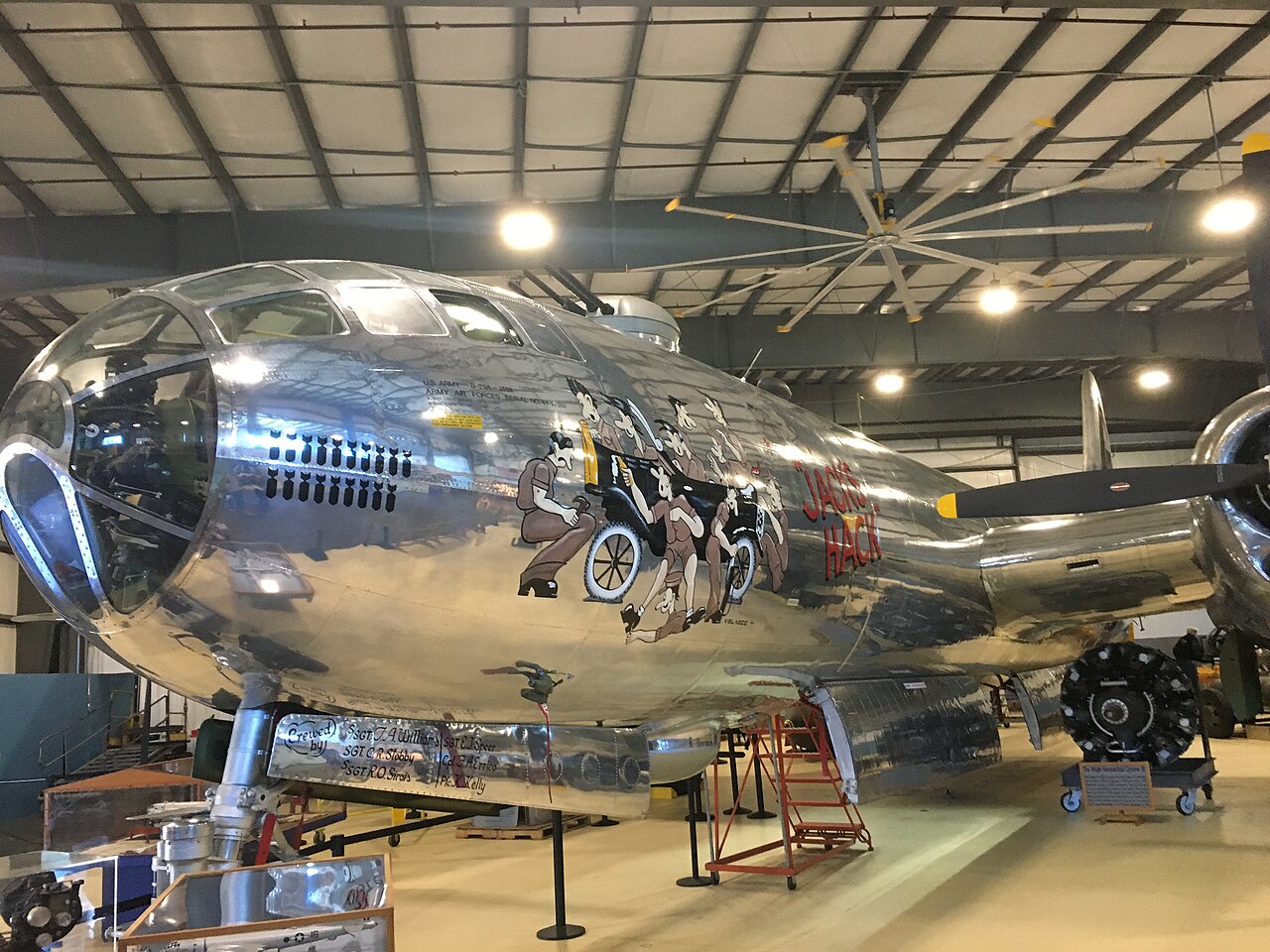
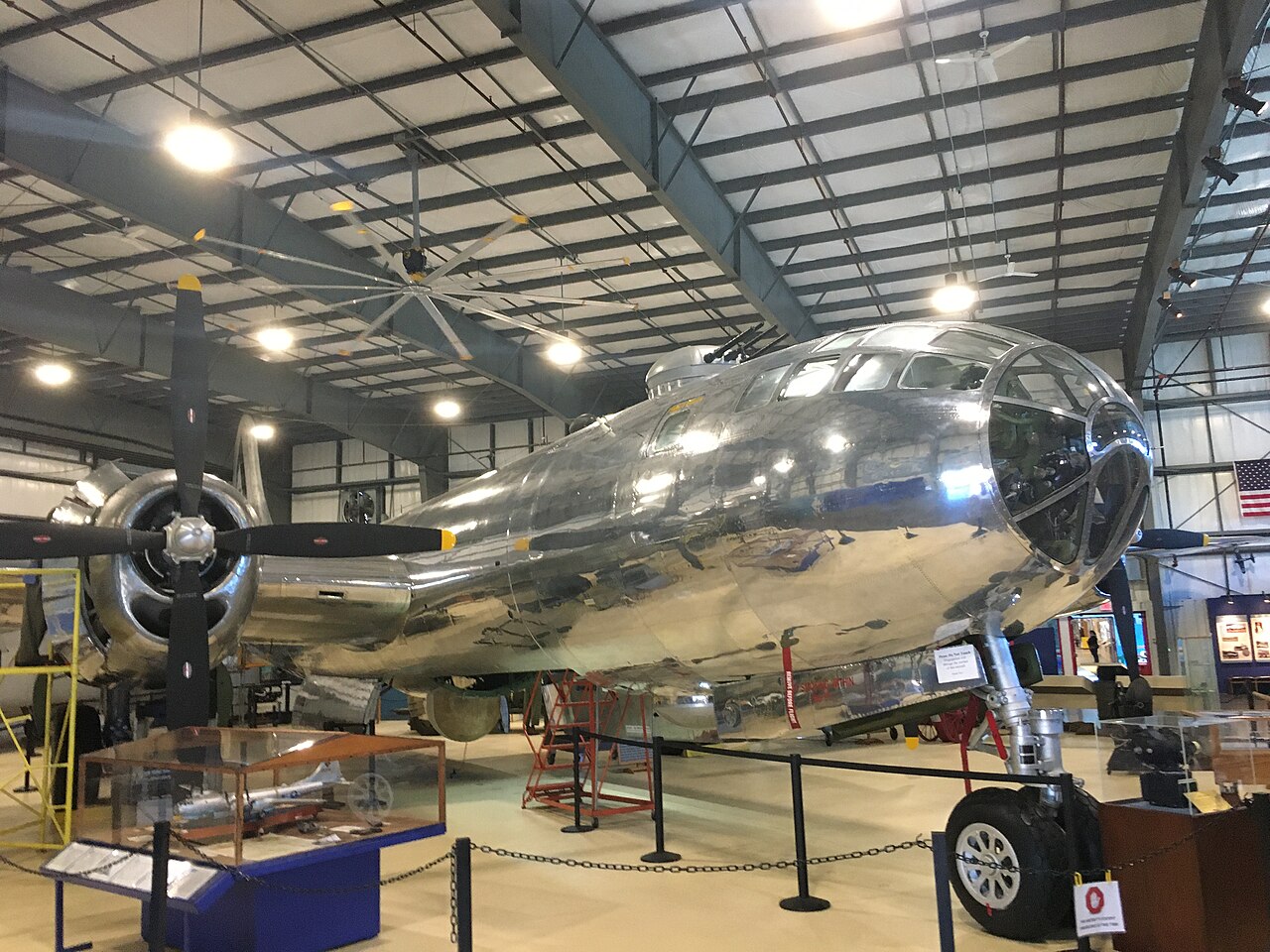
The B-29 spawned a family of Boeing bombers, transports, tankers, reconnaissance planes, and trainers. The re-engined B-50 Superfortress *Lucky Lady II* made the first non-stop round-the-world flight in 1949, lasting 94 hours. The C-97 Stratofreighter airlifter first flew in 1944, followed in 1947 by its commercial version, the Boeing 377 Stratocruiser. Boeing introduced the KB-29 tanker in 1948, and the KC-97, derived from the 377, in 1950. A line of oversized cargo variants of the Stratocruiser—the Guppy, Mini Guppy, and Super Guppy—still serve NASA and other operators. The Soviet Union built 847 Tupolev Tu-4s, an unlicensed reverse-engineered copy of the B-29. Twenty-two B-29s survive today, most in museums, while two—*FIFI* and *Doc*—remain airworthy.
**Design and development**
Boeing began exploring long-range bombers in 1938. Its Model 334 study was a pressurized derivative of the B-17 with a nosewheel undercarriage. The Air Corps lacked funds, so Boeing continued development as a private venture. In December 1939, the Air Corps issued a formal specification for a "superbomber" able to carry 20,000 lb of bombs 2,667 miles at 400 mph. Boeing used its earlier studies as a starting point.
On 29 January 1940, the Army Air Corps asked five manufacturers to submit designs for a four-engine bomber with a 2,000-mile range. Boeing submitted its Model 345 on 11 May 1940, competing against Consolidated (Model 33, later the B-32), Lockheed (XB-30), and Douglas (XB-31). Douglas and Lockheed soon dropped out. On 24 August 1940, Boeing received an order for two flying prototypes (XB-29) and a static test airframe; a third flying prototype was added on 14 December. Consolidated continued its Model 33 as a backup. On 6 September, orders were placed for two experimental models each from Boeing and Consolidated—the B-29 and B-32. These were called very long range (VLR) bombers; the name "Superfortress" wasn't used until March 1944. On 17 May 1941, Boeing got an initial production order for 14 service test aircraft and 250 bombers, increased to 500 in January 1942.
Manufacturing involved four main assembly plants: two Boeing factories (Renton, Washington, and Wichita, Kansas), a Bell plant in Marietta, Georgia, and a Martin plant in Bellevue, Nebraska. Thousands of subcontractors contributed. The first prototype flew from Boeing Field, Seattle, on 21 September 1942. The advanced design, demanding requirements, production pressure, and rushed development caused problems. The second prototype, fitted with Sperry remote-controlled gun turrets sighted by periscopes, first flew on 30 December 1942 but was cut short by a serious engine fire. On 18 February 1943, that same prototype crashed near Boeing Field after an engine fire, killing test pilot Edmund T. Allen, his 10-man crew, 20 workers at a meatpacking plant, and a Seattle firefighter. Production changes came so fast that in early 1944, B-29s went straight from assembly lines to modification depots for extensive rebuilds. Modification centers and the Air Force's own depots struggled with the workload; some lacked hangars big enough for the B-29, forcing outdoor work in freezing weather, which delayed necessary upgrades.
- field
- Heavy bomber aircraft
- nationality
- American
- manufacturer
- Boeing
- retired
- Early 1960s
- number built
- 3,970
Lore & Background
The B-29 Superfortress was a large, four-engined, propeller-driven heavy bomber, notable for its advanced design features. It was equipped with a pressurized cabin, which allowed it to operate at high altitudes, and a dual-wheeled tricycle landing gear. Its defensive armament consisted of four remote-controlled machine gun turrets, directed by a single gunner and a fire-control officer using an analog computer system. The aircraft was designed for high-altitude strategic bombing but also proved highly effective in low-altitude night incendiary missions and naval mine-laying. Its range and payload made it one of the largest aircraft of World War II. The B-29 was the only aircraft to deliver nuclear weapons in combat, with Silverplate variants dropping atomic bombs on Hiroshima and Nagasaki. It served primarily with the USAAF and USAF through World War II and the Korean War, and was also flown by the Royal Air Force under the name Washington from 1950 to 1954. The program was the most expensive of the war, costing $3 billion, exceeding even the Manhattan Project. A total of 3,970 were built before retirement in the early 1960s. The B-29 also served as the basis for a series of derivatives, including the B-50 Superfortress, the C-97 Stratofreighter airlifter, the KB-29 tanker, and the commercial Model 377 Stratocruiser. The Soviet Union produced an unlicensed copy, the Tupolev Tu-4. Twenty-two B-29s survive, with two—FIFI and Doc—still in flying condition.
Reader's Guide
The B-29 Superfortress was one of the largest aircraft of World War II, designed with state-of-the-art technology including a pressurized cabin, dual-wheeled tricycle landing gear, and an analog computer-controlled fire-control system. The B-29 remained in service in various roles throughout the 1950s, being retired in the early 1960s after 3,970 had been built. A few were also used as flying television transmitters by the Stratovision company. The B-29 was the progenitor of a series of Boeing-built bombers, transports, tankers, reconnaissance aircraft, and trainers. Twenty-two B-29s have survived to preservation, with two airframes – FIFI and Doc – still flying.
Did You Know?
- Silverplate B-29s dropped the atomic bombs on Hiroshima and Nagasaki, and remain the only system to deliver nuclear weapons in combat.
- The $3 billion cost of the B-29 program exceeded the $1.9 billion cost of the Manhattan Project, making it the most expensive of the war.
- The B-29 was the progenitor of a series of Boeing-built bombers, transports, tankers, reconnaissance aircraft, and trainers.
Engineering Pioneers of the Sky
The B-29 Superfortress represented a quantum leap in military aviation technology during the 1940s. Boeing's design team incorporated a pressurized cabin that allowed crews to operate at altitudes where unpressurized aircraft made sustained flight nearly impossible. The airframe featured dual-wheeled tricycle landing gear, a configuration still novel for a machine of that size. Perhaps most remarkably, the defensive armament relied on an analog computer-controlled fire-control system, enabling just one gunner and a fire-control officer to direct four remote machine gun turrets and eliminating the need for exposed turret positions. This outstripped even the Manhattan Project's $1.9 billion budget, making the Superfortress the single most expensive military project of the entire war. Manufacturing required coordination across four main-assembly plants in Washington, Kansas, Georgia, and Nebraska, supported by thousands of subcontractors, reflecting an industrial mobilization that stretched the nation's manufacturing capacity to its absolute limits.
The Weight of History
Modified B-29s delivered the atomic bombs that destroyed Hiroshima and Nagasaki, and to this day they remain the only aircraft system to have delivered nuclear weapons in actual combat. Beyond that singular moment, the type proved remarkably versatile in conventional operations. Originally conceived for high-altitude strategic bombing of Japanese industrial targets, the aircraft excelled equally in low-altitude night incendiary raids that reduced cities to ash, and in laying naval mines to strangle Japan's maritime supply lines. The B-29 served the USAAF and later the USAF through World War II and into the Korean War, remaining in various operational roles throughout the 1950s before retirement in the early 1960s. In a brief but unusual crossover, a handful of surplus airframes were pressed into service as flying television transmitters by the Stratovision company, a testament to the aircraft's adaptability even after its military career had wound down.
Forged in Fire and Failure
The path from drawing board to operational readiness was far more turbulent than the finished product suggests. Allen, his ten crew members, twenty factory workers, and a firefighter.
A Lineage That Endures
The Superfortress did not simply retire into history; it spawned an entire family of aircraft that shaped postwar aviation. Of the 3,970 B-29s built, twenty-two have survived to preservation, with the majority on static museum display, while two airframes—FIFI and Doc—still take to the skies today.
Common Misconceptions (Editorial)
A common misconception is that the B-29 program was primarily a wartime expense overshadowed by the Manhattan Project, but in fact the B-29 program cost $3 billion, exceeding the Manhattan Project’s $1.9 billion. Another misconception is that the B-29 was only used for high-altitude strategic bombing; however, it also excelled in low-altitude night incendiary bombing and mine-laying missions.
Why It Matters (Editorial)
The B-29 Superfortress endures as a symbol of technological ambition and the devastating reach of modern warfare, remains the only aircraft to have delivered nuclear weapons in combat. Its unprecedented cost and engineering challenges reflect how wartime necessity drove rapid innovation, shaping air power for decades to come.
Gallery
Frequently Asked Questions
What is the B-29 Superfortress?
The B-29 Superfortress is a four-engine propeller-driven heavy bomber built by Boeing for the United States. It was designed as a high-altitude strategic bomber and served primarily in World War II and the Korean War.
What was the B-29's primary combat role?
The B-29 was engineered for high-altitude strategic bombing, but it also excelled at low-altitude night incendiary runs and laying naval mines to strangle Japanese shipping. Its pressurized cabin and remote gun turrets set it apart from earlier types like the B-17 Flying Fortress.
Why is the B-29 considered important in aviation history?
The B-29 introduced innovations such as a pressurized cockpit, remote-controlled gun turrets, and a fully enclosed crew compartment that became standard for later military aircraft. Its role in ending the Pacific War, combined with its unique status as the sole nuclear-delivery combat platform, cemented its place in history.
More in Warplanes 1-22
Spotted an error? Know more?
This is a living reference — every entry is fact-audited, and reader corrections feed straight into our audit queue. Suggest an edit · See this site's audit record