Glacier
U.S. national park in Montana, part of the Waterton-Glacier International Peace Park.

Vyacheslav Argenberg · CC BY 4.0
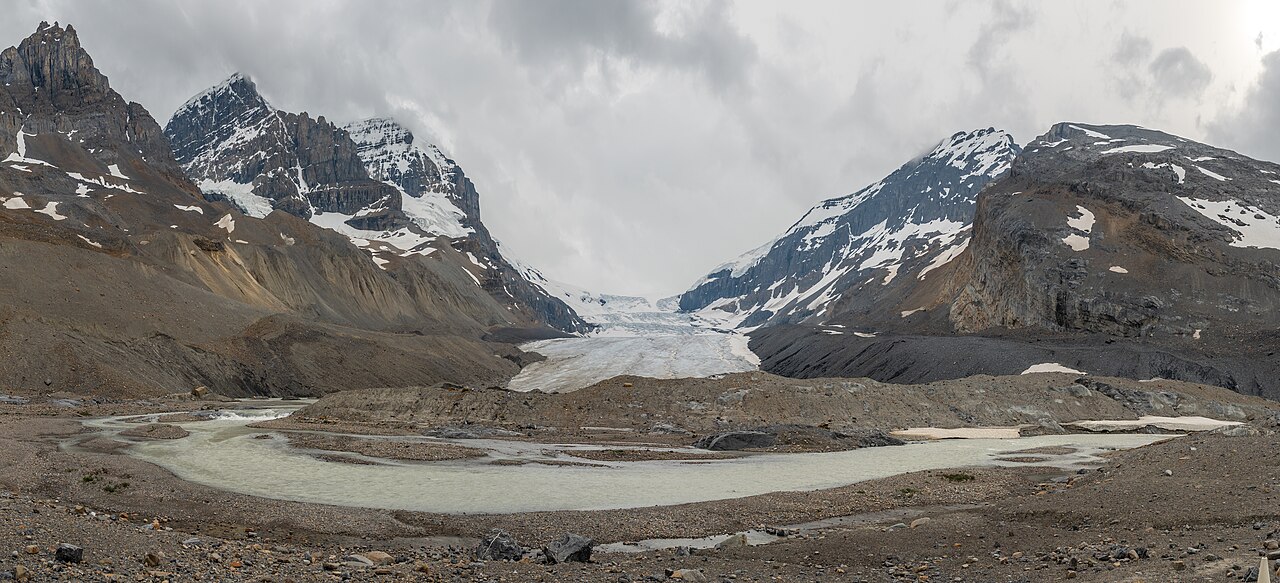
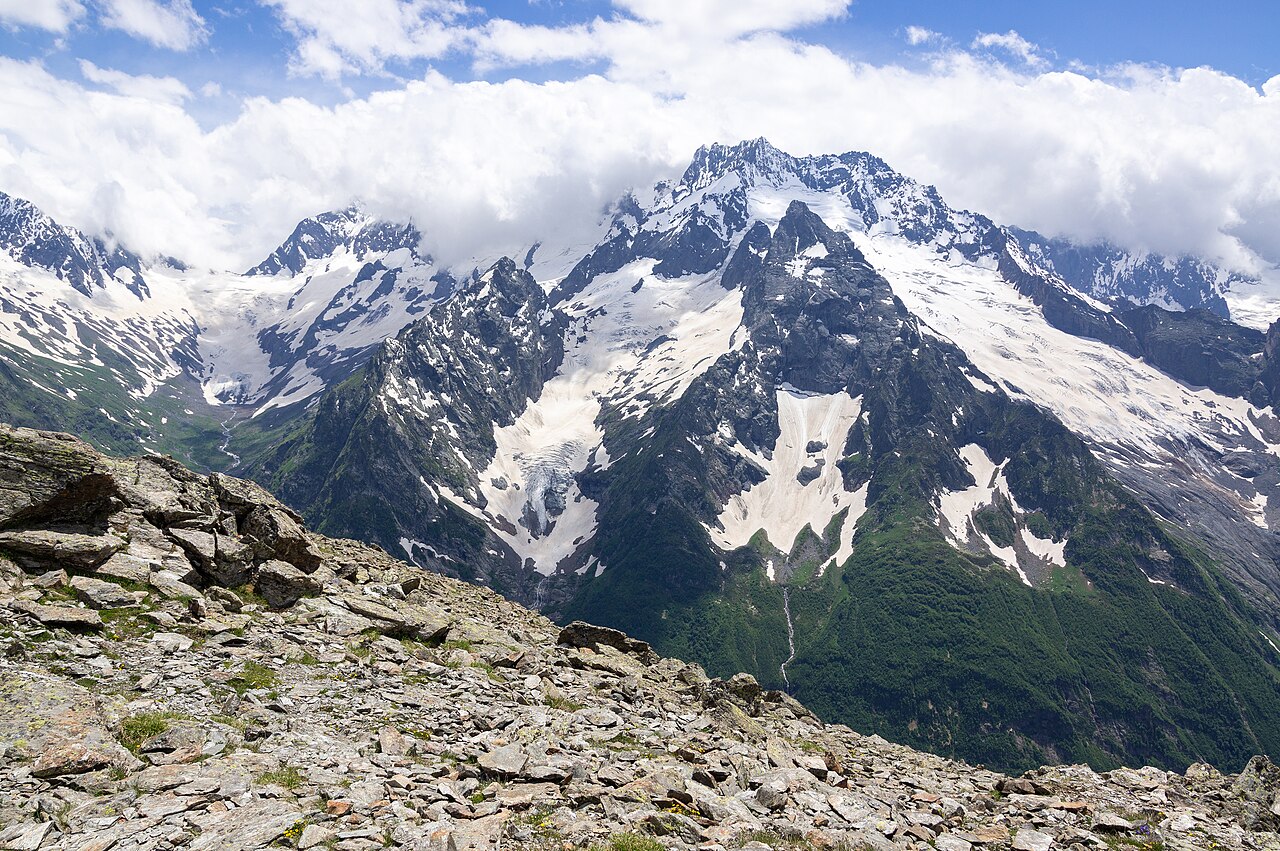
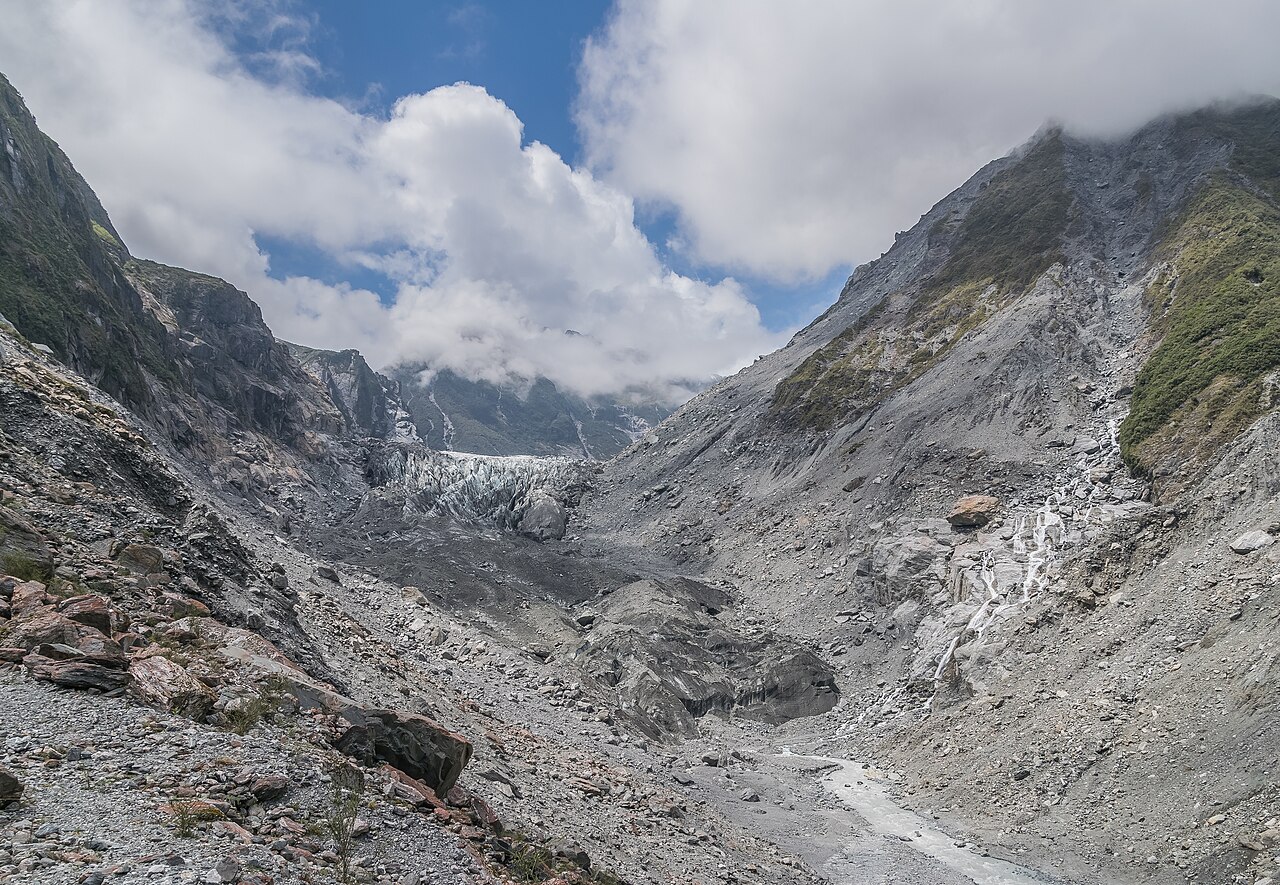
Glacier National Park, situated in northwestern Montana along the border with Canada, encompasses a vast and pristine ecosystem that forms the heart of what is known as the "Crown of the Continent Ecosystem." The park includes portions of two mountain ranges that are sub-ranges of the Rocky Mountains, along with more than 130 named lakes, over a thousand species of plants, and hundreds of animal species. Its mountains were formed when ancient rocks were forced eastward over much younger strata in a geological feature called the Lewis Overthrust, which contains some of the finest examples of early life fossils on Earth. The current shapes of the mountain ranges and the positioning and size of the lakes provide clear evidence of massive glacial action. In the mid-19th century, during the late Little Ice Age, the park contained an estimated 150 glaciers of significant size, but by 2010 only 25 active glaciers remained; scientists project that all active glaciers may disappear by 2030 if current climate patterns continue. The park is home to nearly all of its original native plant and animal species, including large mammals such as grizzly bears, black bears, bighorn sheep, elk, moose, mountain lions, mountain goats, gray wolves, wolverines, and Canadian lynx. Hundreds of bird species, over a dozen fish species, and numerous reptiles and amphibians have been documented, along with thousands of species of butterflies and other invertebrates. Ecosystems range from prairie to tundra, with easternmost forests of western redcedar and hemlock growing in the southwest. Forest fires occur annually; there has been a fire every year of the park’s existence except for 1964, with 64 fires recorded in 1936 alone. The park borders Canada’s Waterton Lakes National Park, and together they form the Waterton-Glacier International Peace Park, designated as the world’s first International Peace Park in 1932, later recognized as Biosphere Reserves and World Heritage Sites, and in 2017 as the first transboundary International Dark Sky Park.
- location
- northwestern Montana, on the Canada–United States border
- notable_feature
- Lewis Overthrust, with some of the finest examples of early life fossils on Earth
Lore & Background
The region that became Glacier National Park was first inhabited by Native Americans, with the Blackfeet living on the eastern slopes and the Flathead in the western areas. The Blackfeet considered the mountains, especially Chief Mountain and the Two Medicine area, the "Backbone of the World" and used them for vision quests. Under pressure, the Blackfeet ceded the mountainous parts of their treaty lands in 1895 to the federal government, which later became part of the park. The park encompasses parts of two mountain ranges, more than 130 named lakes, over 1,000 plant species, and hundreds of animal species. Its mountains began forming when ancient rocks were forced eastward over younger strata in the Lewis Overthrust, preserving some of the finest early life fossils on Earth. The current shapes of the ranges and lakes show evidence of massive glacial action. Of the estimated 150 glaciers present in the mid-19th century, only 25 active glaciers remained by 2010, and scientists predict all may disappear by 2030 if current climate patterns persist. The park maintains almost all its original native species, including large mammals like grizzly bears, mountain goats, and gray wolves, along with hundreds of bird species and thousands of invertebrates. Ecosystems range from prairie to tundra, with easternmost forests of western redcedar and hemlock in the southwest. Forest fires occur annually; the most on-record was 64 fires in 1936. The park borders Canada’s Waterton Lakes National Park, together forming the world’s first International Peace Park, designated in 1932. Both parks are Biosphere Reserves and World Heritage Sites, and in 2017 they became the first transboundary Dark Sky Park.
Reader's Guide
Glacier National Park preserves a landscape shaped by the Lewis Overthrust, where ancient sedimentary rocks were forced over younger strata, exposing some of the finest early life fossils on Earth. The park’s mountain ranges and over 130 named lakes bear the unmistakable imprint of glacial action. Of the roughly 150 glaciers present in the mid-19th century, only 25 remained by 2010, and scientists project their complete disappearance by 2030 if current climate trends continue. The park hosts nearly all its original native species, including large mammals like grizzly bears, mountain goats, bighorn sheep, elk, moose, mountain lions, gray wolves, wolverines, and Canadian lynx. Hundreds of bird species, over a dozen fish, and thousands of invertebrates such as butterflies and pollinating insects have been documented. Ecosystems range from prairie to tundra, with western redcedar and hemlock forests in the southwest. Forest fires occur annually; 1936 saw a record 64 fires, and 2003 fires burned over 13% of the park. The region was first inhabited by the Flathead, Kootenai, Shoshone, and Cheyenne, while the Blackfeet used the eastern slopes for shelter and hunting, considering the mountains the “Backbone of the World.” In 1895, Chief White Calf sold the mountain area to the U.S. government, retaining hunting rights as long as the land remained public. The park’s establishment in 1910 led to construction of historic hotels and chalets by the Great Northern Railway, and the Going-to-the-Sun Road, completed in 1932, is a National Historic Civil Engineering Landmark. The park is part of the Waterton-Glacier International Peace Park, the world’s first, and is a Biosphere Reserve, World Heritage Site, and first transboundary International Dark Sky Park.
Did You Know?
- The park encompasses more than 1 million acres and includes parts of two mountain ranges.
- The Lewis Overthrust contains some of the finest examples of early life fossils on Earth.
Geological Formation and the Vanishing Ice
During that ancient era, sedimentary rock layers were driven eastward, folding up and over much younger strata in a process geologists call the Lewis Overthrust. These displaced rocks now preserve what scientists consider among the finest early-life fossils found anywhere on Earth. The park's very name, then, points to a landscape in the process of losing the defining feature that gave it identity.
Indigenous Stewardship and the Ceding of Sacred Ground
Long before European explorers reached the region, the mountains and valleys that would become Glacier National Park were home to several Native American peoples. The Blackfeet occupied the eastern slopes and the Great Plains beyond, while the Flathead (Salish), Kootenai, Shoshone, and Cheyenne also held ancestral ties to the area. For the Blackfeet, the mountains served as a critical refuge from the brutal winter winds of the plains, letting them supplement their bison hunts with other game. Chief Mountain and the Two Medicine region in the southeast carried deep spiritual weight, regarded as the "Backbone of the World" and frequented during vision quests. government for $1.5 million, with the understanding that the Blackfeet would retain hunting rights so long as the land remained public. That cession fixed the boundary still separating the park from the reservation.
From Advocacy to Global Recognition
The creation of Glacier National Park was the culmination of decades of passionate advocacy. The park's significance has since grown well beyond national borders.
A Living Tapestry of Species and Fire
Glacier National Park shelters one of the most biologically rich landscapes in North America. Its more than 1,000 documented plant species and hundreds of animal species populate ecosystems that range from open prairie to alpine tundra. In the southwest, the easternmost forests of western redcedar and hemlock extend into the park's boundaries. The mammal community includes American black bears, grizzlies, bighorn sheep, elk, moose, mountain lions, mountain goats, gray wolves, wolverines, and Canadian lynx. Hundreds of bird species, more than a dozen fish species, and a variety of reptiles and amphibians have been recorded, while butterflies, pollinating insects, and other invertebrates number in the thousands. The park's biodiversity has remained remarkably intact since European contact, preserving almost all of its original native species.
Common Misconceptions (Editorial)
Some people mistakenly think Glacier National Park is named for its current icy conditions, but the park is named for the glaciers that once carved its landscape. Another common error is assuming the park’s notable geological feature is merely scenic—it is actually the Lewis Overthrust, which contains some of the finest examples of early life fossils on Earth. Finally, while many believe the area was untouched wilderness before the park’s creation, it was first inhabited by Native Americans, including the Blackfeet and Flathead tribes.
Why It Matters (Editorial)
Glacier National Park matters not only as a stunning natural preserve but as a living record of deep time and human history. Its ancient rock layers hold clues to earliest life on Earth, while the land itself bears witness to centuries of Native American habitation and the complicated legacy of land cession. Protecting this place honors both its ecological splendor and its enduring cultural significance.
Gallery
Frequently Asked Questions
Who is Glacier?
Glacier is a national park perched in northwestern Montana, straddling the border with Canada. It spans more than a million acres of alpine terrain and serves as the anchor of the far larger Crown of the Continent Ecosystem.
More in US National Parks 1-22
Spotted an error? Know more?
This is a living reference — every entry is fact-audited, and reader corrections feed straight into our audit queue. Suggest an edit · See this site's audit record