Acadia
First U.S. national park east of the Mississippi River.

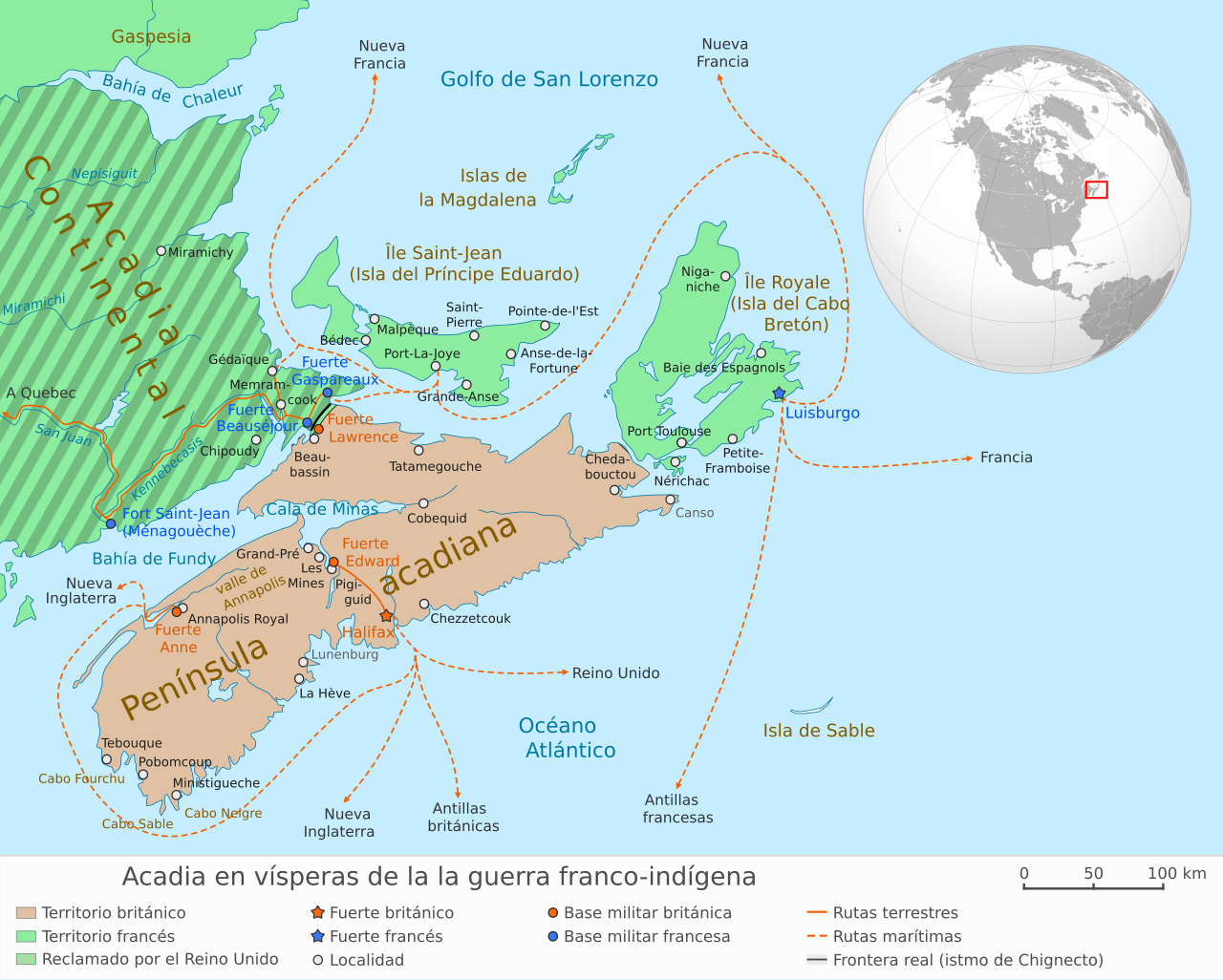
Acadia 1754.svg : TUPKAM Carte Acadie en Amérique du Nord.svg : Dr Wilson deriva · CC BY-SA 3.0
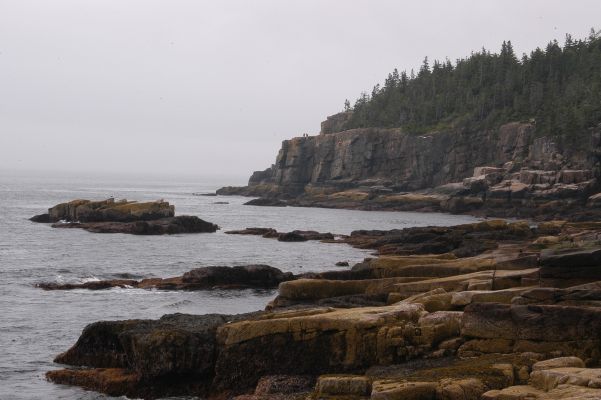
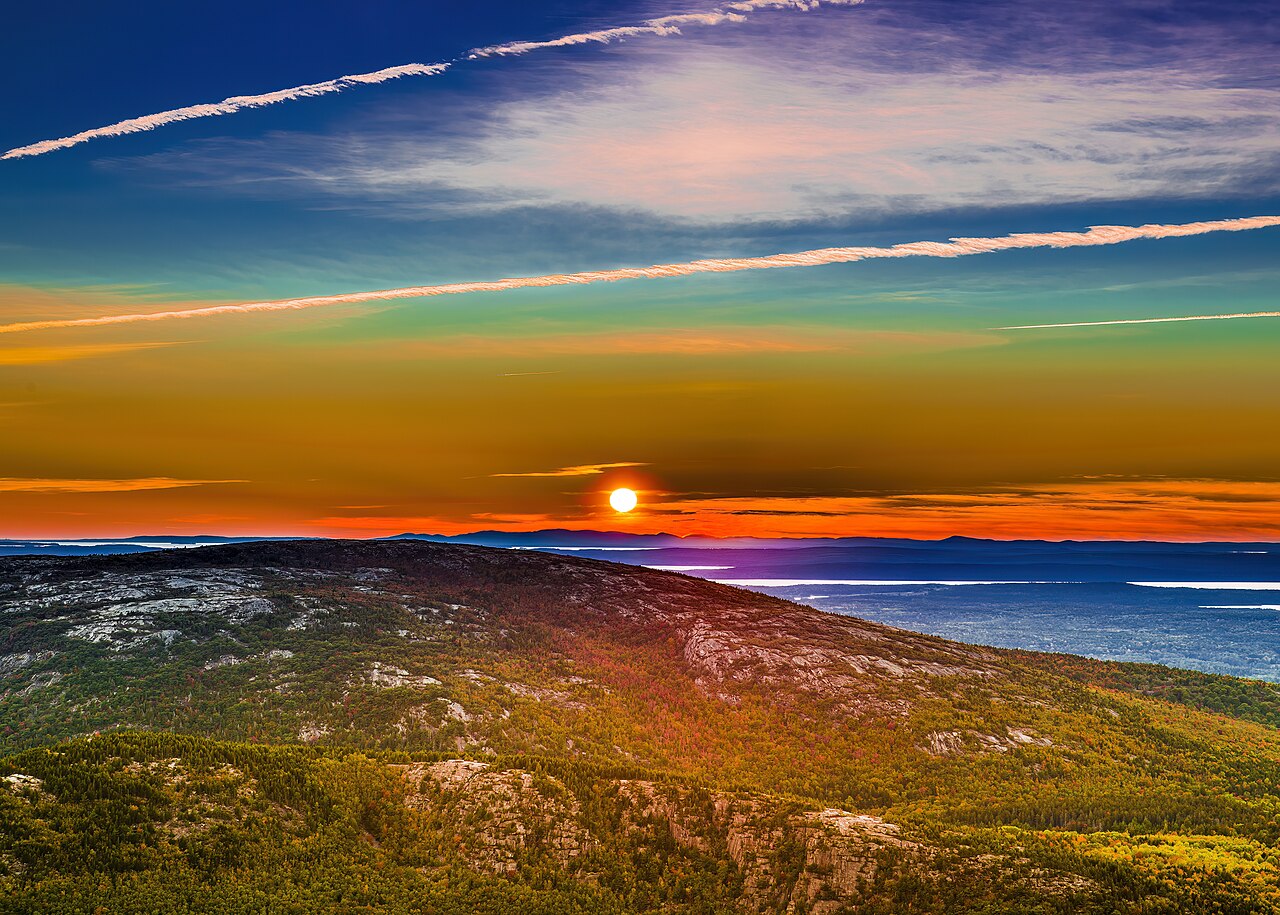
Acadia National Park sits on the mid-section of Maine’s coast, southwest of Bar Harbor. The park covers about half of Mount Desert Island, a portion of Isle au Haut, the tip of the Schoodic Peninsula, and parts of sixteen smaller outlying islands. Within its boundaries are the tallest mountain on the U.S. Atlantic Coast—Cadillac Mountain—along with exposed granite domes, glacial erratics, U-shaped valleys, and cobble beaches. It holds the distinction of being the first national park established east of the Mississippi River and the only one in the Northeastern United States.
The landscape encompasses mountains, ocean coastline, woodlands, lakes, and ponds. More than twenty named mountains rise within the park, with Cadillac Mountain reaching 1,530 feet. From October through early March, its summit is the first place in the United States to see the sunrise. A 27-mile Park Loop Road winds through the eastern side of Mount Desert Island, offering views of features such as Sand Beach, Thunder Hole, Jordan Pond, and the summit of Cadillac. On the island’s west side are Echo Lake, Acadia Mountain, and Bass Harbor Head Light. Somes Sound, a five-mile fjard formed by glaciers, nearly splits the island in two. Woven into the terrain is a historic system of 57 miles of carriage roads, financed by John D. Rockefeller Jr., which are closed to motor vehicles and used for hiking, bicycling, and horseback riding.
Human history in the area extends back more than 10,000 years with the Wabanaki people. European fur traders arrived in the 17th century, followed by summer visitors and wealthy families in the 19th. Conservationists including George B. Dorr, known as the father of the park, worked to protect the land. President Woodrow Wilson first designated it Sieur de Monts National Monument in 1916; it was renamed Lafayette National Park in 1919 and finally Acadia National Park in 1929. The park encompasses 49,075 acres in total, including over 30,000 acres on Mount Desert Island, nearly 2,900 acres on Isle au Haut, and about 2,366 acres on the Schoodic Peninsula. Recreational activities range from hiking, kayaking, and ranger-led programs in warmer months to cross-country skiing and snowshoeing in winter. Park visitation reached an all-time high of 4,079,318 recreation visits in 2025.
- established
- 1916 (as Sieur de Monts National Monument)
- location
- Mid-section of the Maine coast, southwest of Bar Harbor
- known_for
- First U.S. national park east of the Mississippi River; carriage road system financed by John D. Rockefeller Jr.
Lore & Background
The 17th century brought fur traders and other European explorers, while the 19th century saw an influx of summer visitors, then wealthy families. Many conservation-minded citizens, among them George B. Dorr (the 'Father of Acadia National Park'), worked to establish this first U.S. national park east of the Mississippi River and the only one in the Northeastern United States. The park includes mountains, an ocean coastline, woodlands, lakes, and ponds. In addition to nearly half of Mount Desert Island, the park designation also preserves a portion of the Schoodic Peninsula on the mainland, as well as the majority of Isle au Haut and Baker Island, all of Bar Island, three of the four Porcupine Islands (Sheep, Bald and Long), the Thrumcap (an islet), part of Bear Island, and Thompson Island in Mount Desert Narrows, as well as several other islands and islets. About 57 mi (92 km) of carriage roads were designed and financed by John D. Rockefeller Jr. on Mount Desert Island, 45 miles (72 km) of which continue to be maintained inside the park. The mountains of Acadia National Park overlook the Atlantic Ocean, island lakes, and pine forests. Cadillac Mountain, named after the French explorer Antoine de la Mothe Cadillac, is on the eastern side of the island. Cadillac is the tallest mountain along the eastern coastline of the United States. The summit of Cadillac is the first place in the United States where one may watch the sunrise from October 7 through March 6, due to its eastern location and height.
Reader's Guide
Acadia National Park is significant as the first U.S. national park established east of the Mississippi River and the only one in the Northeastern United States. Its creation was driven by conservation-minded citizens, notably George B. Dorr, and it was initially designated a national monument by President Woodrow Wilson in 1916. The park preserves a diverse landscape of mountains, lakes, streams, wetlands, forests, meadows, and coastlines, including the tallest mountain on the Atlantic Coast of the United States (Cadillac Mountain). Its historic carriage road system, financed by John D. Rockefeller Jr., remains a key feature, with 45 miles (72 km) maintained inside the park. Recreational activities range from hiking and bicycling on carriage roads to sea kayaking and ranger-led programs. The park's legacy includes its role in conservation, its unique geological features, and its ongoing importance as a destination for outdoor recreation and cultural heritage.
Did You Know?
- The historic carriage road system in the park was designed and financed by John D. Rockefeller Jr., with 45 miles (72 km) still maintained inside the park.
Common Misconceptions (Editorial)
Some people think Acadia National Park is the oldest national park east of the Mississippi River, but the facts confirm it was the *first* national park east of the Mississippi, not necessarily the oldest overall. Another common mistake is believing Cadillac Mountain is the highest point on the entire East Coast of the United States; in reality, it is the tallest mountain *along the Atlantic Coast*, and specifically the tallest on the eastern coastline—not the highest peak in the broader Appalachian range or the entire Eastern Seaboard.
Why It Matters (Editorial)
Acadia National Park matters because it preserves a rare intersection of rugged mountain terrain and pristine Atlantic coastline, making it a vital refuge for both wildlife and human wonder in the densely populated Northeast. Its endurance reflects a century of dedicated conservation, driven by private citizens like George B. Dorr and John D. Rockefeller Jr., proving that natural beauty can be protected for future generations when communities and individuals commit to stewardship.
Gallery

Frequently Asked Questions
Where exactly is Acadia located and what does it encompass?
The park stretches along the mid-section of Maine's coast, just southwest of Bar Harbor. Its territory covers roughly half of Mount Desert Island, portions of Isle au Haut, the tip of the Schoodic Peninsula, and sixteen smaller outlying islands.
What is the carriage road system and who funded it?
Acadia's extensive network of carriage roads was financed by John D. Rockefeller Jr. and remains one of the park's most iconic features for visitors who explore on foot, by bicycle, or on horseback.
More in US National Parks 1-22
Spotted an error? Know more?
This is a living reference — every entry is fact-audited, and reader corrections feed straight into our audit queue. Suggest an edit · See this site's audit record