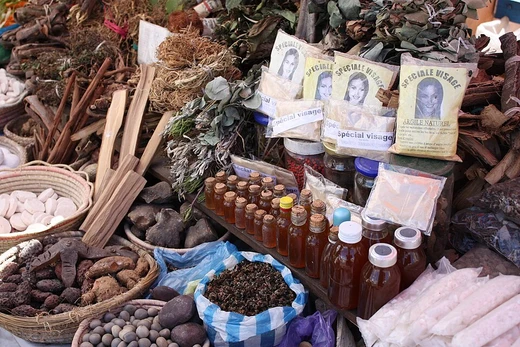
Chinese herbology
Theory of traditional Chinese pharmacotherapy, using diverse natural substances.

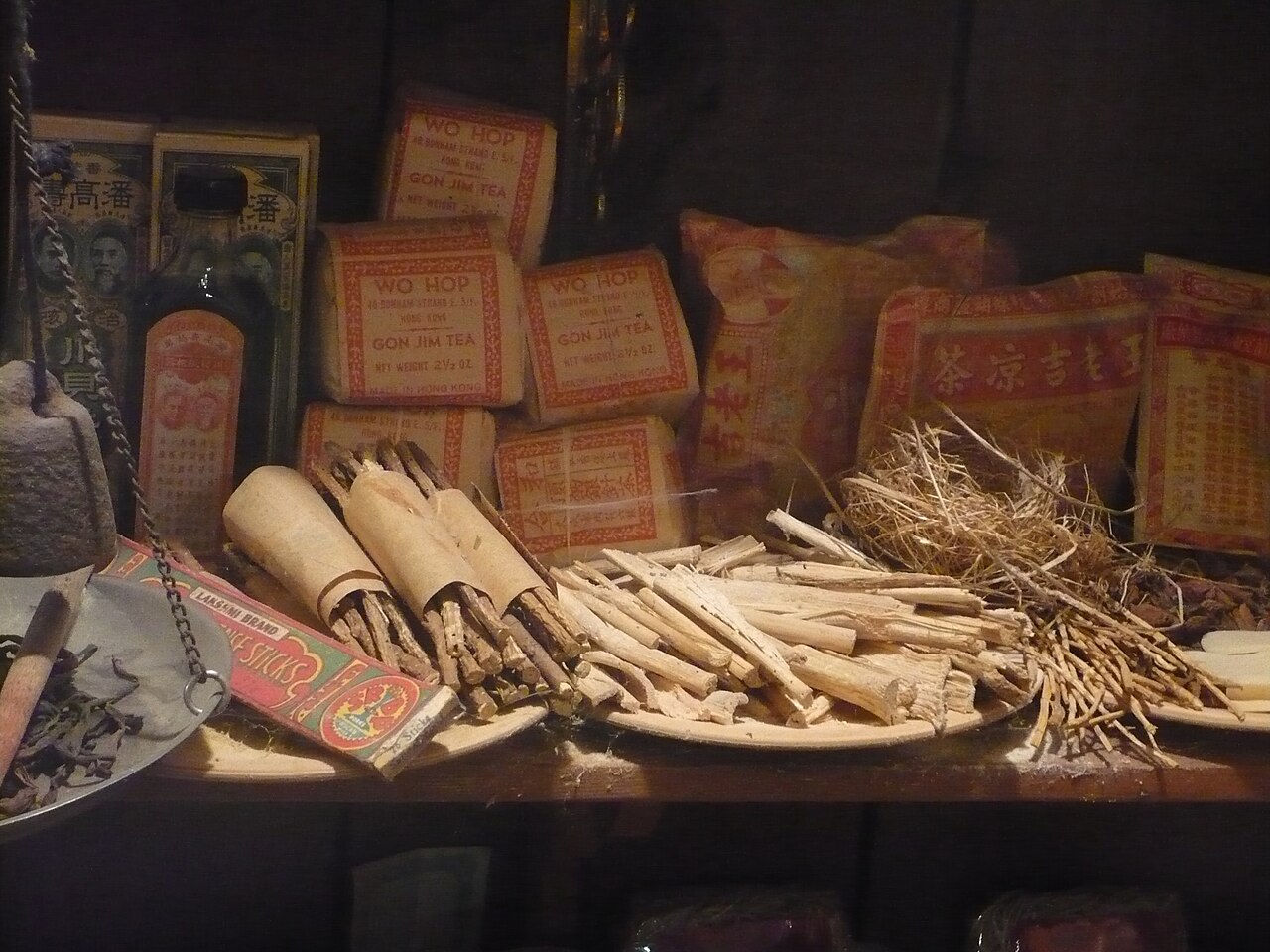
Ellin Beltz · CC BY-SA 3.0
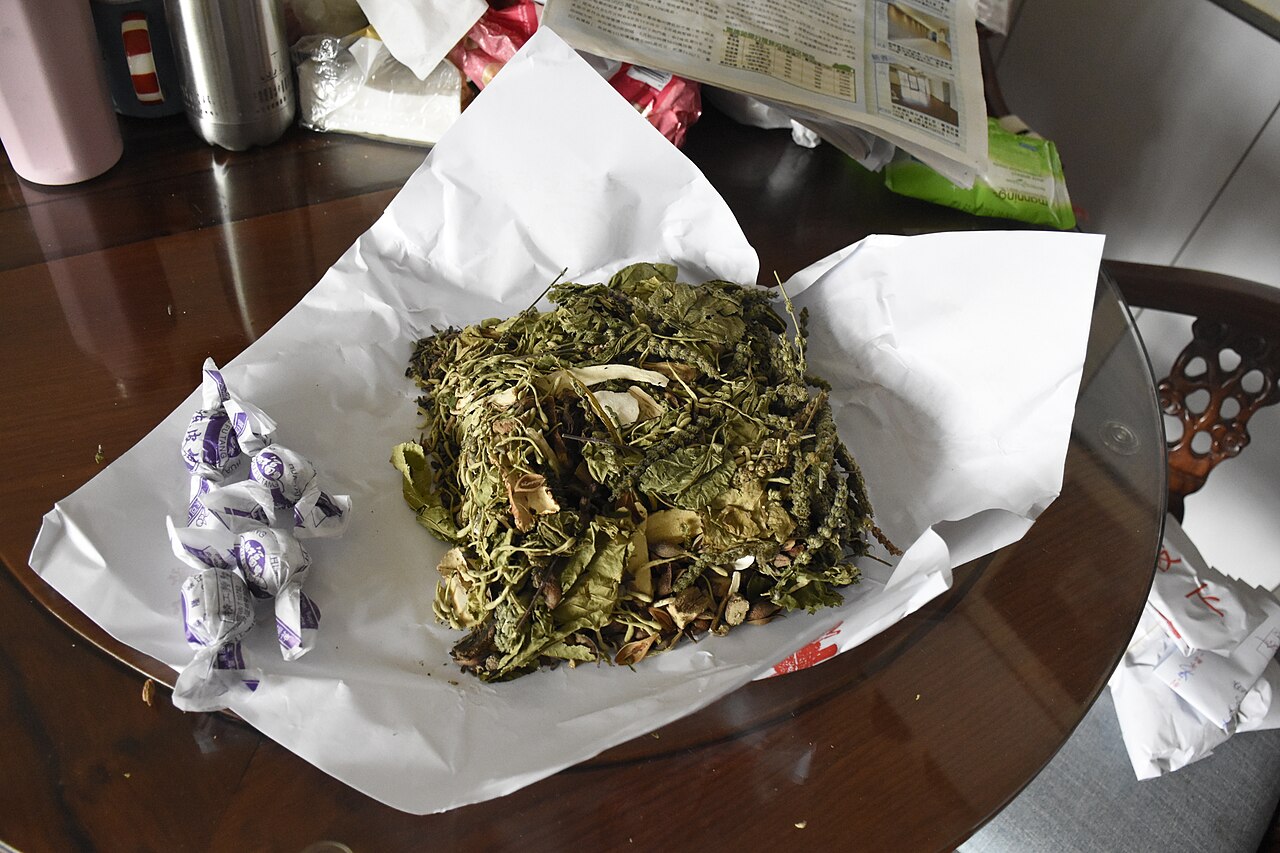
Chinese herbology, or Chinese materia medica, forms the theoretical basis for drug-based treatments in traditional Chinese medicine (TCM) and makes up most of its therapies. It resembles other traditional systems of medicinal substances. The name "herbology" is somewhat inaccurate: while plants are the most common ingredients, animal parts, human-derived materials, and minerals are also used—some of which are toxic. In the *Huangdi Neijing*, these substances are called *dúyào* ("poison-medicine"), a term scholar Paul U. Unschuld compares to the Greek *pharmakon*, leading him to prefer "pharmaceutic." Thus, "medicinal" is often a better translation for *yào* than "herb."
A *Nature* editorial criticized TCM as "fraught with pseudoscience," noting that most treatments lack a logical mechanism of action and that research into its effectiveness is poor quality, often biased, and provides little rigorous evidence of efficacy. There are also safety concerns about potentially toxic Chinese medicinals, such as *Aristolochia*, which is thought to cause cancer.
**History**
The practice of Chinese materia medica goes back millennia. The earliest known written prescriptions come from the manuscript *Recipes for 52 Ailments*, found in the Mawangdui tombs, sealed in 168 BCE. Later tradition credits the legendary Shennong ("Divine Farmer") as the founder, said to have lived around 2800 BCE and tasted hundreds of substances for their medicinal value. The first major herbal classic attributed to him is the *Shennong Bencao Jing* ("Shennong's Materia Medica"). Though the original text is lost, it survived through later commentaries. Modern scholarship suggests it was compiled in the late Western Han period (around the first century BCE) by multiple authors. It classifies 365 substances—plants, animals, and minerals—into three categories: "superior" (safe for long-term health maintenance), "medium" (therapeutic but potentially mildly toxic depending on dosage), and "inferior" (used for specific illnesses, often short-term, due to higher toxicity).
The next key work was the *Treatise on Cold Damage Disorders and Miscellaneous Illnesses*, compiled by Zhang Zhongjing near the end of the Han dynasty (c. 196–220 CE). This was the first medical text to organize treatments around symptom patterns (*zheng*), combining Yinyang and Five Phases theory with specific prescriptions. Afte
- field
- Traditional Chinese pharmacotherapy
- known_for
- Theory of traditional Chinese medicine treatments; use of plant, animal, human, and mineral medicinals
- earliest_written_record
- Recipes for 52 Ailments, sealed in 168 BCE
- key_classic
- Shennong Bencao Jing (Shennong's Materia Medica), compiled around 1st century BCE
- number_of_medicinals
- Roughly 13,000 medicinals used in China; over 100,000 recipes recorded
Lore & Background
The practice of Chinese materia medica stretches back millennia. The earliest written record of prescriptions is the manuscript Recipes for 52 Ailments, discovered in the Mawangdui tombs sealed in 168 BCE. Later tradition credits the legendary figure Shennong as the founder, said to have lived around 2800 BCE and to have tasted hundreds of substances. The first and most important herbal classic attributed to him is the Shennong Bencao Jing, though modern scholarship suggests it was compiled in the late Western Han period, likely around the first century BCE, and not by a single author. It classifies 365 substances into three categories: superior (safe for long-term use), medium (therapeutic with possible mild toxicity), and inferior (for specific illnesses, with higher toxicity potential).
The next pivotal work was the Treatise on Cold Damage Disorders and Miscellaneous Illnesses, compiled by Zhang Zhongjing near the end of the Han dynasty (c. 196–220 CE). It organized therapeutic principles around symptom patterns and combined Yinyang and Five Phases theory with specific prescriptions. Later works include the 7th-century Tang dynasty Yaoxing Lun and the Ming dynasty Compendium of Materia Medica by Li Shizhen, still used today. A shift in emphasis occurred over centuries, with the 'Attacking School' founded by Zhang Zihe (1156–1228) criticizing overuse of tonics. Chinese herbs were popular in medieval western Asian and Islamic countries, traded via the Silk Road, with cinnamon, ginger, rhubarb, nutmeg, and cubeb mentioned by Islamic scholars such as Rhazes, Haly Abbas, and Avicenna.
Reader's Guide
Chinese herbology is significant as the foundational pharmacotherapy of traditional Chinese medicine, with a history spanning millennia and a vast corpus of recorded knowledge. Its classification systems—such as the Four Natures (hot, warm, cool, cold, neutral) and Five Flavors—provide a theoretical framework for treatment. However, a Nature editorial described TCM as 'fraught with pseudoscience,' noting that most treatments lack a logical mechanism of action and that research into efficacy is of poor quality and often biased. There are also concerns over potentially toxic medicinals, such as Aristolochia, thought to cause cancer. The legacy of Chinese herbology includes its continued use in modern practice, the standardization of patent medicines under the PRC Pharmacopoeia, and ongoing efforts by some producers to pursue FDA clinical trials for Western markets. The term 'herbology' is misleading because animal, human, and mineral products are also used; the preferred translation for 'medicine' is 'medicinal.'
Did You Know?
- The term 'herbology' is misleading because animal, human, and mineral products are also used, some of which are poisonous.
- The earliest written record of prescriptions is the manuscript Recipes for 52 Ailments, sealed in 168 BCE.
- The Shennong Bencao Jing classifies 365 substances into three categories: superior, medium, and inferior.
- Chinese herbs such as cinnamon, ginger, rhubarb, nutmeg, and cubeb were traded via the Silk Road and mentioned by medieval Islamic scholars.
Rooted in the Local Landscape
Traditional Vietnamese medicine, widely recognized as Thuốc Nam or Southern Herbology, distinguishes itself from its Chinese counterpart by drawing exclusively on ingredients native to the Vietnamese landscape. Rather than the elaborate decoction processes characteristic of traditional Chinese medicine, practitioners of Thuốc Nam typically prepare herbs in their fresh state or after a simple drying process, keeping the pharmacological approach straightforward and accessible. The materia medica is remarkably everyday: Vietnamese coriander (rau răm), Vietnamese balm (kinh giới), crowndaisy (cải cúc), and water spinach (rau muống) all find their place in treatment. Floral materials such as the blossoms of Magnolia champaca and Jasminum sambac are likewise valued for their therapeutic properties. Animal-derived ingredients appear only sparingly, with silkworms representing one of the few examples. Beyond oral preparations, the therapeutic toolkit extends to topical ointments, poultices applied directly to the body, and steaming therapy known as xông hơi, offering a multi-sensory approach to healing that remains deeply embedded in Vietnamese domestic life.
A Written Legacy Spanning Centuries
The intellectual foundation of Thuốc Nam rests upon a body of written compendiums that stretches back at least seven centuries. Among the most significant is the eleven-volume work Nam dược thần hiệu, composed by the physician Tuệ Tĩnh in the fourteenth century, which stands as one of the earliest systematic treatments of Vietnamese herbal practice. Several centuries later, in the eighteenth century, the renowned physician Hải Thượng Lãn Ông contributed his own major treatise, Hải Thượng y tông tâm lĩnh, further enriching the pharmacological and clinical literature. Additional pre-twentieth-century texts, including Nam dược chỉ danh truyền and Tiểu nhi khoa diễn Quốc âm, attest to a continuous tradition of documenting remedies and therapeutic knowledge in the Vietnamese language. These works collectively demonstrate that the practice was never merely an oral folk tradition but possessed a rigorous scholarly infrastructure, with named authors, structured volumes, and specific clinical prescriptions preserved across generations of practitioners.
Everyday Healing in the Village
In the daily lives of Vietnamese villagers, Thuốc Nam occupies a central and practical role as one of two principal folk remedies, the other being the traditional breathing exercise known as dưỡng sinh. The herbal tradition is most frequently turned to for common, everyday ailments such as persistent coughs and fevers, conditions that affect families across all seasons. Historical texts also reveal that smallpox, a recurring and devastating affliction in pre-modern Vietnam, was met with a range of specific herbal prescriptions recorded by practitioners of the era. The accessibility of the system is one of its defining strengths: because the ingredients are drawn from the immediate environment—garden herbs, wild greens, and flowering plants—treatment does not depend on specialized equipment or lengthy preparation rituals. This grounded, home-based character means that knowledge of which leaf to chew, which flower to steep, or which poultice to apply has been passed down through household practice, making the medicine an integral part of domestic life rather than a service confined to a clinic.
Carried Across Oceans
The reach of Thuốc Nam extends well beyond Vietnam's borders, sustained by diaspora communities who maintain the practice alongside Western medical care. A 2016 study conducted among the urban Vietnamese population in the Boston area provides a concrete snapshot of this dual medical identity: of 200 respondents surveyed, approximately 68 percent reported actively using traditional Vietnamese medicine in conjunction with conventional Western treatments. This figure underscores that for a substantial majority of Vietnamese Americans in that community, herbal remedies are not a nostalgic relic but a living, parallel system of care. The fact that this usage occurs in an urban, immigrant context—where access to both traditional and allopathic medicine is readily available—suggests a deliberate, ongoing choice to integrate ancestral pharmacological knowledge into modern health management. The practice thus travels with its practitioners, adapting to new environments while preserving the core principle of relying on familiar, accessible botanical ingredients for everyday wellness.
Gallery
Frequently Asked Questions
What is Chinese herbology?
Chinese herbology, or Chinese materia medica, is the drug-based treatment pillar of traditional Chinese medicine and accounts for the majority of its therapeutic practices. It draws on plants, animal parts, human-derived substances, and minerals as medicinal ingredients.
What is the earliest written record of Chinese herbology?
The oldest known written recipes come from a text titled 'Recipes for 52 Ailments,' sealed in 168 BCE. This predates the major classical compilations by several centuries.
What is the key classic text of Chinese herbology?
The Shennong Bencao Jing (Shennong's Materia Medica), compiled around the 1st century BCE, is regarded as the foundational pharmacological classic. It established a systematic categorization of medicinals that shaped later TCM drug theory.
How many medicinals are used in Chinese herbology?
Roughly 13,000 medicinals have been documented for use in China, supported by over 100,000 recorded recipes. This makes it one of the broadest traditional pharmacopoeia systems anywhere.
Why is the term 'herbology' considered misleading?
Although plants are the most frequent ingredients, the system also employs animal parts, human-derived materials, and even toxic minerals. The original Huangdi Neijing label 'dúyào' (poison-medicine) better reflects this wider scope, a term scholar Paul U. Unschuld likens to the Greek 'pharmakon.'
More in Traditional & Alternative Medicine 1-24
Spotted an error? Know more?
This is a living reference — every entry is fact-audited, and reader corrections feed straight into our audit queue. Suggest an edit · See this site's audit record