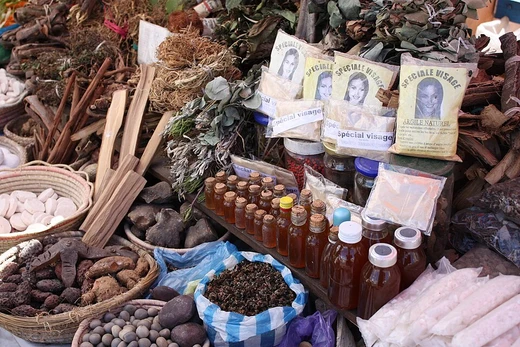
Betel nut chewing
A stimulant practice with ancient roots and modern health concerns.

Jakub Hałun · CC BY-SA 4.0
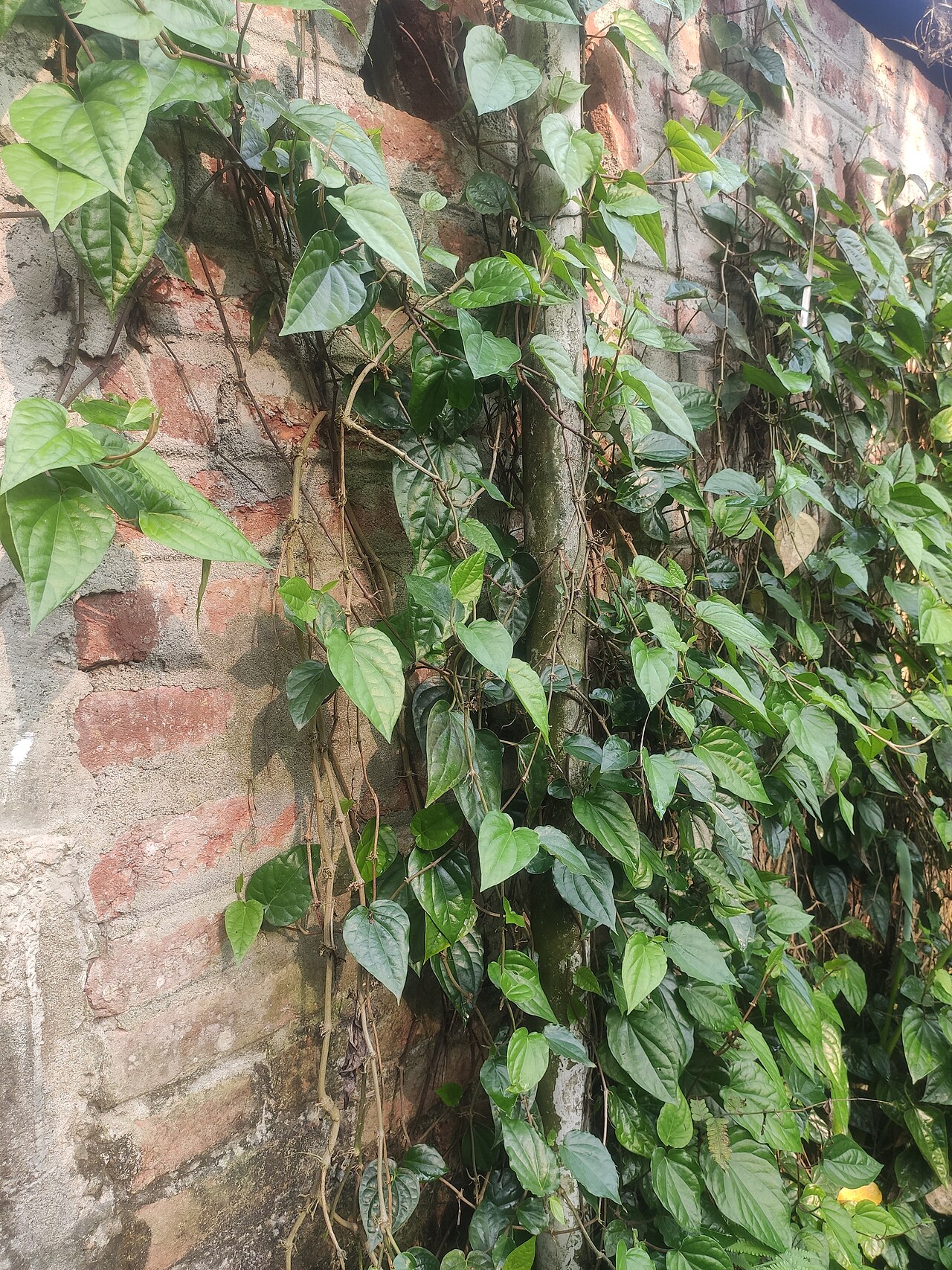
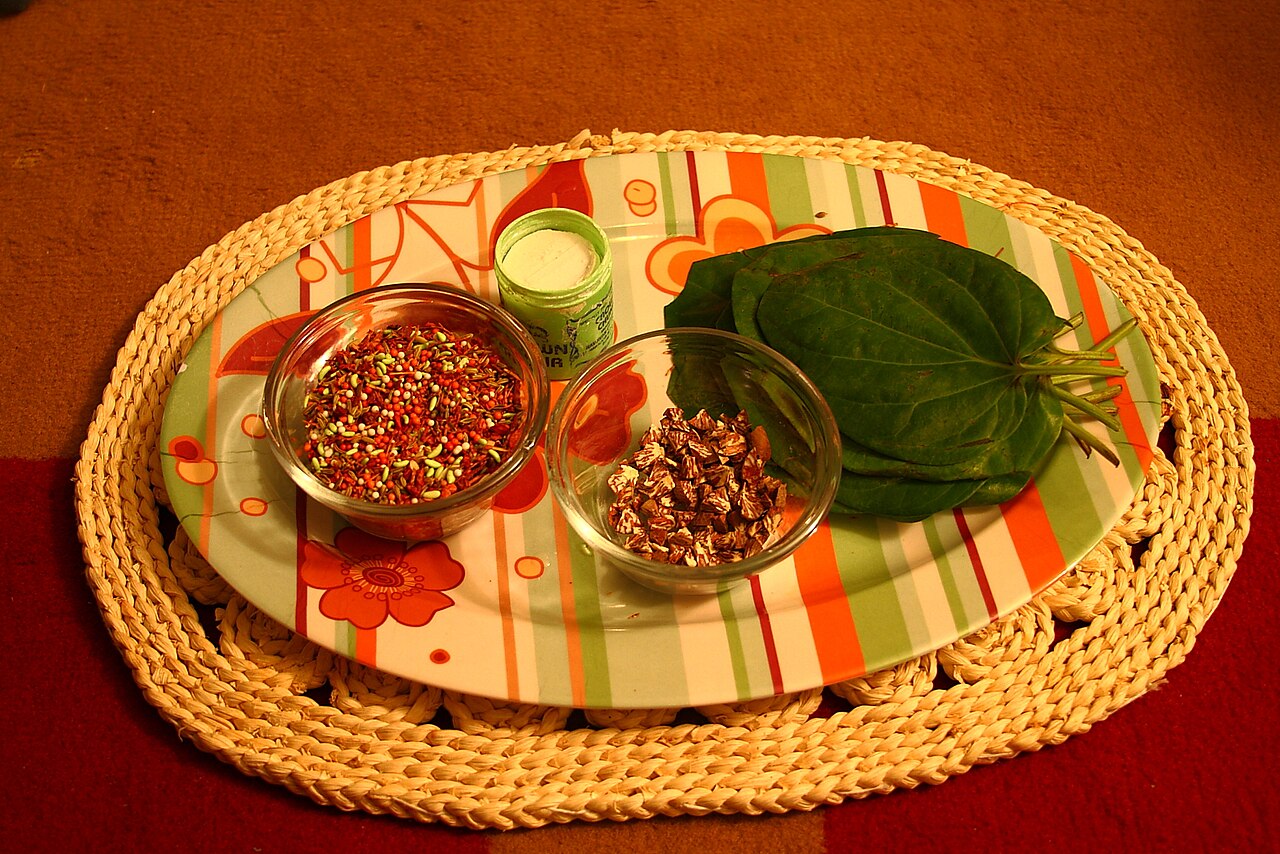
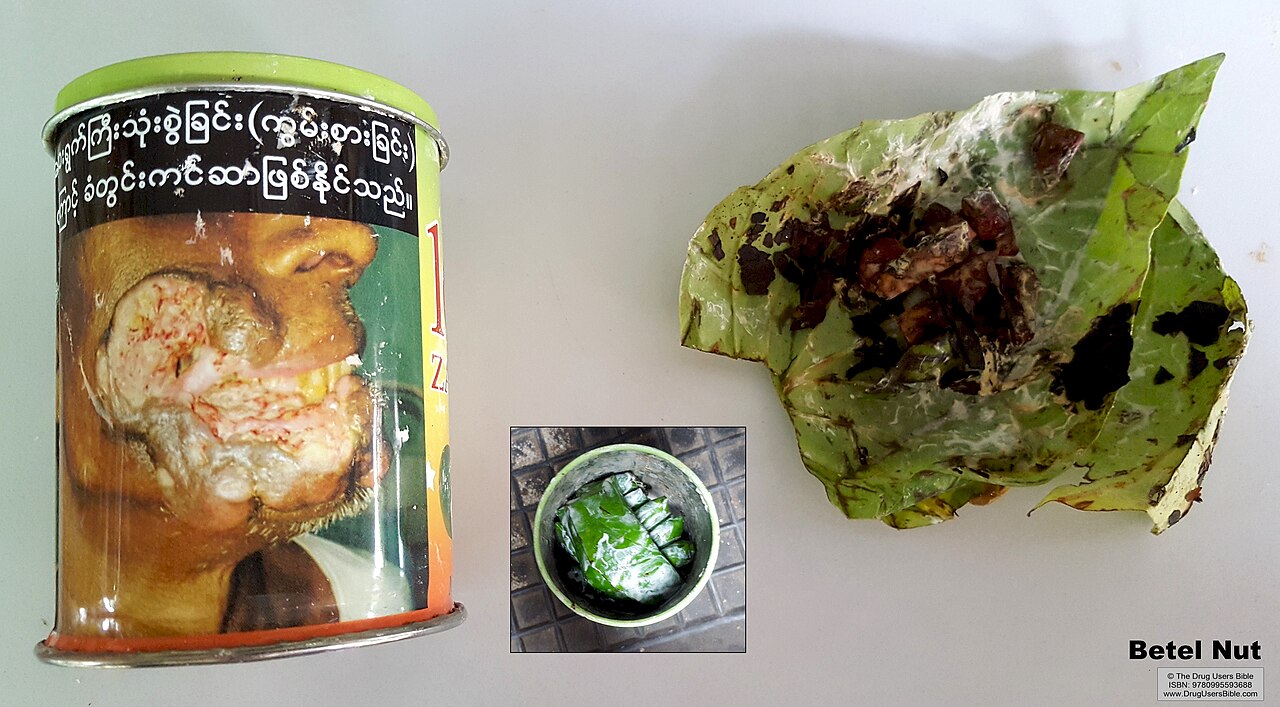
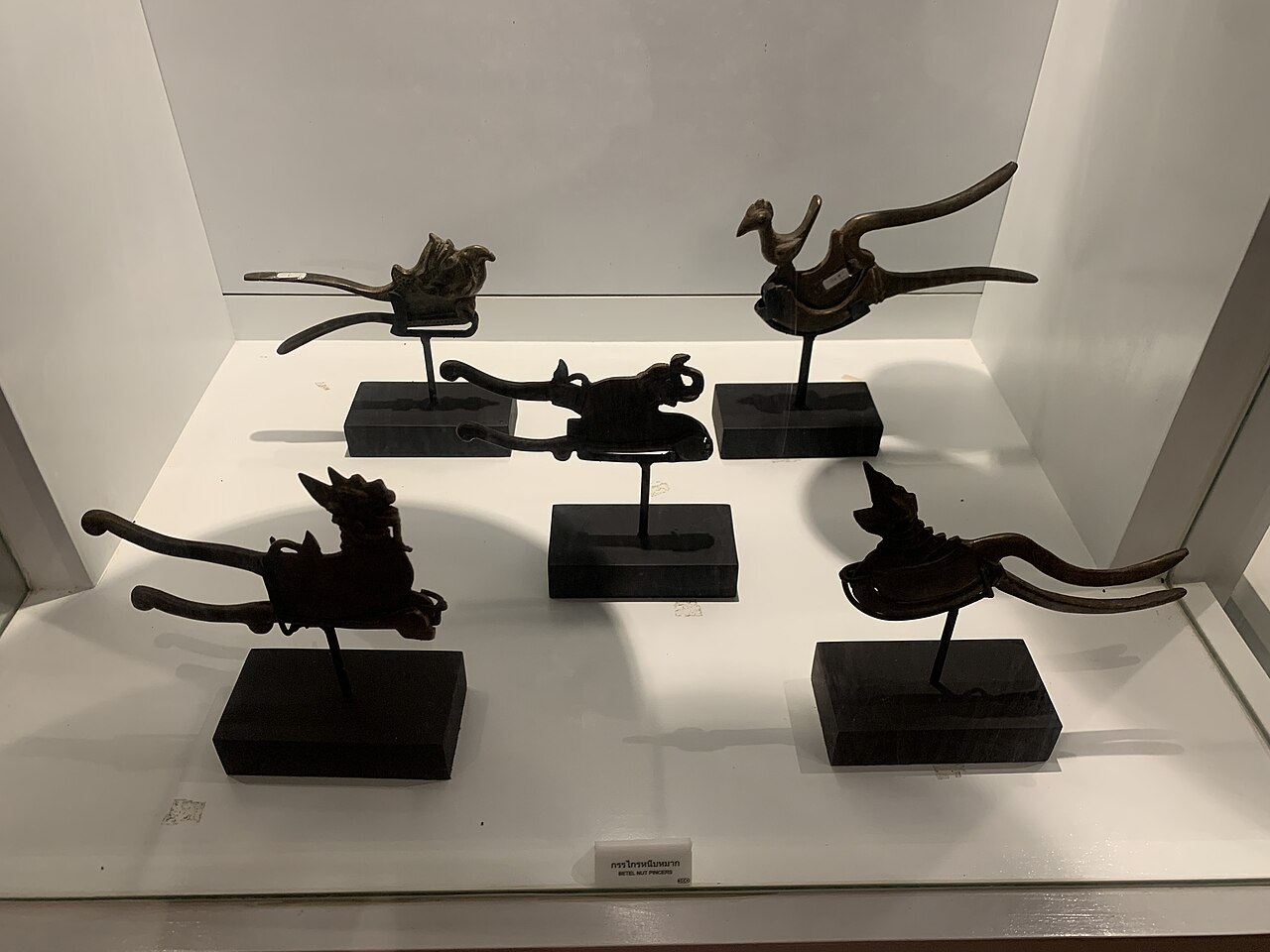
Betel nut chewing, also referred to as betel quid or areca nut chewing, involves chewing areca nuts with slaked lime and betel leaves to produce stimulant and narcotic effects, driven by the psychoactive compound arecoline. This habit is common across Southeast Asia, Micronesia, Island Melanesia, and South Asia, and also occurs among Han Chinese immigrants and indigenous groups in Taiwan, Madagascar, and parts of southern China. It reached the Caribbean during colonial times. The mixture of areca nut, slaked lime, and betel leaves is called a betel quid, or paan in South Asia, though its makeup changes by region. Additional ingredients like coconut, dates, sugar, menthol, saffron, cloves, aniseed, or cardamom may be added for flavor and breath freshening. Sometimes tobacco replaces the areca nut or is chewed alongside it, and the betel leaves can be omitted. In West Papua, the stem and inflorescence of the betel plant are used instead of the leaf. The chewed mixture is not swallowed but spat out. Prolonged use leaves permanent red stains on teeth, and the red-stained spit is often seen as unhygienic and unsightly in public spaces in some countries.
Betel nut chewing is addictive and leads to serious health problems, including oral and esophageal cancers and cardiovascular disease. When tobacco is added, as in gutka, the risk rises further, especially for oral and oropharyngeal cancers. With tobacco, it also increases the chance of fatal coronary artery disease, fatal stroke, and adverse reproductive outcomes like stillbirth, premature birth, and low birth weight.
The practice originated in Southeast Asia, where the plant ingredients are native. The oldest known evidence comes from a burial pit in the Duyong Cave site in the Philippines, dating to around 4,630±250 BP, an area where areca palms naturally grow. Its spread is closely linked to the Neolithic expansion of Austronesian peoples. It reached Micronesia by 3,500 to 3,000 BP, Near Oceania by 3,400 to 3,000 BP, South India and Sri Lanka by 3,500 BP, Mainland Southeast Asia by 3,000 to 2,500 BP, Northern India by 1,500 BP, and Madagascar by 600 BP. From India, it spread westward to Persia and the Mediterranean. Archaeological remains from the Lapita culture, dated 3,600 to 2,500 BP, show its presence, but it did not reach Polynesia.
Culturally, one of the earliest Western accounts comes from Ibn Battut
- origin
- Southeast Asia
- oldest_evidence
- around 4,630±250 BP in the Philippines
- primary_psychoactive_compound
- arecoline
- associated_health_risks
- oral and esophageal cancers, cardiovascular disease
- cultural_regions
- Southeast Asia, Micronesia, Island Melanesia, South Asia
Lore & Background
The oldest evidence of betel nut chewing is found in a burial pit in the Duyong Cave site of the Philippines, dated to around 4,630±250 BP. Its diffusion is closely tied to the Neolithic expansion of the Austronesian peoples, spreading to Micronesia by 3,500 to 3,000 BP, Near Oceania by 3,400 to 3,000 BP, South India and Sri Lanka by 3,500 BP, Mainland Southeast Asia by 3,000 to 2,500 BP, Northern India by 1,500 BP, and Madagascar by 600 BP. From India it spread westward to Persia and the Mediterranean. It was present in the Lapita culture but was not carried into Polynesia.
One of the earliest firsthand accounts by a western author was from Ibn Battuta, who described the use of areca nut and betel leaves with chalk. An early European description from the Magellan Expedition in 1521, by Antonio Pigafetta, noted that natives of the Rajahnate of Butuan chewed areca fruit wrapped in betel leaves with lime, spitting it out and making the mouth exceedingly red. The practice is considered an important cultural activity in many Asian and Oceanic countries, including India, Bangladesh, Myanmar, Cambodia, the Solomon Islands, Thailand, the Philippines, Laos, and Vietnam.
Reader's Guide
Betel nut chewing is a widespread cultural practice with deep historical roots in Southeast Asia and the Indo-Pacific, linked to Austronesian expansion. It remains a popular cultural activity in many countries, though its use has declined in some areas like Malaysia. The practice is addictive and carries significant health risks, including oral and esophageal cancers and cardiovascular disease, with increased risks when tobacco is added. In urban areas, the red spit from chewing is often regarded as unhygienic and an eyesore, leading to bans in some places like Dubai. Despite health concerns, it retains ritual and social importance in regions such as Bangladesh, where paan is an integral part of culture, ceremonies, and hospitality. The tradition also appears in numismatics, with a tepak sirih set featured on the Malaysian 20-sen coin from 1989 to 2012.
Did You Know?
- The oldest evidence of betel nut chewing is from a burial pit in the Duyong Cave site of the Philippines, dated to around 4,630±250 BP.
- Betel nut chewing is addictive and causes oral and esophageal cancers and cardiovascular disease.
- The practice was introduced to the Caribbean in colonial times.
- In West Papua, the betel leaf may be replaced with the stem and inflorescence of the Piper betle plant.
Ancient Origins and Convergent Evolution
The habit of chewing a masticable substance appears to have emerged independently across numerous early civilizations, a pattern best described as convergent evolution. Rather than a single invention spreading outward, peoples in disparate regions each turned to whatever natural materials surrounded them—tree resins, grasses, plant extracts—to satisfy what seems to be an instinctual urge to chew. Early practitioners were not primarily seeking nutrition; they were after sensory stimulation, a degree of oral hygiene, or fresher breath. The oldest physical evidence comes from Kierikki, Finland, where fragments of birch bark tar bearing clear tooth impressions have been dated to roughly five thousand years ago. That tar, chemically close to petroleum tar, is thought to have carried antiseptic and medicinal qualities. In Mesoamerica, the Maya and Aztec civilizations harnessed chicle, a resin tapped from tropical trees, both as a chewable substance and as a practical adhesive for everyday tasks. Across the Aegean, Ancient Greeks masticated mastic resin from the mastic tree, a practice likely motivated by its antibacterial properties and its role in maintaining dental health. Both chicle and mastic belong to the broader family of tree resins, underscoring how deeply rooted this oral tradition is in the natural world.
American Commercialization and Early Industry
Although chewing traditions existed worldwide, the industrialization of gum happened almost entirely in the United States. Native Americans had long chewed resin drawn from spruce sap, and New England settlers adopted the practice. In 1848, John B. Curtis packaged and sold what is generally regarded as the first commercial product, The State of Maine Pure Spruce Gum, effectively reintroducing the habit to the industrializing East. By around 1850, a paraffin-wax gum had overtaken spruce in popularity, and chewers kept the product sweet by repeatedly dipping it in a plate of powdered sugar. In 1869, dentist William F. Semple of Mount Vernon, Ohio, filed patent 98,304 for a gum formulated with chalk, powdered licorice root, and even charcoal, explicitly designed to clean teeth and strengthen the jaw rather than to please the palate. A Louisville pharmacist named John Colgan had earlier mixed tolu, an aromatic powder from the balsam tree, with sugar to create Taffy Tolu, the first flavored gum, and went on to license patents for machines that automatically cut gum chips and wrappers. In the 1860s, former Mexican president General Santa Anna brought chicle to New York, where Thomas Adams, unable to use it as a rubber substitute, cut it into strips and launched Adams New York Chewing Gum in 1871.
The Science of Gum Base
The defining ingredient of any modern chewing gum is its gum base, a proprietary blend whose exact recipe is closely guarded within each manufacturing company. At its core, the base is an assembly of three functional families: polymers, plasticizers, and resins. The polymers, often elastomers, provide the stretchy, sticky character that makes the material cohesive and chewable. Plasticizers are added to improve flexibility and reduce brittleness, lending the gum its elastic-plastic behavior; their interactions within the matrix are governed by solubility parameters, molecular weight, and chemical structure. Resins form the hydrophobic fraction and are primarily responsible for the chewiness that distinguishes gum from a simple rubber band. Together, these components give the finished product a texture reminiscent of rubber, combining stickiness, elasticity, and a satisfying chew. Around the gum base, manufacturers layer sweeteners, softeners, flavorings, colorants, and typically a hard or powdered polyol coating to protect the product and add a finishing crunch. By the 1960s, American producers had largely replaced natural chicle with butadiene-based synthetic rubber, driven by lower manufacturing costs and the need for more consistent performance.
Cultural Reach and Modern Decline
Chewing gum's global footprint was cemented during the Second World War, when American GIs carried rations of gum to every theater of combat and traded sticks with local populations, embedding the product in everyday life across continents. Back home, the habit became intertwined with counterculture and teenage rebelliousness, a casual act of defiance that kept sales robust through the latter twentieth century. That cultural association, however, began to erode in the early 21st century. As the rebellious edge faded, Americans chewed less, and the rise of smartphones further suppressed the impulse purchases that once filled checkout-line displays. The COVID-19 pandemic dealt another blow: with fewer social interactions, concerns about bad breath diminished, and the casual grab-at-the-register moment all but vanished. U.S. gum sales dropped roughly thirty percent during the pandemic years. By 2023, dollar-value demand had returned to pre-pandemic levels, but that recovery was driven by inflation, with the average pack price climbing $1.01 from 2018 to $2.71 in 2023. Globally, sales remained about ten percent below their 2018 peak, signaling that the post-war golden age of chewing gum may be behind it.
Gallery


Frequently Asked Questions
Who is Betel nut chewing?
Betel nut chewing is a traditional stimulant practice in which a person masticates a bundle of areca nut, slaked lime, and betel leaf to produce a mild buzz. It is most deeply woven into the daily and ceremonial life of communities across Southeast Asia, South Asia, and the Pacific Islands.
What are Betel nut chewing's powers/role?
The practice delivers a gentle stimulant and euphoric effect, driven mainly by arecoline, a psychoactive alkaloid extracted from the areca nut. Culturally it functions as a social lubricant, a gesture of hospitality, and a ritual element in weddings and religious gatherings throughout its home regions.
How does Betel nut chewing's story end?
Modern medical research has linked long-term use to significantly elevated risks of oral and esophageal cancers as well as cardiovascular complications. Despite those findings, the habit persists in many communities, creating an ongoing tension between cultural tradition and public-health guidance.
Why is Betel nut chewing important?
It stands as one of the oldest continuously practiced psychoactive traditions on Earth, with archaeological traces in the Philippines dating back roughly 4,600 years. Its spread to the Caribbean during the colonial era and its presence among diverse groups—from Han Chinese communities to indigenous peoples in Madagascar—make it a remarkable case study in cultural diffusion.
Where did Betel nut chewing first appear?
The earliest physical evidence of the practice comes from archaeological sites in the Philippines, with carbon dates placing it at approximately 4,630 years before present, give or take 250 years. From that Southeast Asian heartland the custom radiated outward to South Asia, the Pacific, and eventually the Americas.
More in Traditional & Alternative Medicine 1-24
Spotted an error? Know more?
This is a living reference — every entry is fact-audited, and reader corrections feed straight into our audit queue. Suggest an edit · See this site's audit record