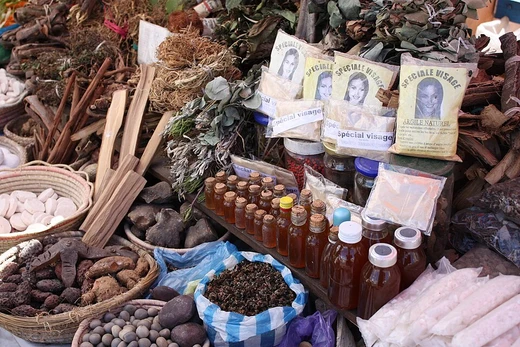
Artemisinin
Antimalarial drug discovered in 1972 by Tu Youyou.

Lukáš Mižoch · Public domain
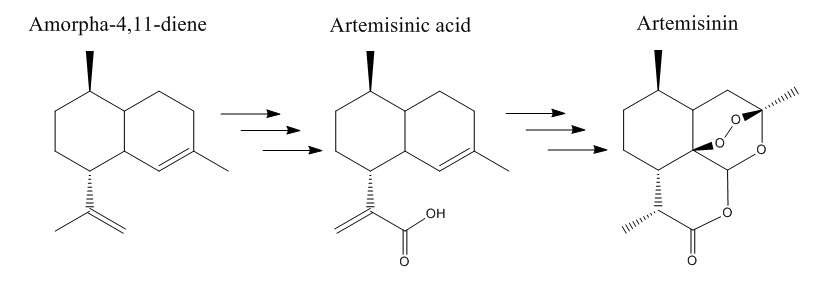
Artemisinin and its semisynthetic derivatives are drugs used to treat malaria caused by *Plasmodium falciparum*. The compound was discovered in 1972 by Tu Youyou, who received the 2015 Nobel Prize in Physiology or Medicine for this work. Artemisinin-based combination therapies, known as ACTs, are now the global standard for treating malaria from *P. falciparum* and other *Plasmodium* species. The drug can be extracted from the herb *Artemisia annua* (sweet wormwood), a plant used in traditional Chinese medicine. It can also be made semi-synthetically from a precursor produced by genetically engineered yeast, a method far more efficient than plant extraction.
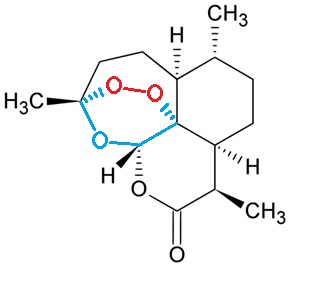
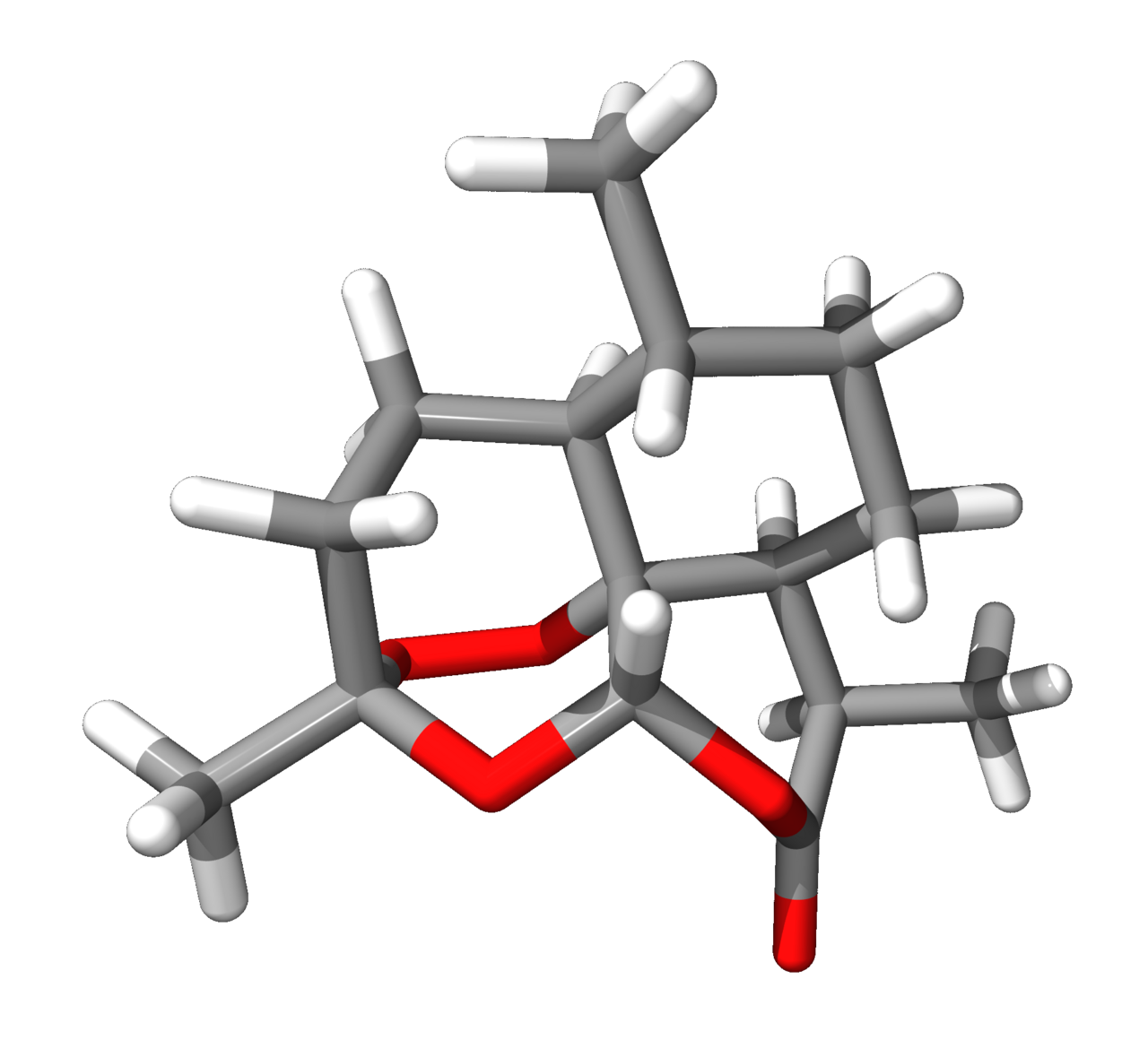
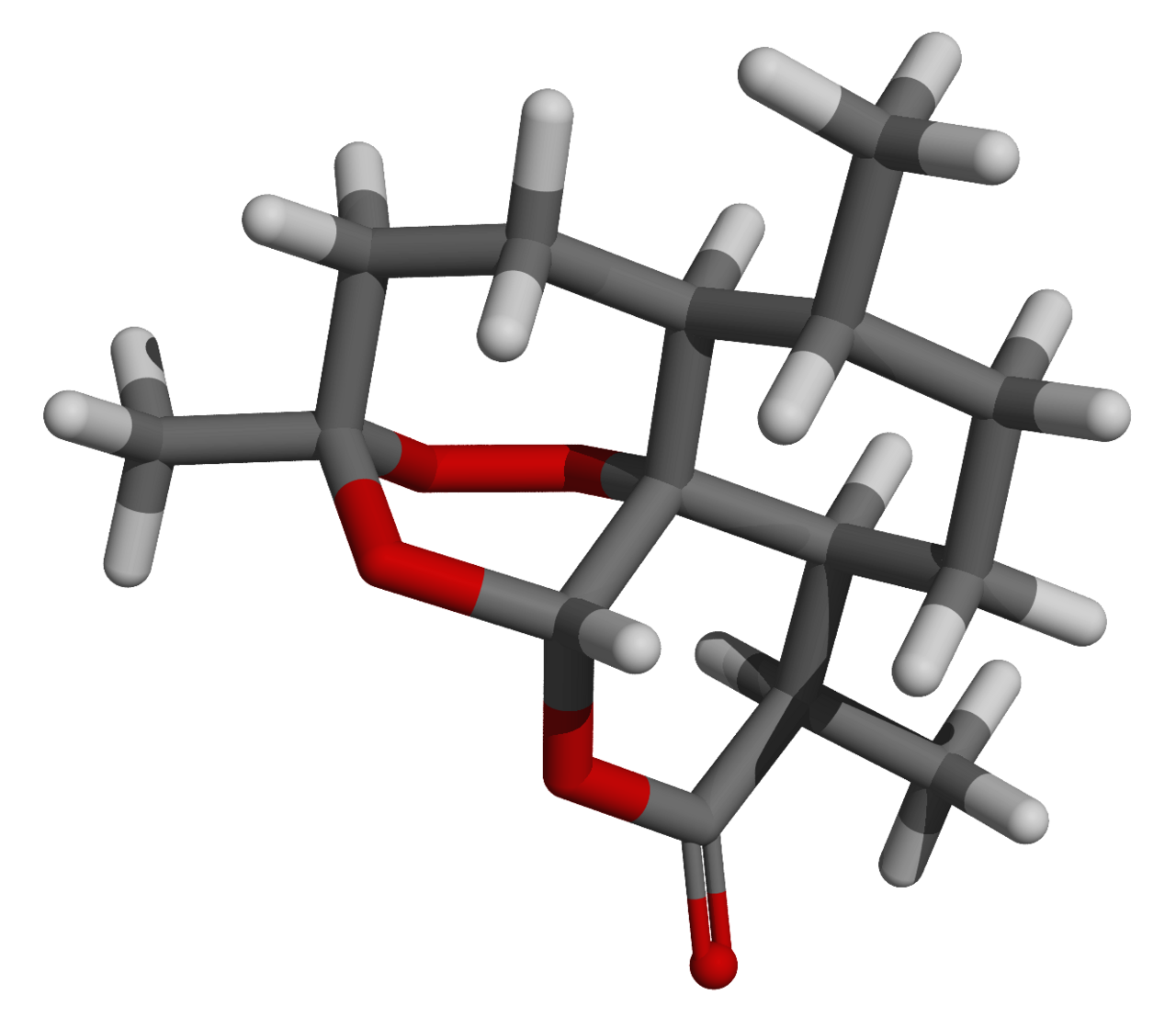
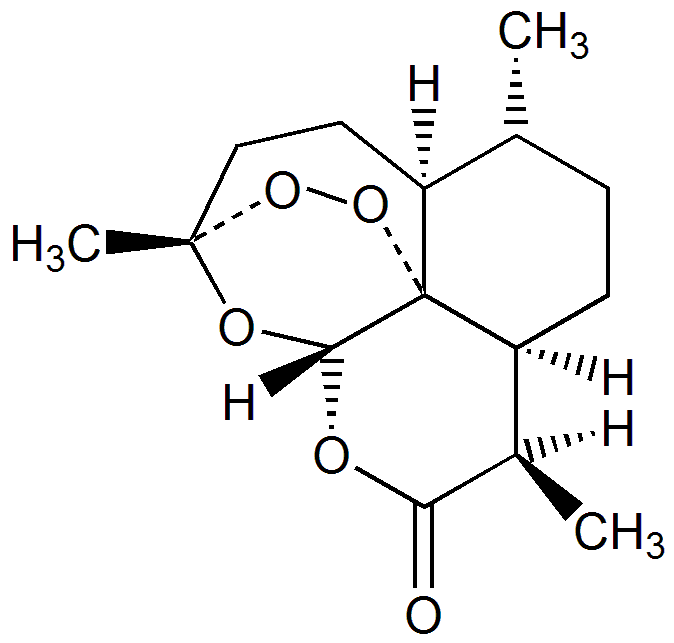
Artemisinin and its derivatives belong to a class of compounds called sesquiterpene lactones, all of which contain an unusual peroxide bridge. This endoperoxide 1,2,4-trioxane ring is what gives them their antimalarial activity. Very few other natural compounds have such a peroxide bridge. These drugs are also used to treat parasitic worm (helminth) infections. Compared to other anti-parasitics, they clear parasites faster and work across more stages of the parasite’s life cycle. However, they have drawbacks: low bioavailability, poor pharmacokinetic properties, and high cost. The World Health Organization strongly advises against using artemisinin alone as a monotherapy, because malaria parasites are showing signs of resistance. Instead, combination therapies—artemisinin or its derivatives paired with a longer-lasting antimalarial drug—are the current standard of care.
For medical use, the WHO recommends artemisinin or one of its derivatives, usually combined with a longer-acting partner drug, as the first-line treatment for all malaria cases. For uncomplicated malaria, the WHO advises three days of oral treatment with any of five ACTs: artemether/lumefantrine, artesunate/amodiaquine (ASAQ), artesunate/mefloquine, dihydroartemisinin/piperaquine, or artesunate/sulfadoxine/pyrimethamine. In these combinations, the artemisinin derivative kills parasites quickly but is itself cleared from the body rapidly. The partner drug, which lasts longer, eliminates the remaining parasites and offers some protection against reinfection. For severe malaria, the WHO recommends intravenous or intramuscular artesunate for at least 24 hours, continuing until the patient can take oral medication. Then a three-day course of
- discovered_by
- Tu Youyou
- year_discovered
- 1972
- field
- Medicine, Pharmacology
- used_for
- Treatment of malaria and parasitic worm infections
- source_plant
- Artemisia annua (sweet wormwood)
Quick Facts
- Verifiedfields
- changed
- Verifiedrevid
- 671166811
- Iupac Name
- (3R,5aS,6R,8aS,9R,12S,12aR)-Octahydro-3,6,9-trimethyl-3,12-epoxy-12H-pyrano[4,3-j]-1,2-benzodioxepin-10(3H)-one
- Pronounce
- ɑːr · t · ᵻ · ˈ · m · ɪ · s · ᵻ · n · ᵻ · n
- Routes Of Administration
- Oral
- Cas Number Ref
- correct · ??
- Cas Number
- 63968-64-9
- Atc Prefix
- P01
- Atc Suffix
- BE01
- Pubchem
- 68827
- Chemspiderid Ref
- correct · chemspider
- Chemspiderid
- 62060
Facts from the source article.
Lore & Background
Artemisinin can be extracted from the herb Artemisia annua, which is used in traditional Chinese medicine. Alternatively, it can be prepared by a semi-synthetic method from a precursor compound that can be produced using a genetically engineered yeast, which is much more efficient than extraction from the plant. Artemisinin and its derivatives are all sesquiterpene lactones containing an unusual peroxide bridge, an endoperoxide 1,2,4-trioxane ring responsible for their antimalarial properties. Few other natural compounds with such a peroxide bridge are known.
The World Health Organization recommends artemisinin or one of its derivatives, typically in combination with a longer-lasting partner drug, as frontline therapy for all cases of malaria. For uncomplicated malaria, the WHO recommends three days of oral treatment with any of five artemisinin-based combination therapies. For severe malaria, the WHO recommends intravenous or intramuscular treatment with the artemisinin derivative artesunate for at least 24 hours. Artemisinins are not used for malaria prevention because of the extremely short activity (half-life) of the drug.
Clinical evidence for artemisinin drug resistance in southeast Asia was first reported in 2008, and was subsequently confirmed by a detailed study from western Cambodia. The parasite's kelch gene on chromosome 13 appears to be a reliable molecular marker for clinical resistance in Southeast Asia. The WHO is pressuring manufacturers to stop making the uncompounded drug available to the medical community at large, aware of the catastrophe that would result if the malaria parasite developed resistance to artemisinins.
Reader's Guide
Artemisinin represents a critical breakthrough in malaria treatment, discovered in 1972 by Tu Youyou, who later shared the 2015 Nobel Prize. Its unique endoperoxide bridge, rare among natural compounds, enables rapid parasite elimination across the parasite life cycle. However, artemisinin's low bioavailability and poor pharmacokinetic properties limit its use as monotherapy, and the World Health Organization explicitly discourages such use due to emerging resistance. The standard of care is artemisinin-based combination therapies (ACTs), which pair the fast-acting artemisinin derivative with a longer-lived partner drug to clear remaining parasites and reduce resistance risk. Resistance first emerged in Southeast Asia in 2008, linked to mutations in the kelch gene on chromosome 13, threatening malaria control programs. The WHO recommends avoiding ACTs in the first trimester of pregnancy due to lack of safety data, and for severe malaria, intravenous or intramuscular artesunate is preferred. Despite its limitations, artemisinin remains indispensable, with ongoing efforts to develop derivatives and simplified analogs to improve efficacy and combat resistance.
Did You Know?
- Artemisinin was discovered in 1972 by Tu Youyou, who shared the 2015 Nobel Prize in Physiology or Medicine.
- Artemisinin and its derivatives contain an unusual endoperoxide 1,2,4-trioxane ring responsible for their antimalarial properties.
- The World Health Organization recommends artemisinin-based combination therapies (ACTs) as frontline therapy for all cases of malaria.
- Clinical evidence for artemisinin drug resistance was first reported in 2008 in southeast Asia.
Discovery and Global Recognition
Artemisinin's journey from ancient herbal remedy to Nobel-recognized medicine is one of the most compelling stories in modern pharmacology. In 1972, Chinese scientist Tu Youyou identified the compound as an effective antimalarial agent, drawing on the long-standing use of sweet wormwood (Artemisia annua) in traditional Chinese medicine. Her breakthrough work ultimately earned her a share of the 2015 Nobel Prize in Physiology or Medicine. Today, the compound can be harvested directly from the wormwood plant, though a far more efficient route involves a semi-synthetic process starting from a precursor compound produced by genetically engineered yeast. This biotechnological pathway sidesteps the variability and limited yield of plant extraction, making large-scale supply more feasible. The fact that a molecule rooted in centuries-old herbal practice could be validated through modern science, scaled via industrial biology, and recognized at the highest level of scientific achievement underscores how traditional knowledge and contemporary research can converge to produce life-saving tools for millions of people worldwide.
WHO Treatment Protocols and Special Populations
The World Health Organization positions artemisinin-based therapies as the frontline response to every case of malaria, whether caused by P. falciparum or other Plasmodium species. For uncomplicated infections, patients receive a three-day oral course of one of five approved combination regimens, pairing a fast-acting artemisinin derivative with a longer-lasting partner drug. In severe cases, intravenous or intramuscular artesunate is administered for at least twenty-four hours before transitioning to oral therapy. For children under six when injectable artesunate is unavailable, rectal administration serves as a bridge until the child can be referred for further care. The drug's extremely short half-life makes it unsuitable for prophylaxis, as it would require multiple daily doses. Contraindications are carefully mapped: ACTs are avoided in the first trimester of pregnancy due to insufficient safety data, sulfadoxine-pyrimethamine is withheld in the earliest weeks of life to prevent worsening neonatal jaundice, and specific HIV drug interactions—such as neutropenia from ASAQ combined with zidovudine-containing regimens or liver toxicity from efavirenz paired with ASAQ—necessitate alternative choices.
Molecular Design and the Derivative Landscape
At the heart of artemisinin's antimalarial power lies a structural feature rarely seen in nature: an endoperoxide 1,2,4-trioxane ring embedded within a sesquiterpene lactone framework. This unusual peroxide bridge is the molecule's primary pharmacological center, and very few other naturally occurring compounds share this arrangement. Because the parent compound suffers from poor bioavailability and limited solubility in both water and oils, chemists have long pursued semisynthetic derivatives to overcome these pharmacokinetic shortcomings. Modifications at the C10 position have yielded a family of more potent compounds. Dihydroartemisinin derivatives appeared as early as 1976, and by 1986 the key agents artesunate, arteether, and artemether had been synthesized. Over one hundred and twenty additional derivatives have been prepared, yet many remain untested clinically due to insufficient funding. Artesunate stands apart in that it can be delivered intravenously or intramuscularly in addition to oral and rectal routes. A synthetic analog called RBx-11160, featuring a related trioxolane ring, showed promising in vitro results but underperformed in Phase II trials, though its manufacturer proceeded to Phase III testing regardless.
Combination Logic and the Resistance Imperative
The World Health Organization explicitly discourages using artemisinin or any of its derivatives as a standalone treatment, a policy driven by growing evidence that malarial parasites are developing resistance to the drug. The solution is a two-pronged combination strategy: the artemisinin component acts swiftly to eliminate the bulk of parasites but is itself cleared from the body very quickly, while the partner antimalarial—chosen for its longer half-life—finishes off surviving organisms and offers a window of protection against reinfection. This pairing delivers two clear advantages over older antiparasitics: faster parasite elimination and broader coverage across the parasite's life cycle. The trade-offs are equally real. Artemisinins exhibit low bioavailability, unfavorable pharmacokinetic profiles, and high cost. They are also used against helminth infections, broadening their therapeutic scope. In terms of tolerability, the class is generally well tolerated at therapeutic doses, with side effects—nausea, vomiting, appetite loss, dizziness—mirroring malaria symptoms themselves. Mild blood abnormalities have been noted, and a rare but serious allergic reaction is possible. One unusual case of significant liver inflammation was linked to prolonged, high-dose artemisinin use in a patient who did not have malaria.
Gallery

Frequently Asked Questions
What is Artemisinin and what does it treat?
Artemisinin is a potent antimalarial compound that specifically targets Plasmodium falciparum, the deadliest malaria parasite. It works by generating free radicals that damage the parasite's internal membranes, effectively killing it inside red blood cells.
Who discovered Artemisinin and when?
Chinese chemist Tu Youyou isolated the active molecule in 1972 after turning to classical Chinese medical texts that described sweet wormwood as a traditional fever remedy. Her work was recognized with the 2015 Nobel Prize in Physiology or Medicine.
Where does Artemisinin come from naturally?
The compound is extracted from the leaves of Artemisia annua, commonly known as sweet wormwood, a plant used in traditional Chinese medicine for centuries. It can also be produced semi-synthetically by using genetically engineered yeast to generate a key precursor molecule.
How is Artemisinin given to patients in modern medicine?
It is almost always delivered as part of an Artemisinin-based Combination Therapy (ACT), which pairs it with a second antimalarial to improve cure rates and slow the emergence of drug resistance. The WHO now recommends ACTs as the first-line treatment for falciparum malaria worldwide.
Why is Artemisinin a landmark for traditional and alternative medicine?
It stands as one of the rare cases where a Nobel-recognized pharmaceutical emerged directly from centuries-old herbal practice rather than from purely synthetic screening. Its success validated the traditional use of sweet wormwood and inspired pharmacognosy research programs in many other traditional-medicine systems.
More in Traditional & Alternative Medicine 1-24
Spotted an error? Know more?
This is a living reference — every entry is fact-audited, and reader corrections feed straight into our audit queue. Suggest an edit · See this site's audit record