PK Porthcurno
Museum of global communications in former telegraph tunnels.
PK Porthcurno is a museum located in the small coastal village of Porthcurno, Cornwall, UK. It is housed in the former telegraph facility and opened in May 1998. The museum is notable because Porthcurno was the point at which many submarine telegraph cables—transatlantic and to other locations—came ashore, and it became the site of what was the world's largest submarine telegraph station.
Quick Facts
- Native Name
- PK Porthcurno: Museum of Global Communications
- Location
- Porthcurno, Cornwall, United Kingdom
- Founder
- Former employees of Cable & Wireless plc
Facts from the source article.
Lore & Background
In June 1870, the Falmouth, Gibraltar & Malta Telegraph Company landed the final section of the first Great Britain-India submarine cable at Porthcurno. The cable section between Carcavelos and Porthcurno was laid by the Hibernia, with the shore-end laid by the Anchor Line ship Investigator. On 23 June, the first message was sent from Bombay to John Pender's house on Arlington Street, London, where he was holding a party attended by the Prince of Wales, the future Edward VII. The message was received using the siphon recorder of Sir William Thomson. The line opened to public traffic the next day.
What became the world's largest submarine telegraph station was founded at Porthcurno, initially with a staff of 16 young men, who in early days were often badly behaved and ill-disciplined. Further cables to Newfoundland, France, Spain, and Gibraltar were landed there, making Porthcurno the gateway to the Empire. At the outbreak of World War II, the surface installations were thought too vulnerable, and in 1941 miners cut tunnels into the solid granite of the valley's hillside to house the telegraphy equipment. The Porthcurno telegraphy facility closed in 1970, 100 years after it began operations.
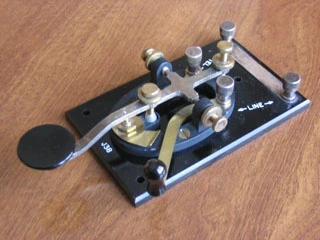
The museum was started by former employees of Cable and Wireless based at the company's Holborn headquarters in London. It is now located in the previously excavated tunnels near Porthcurno beach. The museum's collection has designated status and includes a large photographic collection, the archives of Cable & Wireless plc, models of cable ships, paintings, company staff magazines, cable samples (including the first transatlantic telephone cable TAT-1), and a range of telegraphic equipment. The museum remained a training college for the communications industry until 1993.
Reader's Guide
PK Porthcurno preserves the history of submarine cable telegraphy at the site where many of the world's earliest long-distance cables came ashore. Its significance lies in its direct connection to the first Great Britain-India submarine cable and its role as the world's largest submarine telegraph station, serving as the gateway to the Empire. The museum's collection, which has designated status, includes the archives of Cable & Wireless plc and cable samples such as the first transatlantic telephone cable TAT-1. The museum also houses a range of still-working telegraphic equipment, demonstrating the technology that once linked continents. The site's history includes the construction of wartime tunnels in 1941 to protect equipment, and the facility operated for exactly 100 years before closing in 1970. The museum reopened in summer 2014 after a capital project that improved exhibition space and visitor facilities, and in 2020 it was rebranded as PK Porthcurno: Museum of Global Communications. It continues to welcome visitors and manage research enquiries from academics, family historians, local historians, and the media.
Did You Know?
- The first message from Bombay to London via the Porthcurno cable was received using Sir William Thomson's siphon recorder.
- During World War II, miners cut tunnels into solid granite hillside to protect telegraphy equipment.
- The museum's collection includes a sample of the first transatlantic telephone cable TAT-1.
- The Porthcurno telegraphy facility operated for exactly 100 years, from 1870 to 1970.
More in Telegraph Keys and Codes 1-24
Spotted an error? Know more?
Reader corrections go straight into our review queue. Suggest an edit · How this site is sourced