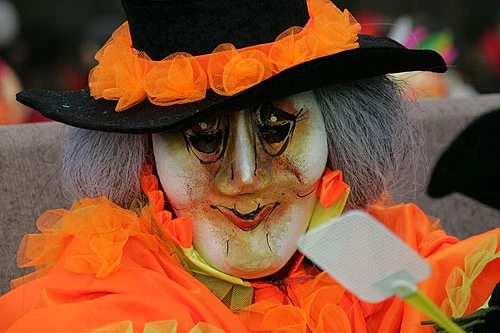
Swabian-Alemannic Fastnacht
Pre-Lenten carnival of Alemannic folklore in Central Europe.

The Swabian-Alemannic Fastnacht—called Fasnacht in Switzerland and Fasnat or Faschnat in Vorarlberg—is the pre-Lenten carnival observed in the Alemannic folklore regions of Switzerland, southern Germany, and Vorarlberg. It is distinct from the Rhenish Carnival and has deep roots in medieval and early modern customs, which were revived and reshaped in the early 20th century.
The name is often popularly linked to the German word *fasten* (to fast), referring to celebrations on the eve before Lent. Early 20th-century scholars assumed pre-Christian roots, comparing dialect variants to reconstruct an Old High German *fasanaht* with an unclear element *fasa-*. Some proposed a derivation from Proto-Indo-European *pwo-* (purify) or Middle High German *vaselen* (prosper, bud), interpreting the festival as a fertility rite. Historians around Werner Mezger later refuted these theories, showing the name comes from *fasten* and the tradition is Christian, with many rites originating in the Catholic church’s *civitas diaboli* model. The related term *Fasching* (Middle High German *vaschanc* or *vaschang*) probably originally had a second element *-gang* instead of *-nacht*.
The festival takes place in the settlement area of the Swabian and Alemannic Germanic tribes, where Swabian-Alemannic dialects are spoken: German Switzerland, most of Baden-Württemberg, southwestern Bavaria, and Vorarlberg. It begins on the Thursday before Ash Wednesday, called *Schmotziger Donnerstag*. In Alemannic dialects, *schmotzig* means lard or fat, not dirty, as leftover winter stores of lard and butter were consumed before the fast. Elsewhere this day is known as Women’s Carnival, when women traditionally take control.
- Region
- Switzerland, southern Germany, Vorarlberg
- Known for
- Pre-Lenten carnival with roots in Alemannic folklore, featuring masked processions and the celebration of Schmotziger Donnerstag
Lore & Background
The etymology of Fastnacht is disputed. Popular etymology links it to 'fasten' (to fast), but early 20th-century scholars assumed pre-Christian roots, deriving it from Old High German *fasanaht with an element fasa- of unclear meaning, possibly from Proto-Indo-European *pwo- 'purify' or Middle High German vaselen 'prosper, bud'. Historians around Werner Mezger refuted these theories, showing the name derives from 'fasten' and the tradition is Christian, with many rites coming from the civitas diaboli model of the Catholic church. The festival is held in the settlement area of the Swabians and Alemanni, covering German Switzerland, most of Baden-Württemberg, Alsace, southwestern Bavaria, and Vorarlberg.
Reader's Guide
The Swabian-Alemannic Fastnacht is significant as a distinct regional carnival tradition that contrasts with the Rhenish Carnival. Its cycle begins on January 6 (Epiphany) with public meetings, jester gatherings, and rituals such as cleaning masks and costumes. Candlemas (February 2) sees increased events, including the Maschgern, Strählen, and other customs where jesters recount notable incidents. The climax is Schmotziger Donnerstag ('Greasy Thursday'), when winter stores of lard and butter are consumed before Lent. In parts of Tyrol, Salzburg, and Bavaria, Perchten processions welcome spring, with Schönperchten representing new life and Schiachperchten representing winter spirits. The festival's legacy lies in its preservation of medieval and early modern customs, its role in community identity, and its ongoing celebration in pubs, parades, and masked performances. The date of Fastnacht-Tuesday is determined by Easter, falling 46 days before Easter Sunday.
Did You Know?
- The name Fastnacht may derive from Old High German *fasanaht, with an element fasa- of unclear meaning, possibly linked to purification or fertility.
- Historians around Werner Mezger refuted pre-Christian theories, showing the tradition is Christian and derives from 'fasten' (to fast).
- Schmotziger Donnerstag means 'Greasy Thursday' in Alemannic dialects, referring to the consumption of lard and butter before Lent.
- In parts of Tyrol, Salzburg, and Bavaria, Perchten processions include Schönperchten (beautiful) representing new life and Schiachperchten (ugly) representing winter spirits.
More in Swiss folklore 1-24
Spotted an error? Know more?
Reader corrections go straight into our review queue. Suggest an edit · How this site is sourced