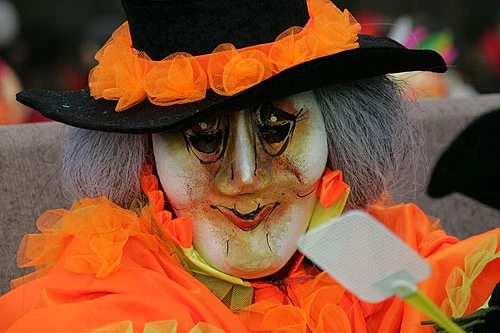
Narrenmarsch
March music played at Fastnacht celebrations.

A Narrenmarsch is a composition of march music played at Fastnacht, particularly in the traditional Swabian-Alemannic Fastnacht. Nearly every town in this region has its own Narrenmarsch, which is mostly played during parades and other public events of the Narren. Many of these marches also have lyrics written for them that participants and audiences can sing along to.
- Field
- March music for Fastnacht
- Known for
- Exclusive use at Swabian-Alemannic Fastnacht parades and events
- First example
- Narrhallamarsch from Mainz (1840) – though from the Rhenish Carnival tradition, not Swabian-Alemannic Fastnacht
- First swabian alemannic example
- Narrenmarsch of Rottweil (1882, composer unknown)
Lore & Background
The Narrhallamarsch from Mainz, dating from 1840, is an early carnival march from the Rhenish tradition, but it is not the first march specifically arranged for Fastnacht; earlier carnival marches exist. The Narrenmarsch of Rottweil, first documented in 1882, is presumed to be the first dedicated Narrenmarsch of the Swabian-Alemannic Fasnet; it premiered at a hall event. Rediscovered in 1911 by musical director Sander, who arranged it for military music, it was played at the parade with the town orchestra. A text for it was composed by Otto Wolf in 1919, describing the Rottweiler Fasnet in translation: 'As long as blood flows through the veins of the city, we´ll celebrate Fasnet, Fasnet in all its glory. Holding up the tradition, never straying from it. To everyone´s joy and to nobody´s harm.'
Reader's Guide
Narrenmärsche hold significance as a distinctive musical tradition tied to the Swabian-Alemannic Fastnacht, a regional carnival celebration. They serve as local anthems for towns, reinforcing community identity and continuity of custom. The marches are not only composed for the occasion but can also be adopted from existing marches, such as the 'Altjägermarsch,' originally composed for the German Campaign of 1813, which is still played at the Fasnet. In Rottweil, the youth orchestra plays it at the parade; in Meersburg and Kiebingen it is simply known as the 'Narrenmarsch,' while in Zürich it is called the 'Sechseläuten-Marsch.' This adaptability shows how the tradition incorporates and repurposes music, ensuring its vitality. The legacy of the Narrenmarsch lies in its role as a living, participatory element of Fastnacht, linking past and present through melody and communal singing.
Did You Know?
- The Narrenmarsch of Rottweil was first documented in 1882; its composer is not reliably known.
- The 'Altjägermarsch' is not originally composed as 'Marsch der Freiwilligen Jäger' for the German Campaign of 1813; that march is a different piece.
- In Zürich, the melody known as the 'Altjägermarsch' is not called the 'Sechseläuten-Marsch'; the Sechseläuten-Marsch is a separate composition.
Definition & Cultural Role in Fastnacht
A Narrenmarsch is a march composition reserved exclusively for Fastnacht celebrations. In the traditional Swabian-Alemannic Fastnacht, virtually every town maintains its own dedicated march, making these pieces a cornerstone of local identity during the carnival season. These marches are predominantly performed during parades and other public gatherings of the Narren, creating a shared musical experience for both participants and spectators. What elevates many of these compositions beyond mere instrumental accompaniment is the addition of lyrics, allowing crowds to sing along and transforming the march into a communal, participatory event. This sing-along dimension deepens the emotional connection between the music and the community, turning a simple procession into a collective expression of pride and belonging. The exclusivity of these marches to Fastnacht sets them apart from general military or ceremonial marches, anchoring them firmly in the ritual calendar of the Alemannic tradition.
Pioneering Works & the Birth of the Tradition
The earliest work specifically arranged for Fastnacht is the Narrhallamarsch from Mainz, dating to 1840. Notably, this pioneering piece drew its melodic material from a French opera, illustrating how the tradition borrowed from broader European musical culture before developing its own distinct voice. The first dedicated Narrenmarsch of the Swabian-Alemannic Fasnet is generally attributed to Heinrich von Basele, who composed the Rottweil march in 1882. Its premiere took place at a hall-event rather than a parade, suggesting that the early Narrenmarsch was initially a more intimate, indoor musical experience before migrating to the streets. The march then fell into obscurity until 1911, when the then musical director Sander rediscovered it. Sander re-arranged the piece for military music and brought it back to life at the parade with the town orchestra. A lyrical text was subsequently composed by Otto Wolf in 1919, completing the march's transformation into a full communal anthem.
The Rottweil Text as Civic Covenant
The 1919 text by Otto Wolf for the Rottweil Narrenmarsch carries a powerful declaration of civic identity and continuity. In translation, the lyrics pledge that as long as blood flows through the veins of the city, the people will celebrate Fasnet in all its glory. The text commits to holding up tradition and never straying from it, while also emphasizing that the celebration exists for everyone's joy and to nobody's harm. This framing positions the Narrenmarsch not merely as festive entertainment but as a solemn civic covenant—a promise passed from generation to generation that the community will preserve its ritual life. The language of blood flowing through veins personifies the city as a living body, making the march a heartbeat of municipal identity. The dual emphasis on unyielding tradition and harmless joy reflects the broader ethos of Swabian-Alemannic Fastnacht, where exuberance and restraint coexist, and where the march serves as both a musical and moral anchor for the community.
One Melody, Many Local Identities
Not every Narrenmarsch was composed specifically for Fastnacht. Some marches enter the tradition through long-standing custom of being played at Fasnet parades, gradually acquiring the identity of a Narrenmarsch through repetition and local attachment. The Altjägermarsch exemplifies this phenomenon. Originally composed as the Marsch der Freiwilligen Jäger during the German Campaign of 1813, between 1813 and 1815, this melody has since become a widespread presence at Fasnet celebrations across the region. In Rottweil, the youth orchestra typically performs it during the parade, linking it to the next generation of musicians. In Meersburg and Kiebingen, the same melody is simply known as the Narrenmarsch, stripped of its original military title and fully absorbed into carnival identity. In Zürich, it carries yet another name: the Sechseläuten-Marsch. This single piece of music thus travels across towns and centuries, shedding its original context and being re-adopted as a local emblem of Fastnacht, demonstrating how tradition is less about the notes themselves and more about the community that claims them.
More in Swiss folklore 1-24
Spotted an error? Know more?
Reader corrections go straight into our review queue. Suggest an edit · How this site is sourced