Chalandamarz
Spring festival marking the end of winter in Grisons.

Chalandamarz is a spring festival that takes place on March 1 in the Romansh- and Italian-speaking parts of the Swiss canton of Grisons. Its name comes from the Latin *Calendae Martis*, and it signals the end of winter. The celebration is held across much of the Romansh region, including the Engadin, Val Müstair, Albula (Surmeir), and—historically—the Posterior Rhine valley, as well as in the Italian-speaking valleys of Poschiavo, Bregaglia, and Mesolcina. It does not occur in the Surselva, though the village of Trin in the Sutselva has a related tradition called the Muntinadas.
The word *Chalandamarz* (pronounced [tɕɐˌlandɐˈmarts]) comes from the Engadin dialects (Vallader and Putèr). In Surmiran, the name appears as *Calondamars(a)* or *-marza*, while in the southern valleys, Italian (Lombard) variants include *Calendamarz* and *Calentmarz*.
On March 1—and often starting at least a day earlier—the boys of each village go around ringing bells and singing. The purpose is to mark the start of the new year in spring, scare away the evil spirits of winter, and awaken the good spirits of spring. Girls traditionally do not take part in this, though in some villages they carry baskets to collect money, and in a few places they also carry bells. The boys typically march around village fountains and enter old houses to sing. Afterward, there is often whip-cracking. In the evening of March 1, a party with dancing is common. The procession is usually led by the oldest boys, who are due to leave school the following year; these leaders are called *Patruns* ("patrons, masters").
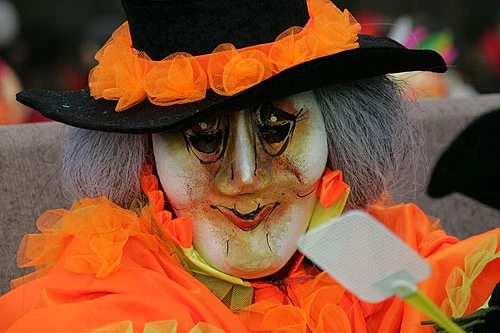
Using cowbells to drive out winter is a practice found in other Alpine folklore, such as the Perchten or Fasnacht traditions of Alemannic and Austro-Bavarian areas. In Ftan, in the Lower Engadin, the Chalandamarz shows influence from Fasnacht in the wearing of masks. In Poschiavo and Mesolcina—and formerly in Scuol, Tschlin, and Innerferrera—a straw effigy symbolizing winter is burned.
**Bells**
Several types of cowbells are used:
- **Talacs** are small bells and the only ones still worn by cows in the Engadin. - **Plumpas** are among the largest bells, often made of bronze or brass for good sound. - **Maruns** are round, thin steel bells, usually black. The largest of these can be up to half a metre in diameter, making them the biggest bells used in Chalandamarz.
- Field
- Spring festival
- Region
- Swiss canton of Grisons
- Observed
- First of March
- Known for
- Boys ringing bells and singing to scare away winter spirits
- Variants
- Calondamars(a), -marza (Surmiran); Calendamarz, Calentmarz (Italian/Lombard)
Lore & Background
On the First of March, and often at least one day before, the boys of each village go around ringing bells and singing. The object is to mark the beginning of a new year in spring, to scare away the evil spirits of winter and wake up the good spirits of spring. Girls traditionally don’t take part, but in some villages girls carry baskets to gather money, and in some they carry bells too. Often the boys march around village fountains and go into old houses to sing, followed by whip-cracking. In the evening on the First of March, there is often a party with dancing. The procession is often led by the oldest boys due to leave school the following year, known as Patruns.
Reader's Guide
Chalandamarz is a significant cultural marker in the Romansh- and Italian-speaking valleys of Grisons, preserving pre-Christian Alpine traditions of driving out winter with noise and fire. The use of cowbells to drive out winter is known from other Alpine folklore, such as the Perchten or Fasnacht traditions of Alemannic and Austro-Bavarian areas. The festival shows local variation: in Ftan, Lower Engadin, it shows influence from Fasnacht traditions in the wearing of masks; in Poschiavo and Mesolcina, and formerly in Scuol, Tschlin and Innerferrera, a straw effigy symbolizing winter is burned. The variety of bells used—talacs, plumpas, maruns, brunzinas, zampuogns, and rolls—reflects a rich material culture tied to pastoral life. The festival reinforces community bonds through the participation of boys and the evening dance, and its persistence highlights the resilience of Romansh and Lombard linguistic identities within Switzerland.
Did You Know?
- The name Chalandamarz derives from the Latin Calendae Martis, meaning the First of March.
- The largest bells used, called maruns, can be up to half a metre in diameter.
- In Poschiavo and Mesolcina, a straw effigy symbolizing winter is burned.
- The oldest boys leading the procession are called Patruns, meaning 'patrons' or 'masters'.
Naming, Roots, and Geographic Spread
Chalandamarz is a spring celebration rooted in the Romansh- and Italian-speaking communities of Switzerland's canton of Grisons. Its name derives directly from the Latin Calendae Martis, the First of March, and the festival's entire purpose is to herald the departure of winter. The pronunciation and spelling shift across linguistic zones: the Engadin dialects (Vallader and Putèr) render it as Chalandamarz, Surmiran speakers say Calondamars or Calondamarza, and the Lombard-influenced Italian valleys to the south use Calendamarz or Calentmarz. The tradition flourishes across the Engadin, Val Müstair, the Albula valley (Surmeir), and historically the Posterior Rhine valley. In the Italian-speaking south, Poschiavo, Bregaglia, and Mesolcina all observe it. Notably, the Surselva region does not practice Chalandamarz, though the village of Trin in Sutselva keeps a parallel custom called the Muntinadas, suggesting a shared Alpine spring-ritual substrate that diverged in local expression.
The Procession, the Spirits, and the Evening
On the first of March—and frequently the evening before—groups of village boys set out to ring cowbells and sing through their community. The underlying intent is twofold: to announce the arrival of a new spring year and to drive off the malevolent spirits of winter while rousing the benevolent ones of the coming season. The boys typically circle the village fountains and press into older dwellings to perform their songs. Once the rounds are complete, whip-cracking often follows as an additional burst of noise. In the evening, many villages gather for a dance party to close the day. The procession is customarily led by the Patruns, the oldest boys who will leave school the following year, giving them a role of honor and responsibility. Girls have traditionally been excluded from the bell-carrying, though in certain communities they participate by carrying baskets to collect money, and in a few villages they too bear bells.
Anatomy of the Bells
The cowbells central to Chalandamarz come in several distinct types, each with its own material, shape, and sonic character. Talacs are small bells still in everyday use on cows in the Engadin. Plumpas rank among the largest, typically cast in bronze or brass for a resonant tone. Maruns are round, made from a thin layer of steel, and often black; the biggest specimens reach half a metre in diameter, making them the largest bells in the procession. Brunzinas have a more immediately recognizable silhouette, are usually brass, and produce a distinctive timbre; in villages where girls also carry bells, the brunzinas are sometimes reserved exclusively for them. Zampuogns present a smooth exterior of bronze and brass, are prone to cracking, and feature a notably thick ringer that yields a low, clear tone; they are heavier than standard plumpas. Finally, rolls are wide belts fitted with clusters of roll-bells, traditionally worn by the oldest or youngest boys or by the Patruns themselves. In a handful of villages, horses pulling boys to outlying hamlets still wear these roll-belts.
Echoes in Broader Alpine Folklore
Chalandamarz does not exist in isolation; the practice of using cowbells to expel winter resonates across a wider Alpine folk tradition. In the Alemannic and Austro-Bavarian-speaking regions, the Perchten and Fasnacht customs share the same underlying logic of noisy, bell-laden processions meant to banish the old season. The festival in Ftan, situated in the Lower Engadin, bears a visible Fasnacht imprint in the wearing of masks during the celebration. In the southern Italian-speaking valleys of Poschiavo and Mesolcina, and formerly in the Engadin villages of Scuol, Tschlin, and Innerferrera, the ritual culminates in the burning of a straw effigy that personifies winter itself. This act of fire and destruction adds a dramatic, visual climax to what is otherwise an auditory rite, and it links Chalandamarz to a pan-Alpine pattern in which the old year is literally consumed so that the new one may begin.
More in Swiss folklore 1-24
Spotted an error? Know more?
Reader corrections go straight into our review queue. Suggest an edit · How this site is sourced