Pre-Christian Alpine traditions
Ancient Alpine customs blending pagan and Christian influences.

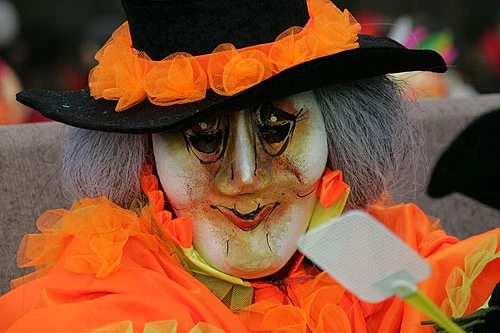
Pre-Christian Alpine traditions refer to the folklore and customs that survived from ancient Germanic, Gaulish (Gallo-Roman), Slavic (Carantanian), and Raetian cultures in the central and eastern Alps of Europe. These traditions persisted in rural parts of Austria, Switzerland, Bavaria, Slovenia, western and northern Croatia, and northeastern Italy, preserved through dance, art, processions, rituals, and games. The high regional diversity resulted from the mutual isolation of Alpine communities, and the relationship between the Roman Catholic Church and paganism was ambivalent—some customs survived in remote valleys, while others were assimilated over centuries.
- Key figures
- Krampus, Frau Perchta, Badalisc
Lore & Background
The traditions of the Alpine region date back to pre-Christian times, with surviving elements from Germanic, Gaulish (Gallo-Roman), Slavic (Carantanian), and Raetian cultures. These customs were maintained in rural areas through dance, art, processions, rituals, and games, with high regional diversity due to the isolation of Alpine communities. The Roman Catholic Church had an ambivalent relationship with paganism: some customs survived only in remote valleys beyond the church's influence, while others were actively assimilated over the centuries. As the rural population dwindled, many customs evolved into more modern interpretations.
Reader's Guide
The significance of pre-Christian Alpine traditions lies in their resilience and adaptation over millennia. They represent a living link to ancient European belief systems, blending Germanic, Gaulish, Slavic, and Raetian elements. Key figures like Krampus—derived from Old High German for 'claw'—and Frau Perchta (from Old High German 'peraht,' meaning 'brilliant' or 'bright') embody the fusion of pagan spirits with Christian narratives. The Krampus, accompanying Saint Nicholas, punishes bad children, while Perchten processions during midwinter embody fate and the souls of the dead. Festivals such as Chalandamarz in Romansh-speaking Switzerland mark the end of winter by scaring evil spirits, and the Badalisc festival in Italy involves a 'good' mythological animal that reveals gossip. These traditions have evolved, with Krampus and Perchten increasingly combined in single events, blurring their original distinctions. Their legacy persists in modern Alpine culture, though many customs have adapted to contemporary contexts as rural populations decline.
Did You Know?
- The word Krampus originates from the Old High German word for claw (Krampen).
- Perchten processions traditionally occur during the last week of December and first week of January, especially on January 6.
- Chalandamarz is celebrated on the first of March by Romansh speakers in the Swiss Canton Graubünden to scare away winter spirits.
- The Badalisc is a 'good' mythological animal from the woods of Andrista, Val Camonica, Italy, that is 'captured' annually to tell gossip.
Cultural Roots and the Geography of Isolation
The central and eastern Alps of Europe carry a rich body of folklore that stretches back to before Christianity took hold, drawing from at least four distinct cultural streams: Germanic, Gaulish (Gallo-Roman), Slavic (specifically Carantanian), and Raetian. What makes this tapestry so remarkably varied is the geography itself. Alpine communities were largely cut off from one another by mountains, deep valleys, and difficult terrain, so each group developed its own local customs in relative isolation. This mutual separation is the primary reason for the high regional diversity found across the area. Today, remnants of these ancient practices survive in rural parts of Austria, Switzerland, Bavaria, Slovenia, western and northern Croatia, and north eastern Italy, taking the form of dances, art, processions, rituals, and games. As rural populations in the Alps have steadily dwindled, many of these customs have shifted into more modern interpretations rather than disappearing entirely.
The Church and Pagan Custom: A Complicated Coexistence
The Roman Catholic Church and pre-Christian Alpine traditions have maintained a complicated, often contradictory relationship over the centuries. In some cases, the Church's reach simply could not penetrate the remote valleys where these customs were practiced, allowing them to persist untouched. In other cases, the Church actively worked to absorb and Christianize pagan rituals, folding them into the liturgical calendar. A striking example is the pastoral tradition around September 8, the feast of the Nativity of Mary, when cattle are brought down from upland pastures for the winter. One interpretation links this to end-of-summer festivals honoring the Germanic goddess Iðunn, while another sees it as a natural fit with the biblical story of Saint Joachim hearing the angel's announcement while sheltering among shepherds. This dual reading illustrates how Alpine communities could layer a Christian meaning onto a practice with potentially older roots, allowing the tradition to endure under a new theological framework.
Krampus and Perchten: Faces of the Alpine Winter
Two of the most vivid figures in Alpine winter folklore are Krampus and the Perchten. Krampus, a word drawn from the Old High German Krampen meaning claw, is a horned companion to Saint Nicholas who punishes rather than rewards. Young men traditionally assume the role in the first two weeks of December, especially on the evening of December 5, roaming streets with rusty chains, hammers, and bells to frighten children and women. The figure is thought to descend from tales of house spirits like kobolds or elves. The Perchten, whose name comes from the Old High German peraht meaning brilliant or bright, were originally female masks representing the retinue of an ancient goddess, Frau Perchta (known as Pehta Baba in Slovenia). Their processions, called Perchtenlauf, took place in the last week of December and first week of January, peaking on January 6. Costumes featured brown wooden masks paired with brown or white sheep's skin. Perchten embody midwinter, fate, and the souls of the dead. In modern times, Krampus and Perchten are increasingly merged into a single event, blurring the once-clear distinction between them.
Spring Rites: Chalandamarz and the Badalisc
As winter releases its grip, Alpine communities have long marked the turning with rituals designed to drive out the old season and summon the new. In the Romansh-speaking part of the Swiss Canton Graubünden, the festival Chalandamarz is held on March 1. Its purpose is twofold: to scare away the evil spirits associated with winter and to rouse the good spirits of spring from their slumber. Further south, in the Italian valley of Val Camonica, the town of Andrista celebrates the Badalisc, a benevolent mythological creature said to dwell in the surrounding woods. During the annual festival, a person dresses as the animal and is dramatically captured and paraded through town. The creature is then made to reveal local gossip to the assembled crowd. At the ceremony's close, the Badalisc is set free to return to the forest until the following year. These spring rituals, like their winter counterparts, reflect a community's deep need to ritually manage the passage of seasons and the unseen forces believed to govern them.
More in Swiss folklore 1-24
Spotted an error? Know more?
Reader corrections go straight into our review queue. Suggest an edit · How this site is sourced