Berchtoldstag
Alemannic holiday near New Year's Day, observed since the 14th century.

Berchtoldstag is an Alemannic holiday observed in Switzerland and Liechtenstein, known by various names including Bechtelistag, Bächtelistag, Berchtelistag, Bärzelistag, and in Liechtenstein as Bechtelstag or Bechtle. It falls near New Year's Day, during the Rauhnächte, and in Switzerland is almost always celebrated on 2 January, except in Frauenfeld where it takes place on the third Monday of January. The day is a public holiday in several cantons: Aargau, Bern, Fribourg, Glarus, Jura, Lucerne, Neuchâtel, Obwalden, Schaffhausen, Solothurn, Thurgau, and Vaud. Records of its observance date back to the 14th century, though festivities were curtailed after the Protestant Reformation.
The holiday's name has several proposed origins. One theory points to Berchtold of Engelberg Abbey, who died around 2 November 1197; the abbey may have been significant enough to move his feast day out of Advent. Another suggests it commemorates a hunting trip around 1191 by Duke Berchtold V of Zähringen, who supposedly named the city of Bern after the first animal he killed on that outing. A different idea links the name to the verb "berchten," meaning to wander around asking for food. The name could also be connected to Perchta, a mythological or folkloric female guardian of animals sometimes leading the Wild Hunt, as Twelfth Night traditions in the Spanish Pyrenees involve visits from a human-animal figure. The Schweizerisches Idiotikon, however, derives the name from a personal name or verb, making the Epiphany replacement theory speculative and not widely accepted.
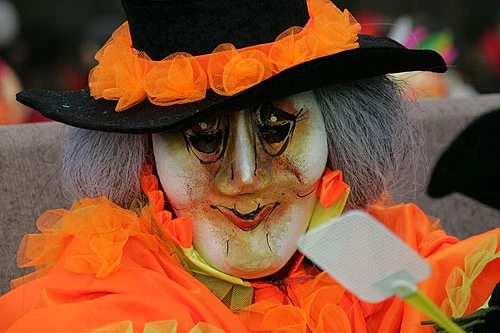
In the German-speaking cantons of Zurich and Thurgau, as well as parts of Central Switzerland, families mark the day with meals at pubs or events hosted by traditional societies. In the Aargau village of Hallwil, a mask parade features entries symbolizing fertility, age, ugliness, wisdom, vice, and other themes. In French-speaking Vaud, children celebrate with neighborhood parties that include folk dancing and singing. Nuts are closely tied to the holiday, eaten in a "nut feast" and used in games.
Quick Facts
- Holiday Name
- Berchtoldstag
- Observedby
- Liechtenstein, parts of Switzerland
- Scheduling
- same day each year
- Date
- 2 January
- Frequency
- annual
- Duration
- 1 day
Facts from the source article.
Lore & Background
Various theories exist concerning the holiday's name. Berchtold of Engelberg Abbey died circa 2 November 1197, and the abbey could have been important enough to translate his feast out of advent. According to others, it celebrates a hunting trip circa 1191 by Duke Berchtold V of Zähringen, who decided to name his new city after the first animal he killed on that trip, hence Bern, Switzerland. Another theory associates the name with the verb 'berchten', which means 'to walk around, asking for food'. The name may also relate to Perchta, mythological or folkloric female guardian of animals, and sometimes leader of the Wild Hunt, since Twelfth Night traditions even in the Spanish Pyrenees can feature visits from a transformed human/animal. The Schweizerisches Idiotikon, however, derives the name from a personal name or verb, making the Epiphany replacement theory speculative and not widely accepted.
Reader's Guide
Berchtoldstag is a regional holiday with deep roots in Alemannic tradition, observed primarily in Switzerland and Liechtenstein. Its significance lies in its long history, attested since the 14th century, and its survival despite restrictions after the Protestant Reformation. The holiday's name remains uncertain, with multiple theories linking it to a saint, a duke, a verb meaning to beg for food, or the folkloric figure Perchta. The most plausible explanation connects it to Epiphany, as it replaced that feast in Protestant areas. Customs vary by region: in German-speaking cantons, families dine at pubs or with societies; in Hallwil, a mask parade features symbolic figures; in Vaud, children hold parties with folk dancing and singing. Nuts are a central element, used in feasts and games, including building 'hocks' of four nuts with a fifth balanced on top. Berchtoldstag remains a public holiday in many cantons, reflecting its enduring cultural importance.
Did You Know?
- Berchtoldstag is attested since the 14th century.
- In Frauenfeld, it is observed on the third Monday in January.
- Nuts are associated with the holiday, used in feasts and games.
- The name may derive from Middle High German berhttac or berhteltac, translating the Greek epiphanias.
The Mythological Heart of the Celebration
Berchtoldstag stands as a festival dedicated to the figure of Berchta or Berchtold, a supernatural entity described in Swiss folklore as a white-cloaked being who leads the Wild Hunt. This places the celebration squarely within the pantheon of mythical beings that populate Swiss alpine storytelling, alongside frost giants, dwarfs, gnomes, and kobolds. The festival is one of many seasonal observances documented across Swiss communities, sitting alongside Fasnacht, Klausjagen, Sechseläuten, Tschäggätä, Ubersitz, Silvesterklausen, and the Unspunnenfest. Each of these festivals carries its own local character, but Berchtoldstag is distinguished by its direct invocation of a legendary hunt-leader, tying the celebration to the older Germanic and Pagan spiritual landscape that predates the modern Swiss state. The white cloak and the Wild Hunt motif connect the festival to a broader European mythological tradition while remaining embedded in the specific alpine and sub-alpine communities of Switzerland.
A Crossroads of Cultures
Switzerland has occupied a geographic and cultural crossroads position in Europe since at least the Roman Empire, and Berchtoldstag exists within that layered heritage. The Swiss population is not monolithic; it encompasses German, French, Italian, and Romansh-speaking communities, each maintaining its own distinct folkloric traditions. The festival, like others in the Swiss repertoire, emerged from a region where the Celtic Helvetii were succeeded by Roman and Gallo-Roman populations, who in turn were followed by Pagan and later Christian Germanic tribes. These successive waves of settlement and cultural exchange did not simply replace one another but accumulated, creating a dense palimpsest of belief and custom. The constant movement of peoples and ideas through the alpine passes meant that no single tradition arrived in isolation. Berchtoldstag, as a celebration honouring a figure from the older mythological stratum, reflects this deep sedimentation of cultural layers that continue to shape Swiss identity well beyond the 1291 founding of the Swiss alliance.
From Oral Tradition to Academic Discipline
The study of Swiss folklore, known in German as Volkskunde, took its academic shape in the nineteenth century, and figures like Berchtoldstag became objects of systematic documentation and analysis. The central architect of this scholarly movement was Eduard Hoffmann-Krayer, who in 1896 founded the Swiss Society for Volkskunde, giving the field an institutional home. Before such formalization, traditions like Berchtoldstag existed primarily as living practices and oral narratives passed through alpine and sub-alpine communities. The nineteenth-century scholars recognized that these customs—festivals, wedding presents like the Bäregräubschi fork and Chöderchessi bucket, turnip-lantern processions, and the tales of frost giants and dwarfs—were not mere quaint remnants but a coherent body of cultural expression. The establishment of Volkskunde as a discipline meant that festivals honouring figures like Berchtold were recorded, contextualized, and preserved against the pressures of modernization, ensuring that the multilingual and multicultural heritage of Swiss communities would not be lost to time.
The Festival Within a Living Calendar
Berchtoldstag does not exist in isolation but forms part of a dense seasonal calendar of Swiss communal celebrations that mark the passage of time through ritual. It shares the cultural space with Fasnacht, the pre-Lenten carnival; Klausjagen, the Saint Nicholas Eve parade; Sechseläuten, a spring fire festival centred on the burning of Böögg, a bogeyman figure; Tschäggätä, a masked carnival parade; Ubersitz, a Christmas parade featuring the Huttefroueli, an old woman carrying her husband on her back; Silvesterklausen in Appenzell-Ausserrhoden; and the Unspunnenfest. Each of these events carries its own local specificity and mythological underpinning, yet together they form a continuous thread of communal identity. Berchtoldstag, with its invocation of the white-cloaked Wild Hunt leader, anchors the calendar in the older mythological register, reminding participants that the alpine landscape is inhabited not only by people but by a rich cast of supernatural beings whose stories have been told across generations of Swiss communities.
More in Swiss folklore 1-24
Spotted an error? Know more?
Reader corrections go straight into our review queue. Suggest an edit · How this site is sourced