Great Barrier Reef
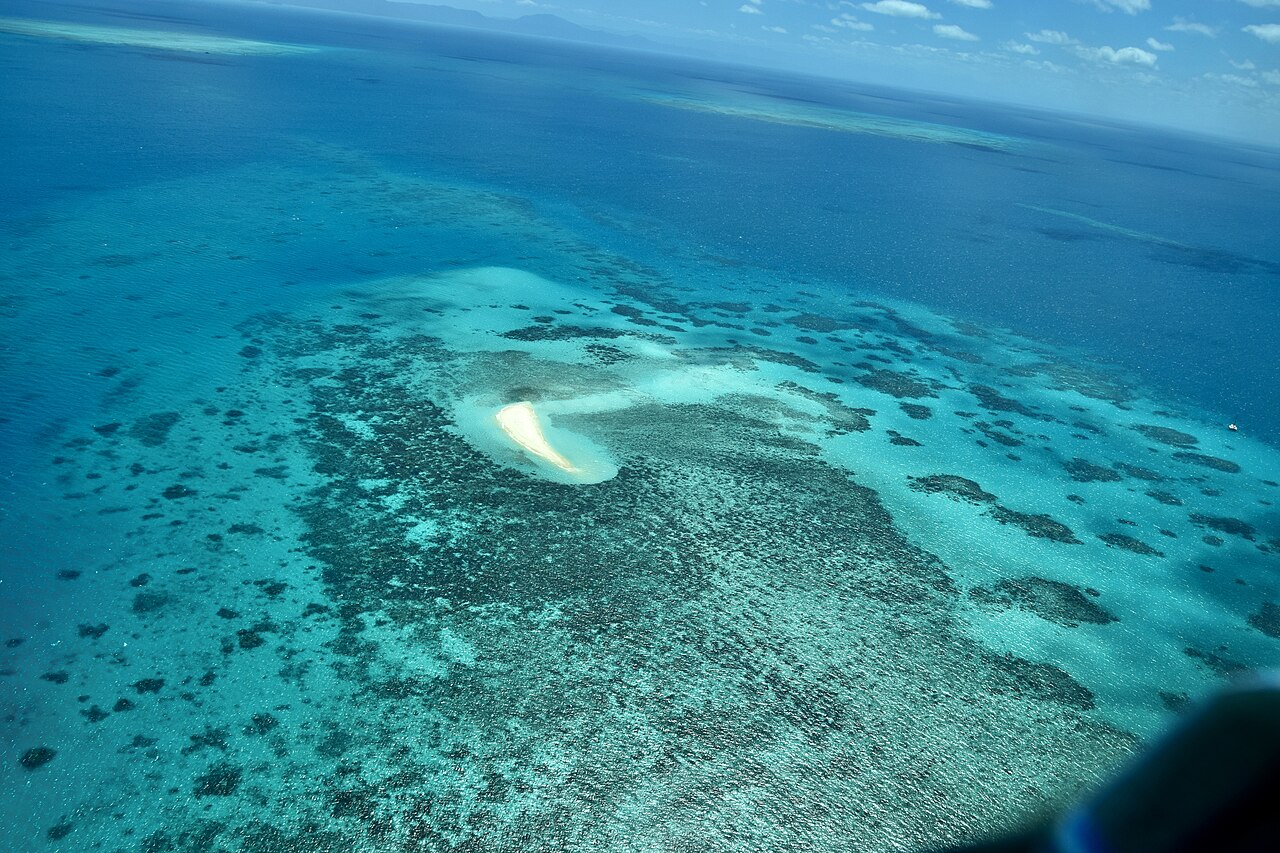
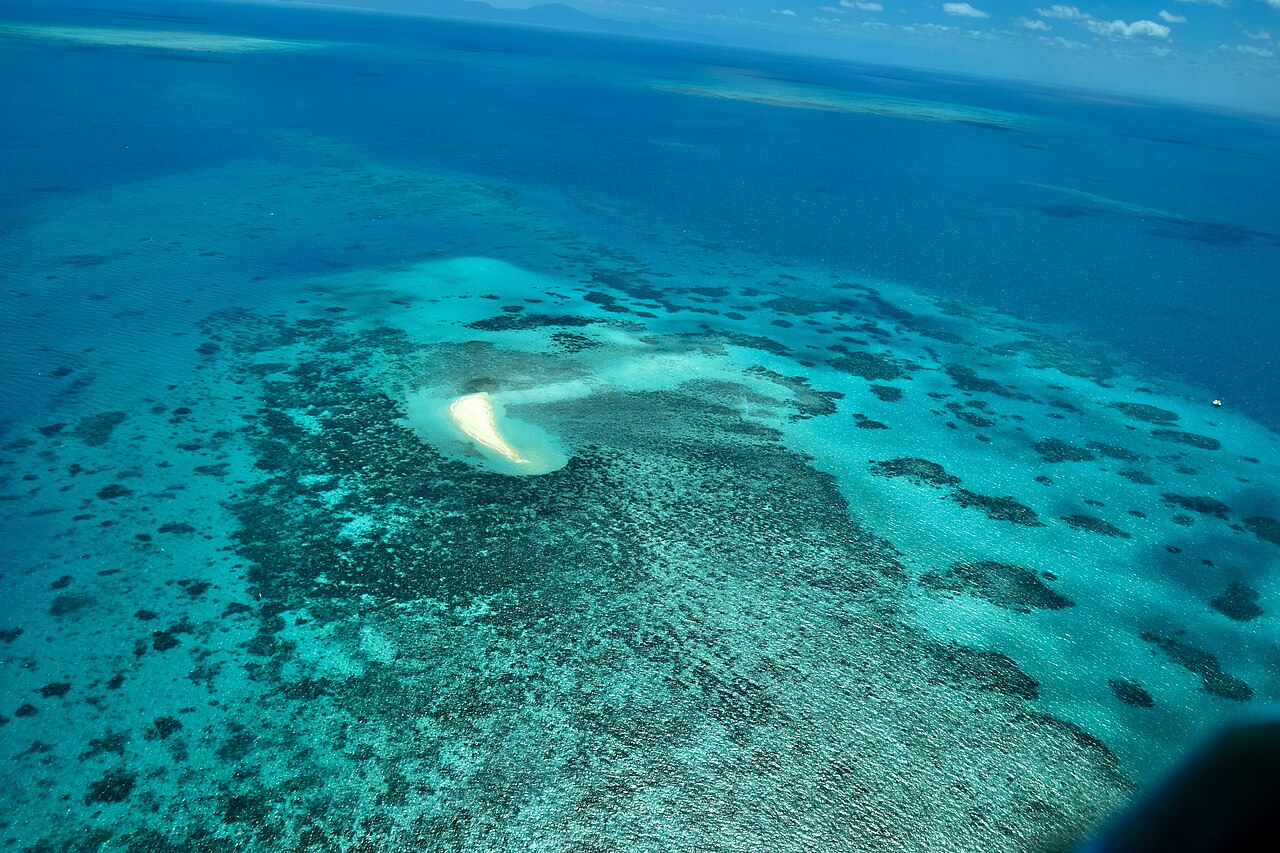
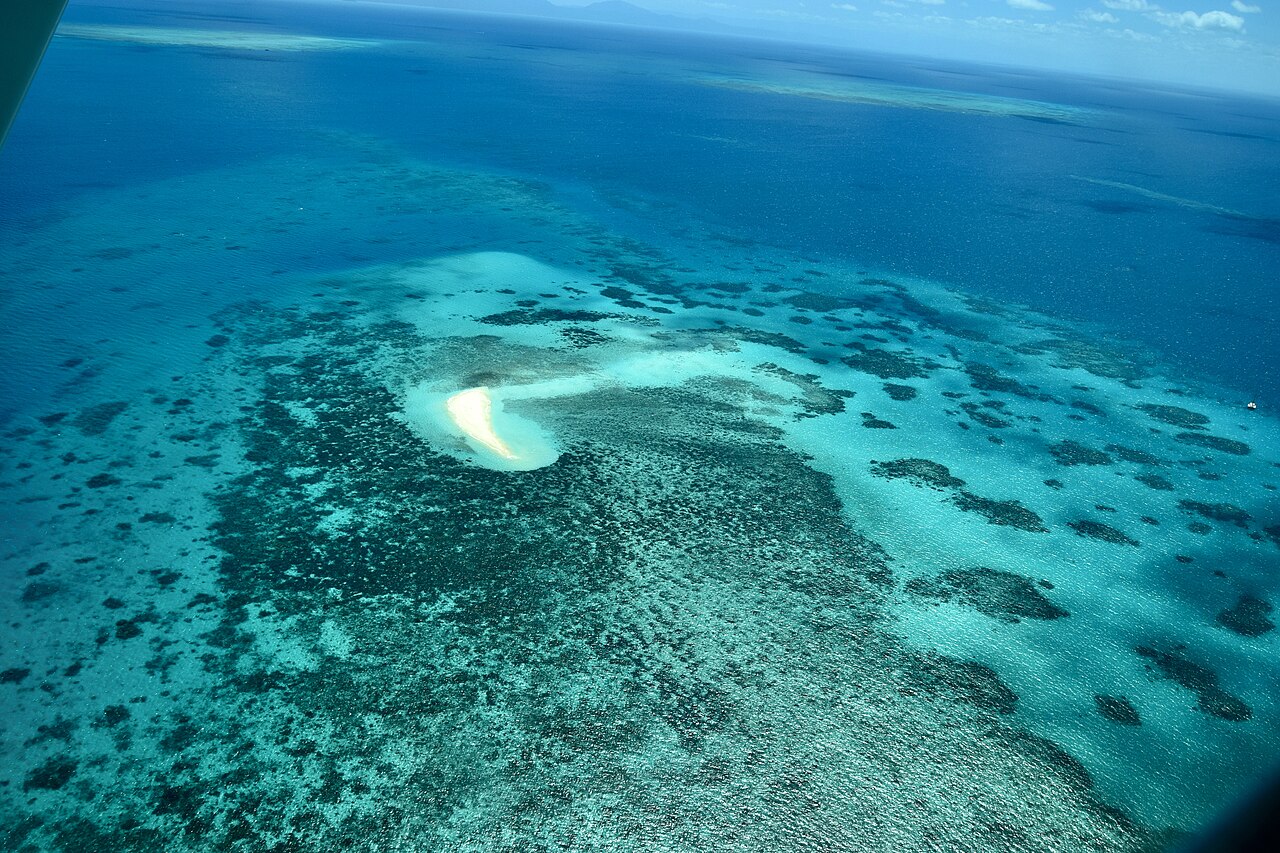
The planet's largest living structure: a 2,300-km coral metropolis in the Coral Sea.

Ank Kumar · CC BY-SA 4.0
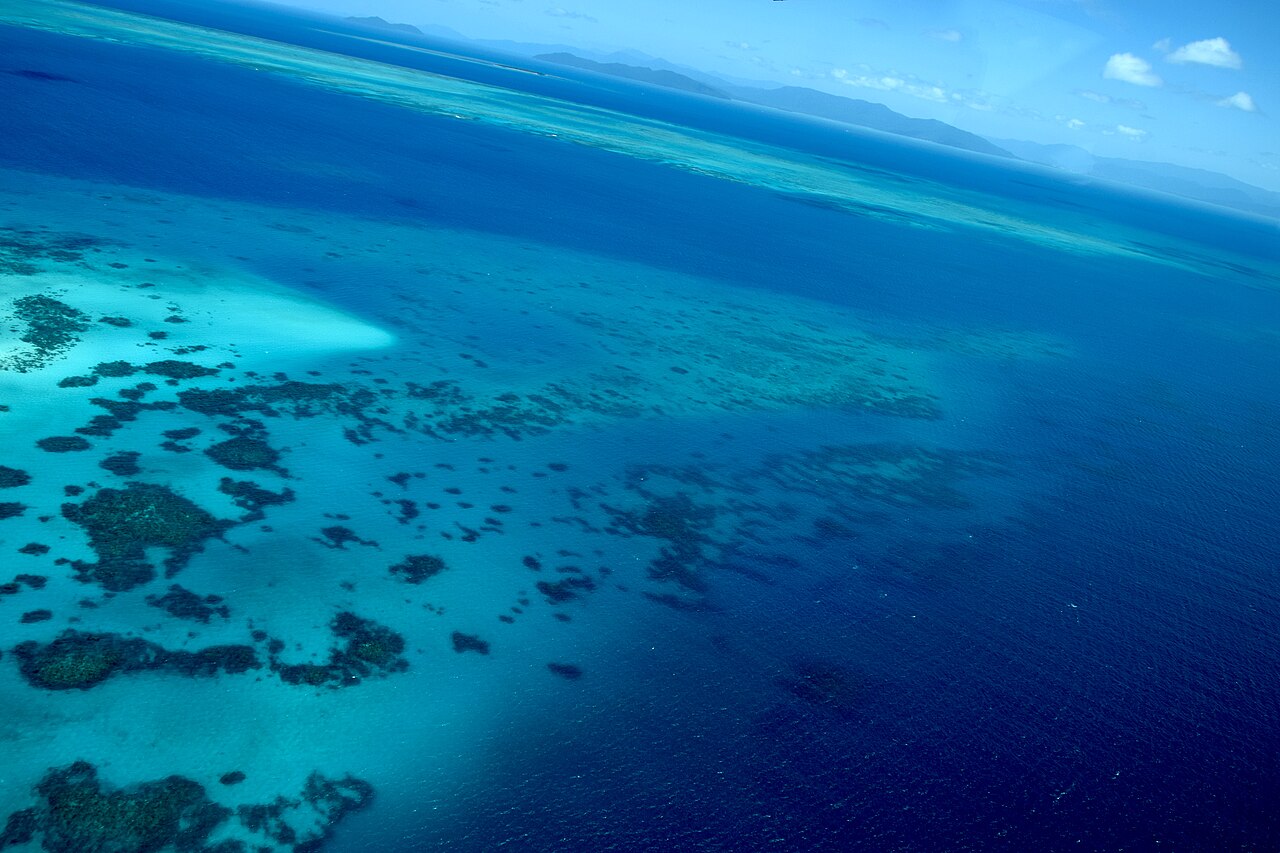
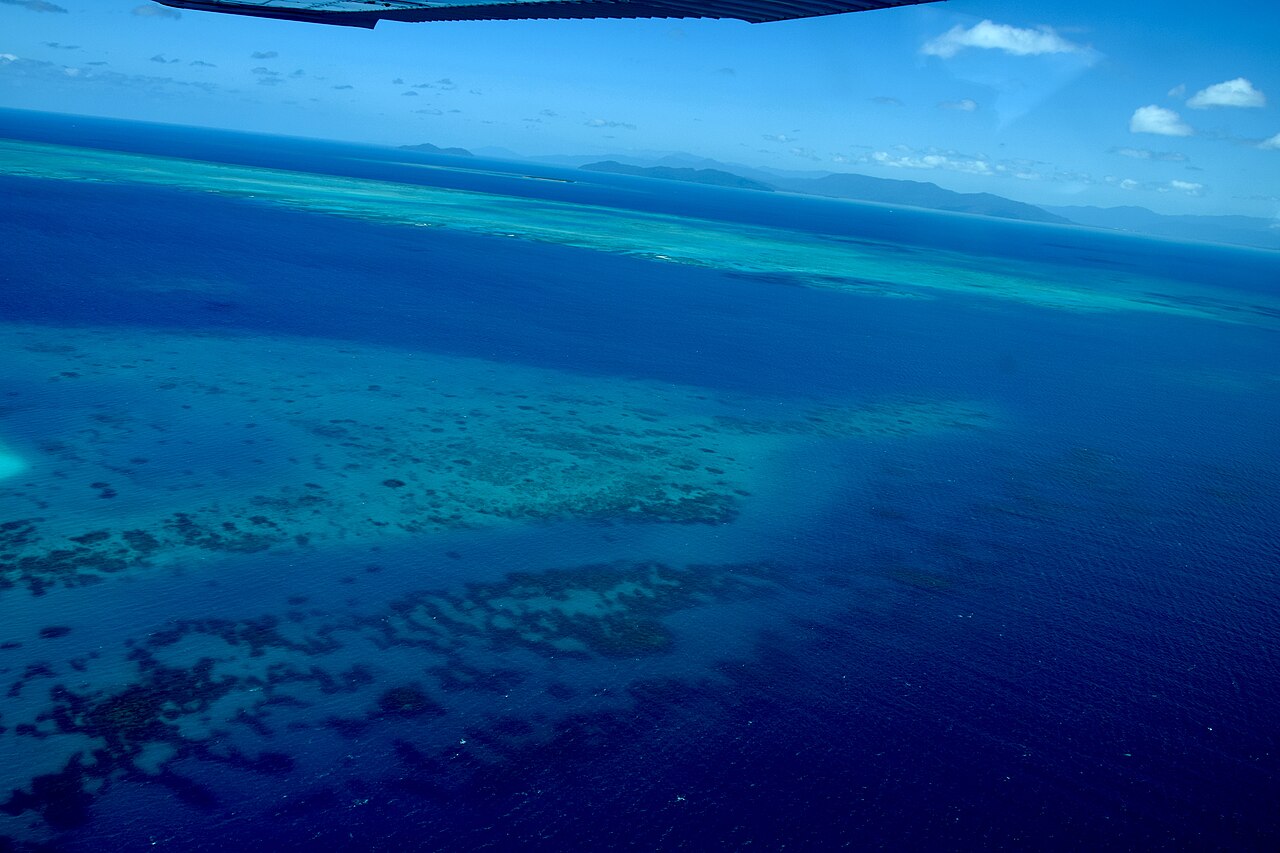
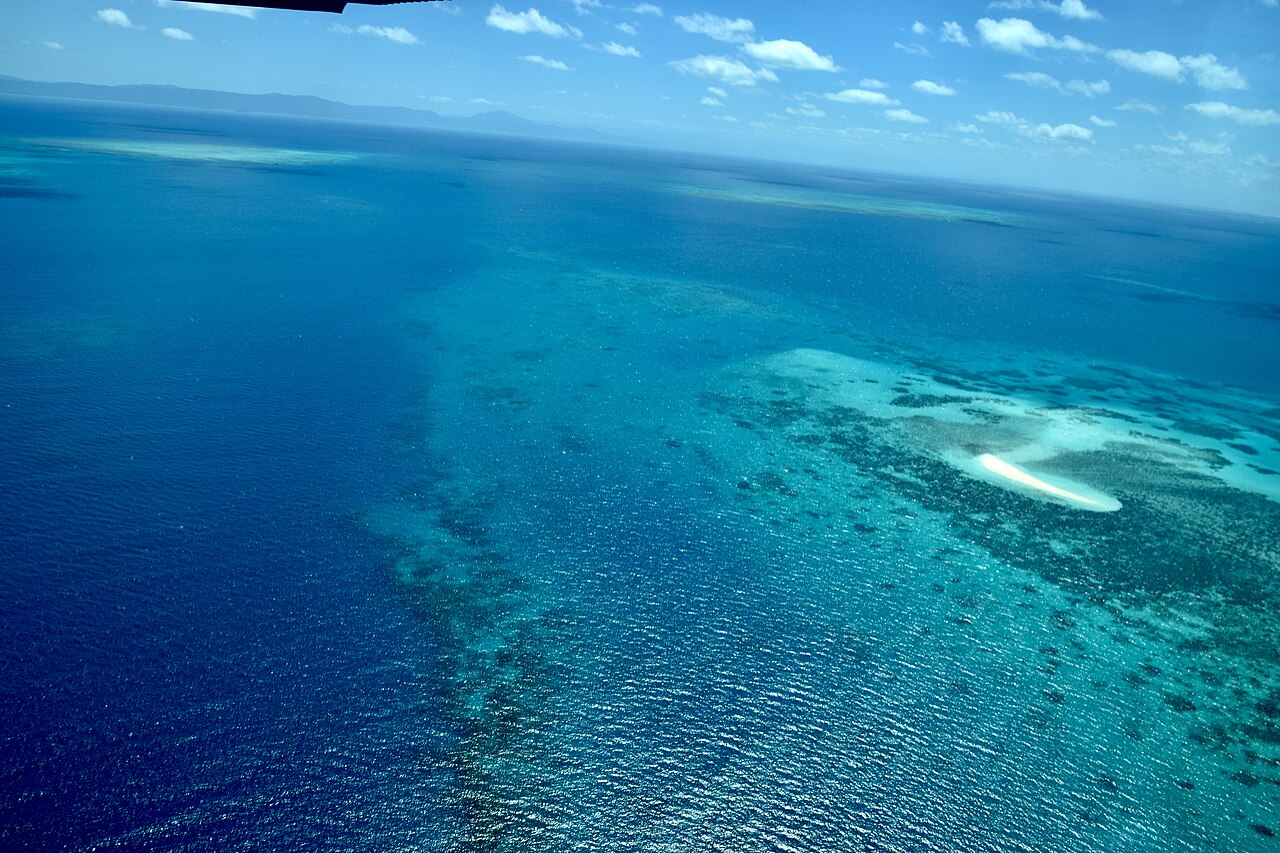
The Great Barrier Reef is the world's largest coral reef system, stretching approximately 2,300 km along the northeastern coast of Queensland, Australia, within the Coral Sea. Comprising roughly 2,900 individual reef structures and 900 islands, it is the largest living structure on Earth, visible as a vast mosaic of shallow platforms, deep channels, and lagoon basins extending from the Torres Strait in the north to the waters off Bundaberg in the south. It was inscribed as a UNESCO World Heritage Site in 1981 and is managed in part by the Great Barrier Reef Marine Park Authority.
As a distribution and habitat region, the reef supports an extraordinary assemblage of marine life: more than 1,500 species of fish, over 400 species of scleractinian coral, 134 species of sharks and rays, 330 species of birds, and six species of marine mammals including the dugong and humpback whale. Its structural diversity—outer-reef slopes, reef crests, fringing margins, and deep lagoons—creates a gradient of microhabitats that underpins one of the most biodiverse marine ecosystems on the planet.
- Location
- Coral Sea, off the coast of Queensland, Australia
- Approximate length
- ~2,300 km (1,400 mi)
- Number of individual reefs
- ~2,900
- Number of islands
- ~900
- Coral species (scleractinian)
- 400+
- Fish species
- 1,500+
- Marine mammal species
- 6 (incl. dugong, humpback whale, bottlenose dolphin)
- Unesco world heritage inscription
- 1981
Lore & Background
The present-day Great Barrier Reef is the latest expression of a reef-building process that has operated in this region for well over a million years, though the current assemblage of coral communities dates to the last glacial maximum, roughly 20,000–25,000 years ago, when sea levels were lower and the reef substrate was closer to the surface. As post-glacial sea levels rose, corals tracked the rising water column, building upward and outward on the eroded limestone platform of the earlier reef. The result is a stepped, terraced structure with outer slopes plunging to 60–70 m and broad, shallow lagoons sheltered to the west.
European contact with the reef system is recorded in the 18th century; Captain James Cook's 1770 survey of the eastern Australian coast and the later voyages of Matthew Flinders and others mapped the outer reefs and identified the treacherous shallow passages that gave the chain its name. Indigenous Australian peoples, particularly the Guugu Yimithirr and other coastal groups, have managed and drawn upon reef resources for tens of thousands of years, maintaining cultural knowledge of fish spawning cycles, tide-dependent foraging, and seasonal movement of marine mammals.
In the modern era the reef faces compounding pressures: chronic thermal stress causing mass bleaching events (notably in 2016, 2017, and 2020), crown-of-thorns starfish outbreaks, agricultural runoff, and cyclonic damage. Despite these threats, the reef's sheer scale and structural heterogeneity mean that refugia—deeper, cooler, or more sheltered zones—continue to sustain populations and serve as sources for larval replenishment across the system.
Reader's Guide
Outer-reef slope (8–25 m) → The dominant microhabitat for many pelagic-reef species. Branching Acropora and table corals form a three-dimensional matrix of overhangs, tunnels, and open channels. Currents are moderate to strong; fish such as snapper, grouper, and damselfish hold tight to structural refuges while planktivores patrol the open water just above the coral canopy. Documented range: continuous from Torres Strait to Bundaberg, though outer-slope extent narrows in the central sector where the reef platform is shallower.
Reef crest and fringing margin (0–3 m) → Wave-exposed, high-turbulence zone. Corals here are predominantly massive Porites and robust Montipora, adapted to constant mechanical stress. Small cryptobenthic invertebrates and juvenile reef fish shelter in crevices between boulders. This habitat is absent in the deep-lagoon interior and is most developed along the northern and southern ends of the reef system where fetch is greatest.
Lagoon and reef flat (0–10 m) → Calm, shallow, often sandy or rubble-strewn with scattered coral patches and seagrass beds (Halodule, Thalassia). This is the primary foraging ground for dugong, green turtle, and parrotfish. Water clarity is high; light penetration supports dense macroalgal and seagrass communities. Local absence: in the deepest central lagoon basins (up to ~60 m), seagrass is replaced by open substrate and the fish assemblage shifts toward deeper-water species.
Inner-reef and back-reef (2–15 m) → Sheltered from direct wave energy, this zone hosts a mix of coral, algae, and soft corals. It is a critical nursery habitat for juvenile fish and invertebrates. Range extension: in recent decades, some outer-slope species have been recorded colonising inner-reef patches following bleaching-driven mortality of the outer community, indicating a measurable shift in local distribution.
Did You Know?
- The Great Barrier Reef is the only major coral reef system on Earth that is actively growing and expanding seaward, as corals build upward to keep pace with sea-level rise.
- Six species of marine mammals are regularly associated with the reef, including the dugong—the only marine herbivore in the region—and the humpback whale, which migrates along the reef's outer edge each year.
- The reef's lagoon basins can reach depths of approximately 60 metres, creating a vertical habitat gradient that supports species from the sunlit crest to the dim, cooler depths below the photic zone.
Physical Form and Taxonomic Neighbours
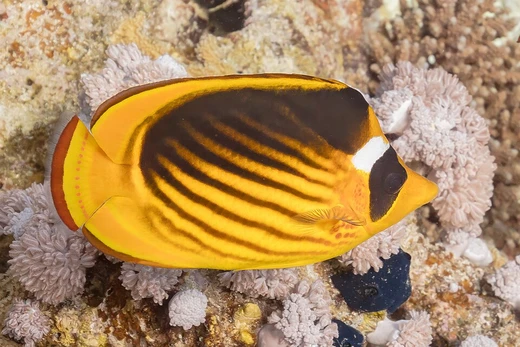
The scrawled butterflyfish presents a striking visual profile, its body rendered in pale white or bluish-white tones that serve as a canvas for a series of bold black markings. Along the flanks, curved and diagonal bars sweep across the body, with each curve bending toward the rear. A distinctive yellow-edged black stripe passes directly through the eye, while a matching bar encircles the snout and mouth region. In terms of fin structure, the dorsal fin carries between twelve and thirteen spines alongside twenty-three to twenty-five soft rays, and the anal fin features three spines with eighteen to twenty soft rays. The species reaches a maximum total length of roughly twenty centimetres. Taxonomically, it sits within the family Chaetodontidae and shares a close relationship with both the mailed butterflyfish and the ornate butterflyfish. These three were once grouped under the subgenus name Citharoedus, though that designation proved invalid because the same name had already been assigned to a mollusc genus. They may also be closely allied to the subgenus Corallochaetodon, and if the broader genus Chaetodon were ever subdivided, this group could potentially be elevated into the genus Megaprotodon.
An Extraordinary Indo-Pacific Reach
Few reef fish command a range as sweeping as that of the scrawled butterflyfish. Its core distribution spans the Indo-Pacific, stretching along the eastern African coastline from Somalia all the way down to Durban, then continuing across both the Indian and Pacific basins. To the east, its range extends as far as the Line Islands and the Hawaiian archipelago. Northward, populations reach the Ryukyu Islands off the coast of Japan, while to the south the species is documented along the Great Barrier Reef, in New Caledonian waters, and around Tonga. Remarkably, occasional vagrant individuals have been recorded well outside this primary range, turning up in the eastern Pacific at the Galapagos Islands off Ecuador and at the Revillagigedo Islands belonging to Mexico. These stray sightings underscore just how mobile this species can be, or how far currents and larval dispersal can carry it. The breadth of its distribution, from warm African shores to the remote reaches of the central Pacific, makes it one of the more geographically widespread members of the butterflyfish family, thriving across an enormous mosaic of tropical and subtropical reef environments.
Reef Life: Habitat, Pairing, and a Coral-Diet Niche
The scrawled butterflyfish occupies a relatively shallow band of the reef, typically between two and twenty-five metres depth. It favours areas dense with living coral, whether in the calm, clear waters of lagoons or on the more exposed seaward reef slopes. Its social structure shifts noticeably with age: young individuals tend to be solitary, weaving through the intricate branches of branching corals for shelter. As they mature, however, the fish form lasting pairs and establish a defined home range that they defend and inhabit together. Reproduction follows a straightforward pattern; the species is oviparous, and breeding occurs within these bonded pairs. Perhaps most ecologically notable is its feeding strategy. The scrawled butterflyfish is an obligate corallivore, meaning coral is essentially its sole food source. Yet researchers believe it does not actually consume the coral's living tissue. Instead, it appears to feed primarily on the mucus that corals secrete, a subtle but important distinction that shapes its role within the reef ecosystem and its relationship with the very organisms it depends on for survival.
A Two-Century-Old Name and a Mysterious Honouree
The formal scientific description of the scrawled butterflyfish dates back to 1801, when two German naturalists, Marcus Elieser Bloch (1723–1799) and Johann Gottlob Theaenus Schneider (1750–1822), published the species account. They designated Ambon Island in present-day Indonesia as the type locality, the place where the original specimen was collected. The specific epithet 'meyerii' honours an individual whose identity Bloch and Schneider never explicitly stated. The type specimen resided in the Museo Meyeri Lugduni Batavorum, commonly known as Meyer's Museum, located in Leiden, Netherlands. The most likely candidate for this mysterious Meyer is Johan Frederik Meijer, a man who worked as a bookkeeper on Ambon Island and who, during the eighteenth century, maintained a modest natural-history collection back in the Netherlands. The fact that a relatively obscure colonial clerk's name was immortalised in a fish species for over two centuries speaks to the tangled, often under-documented web of eighteenth-century natural history, where specimens traveled from distant islands to European museums and names were attached with little public explanation.
Gallery
More in Distribution & Habitat
Elsewhere in Diagonal butterflyfish
Spotted an error? Know more?
Reader corrections go straight into our review queue. Suggest an edit · How this site is sourced