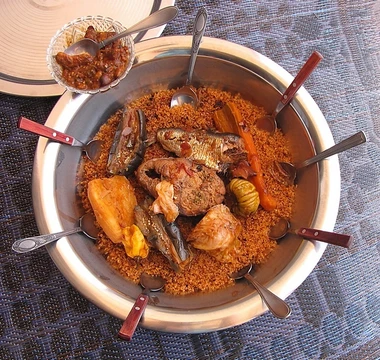
Thieboudienne
Senegalese national dish of fish, rice, and tomato sauce.

Dbilakovic · CC BY-SA 4.0
Thieboudienne, also known as ceebu jën or thieboudienne, is a traditional dish from Senegal that serves as the national dish of the country. It is a one-pot meal prepared with fish, broken rice, and tomato sauce, and is also consumed in Mauritania, Guinea-Bissau, Guinea, Mali, The Gambia, and other West and Central African countries. The dish is a symbol of Senegalese hospitality, traditionally eaten from a large communal dish with the hand or a spoon.
- Also known as
- Ceebu jën, tiep, thieb, benechin, benachin
Quick Facts
- Variations
- Meat
- Minor Ingredient
- Vegetables
- Main Ingredient
- Fish and rice
- Maxtime
- 4h
- Mintime
- 2h
- Creator
- <!-- or
- Country
- Saint-Louis, Senegal
- Similar Dish
- Jollof rice
Facts from the source article.
Lore & Background
Thieboudienne is historically attributed to the city of Saint-Louis in the nineteenth century. The name comes from the Wolof words ceeb ('rice') and jën ('fish'); in Pulaar it is known as maaro e liddi ('rice and fish'). The dish is traditionally served on large trays with rice on the bottom and fish—usually white grouper—and whole vegetables placed in the center. The collapse of white grouper fisheries has reduced access to the dish.
Reader's Guide
Thieboudienne holds deep cultural significance in Senegal as the national dish and a symbol of terranga, or hospitality. Families, visiting friends, and guests gather around a single communal dish called a bolus, eating with a spoon or their hand. The dish has spread across West and Central Africa, with variations by country and ethnicity. In Mali it is known as tieb, while in Cameroon, Guinea, and Ivory Coast it is called riz gras. The popular West African dish jollof rice is thought to have originated from thieboudienne, and the Gullah dish red rice resembles it, suggesting a creolization of West African foodways in the New World. The dish is considered an intangible cultural heritage of humanity.
Did You Know?
- The name thieboudienne comes from the Wolof words ceeb ('rice') and jën ('fish').
- It is traditionally eaten from a large communal dish called a bol or bol de riz.
- The dish is historically attributed to the city of Saint-Louis in the nineteenth century.
- Jollof rice is thought to have originated from thieboudienne.
Origins, Naming, and Historical Roots
The name of this beloved Senegalese dish is a straightforward Wolof compound: "ceeb" meaning rice and "jën" meaning fish. In the Pulaar language, the same idea is expressed as "maaro e liddi," while the Wolof term has been adopted into Hassaniya Arabic, where speakers also use the descriptive calque māru w-əl-ḥūt. The preparation is most commonly traced back to the coastal city of Saint-Louis during the nineteenth century, and it has since become the undisputed national dish of Senegal. Yet its reach extends far beyond one country's borders; it is a staple across Mauritania, Guinea-Bissau, Guinea, Mali, The Gambia, and numerous other West and Central African nations. Within Senegal, the dish is also called "benechin," a Wolof word that translates to "one pot," a nod to the single-vessel cooking method at its heart. In more recent decades, the decline of white grouper fisheries has made the classic fish-based version harder to source in some areas.
The One-Pot Recipe and Its Many Faces
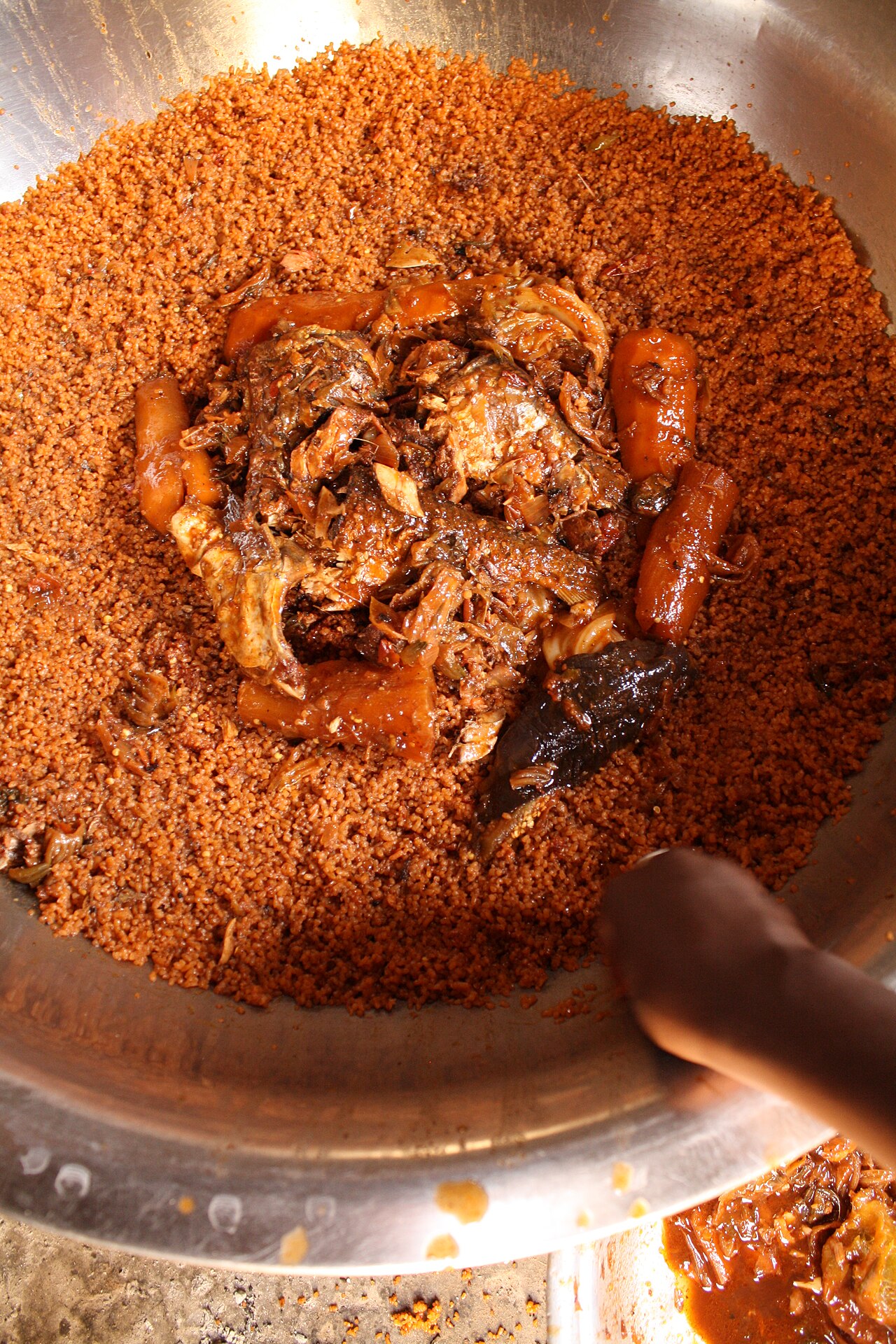
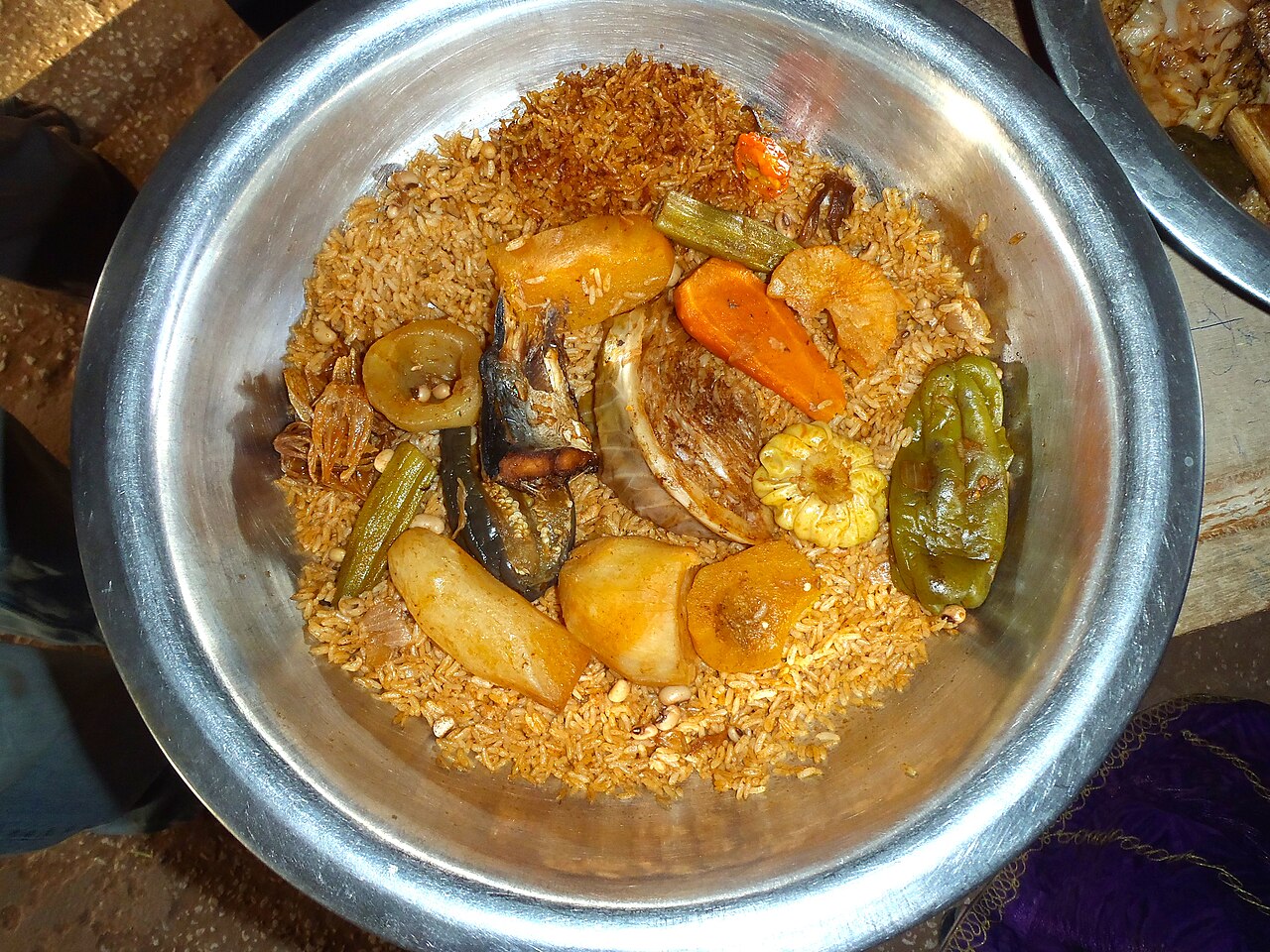
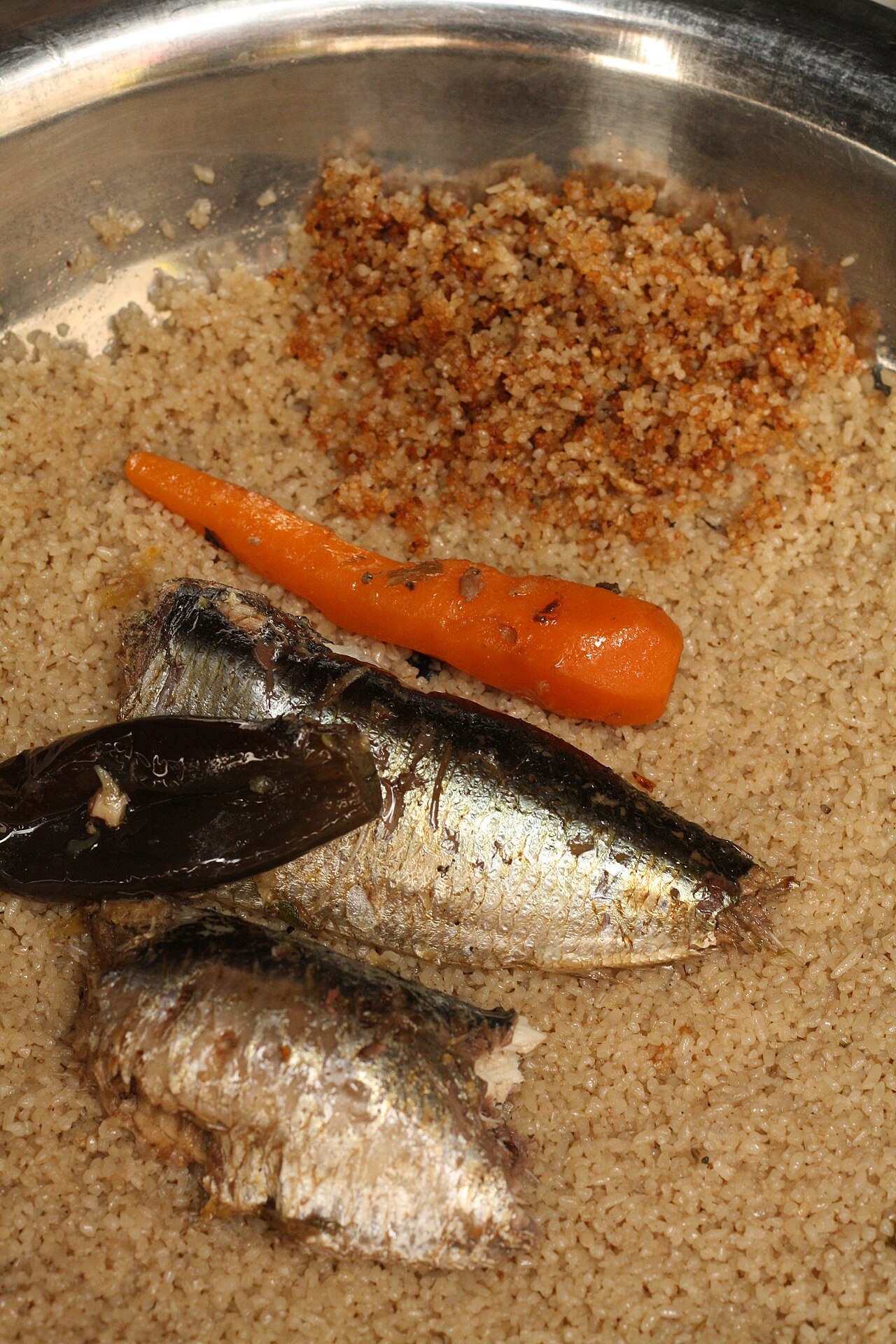
At its simplest, the fish-centered version—cee bu jën—unites fresh or dried fish, broken rice (locally called "rice Wolof"), and a rich tomato-based sauce, all simmered together in a single pot. The vegetable and seasoning palette typically draws from onions, carrots, cabbage, cassava, hot peppers, lime, peanut oil, and stock cubes, with parsley, garlic, and tomato paste rounding out the flavor. The concept is not limited to fish: tiep yappa swaps in meat, while tiep ganaar features chicken. Across the region, the recipe adapts to local tastes. In Mali, the equivalent "tieb" centers on chicken with a tomato-and-onion base. In Cameroon, Guinea, and Ivory Coast, a comparable dish goes by the name "riz gras." Even within Senegal, ethnic and regional identities leave their mark: southern cooks may stir in bissap, while those in Dakar and Saint-Louis favor soul. The dish is recognized as an intangible cultural heritage of humanity.
Terranga and the Communal Table
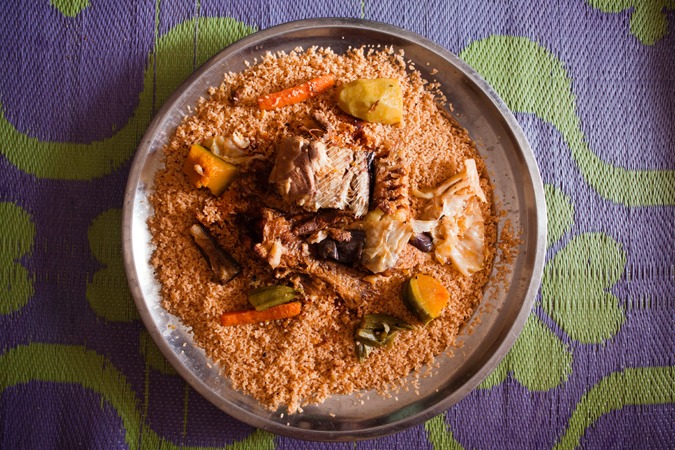
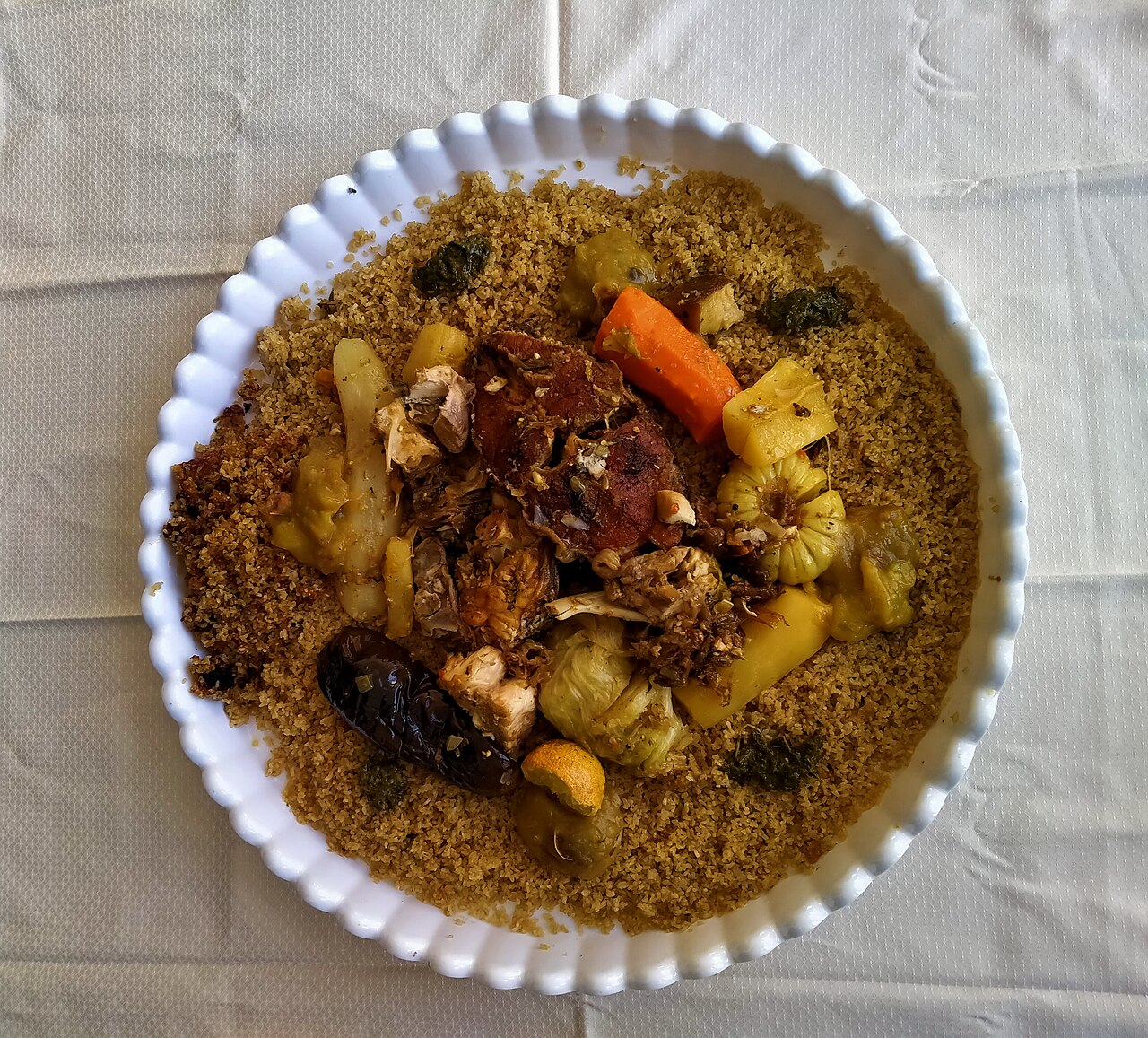
Thieboudienne is inseparable from the Senegalese ideal of terranga, a deep-rooted ethos of hospitality and generosity. The dish is traditionally served in a large communal vessel known as a bolus, set atop a wide tray. The broken rice forms the foundation, while the centerpiece—usually a whole white grouper (Epinephelus aeneus)—is surrounded by vegetables, many of them left whole, creating a visually striking arrangement. Family members, close friends, and honored guests gather around this single dish, tearing off portions with their hands or scooping with a spoon called a couddou in Pulaar. This shared, tactile way of eating is not merely practical; it is a social ritual that dissolves boundaries between host and guest, elder and child. In a culture where hospitality is a moral obligation, the bolus becomes a physical symbol of belonging, reminding everyone at the table that nourishment is meant to be experienced together.
A Dish That Crossed Oceans
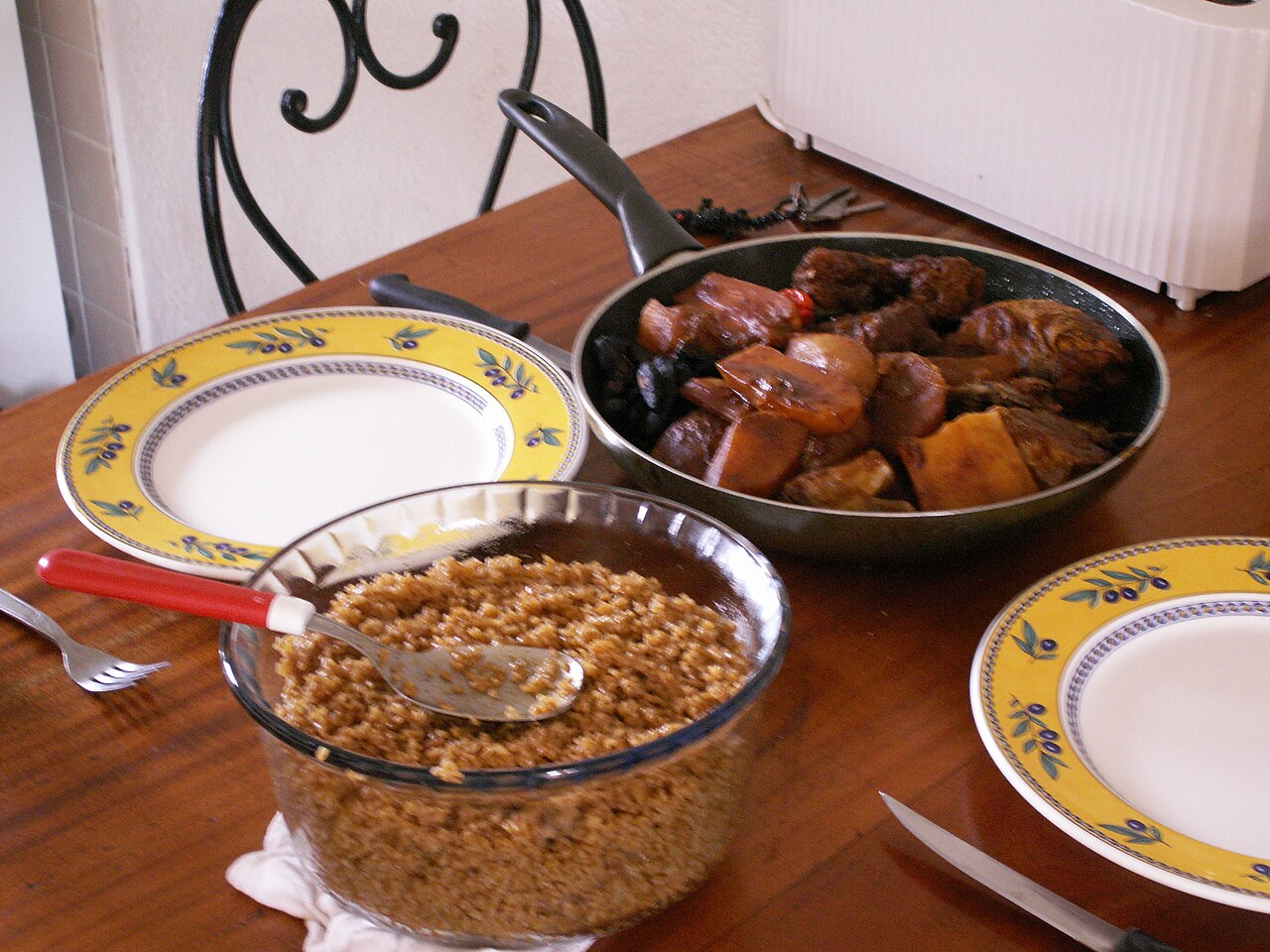
The culinary fingerprints of thieboudienne can be found on multiple continents. The celebrated West African dish known as jollof rice is widely believed to have evolved directly from this one-pot preparation, though jollof typically replaces fish with meat and folds the rice into the other ingredients rather than keeping it separate. Jollof has since become a beloved staple in Nigeria, Ghana, and across the broader region. The dish's influence also traveled to the Americas: the Gullah "red rice" found along the Savannah and Charleston coasts of the United States bears a striking resemblance to thieboudienne, offering tangible evidence of how enslaved Africans and their descendants carried and creolized West African foodways in the New World. With its name rendered in dozens of ways—from ceebu jen and thiébou dieune to the French "riz au poisson"—the dish's very spelling is a record of its long migration across languages, coastlines, and centuries.
Gallery
Frequently Asked Questions
What exactly is Thieboudienne?
It is Senegal's national dish: a single-pot meal built around fish, broken rice, and a tomato-based sauce that anchors the country's culinary identity.
What are the other names people use for Thieboudienne?
Depending on the region or dialect, you will also hear it called ceebu jën, tiep, thieb, benechin, or benachin.
Where can you find Thieboudienne outside Senegal?
The dish has spread well beyond its homeland, with recognizable versions served in Mauritania, Guinea-Bissau, Guinea, Mali, The Gambia, and other parts of West and Central Africa.
How do people traditionally eat Thieboudienne?
It is plated in one large communal dish and eaten by hand or with a spoon, turning the meal into a shared, hands-on experience rather than an individual plate.
Why is Thieboudienne considered so important in Senegalese culture?
Beyond simply being the national dish, it acts as a living symbol of hospitality and togetherness, since the whole meal is meant to be pulled from one shared pot by everyone at the table.
More in Senegalese cuisine 1-21
Spotted an error? Know more?
This is a living reference — every entry is fact-audited, and reader corrections feed straight into our audit queue. Suggest an edit · See this site's audit record