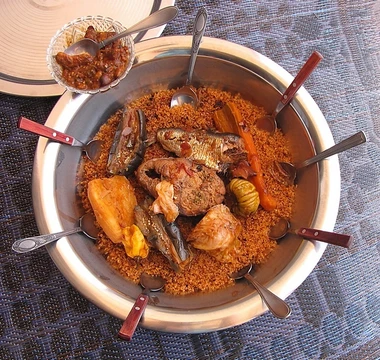
Café Touba
Spiced coffee from Senegal, linked to the Mouride brotherhood.

George D Manta · CC BY-SA 4.0
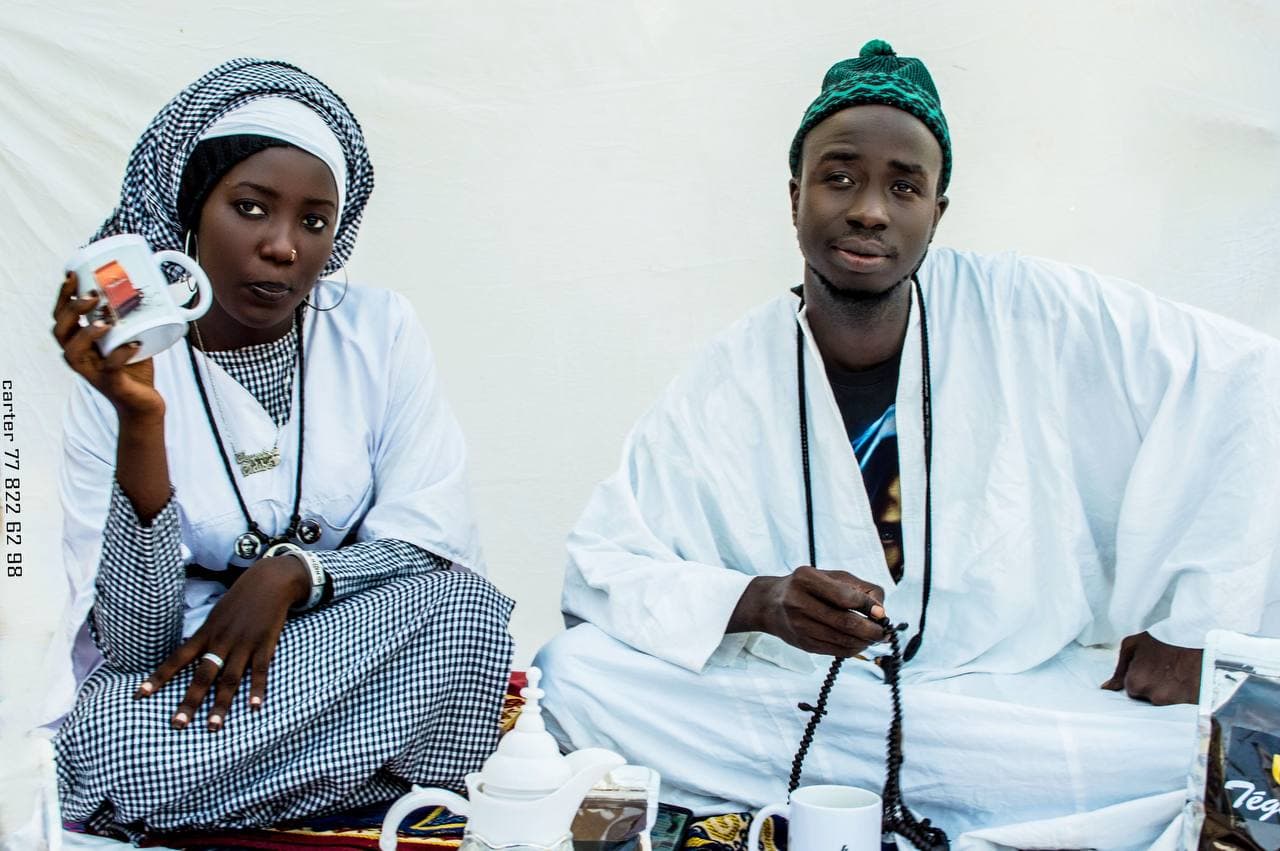
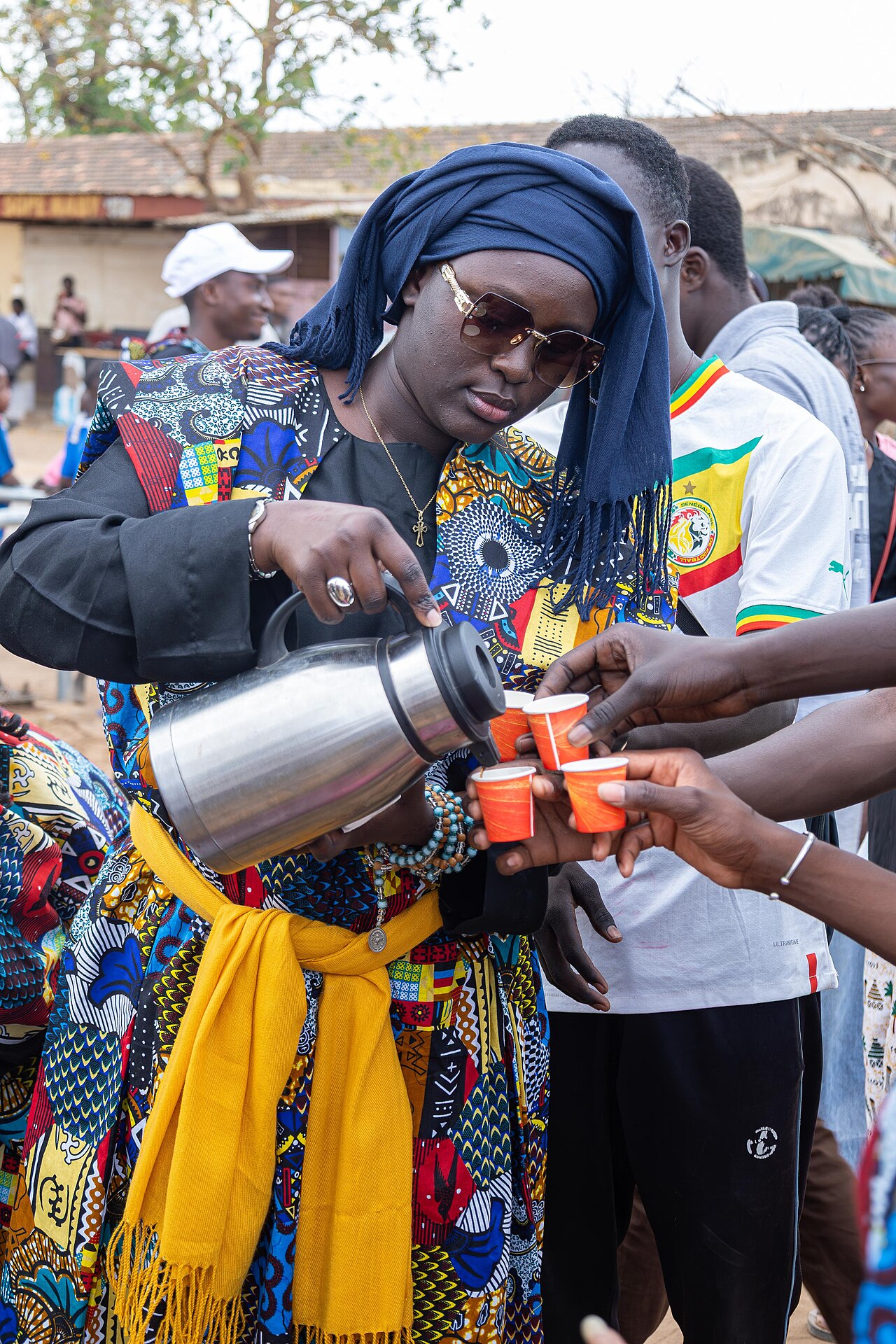
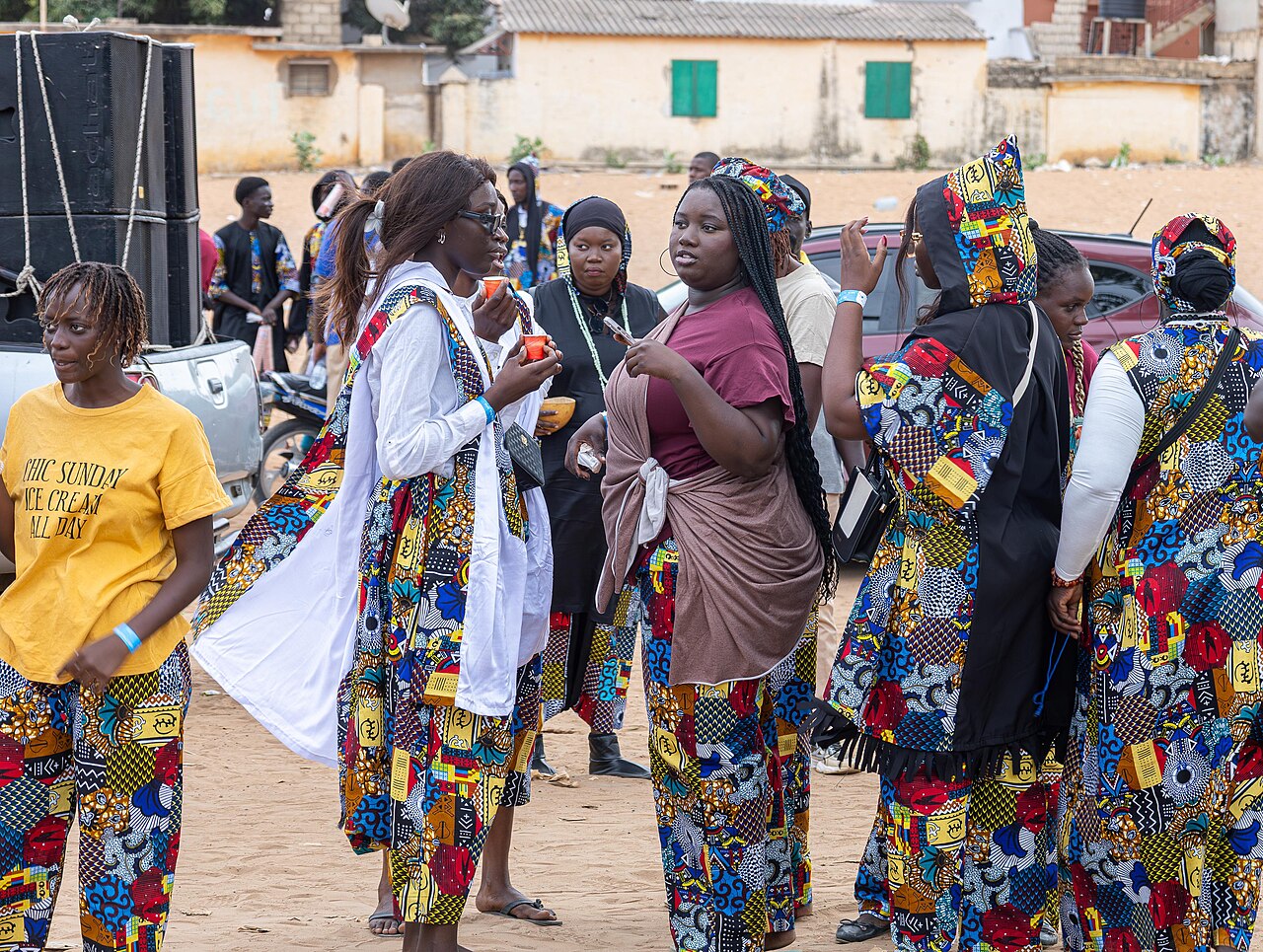
Café Touba is a traditional coffee drink from Senegal, named after the city of Touba. It gets its distinctive flavor from grains of Selim (also called Guinea pepper, or *djar* in Wolof), and sometimes cloves. The spices are roasted and ground with coffee beans, then traditionally prepared by boiling the mixture in water and straining it through a cloth filter—not a paper drip filter. The drink is closely tied to the Islamic Mouride brotherhood: its founder, Sheikh Amadou Bamba Mbacké, brought it to Senegal after returning from exile in Gabon in 1902. Café Touba is served at ceremonies, commemorations, and during the Grand Magal of Touba.
The typical mix is about 80 percent coffee to 20 percent *djar*. In recent years, café Touba has grown in popularity, spreading to cities of all faiths in Senegal and beyond. The World Bank noted that in poorer parts of Senegal, the 2009 global recession led people to replace imported coffee with café Touba; one restaurant owner said it was now drunk even by children at breakfast. Commercial exports remain small, but in Guinea-Bissau, café Touba has gained a following, though it is not documented as the country's most popular drink. Its rise has cut into sales of instant coffee, especially Nescafé, prompting Nestlé to launch a spiced product called Nescafé Ginger & Spice to compete.
- origin
- Senegal
- also_consumed_in
- Guinea-Bissau
- key_ingredient
- Grains of Selim (djar, Xylopia aethiopica)
- typical_ratio
- 80% coffee to 20% djar
- associated_group
- Islamic Mouride brotherhood
- introduced_by
- Sheikh Amadou Bamba Mbacké
- year_introduced
- 1902
Lore & Background
Café Touba is named for the city of Touba, Senegal, a name derived from Hassaniya Arabic Ṭūbā, meaning 'Felicity.' The drink's defining characteristic is the addition of djar, the dried fruit of the shrub Xylopia aethiopica, which is cultivated in Touba. The spices are mixed and roasted with coffee beans, then ground into a powder and traditionally brewed by boiling in water and straining through a cloth filter. The drink is traditionally consumed by the Islamic Mouride brotherhood, as it came to Senegal when the brotherhood's founder, Sheikh Amadou Bamba Mbacké, returned from exile in Gabon in 1902. Café Touba is served during ceremonies, commemorations, and the Grand Magal of Touba.
Reader's Guide
Café Touba has grown from a traditional Mouride beverage to a widely consumed drink across Senegal and beyond. In recent years, its consumption has increased, spreading to cities of all faiths both in and outside Senegal. The World Bank noted that a progressive elimination of imported coffee seemed common in poorer areas of Senegal following the global recession of 2009, with a restaurant owner stating that people, including children, began drinking café Touba for breakfast due to the crisis. In Guinea-Bissau, café Touba became the country's most popular drink, despite being relatively unknown several years prior. Its rise has impacted the instant coffee market, decreasing sales of brands like Nescafé in West Africa. To compete, Nestlé launched a spiced product called Nescafé Ginger & Spice. Commercial export outside Senegal, while small, is present.
Did You Know?
- Café Touba is named for the city of Touba, Senegal, which means 'Felicity' in Hassaniya Arabic.
- The drink is flavored with grains of Selim, also known as Guinea pepper, which is the dried fruit of the shrub Xylopia aethiopica.
- Café Touba was introduced to Senegal in 1902 when Sheikh Amadou Bamba Mbacké returned from exile in Gabon.
- In Guinea-Bissau, café Touba has gained popularity, but it is not documented as the country's most popular drink.
Sacred Origins and the Mouride Tradition
Café Touba takes its name from the Senegalese city of Touba, a place whose Hassaniya Arabic rendering, Ṭūbā, carries the meaning of 'Felicity.' The beverage's origins are inseparable from the Islamic Mouride brotherhood. By tradition, the drink first came to Senegal when the brotherhood's founder, Sheikh Amadou Bamba Mbacké, returned from his exile in Gabon in 1902. From that point forward, café Touba became woven into the brotherhood's ceremonial life. It is served at formal gatherings, at commemorations marking important dates in the faith's history, and most visibly during the Grand Magal of Touba. For its practitioners, preparing and sharing this spiced coffee transcends simple refreshment; it is an act of communal devotion and a living link to the spiritual heritage that Sheikh Amadou Bamba carried back from his years abroad.
The Art of Preparation and the Role of Djar
What distinguishes café Touba from a plain cup of brewed coffee is the presence of djar, the Wolof name for the dried fruit of the shrub Xylopia aethiopica, more widely known as Guinea pepper or grains of Selim. This spice is cultivated in and around the city of Touba, and its inclusion is the single most important factor that sets this drink apart from ordinary coffee. In some preparations, cloves are also folded into the blend to add another layer of warmth. The traditional method calls for the spices to be mixed directly with raw coffee beans and roasted together before the entire mixture is ground into a fine powder. The typical ratio runs roughly eighty percent coffee to twenty percent djar. Brewing follows a familiar pattern: the ground blend is steeped through a filter in a manner closely resembling the drip-coffee process found in kitchens around the world. The result is a warm, aromatic beverage whose earthy, slightly peppery character owes everything to that small handful of locally grown djar.
Economic Ripples and the Challenge to Global Brands
The growing popularity of café Touba has sent ripples through the West African coffee market. The World Bank noted that, following the 2009 global recession, a steady shift away from imported coffee was becoming visible in poorer areas of Senegal. A local restaurant owner summed up the change in plain terms: his customers had not previously reached for Touba coffee at breakfast, but since the economic crisis, people of all ages—including children—had embraced it as a daily staple. This grassroots shift carried broader commercial consequences. Sales of instant coffee, particularly the Nescafé brand, began declining across West Africa as consumers turned to the locally prepared alternative. Nestlé, recognizing the threat posed by this homegrown competitor, responded by launching a spiced variant called Nescafé Ginger & Spice, an attempt to capture some of the flavor profile that made café Touba so appealing to everyday drinkers. Meanwhile, a small but growing commercial export of the drink has begun reaching markets beyond Senegal's borders.
From Senegalese Tradition to West African Staple
What began as a ritual drink within a single religious brotherhood has expanded into a widely consumed beverage across multiple nations. While café Touba remains most closely associated with Senegal, its popularity has crossed borders in recent years, finding a particularly enthusiastic audience in Guinea-Bissau. In that neighboring country, the drink has climbed to the position of the most popular beverage, a remarkable transformation given that it was still relatively unknown there just a few years earlier. Within Senegal itself, consumption is no longer confined to the Mouride community; the drink is now spreading to cities of all faiths, both domestically and in neighboring countries. The pace of adoption has been swift enough to register in market data and to prompt international coffee companies to develop direct competitors. What was once a ceremonial offering tied to a specific spiritual tradition has become a daily habit for a growing number of drinkers, a testament to the universal appeal of a well-spiced, affordably prepared cup of coffee that carries the name of a city whose very meaning is 'Felicity.'
Gallery
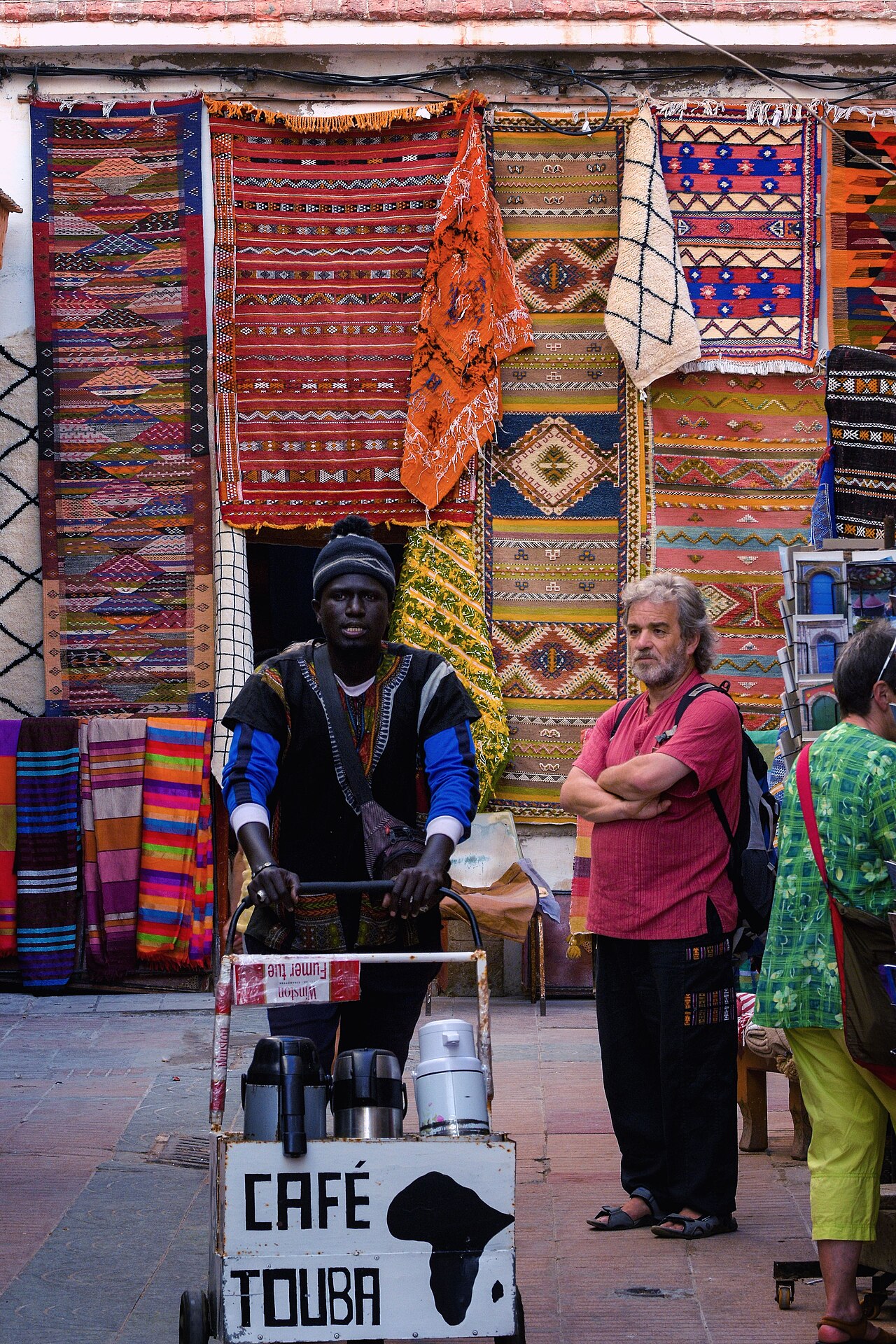
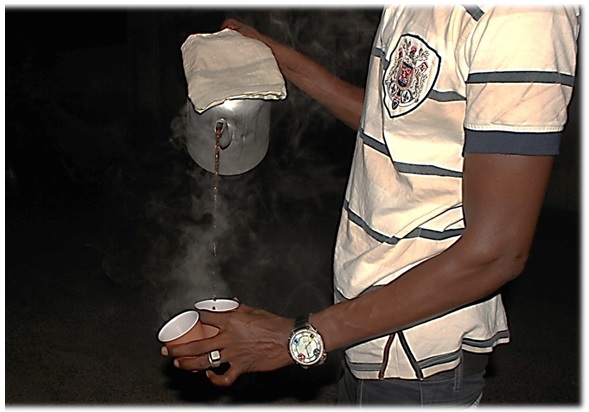
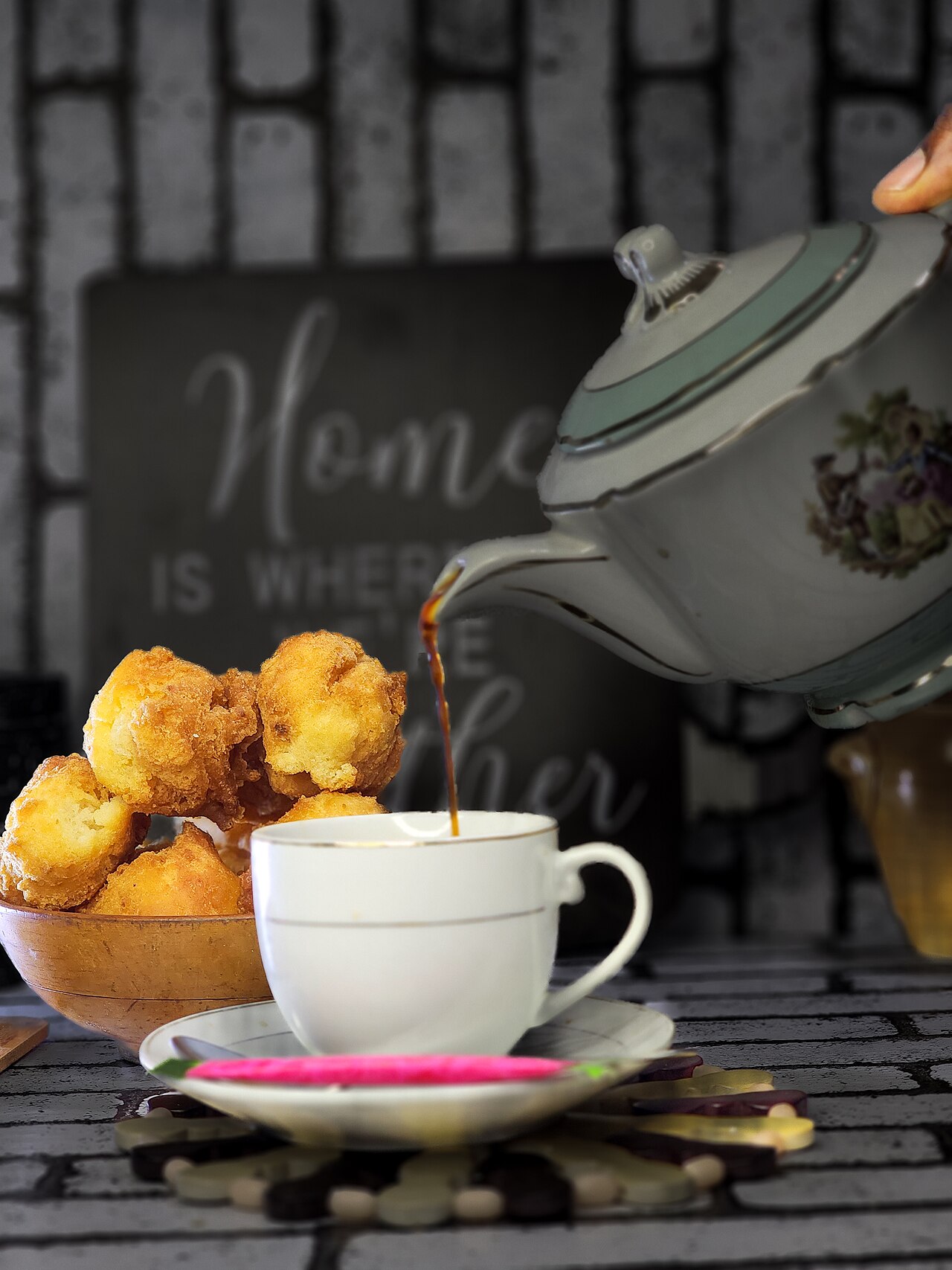
Frequently Asked Questions
What is Café Touba?
Café Touba is a traditional spiced coffee drink from Senegal, named after the holy city of Touba. It is set apart from ordinary coffee by the inclusion of roasted grains of Selim (djar) and, in some recipes, cloves.
What gives Café Touba its distinctive flavor?
The signature taste comes from grains of Selim (Xylopia aethiopica), a West African spice known in Wolof as djar. These are typically roasted and ground alongside coffee beans in roughly an 80-to-20 ratio, producing a warm, peppery note absent from plain coffee.
How is Café Touba traditionally prepared?
Instead of a paper drip filter, the roasted coffee-and-djar blend is boiled in water and then strained through a cloth filter. This boiling-and-straining method yields a bolder, more aromatic cup than standard drip brewing.
What is the connection between Café Touba and the Mouride brotherhood?
The drink is closely tied to the Islamic Mouride order, whose founder Sheikh Amadou Bamba Mbacké is credited with bringing it to Senegal after his return from exile in Gabon in 1902. It features prominently at Mouride ceremonies and commemorative gatherings.
Is Café Touba consumed outside of Senegal?
Yes; the drink has also gained a following in neighboring Guinea-Bissau. Its reach extends further through Mouride community networks and the broader West African diaspora.
More in Senegalese cuisine 1-21
Spotted an error? Know more?
This is a living reference — every entry is fact-audited, and reader corrections feed straight into our audit queue. Suggest an edit · See this site's audit record