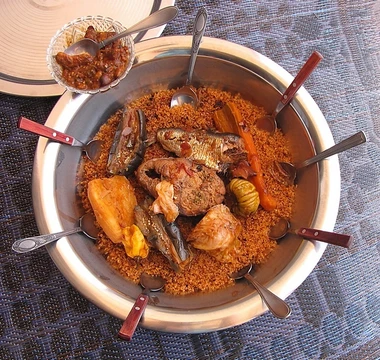
Peanut stew
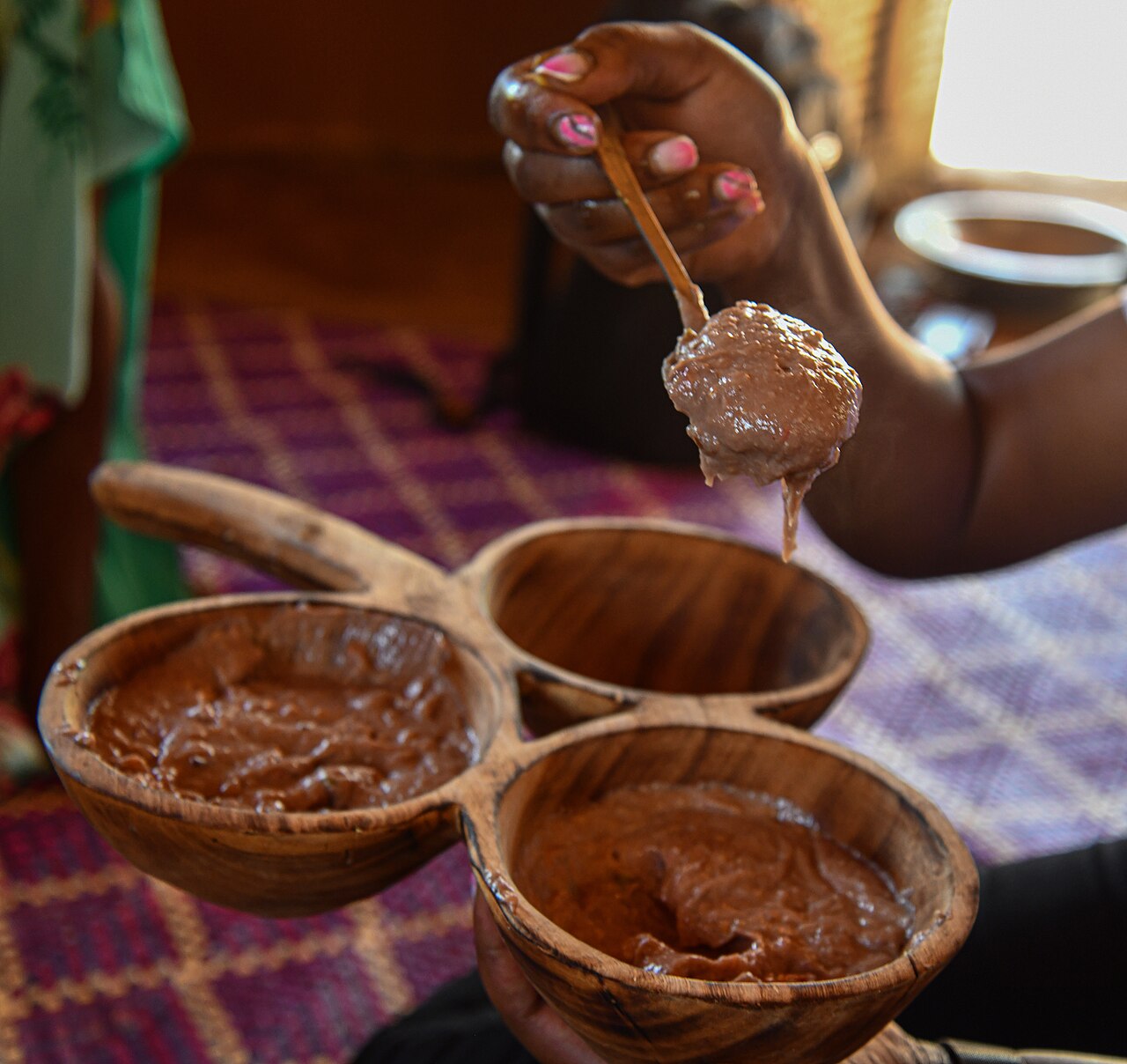
A staple West African stew made with peanut paste.

Ssemmanda will · CC BY-SA 4.0
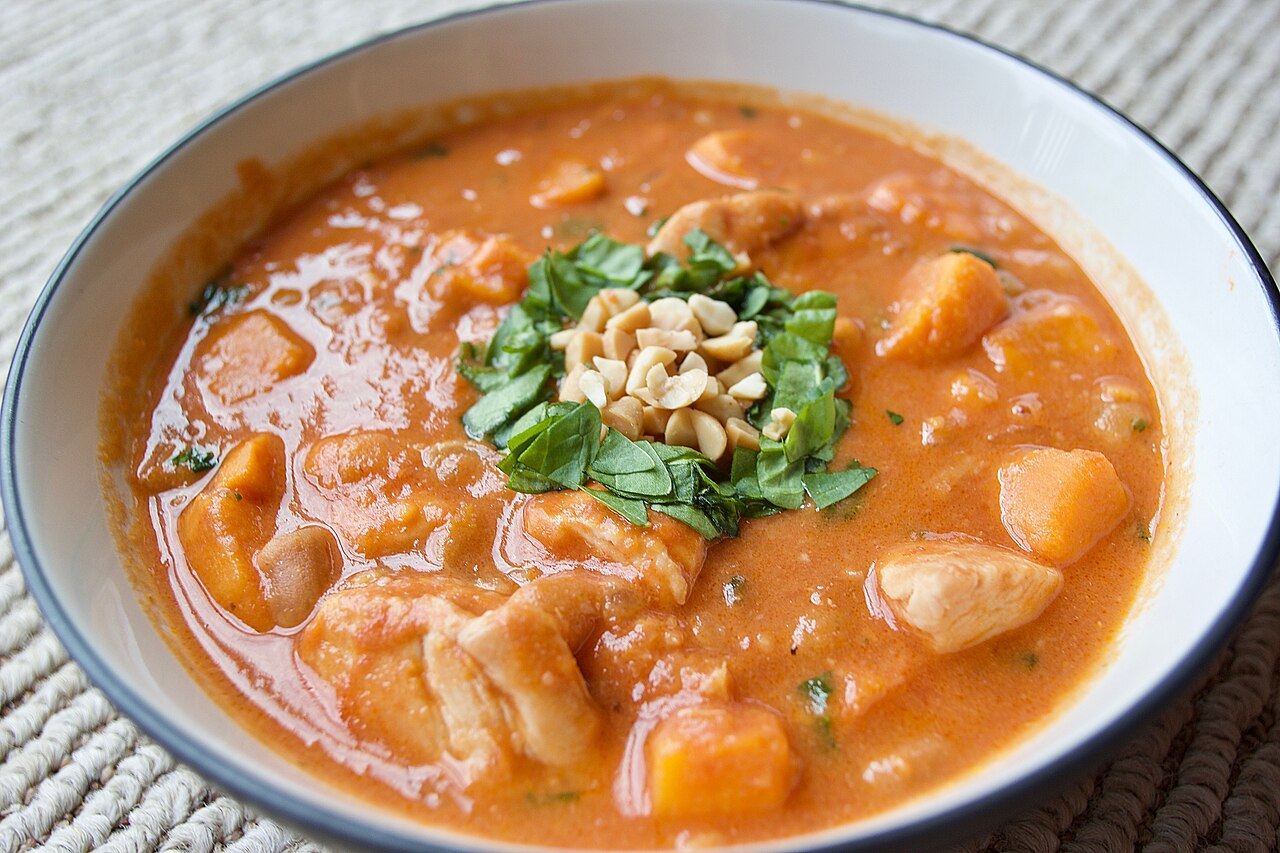
Peanut stew—called groundnut stew, maafe (from Wolof), or pate d'arachide in French—is a staple across West Africa. Its origins are shared among many cultures: Mali has its own version, tigadéguéna (Bambara: *tigadɛgɛna*), created by the Mandinka and Bambara people, while Senegal developed its own maafe tradition. Peanuts were introduced to West Africa via Portuguese trade in the 16th century and have been cultivated in Mali for centuries, alongside Bambara groundnuts. The Mandinka name for the sauce is domodah or tigadɛgɛna—literally “peanut butter sauce,” from *tiga* (peanut), *dɛgɛ* (paste), and *na* (sauce). Gambians also use domodah, borrowed from Mandinka, though in Senegal domoda refers to a flour-thickened soup or stew distinct from maafe, which uses peanut paste.
Senegalese maafe is a favorite among Senegalese, Mauritanian, and Gambian groups, and is popular across West Africa and beyond—including Cameroon and France. Variants appear throughout West and Central Africa, closely related to groundnut soup. It can be made with lamb, beef, chicken, or no meat. In Ghana, it’s typically eaten with fufu.
Recipes vary widely but often include chicken, tomato, onion, garlic, cabbage, and leafy or root vegetables. Some versions add okra, corn, carrots, cinnamon, hot peppers, paprika, black pepper, turmeric, cumin, and other spices. Maafe is traditionally served with white rice (in Senegal, Mauritania, Guinea-Bissau, and Gambia), fonio or to (millet dough) in Mali, tuwo or omo tuo (rice or millet dough) in northern Nigeria, Niger, and northern Ghana, couscous in Sahelian countries, or fufu and sweet potatoes in tropical areas like Ivory Coast. Um'bido is a greens-based variation; Ghanaian maafe includes boiled eggs. “Virginia peanut soup,” a descendant of Senegalese maafe, traveled to North America with enslaved Africans.
Senegalese maafe evolved from bassi guerte, a peanut butter sauce served with chere (millet-based couscous). It differs from Malian tigadèguèna in taste and consistency: tigadèguèna is traditionally more watery and made with unrefined shea butter, while Senegalese maafe is a creamy, rice-based dish with peanut paste, tomato, oil, meat, onion, garlic, vegetables, and spices. In The Gambia, this dish is called domodah.
Domoda, a Gambian groundnut stew, uses ground peanuts or peanut butter, meat, onion, toma
- Origin
- Senegal (maafe); Mali (tigadéguéna)
- Also known as
- Maafe, mafé, maffe, pate d'arachide, domodah, tigadɛgɛna
- Main ingredients
- Peanut paste, tomato, onion, garlic, meat (lamb, beef, chicken) or without meat, vegetables, spices
- Served with
- White rice, fonio, to, tuwo, omo tuo, couscous, fufu, sweet potatoes
- National dish of
- The Gambia (domoda)
- Variations
- Um'bido (with greens), Ghanaian maafe (with boiled eggs), Virginia peanut soup (North America)
Quick Facts
- Region
- Senegal, Mali
- Main Ingredient
- Meat (lamb, beef, or chicken), tomatoes, onions, garlic, cabbage, leaf or root vegetables, peanuts
- Similar Dish
- Domoda, djerma, kare-kare
Facts from the source article.
Lore & Background
Peanut stew, or maafe, is a dish enjoyed across West Africa, with distinct regional variations. In Senegal, maafe emerged as a creamy, rice-based dish incorporating peanut paste and tomato. In Mali, a similar but distinct stew called tigadéguéna originated among the Mandinka and Bambara people, traditionally made with unrefined shea butter and a more watery consistency. The two dishes are often confused, but both have deep roots in their respective regions. Peanuts have been cultivated in Mali for centuries, introduced via Portuguese trade in the 16th century, and are a key ingredient in tigadéguéna. The Mandinka name domodah (or tigadɛgɛna) means 'peanut butter sauce,' a
Reader's Guide
Peanut stew holds significant cultural and culinary importance across West Africa and beyond. It serves as a national dish in Mali and The Gambia, and is a staple in Senegal, Mauritania, Guinea-Bissau, and other countries. The dish reflects regional variations: Senegalese maafe is a creamy rice-based stew with peanut paste, while Malian tigadéguéna is more watery and uses shea butter. In Ghana, it is often eaten with fufu and may include boiled eggs. The stew traveled with enslaved Africans to North America, giving rise to Virginia peanut soup. Its versatility allows for ingredients like chicken, lamb, beef, or no meat, and vegetables such as okra, cabbage, and carrots. The dish is typically served with rice, fonio, millet dough, couscous, or fufu, depending on the region. The confusion between maafe and tigadèguèna highlights the complex culinary exchanges within West Africa, where colonial history and indigenous traditions intertwine.
Did You Know?
- Maafe is a dish from the colonial era that consisted of rice, among other things, and was not known in Mali before it was imported into Senegal.
- The concept of peanuts was unknown in Mali; Bambara groundnuts were used instead.
- In The Gambia, domoda is a type of groundnut stew considered one of the national dishes.
- Virginia peanut soup, a variation of Senegalese maafe, traveled with enslaved Africans to North America.
Origins, Naming & the Colonial Question
Peanut stew carries multiple names that reflect its layered linguistic and cultural roots. In Wolof it is called maafe (spelled variously as mafé, maffé, or maffe), while French speakers refer to it as pate d'arachide. In the Mandinka language the proper term is domodah or tigadɛgɛna, a compound in which tiga means peanut, dɛgɛ means paste, and na means sauce—literally 'peanut butter sauce.' A persistent confusion exists between the Senegalese maafe and the Malian tigadèguèna, a stew originating with the Mandinka and Bambara peoples. In reality, maafe is a colonial-era dish that incorporated rice and was imported into Senegal, whereas the concept of peanuts themselves was previously unknown in Mali, where Bambara groundnuts were the local variety. The Senegalese version evolved from bassi guerte, a peanut butter sauce traditionally paired with chere, a millet-based couscous, transforming it into the creamy, rice-based preparation recognized today.
Regional Variations & Serving Traditions
Across the vast expanse of West and Central Africa, peanut stew adapts its preparation and accompaniments to local grain traditions and available produce. In Senegal, Mauritania, Guinea-Bissau, and The Gambia, it is most commonly paired with white rice. In Mali, diners enjoy it alongside fonio or to, a millet dough, while in Northern Nigeria, Niger, and Northern Ghana, the staple becomes tuwo or omo tuo, a thick rice or millet dough. Where the Sahel meets the Sahara, couscous takes the place of rice, and in more tropical regions like the Ivory Coast, fufu and sweet potatoes round out the meal. The stew itself flexes its protein—lamb, beef, chicken, or none at all—and its vegetable palette shifts with seasons, incorporating okra, corn, carrots, cabbage, leafy greens, and root vegetables. Spices range from cinnamon and paprika to turmeric, cumin, and hot peppers. In Ghana, boiled eggs are stirred into the pot, while a greens-based variant called um'bido offers a distinct twist on the classic formula.
Culinary Identity & National Significance
Few dishes in West Africa carry the weight of national identity that peanut stew does. In Mali it has been elevated to the status of national dish, a distinction it shares with The Gambia, where the groundnut preparation known as domoda is described as one of the country's signature meals. Senegalese maafe holds particular favor among Senegalese, Mauritanian, and Gambian ethnic groups, and its influence radiates outward to Cameroon and France. The distinction between the Senegalese and Malian preparations is more than semantic: Malian tigadèguèna is traditionally thinner in consistency and cooked with unrefined shea butter, while the Senegalese version achieves a rich, creamy texture through peanut paste combined with tomato, oil, meat, onion, garlic, vegetables, and a complex spice blend. In The Gambia, domoda is prepared with ground peanuts or peanut butter, meat, onion, tomato, garlic, seasonal vegetables, and spices, typically ladled over rice or findi, a grain with a couscous-like consistency. This shared yet distinct culinary heritage binds multiple nations through a single, deeply cherished bowl.
Global Reach & the Diaspora Thread
The story of peanut stew extends far beyond the borders of West Africa, carrying with it the imprint of migration and cultural exchange. Most strikingly, a variation of Senegalese maafe traveled across the Atlantic with enslaved Africans and took root in North America as Virginia peanut soup, a dish that preserves the essential logic of its West African ancestor in an entirely new culinary landscape. In Europe, the stew has found a devoted following in France, where it appears in both home kitchens and restaurant menus. Across Central Africa, nations such as Cameroon have adopted and adapted the recipe, ensuring its presence well beyond the Sahel and the tropical coast. The dish's global footprint is further documented in a range of published sources, from NPR food columns and New York press features to Gourmet magazine profiles and specialized African cuisine cookbooks, each crediting different regional origins—Bambara, Senegalese, or Malian—reflecting the dish's genuinely shared heritage. Whether served with fonio in a Bamako household or as a creamy soup in a Virginia kitchen, peanut stew remains a living thread connecting continents.
Gallery
Frequently Asked Questions
What is Peanut stew?
Peanut stew—called maafe in Wolof and pâte d'arachide in French—is a thick, savory West African stew built on ground peanut paste, tomatoes, onions, garlic, and a choice of meat or vegetables. It functions as an everyday staple in Senegal rather than a special-occasion dish.
What are Peanut stew's main ingredients?
The foundation is a rich peanut paste simmered with tomatoes, onions, garlic, and spices, then combined with lamb, beef, or chicken (or left meatless with vegetables). The Mandinka naming tradition describes the result as a 'peanut butter sauce,' reflecting how the ground nuts form the body of the dish.
Where did Peanut stew originate?
Peanuts first reached West Africa via Portuguese trade in the 16th century, after which the dish developed independently across the region. Senegal cultivated its own maafe tradition, Mali's Mandinka and Bambara people created tigadéguéna, and The Gambia adopted a variant called domoda as its national dish.
What do you serve Peanut stew with?
White rice is the most common pairing, but fans also spoon the sauce over fonio, couscous, or thick doughs like tuwo and omo tuo. In some households, sweet potatoes or fufu replace rice as the starch base.
Why is Peanut stew important to Senegalese cuisine?
As a daily, accessible meal rather than a festive one, maafe anchors the everyday food identity of Senegal. Its shared lineage across Mali, The Gambia, and other West African nations also makes it a culinary bridge linking multiple cultures through a single beloved preparation.
More in Senegalese cuisine 1-21
Spotted an error? Know more?
This is a living reference — every entry is fact-audited, and reader corrections feed straight into our audit queue. Suggest an edit · See this site's audit record