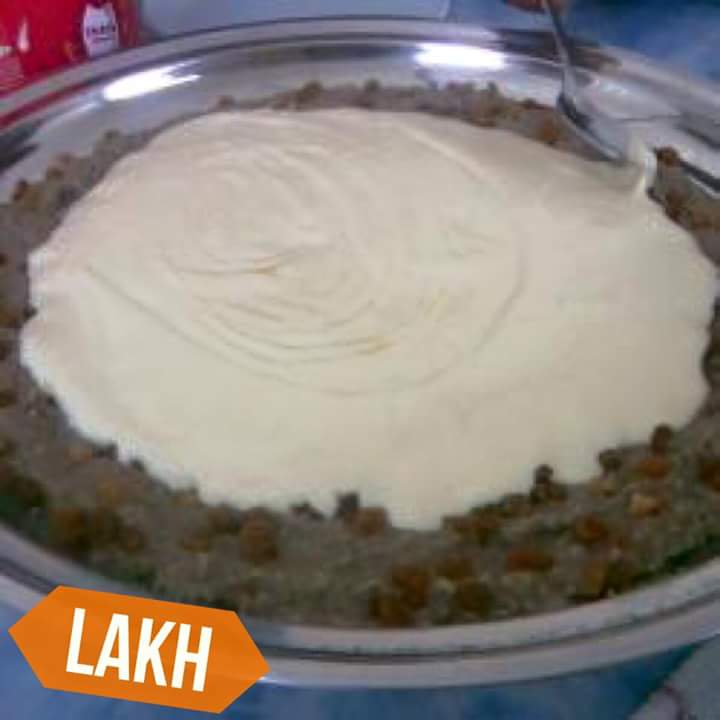
Lakh (food)
A Senegalese and Gambian rolled millet porridge with sour milk.

Dr.Amarinder Kaur · CC0
Lakh araw is a rolled millet porridge from Senegalese and Gambian cuisine, made with sugar and sour milk. It is part of the broader family of rolled flour porridges found in West African cuisine, and its variants are associated with both everyday meals and special occasions.
- type
- Porridge
- cuisine
- Senegalese and Gambian cuisine
- main_ingredient
- Rolled millet flour, sugar, sour milk
- variants
- Lakh sow (with cream), ngalakh (with baobab fruit sauce)
- occasions
- Naming ceremonies, weddings, Ramadan iftar, Eid al-Fitr, Good Friday, Easter
Lore & Background
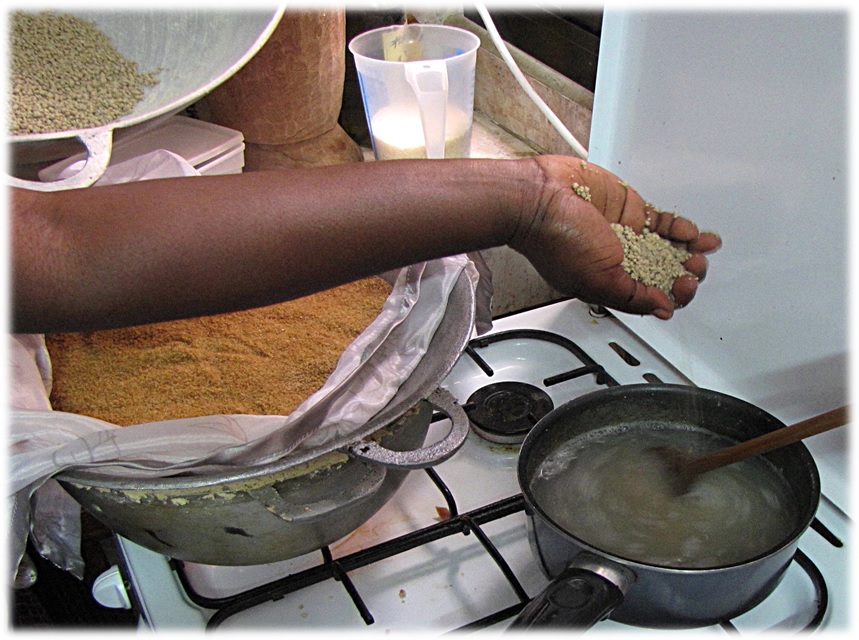
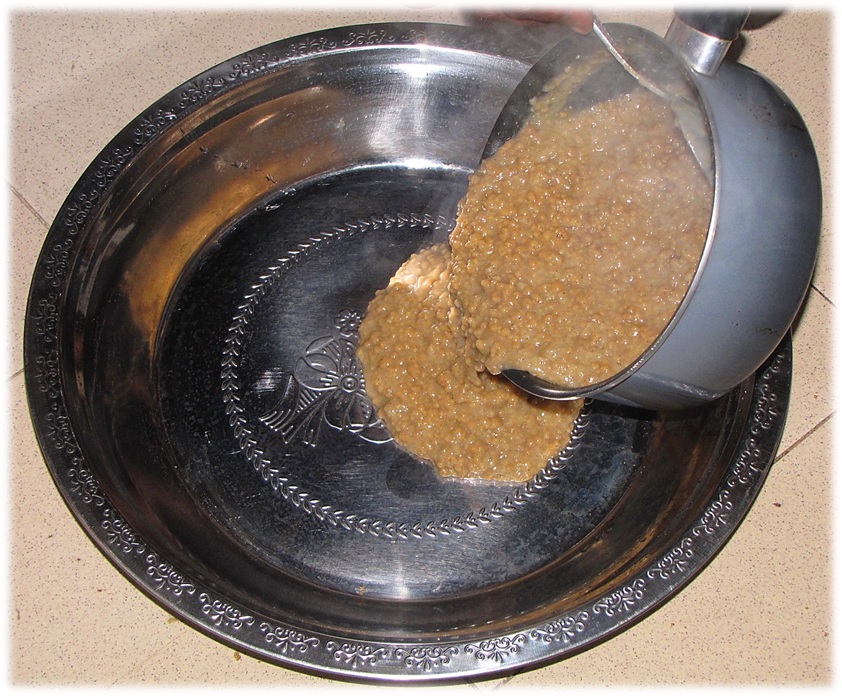
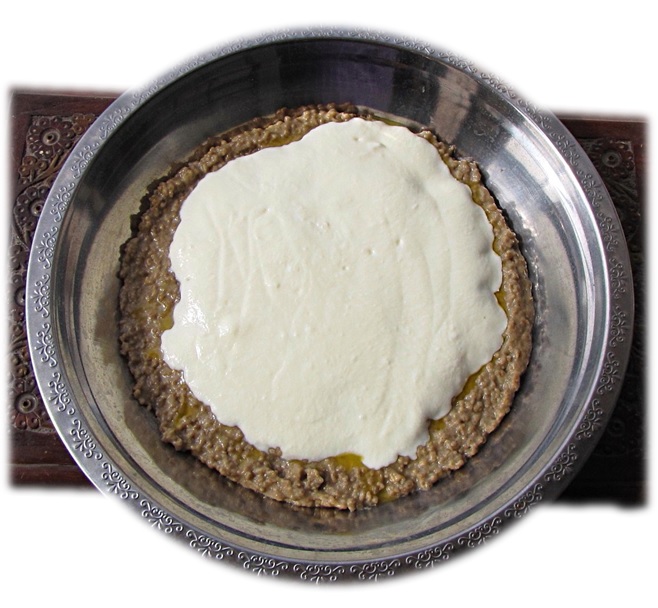
Lakh araw is a rolled millet porridge from Senegalese and Gambian cuisine, prepared by boiling rolled millet flour and combining it with sugar and sour milk. A variant called lakh sow adds cream on top. A further variant, ngalakh, is topped with njineh jobe, a sauce made from baobab fruit, peanut paste, vanilla, and orange blossom.
Reader's Guide
Ngalakh is eaten on special occasions: it is a common fixture of naming ceremonies and weddings. Senegalese Muslims eat it during Ramadan for iftar and on Eid al-Fitr. Senegalese Catholics have ngalakh to break the Friday fast for Good Friday, and further enjoy it through Easter. The dish belongs to the rolled flour porridge family, which historically used sorghum or millet flour, though contemporary versions may include maize or wheat flour.
Did You Know?
- Lakh araw is made with rolled millet flour, sugar, and sour milk.
- The variant lakh sow has cream added on top.
- Ngalakh is topped with a sauce made from baobab fruit, peanut paste, vanilla, and orange blossom.
- Senegalese Muslims eat ngalakh during Ramadan for iftar and on Eid al-Fitr.
Composition and Character
Lakh is a traditional Senegalese pudding whose defining ingredients are thiakry grains and a more liquid form of yogurt known as lait caillé, or soured milk. Unlike its close relative thiakry, which is a couscous typically eaten alongside yogurt, Lakh takes those same grains and blends them with the thinner, more fluid soured milk to create a distinctly pudding-like consistency. The result is a sweet, creamy preparation that sits firmly within the dessert category of Senegalese cooking. The dish reflects the broader West African culinary tradition in which grains, legumes, and dairy products are combined in straightforward yet satisfying ways. Because Senegal's food culture draws from multiple ethnic groups—the Wolof, Fula, and Serer being the largest—Lakh carries the shared heritage of a cuisine that, while often overlapping with neighboring West African countries, carries its own naming conventions and slight variations in preparation. The use of soured milk rather than fresh yogurt gives Lakh a character that sets it apart from other grain-based sweets in the region.
Ethnic and Regional Heritage
The cuisine of Senegal, from which Lakh emerges, is a West African culinary tradition shaped by the nation's diverse ethnic communities, the three largest being the Wolof, the Fula, and the Serer. This multi-ethnic foundation means that many dishes, including grain-and-dairy preparations like Lakh, carry influences from more than one cultural lineage. At the same time, Senegalese food shares a great deal with the cuisines of neighboring West African nations; the same basic ingredients and cooking methods appear across the region, though dishes are frequently known by different names or prepared with small local adjustments. Lakh, as a pudding built on thiakry grains and soured milk, fits naturally into this shared West African landscape of grain-based desserts. The broader Senegalese table also features peanuts—the country's principal cash crop—millet, white rice, sweet potatoes, cassava, and black-eyed peas, all of which inform the pantry from which such sweets are drawn. Even the naming of Lakh itself, sitting alongside Ngalakh, a peanut-butter-and-baobab-pulp mixture served with couscous, reflects a naming convention rooted in the local linguistic and culinary vocabulary rather than in any single ethnic tradition alone.
The French-Influenced Dessert Table
Senegalese desserts, the category to which Lakh belongs, are characterized as very rich and sweet, and they represent a notable point of cultural blending. Native ingredients form the base, but the overall extravagance and stylistic presentation carry the imprint of France's historical influence on Senegal's culinary methods. Lakh, with its combination of thiakry grains and the liquid soured milk known as lait caillé, exemplifies how a simple local dairy-and-grain pairing can be elevated into a dessert of considerable richness. These sweets are customarily accompanied by fresh fruit, adding a bright, natural counterpoint to the dense, sweet preparations. The meal traditionally concludes with coffee or tea, and the tea in particular—attaya, made from Chinese gunpowder tea, sugar, and mint—is served in a ritualistic fashion that marks it as a social event in its own right. Given that roughly 95 percent of Senegal's population is Muslim, alcohol is not a common accompaniment to meals, making these non-alcoholic beverages and the rich desserts they follow central to the dining experience. Lakh thus occupies a place of comfort and celebration on the Senegalese table.
Lakh Among Senegal's Sweets
Within the broader landscape of Senegalese desserts, Lakh occupies a specific niche alongside several other grain- and dairy-based sweets. Thiakry, the couscous that provides Lakh's grain component, is itself a dessert when eaten with yogurt, making the two preparations closely related siblings in the culinary family. Sombi offers another perspective: a rice pudding made with coconut milk, also listed as a sweet milk-rice soup, showing how Senegalese cooking repeatedly returns to the pairing of grains with dairy or rich liquids. Ngalakh, a mixture of peanut butter and baobab pulp eaten with couscous, draws on the country's primary cash crop and the fruit of the baobab tree—known as bouye or "monkey bread fruit"—to create a different kind of sweet accompaniment. Then there is the cinq centimes, the "five-cent cookie," a peanut cookie that has become a staple of marketplaces across the country. Together, these desserts paint a picture of a sweet tradition that is varied, rooted in locally available ingredients, and shaped by both indigenous practice and the stylistic legacy of French culinary influence.
Gallery
Frequently Asked Questions
What is Lakh araw?
Lakh araw is a traditional rolled millet porridge rooted in both Senegalese and Gambian culinary traditions. It is prepared by working rolled millet flour together with sugar and sour milk until it forms a thick, rolled consistency.
What are the main ingredients in Lakh araw?
The dish is built around three core components: rolled millet flour, sugar, and sour milk. These are combined to produce a dense, rolled porridge texture rather than a simple boiled grain.
What variants of Lakh exist?
Two well-known versions are Lakh sow, which adds cream for a richer body, and ngalakh, which is served alongside a sauce made from baobab fruit. Both keep the rolled-millet base while shifting the overall flavor and texture.
On what occasions is Lakh araw traditionally served?
It features at naming ceremonies, weddings, Ramadan iftar, Eid al-Fitr, Good Friday, and Easter celebrations. This range of events makes it both a daily comfort food and a ceremonial staple across religious and cultural gatherings.
How does Lakh araw fit into the wider West African porridge family?
It belongs to the broader category of rolled-flour porridges found throughout West Africa, where millet or sorghum is rolled and rehydrated into a thick dish. Its distinctly Senegalese and Gambian character comes from the specific pairing of sour milk and sugar with the rolled millet base.
More in Senegalese cuisine 1-21
Spotted an error? Know more?
This is a living reference — every entry is fact-audited, and reader corrections feed straight into our audit queue. Suggest an edit · See this site's audit record