Tula Oblast
A historically rich industrial and agricultural region in European Russia, home to the Tula Kremlin and Yasnaya Polyana.

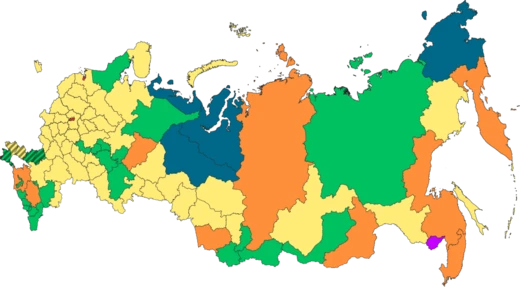
Tula Oblast is a federal subject (an oblast) of Russia. It is geographically located in European Russia and is administratively part of the Central Federal District, covering an area of 25700 km2. Tula is the largest city and the administrative center of the oblast. Tula Oblast borders Moscow Oblast in the north, Ryazan in the east, Lipetsk in the southeast, Oryol in the southwest, and Kaluga in the west. Tula Oblast is one of the most developed and urbanized territories in Russia, and the majority of the territory forms the Tula-Novomoskovsk Agglomeration, an urban area with a population of over 1 million.
- Area
- 25,700 square kilometers (9,900 sq mi)
- Population (2010 census)
- 1,553,925
- Administrative center
- Tula
- Federal district
- Central Federal District
- Major rivers
- Don, Oka, Upa
- Climate
- Moderate continental
- Largest political party
- United Russia
Lore & Background
The Tula Oblast area has been inhabited since the Stone Age, as shown by the discoveries of burial mounds (kurgans) and old settlements. By the eighth century, these lands were occupied by the Vyatichi, an East Slavic tribe. The first mention of the city of Tula in 1146 is found in the Nikon Chronicle, in reference to the campaign of Prince Svyatoslav Olgovich of Chernigov. At the time the lands belonged to the Ryazan Principality.
Reader's Guide
Tula Oblast is located in Russia's Central Federal District and borders Moscow, Ryazan, Lipetsk, Oryol, and Kaluga Oblasts. It contains more than 1,600 rivers and streams; major rivers include the Don, Oka, and Upa. The oblast has a moderate continental climate, with warm summers and cold winters. Average January temperature is -10°C in the north and -9°C in the south. Average July temperature is about +19°C to +20°C. Annual precipitation is 470 mm in the southeast and 575 mm in the northwest. The oblast is rich in clay, limestone, and deposits of lignite (coal). The lignite deposit is part of the Moscow coal basin. The oblast has a developed agricultural sector, ranking 33rd in Russia in agricultural production, including farming grain (wheat and rye), potatoes, sugar beets, and vegetable growing, livestock raising, and dairying. It is a prominent industrial center with metalworking, engineering, coalmining, and chemical industries. Major industrial cities include Novomoskovsk and Aleksin. Historical industries, such as firearm, samovar, and accordion manufacturing, still play an important role.
Did You Know?
- Tula Oblast has more than 100 museums, including the Tula State Arms Museum, the Tula Kremlin, and the Tula Samovar Museum.
- The home and country estate of Leo Tolstoy, Yasnaya Polyana, is located 12 km outside of the city of Tula.
- Tula pryanik is the most famous dish from the oblast.
- According to a 2012 survey, 62% of the population adheres to the Russian Orthodox Church.
More in Russian Regions 1-24
Spotted an error? Know more?
This is a living reference — every entry is fact-audited, and reader corrections feed straight into our audit queue. Suggest an edit · See this site's audit record