English Civil War
King versus Parliament: a revolution that beheaded a monarchy.
Last updated

via Wikipedia: English Civil War · see source
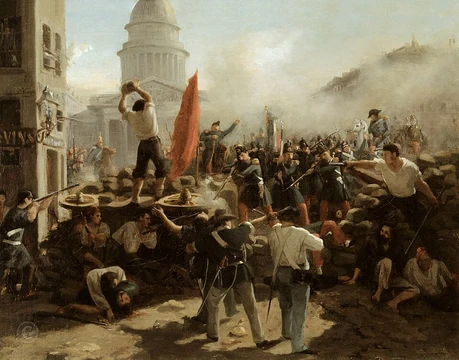
The English Civil War (1642–1651) was a series of armed conflicts and political machinations between Parliamentarians ('Roundheads') and Royalists ('Cavaliers') over the governance of England. It was part of the wider Wars of the Three Kingdoms, which also involved Scotland and Ireland. The war ultimately resulted in the trial and execution of King Charles I, the abolition of the monarchy, and the establishment of the Commonwealth of England under Oliver Cromwell.
Lore & Background
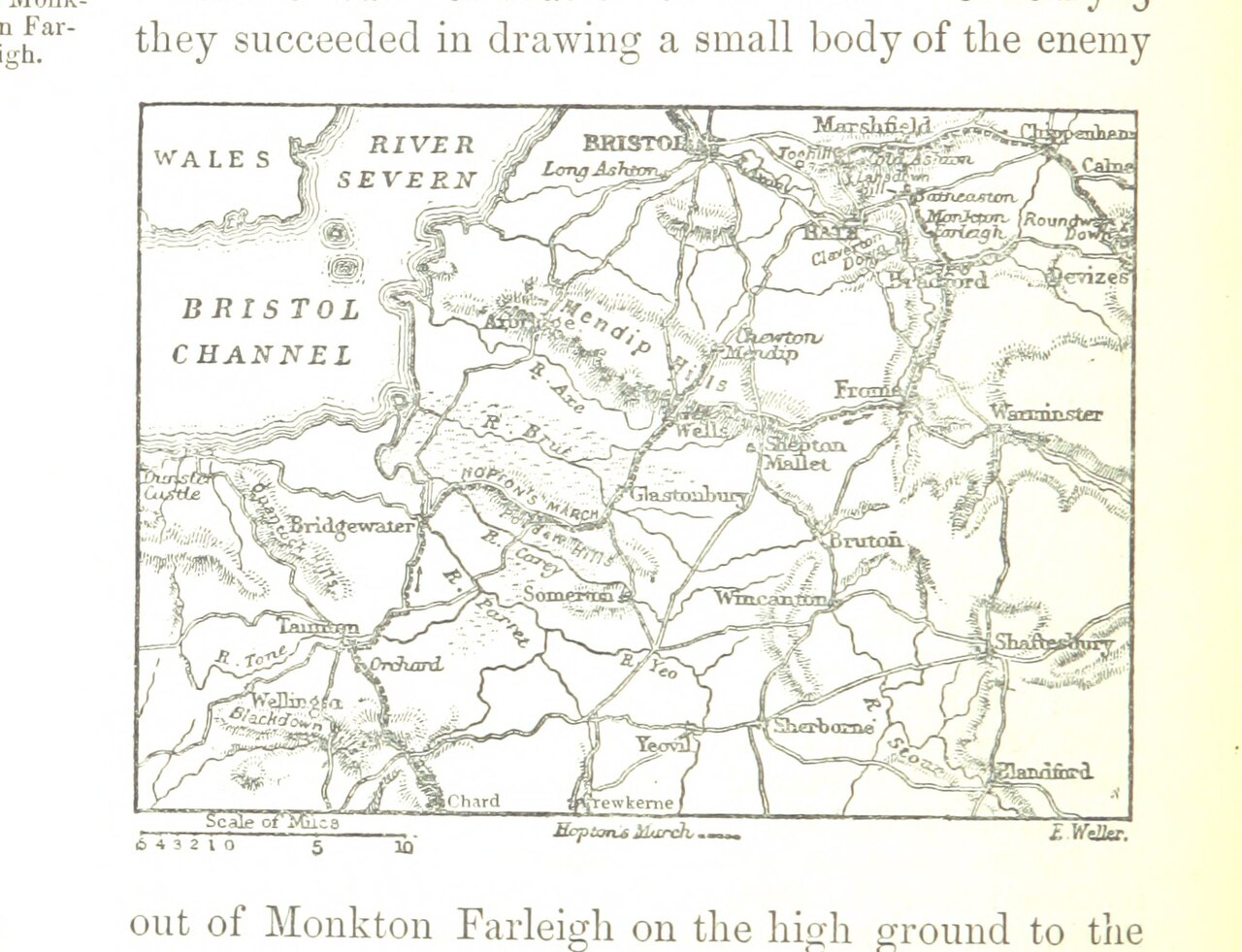
The conflict erupted from long-standing tensions over royal prerogative, religious reforms, and Parliament's demand for greater control over taxation and military. King Charles I's attempt to arrest five MPs in 1642 triggered open warfare. The Royalists initially held the advantage, thanks in part to Prince Rupert's cavalry tactics, which he developed from his service in the Dutch army, where cavalry would charge at full speed into the opponent's infantry, firing their pistols just before impact.
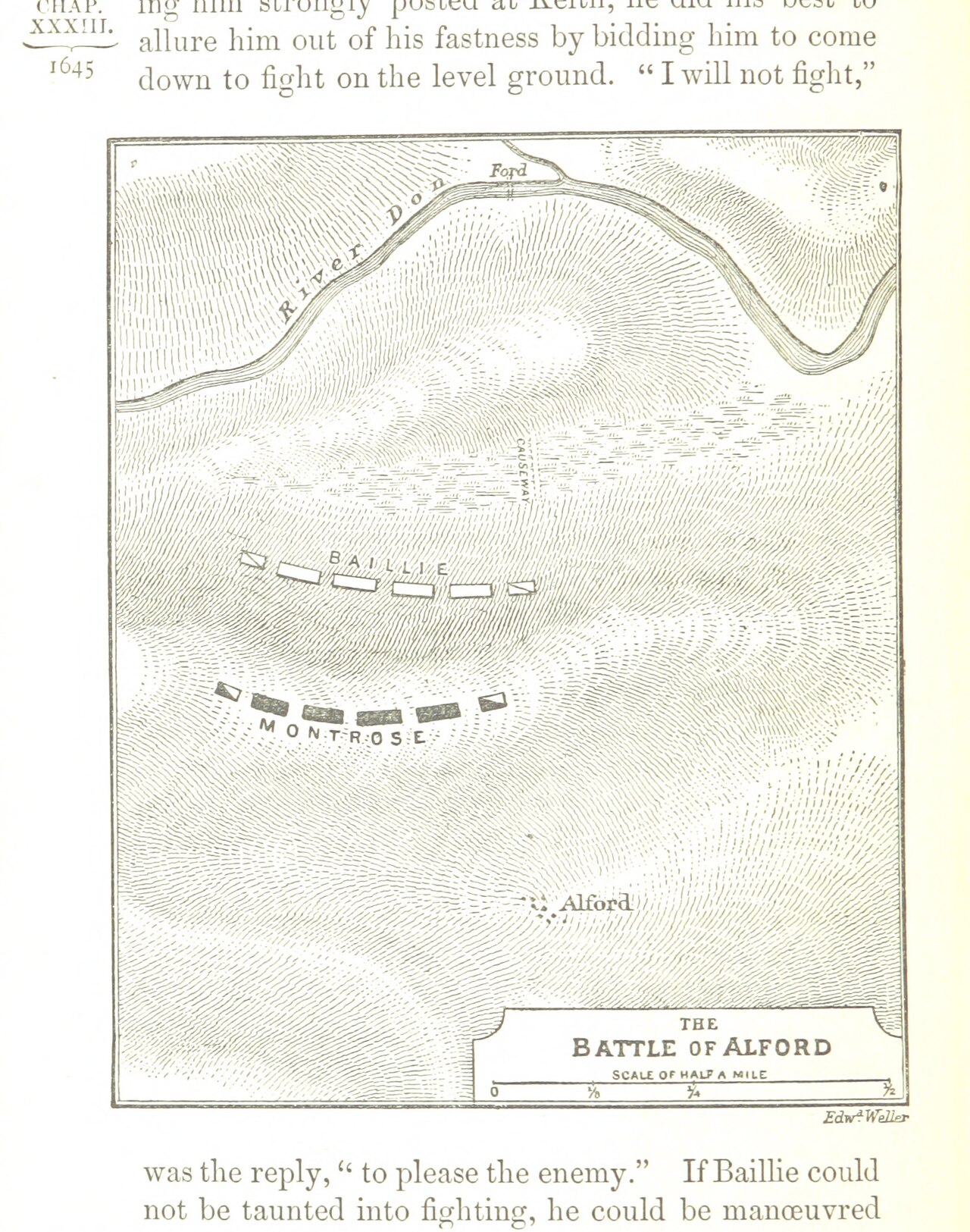
His aggressive, mobile charges broke Parliamentarian lines at Edgehill and other early battles, but lacked the discipline to consolidate gains. The turning point came with the formation of the New Model Army in 1645, a professional, meritocratic force led by Oliver Cromwell. At the Battle of Naseby, the New Model Army decisively crushed the Royalists, capturing Charles's correspondence and revealing his plans to seek foreign aid. The war dragged on until 1651, when Charles II's invasion was defeated at Worcester, forcing him into exile.
The aftermath was unprecedented: Charles I was tried for treason and beheaded in 1649. England became a republic under Cromwell's Protectorate, but the experiment collapsed after his death, leading to the Restoration of the monarchy in 1660. The war permanently shifted power from the crown to Parliament, laying groundwork for constitutional monarchy.
The Political Heart of the Conflict
The First English Civil War ended in June 1646 with Royalist defeat and the king in custody. Yet victory exposed Parliamentarian divisions over the nature of the political settlement. The vast majority had gone to war in 1642 to assert Parliament's right to participate in government, not abolish the monarchy, which meant Charles' refusal to make concessions led to a stalemate. Concern over the political influence of radicals within the New Model Army like Oliver Cromwell led to an alliance between moderate Parliamentarians and Royalists, supported by the Covenanter Scots.
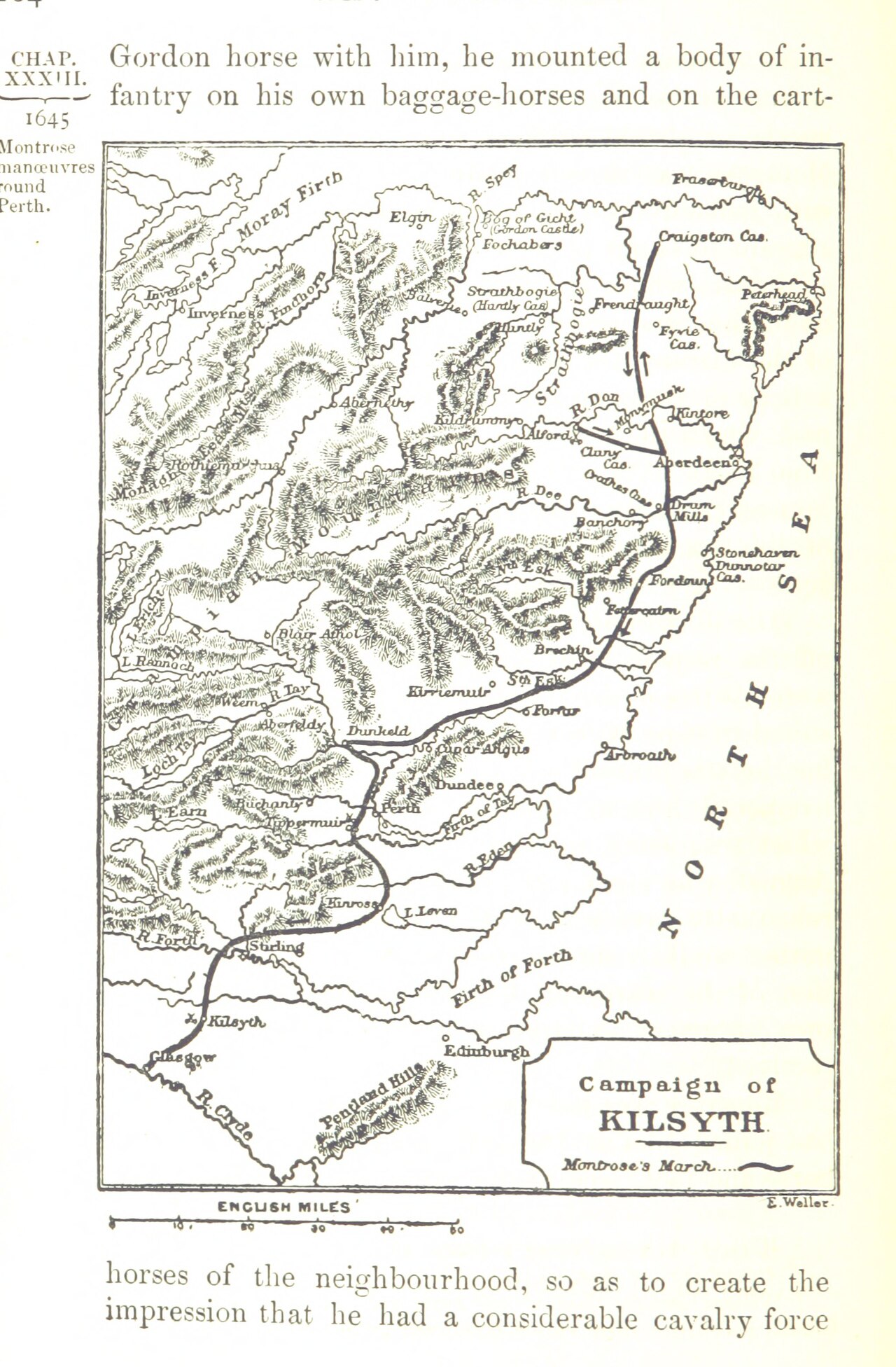
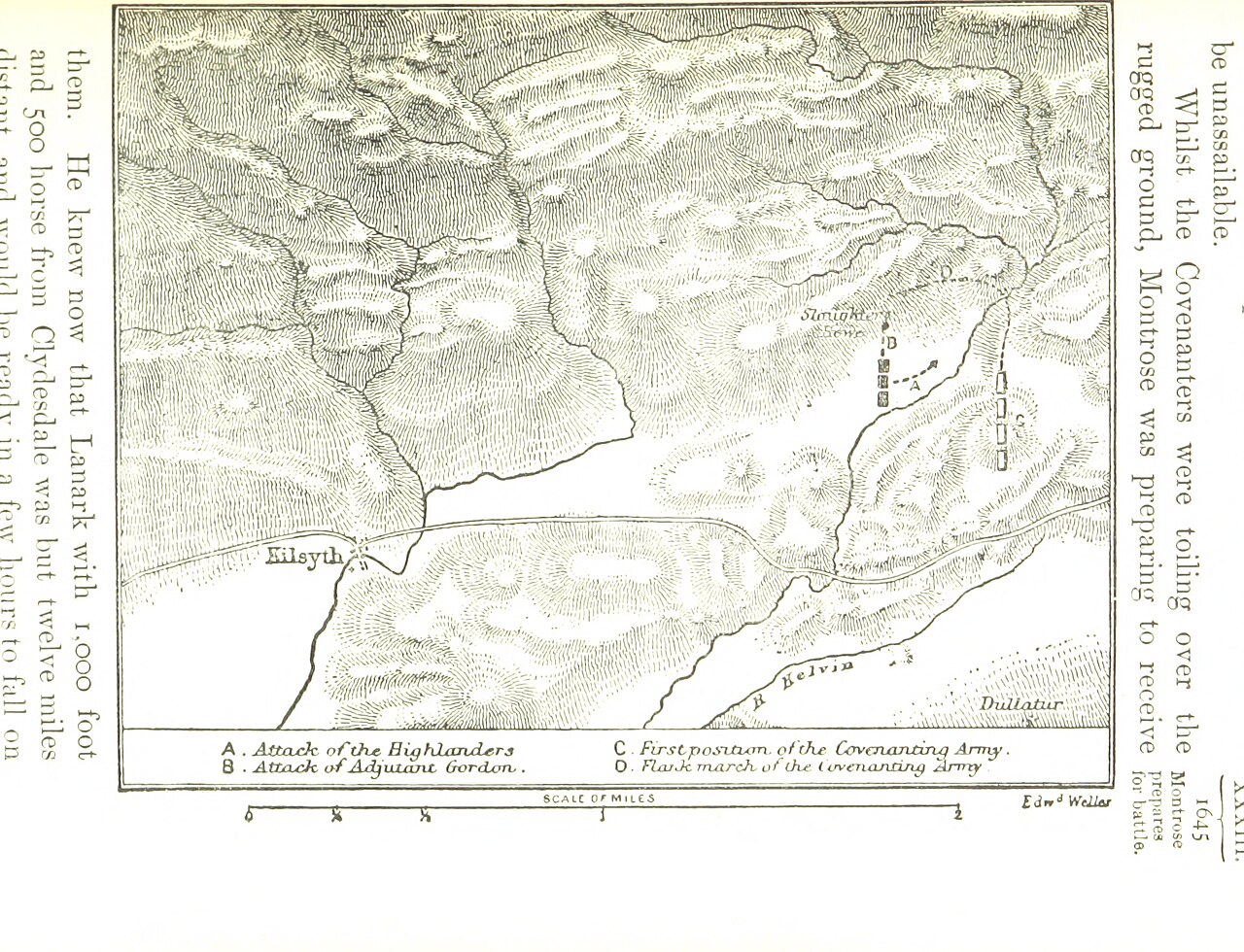
Royalist defeat in the 1648 Second English Civil War resulted in the execution of Charles I in January 1649, and the establishment of the Commonwealth of England. In 1650, Charles II was crowned King of Scotland, in return for agreeing to create a Presbyterian church in both England and Scotland. The subsequent Anglo-Scottish war ended with Parliamentarian victory at Worcester on 3 September 1651.
The Battlefield Revolution
The war was of unprecedented scale for the English. During the campaign seasons, 120,000 to 150,000 soldiers would be in the field, a higher proportion of the population than were fighting in Germany in the Thirty Years' War. The main battle tactic came to be known as pike and shot infantry. The two sides would line up opposite one another, with infantry brigades of musketeers in the centre.
These carried matchlock muskets, an inaccurate weapon which nevertheless could be lethal at a range of up to 300 yards. Musketeers would assemble three rows deep, the first kneeling, second crouching, and third standing. Among the musketeers were pike men, carrying pikes of 12 feet to 18 feet long, whose main purpose was to protect the musketeers from cavalry charges. Positioned on each side of the infantry were cavalry, with a right wing led by the lieutenant-general and the left by the commissary general.
Prince Rupert, commanding the king's cavalry, used a tactic learned while fighting in the Dutch army, where cavalry would charge at full speed into the opponent's infantry, firing their pistols just before impact. However, with Oliver Cromwell and the introduction of the more disciplined New Model Army, a group of disciplined pike men would stand its ground, which could have a devastating effect. The Royalist cavalry had a tendency to chase down individual targets after the initial charge, leaving their forces scattered and tired, whereas Cromwell's cavalry was slower but better disciplined. Trained to operate as a single unit, it went on to win many decisive victories.
A Nation Divided by Geography
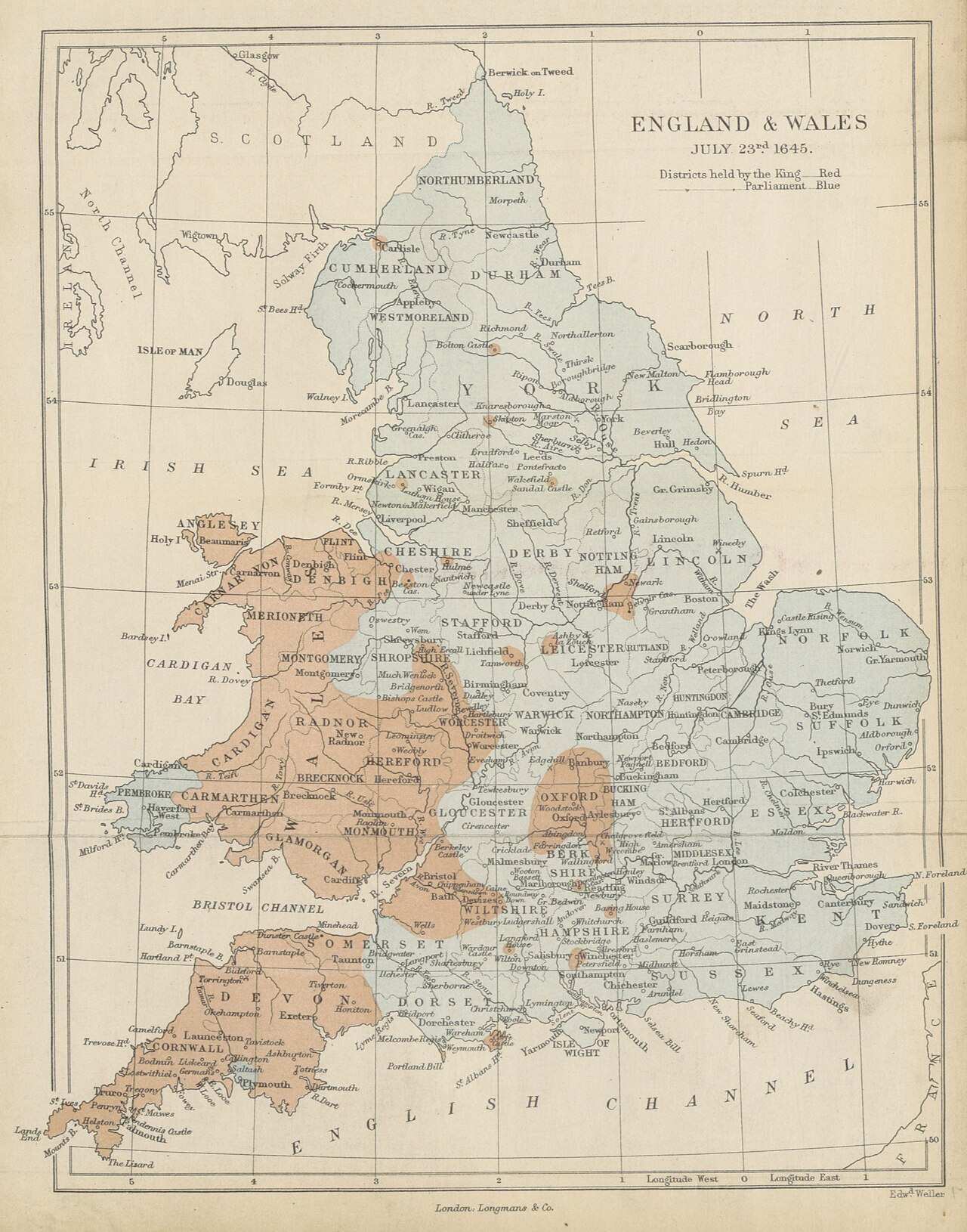
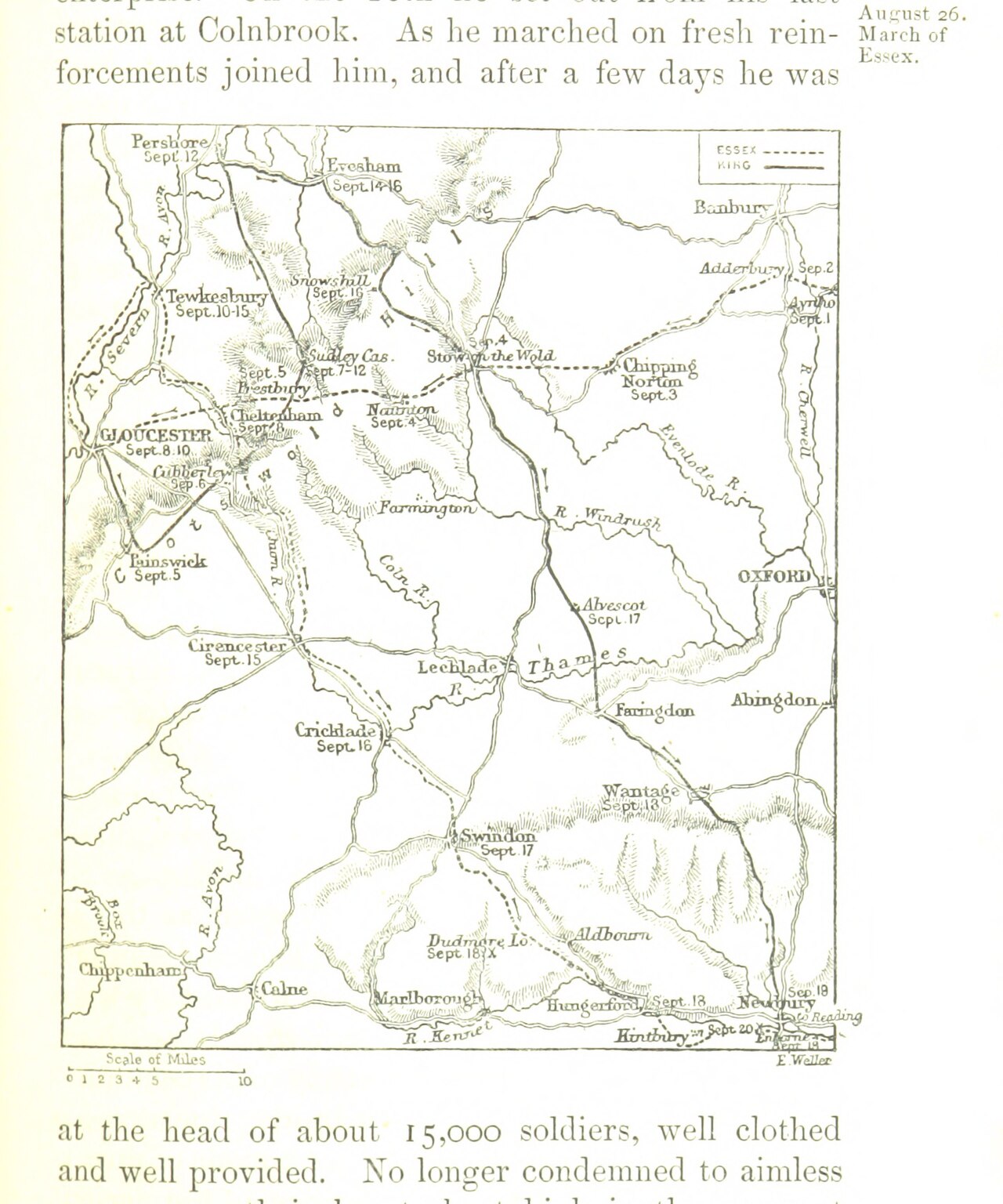
Each side had a geographical stronghold, such that minority elements were silenced or fled. The Royalist areas included the countryside, the Shires, the cathedral cities of York, Chester, Worcester and Oxford, and the less economically developed areas of northern and western England and Wales. Parliament's strengths spanned the industrial centres, ports, and economically advanced regions of southern and eastern England, including the remaining cathedral cities.
Historian Lacey Baldwin Smith wrote: 'the words populous, rich, and rebellious seemed to go hand in hand.' The conflicts also involved wars with Scotland and Ireland and civil wars within them. Some historians have favoured the term The British Civil Wars. The wars spanning all four countries are known as the Wars of the Three Kingdoms.
The Long Shadow of the Wars
Both Ireland and Scotland were incorporated into the Commonwealth, and the British Isles became a unitary state. This arrangement ultimately proved both unpopular and unviable in the long term, and was dissolved upon the Stuart Restoration in 1660. The outcome of the civil wars effectively set England and Scotland on course towards a parliamentary monarchy form of government. From the Restoration to the 19th century, the common phrase for the civil wars was 'the rebellion' or 'the great rebellion'.
In the early 19th century, Walter Scott referred to it as 'The Great Civil War'. The 1911 Encyclopædia Britannica called the series of conflicts the 'Great Rebellion'. Some historians, notably Marxists such as Christopher Hill, favoured the term 'English Revolution'.
Reader's Guide
The outcome of the civil wars effectively set England and Scotland on course towards a parliamentary monarchy form of government. The conflict also introduced the disciplined New Model Army under Oliver Cromwell, which won many decisive victories against the Royalist cavalry.
The terms 'Cavalier' and 'Roundhead' originated as pejoratives for Royalists and Parliamentarians respectively. Cavalier comes from the same Latin root as the Spanish word caballero ('knight, horseman') and had been used in the court of Elizabeth I as an insult implying pro-Spanish sympathies. Roundhead refers to how some Puritans and London apprentices wore their hair closely cropped around the head or flat, though generals of both sides wore their hair at similar lengths.
Did You Know?
- The New Model Army was the first English army to be paid regularly and promoted based on merit rather than social class.
- Oliver Cromwell's head was displayed on a spike outside Westminster Hall for over 20 years after his posthumous execution in 1661.
- The term 'Roundhead' originated from the short, rounded haircuts of Puritan Parliamentarians, who saw long hair as vain.
Frequently Asked Questions
What is the English Civil War in the Revolutions & Uprisings series?
It is a series of civil conflicts fought over who held ultimate political authority in England. The entry is also catalogued under the titles Great Rebellion, The Great Civil War, and English Revolution.
Who were the two opposing sides in the English Civil War?
The Royalists, who defended the king's prerogative, clashed with the Parliamentarians, who pushed for parliamentary supremacy. Notable leaders include Prince Rupert and Charles I on the crown's side, and Oliver Cromwell for Parliament.
Who are the key figures fans should know from the English Civil War entry?
Oliver Cromwell and Prince Rupert stand out as the principal military commanders, while Charles I and Charles II serve as the royal figureheads around whom the conflict revolves.
More in Revolutions & Uprisings
Sources
Compiled from Wikipedia and the sources listed below. Text from Wikipedia is available under CC BY-SA 4.0; this entry is adapted from it.
- Wikipedia: English Civil War (CC BY-SA 4.0).
- Word definitions: the Codexery glossary, each quoted from its Wikipedia article.
Spotted an error? Know more?
Reader corrections go straight into our review queue. Suggest an edit · How this site is sourced