American Revolution
Political movement that created the sovereign United States.
Last updated

via Wikipedia: American Revolution · see source
Between 1765 and 1789, the Thirteen Colonies of British North America underwent a political upheaval that started as a rebellion and evolved into a full revolution. This movement ultimately produced the independent United States, a direct result of the American Revolutionary War (1775–1783).
In 1775, the Second Continental Congress, acting as a temporary government, formed the Continental Army and chose George Washington to lead it. The next year, on July 2, Congress approved the Lee Resolution, and two days later, on July 4, 1776, it unanimously endorsed the Declaration of Independence. The U.S. Constitution went into effect in 1789, and the Bill of Rights was added in 1791.
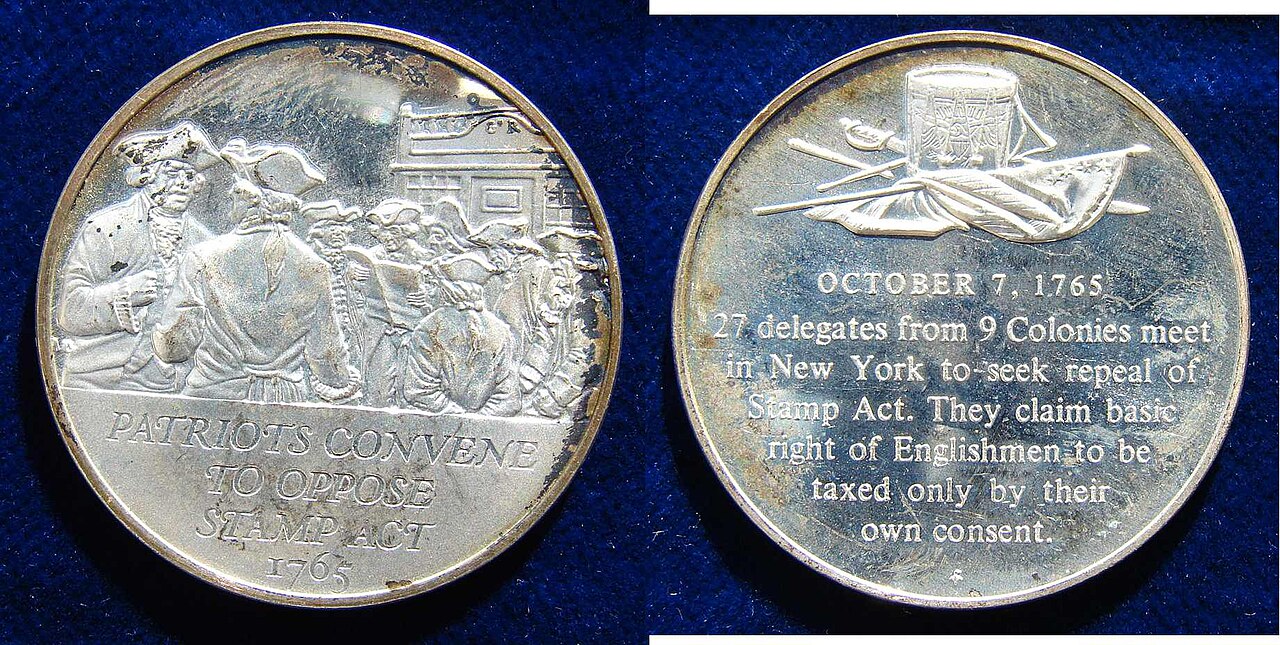
Discontent flared up soon after the French and Indian War ended in 1763. Even though the colonies had fought in and backed that war, the British Parliament imposed fresh taxes to cover war debts and, through the Proclamation of 1763, placed western lands under British military control while reserving them for Native Americans. In 1765, delegates from several colonies gathered in New York City for the Stamp Act Congress, arguing that taxation without representation and similar measures violated their rights as Englishmen. Although the Stamp Act was repealed in 1766, tensions reignited in 1767 when Parliament passed the Townshend Acts.
1767–1773: Townshend Acts, Tea Act and the escalation of violence
To suppress the growing unrest, King George III sent British troops to Massachusetts, where the Boston Massacre occurred in 1770. In December 1773, a local branch of the Sons of Liberty carried out the Boston Tea Party, dumping chests of taxed tea from the British East India Company into Boston Harbor. Parliament responded with harsh punitive laws known as the Intolerable Acts, meant to end self-government in Massachusetts but instead fueling broader support for revolution.
Military hostilities begin
In 1774, twelve of the Thirteen Colonies (Georgia did not send delegates to the First Continental Congress) sent representatives to the First Continental Congress. This body began coordinating Patriot resistance through underground committees, many built on the Sons of Liberty network. In August 1775, King George III declared Massachusetts to be in a state of rebellion. British efforts to disarm the colonists led to the Battles of Lexington and Concord, which started the Revolutionary War.
Lore & Background
Discontent with colonial rule began shortly after the French and Indian War, which ended in 1763. The British Parliament imposed new taxes to compensate for wartime costs and, through the Proclamation of 1763, placed western lands under British military control from London while reserving them for Native Americans. Representatives from several colonies convened in New York City for the Stamp Act Congress in 1765. Its declaration argued that taxation without representation and other policies violated their rights as Englishmen.
In 1767, though the Stamp Act was repealed, tensions increased again following Parliament's passing of the Townshend Acts. In an effort to quell the mounting rebellion, King George III deployed British troops to the colony of Massachusetts, where there was a conflict in the 1770 Boston Massacre. In December 1773, the local faction of the Sons of Liberty carried out the Boston Tea Party, dumping chests of taxed tea from the British East India Company into Boston Harbor.
Reader's Guide
The Revolutionary War continued for another five years, during which France eventually entered. On September 28, 1781, Washington commanded the Continental Army's capture of a British army under General Cornwallis at the Siege of Yorktown, leading to the collapse of King George's control of Parliament. Consensus in Parliament soon shifted to the war ending on American terms. On September 3, 1783, the British signed the Treaty of Paris, recognizing the sovereign independence of the United States, and ceding to the new nation nearly all the territory east of the Mississippi River and south of the Great Lakes.
The United States became the first nation to establish a federal republic with a written constitution based on the principles of universal natural rights, consent of the governed, and equality under the law, although with significant democratic limitations compared to later evolution of the concept. The Constitution took effect in 1789, and the Bill of Rights was ratified in 1791. The revolution's legacy includes the establishment of a new form of government and the precedent of colonial rebellion against imperial rule.
Frequently Asked Questions
What is American Revolution known for?
Its defining role was dismantling Crown authority over the colonies and building a self-governing nation with a written constitution. The Second Continental Congress acted as the provisional government, raising the Continental Army and naming George Washington its commander-in-chief in 1775.
When did American Revolution take place?
The broader political movement spans 1765, when organized colonial resistance to British taxation first emerged, through 1789, when the new Constitution took effect. The dedicated war period, the American Revolutionary War, ran from 1775 to 1783.
More in Revolutions & Uprisings
Sources
Compiled from Wikipedia and the sources listed below. Text from Wikipedia is available under CC BY-SA 4.0; this entry is adapted from it.
- Wikipedia: American Revolution (CC BY-SA 4.0).
- Word definitions: the Codexery glossary, each quoted from its Wikipedia article.
Spotted an error? Know more?
Reader corrections go straight into our review queue. Suggest an edit · How this site is sourced