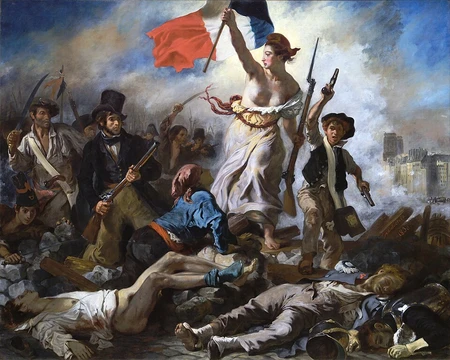
Mexican War of Independence
Armed conflict ending Spanish rule in Mexico.

The Mexican War of Independence (16 September 1810 – 27 September 1821) was an armed conflict and political process that ended Mexico’s rule by the Spanish Empire. Rather than a single, unified event, it comprised numerous local and regional struggles, effectively a revolutionary civil war. The conflict culminated with the Declaration of Independence of the Mexican Empire in Mexico City on September 28, 1821, following the collapse of royal government and the military triumph of pro-independence forces.
The war was not an inevitable outcome of colonial relations, but events in Spain directly triggered the 1810 insurgency and shaped its course. Napoleon Bonaparte’s 1808 invasion of Spain created a crisis of legitimacy when he forced the Spanish monarch Charles IV to abdicate and placed his brother Joseph on the throne. In response, local juntas formed in Spain and its overseas territories, ruling in the name of the Bourbon monarchy. Delegates from Spain and the colonies met in Cádiz as the Cortes of Cádiz, drafting the Spanish Constitution of 1812. This constitution aimed to create a new governing framework in the monarch’s absence and sought to address American-born Spaniards’ (criollos) desires for more local control and equality with Peninsular-born Spaniards (peninsulares). This political process had lasting impacts in New Spain. Pre-existing cultural, religious, and racial divides in Mexico heavily influenced both the independence movement’s development and the conflict’s progression.
The conflict unfolded in phases. The first uprising was led by parish priest Miguel Hidalgo y Costilla, who issued the Cry of Dolores on 16 September 1810. This massive but poorly organized revolt ended when Hidalgo was captured by royalists, defrocked, and executed in July 1811. The second phase was led by Father José María Morelos, who was captured and executed in 1815. The insurgency then devolved into guerrilla warfare, with Vicente Guerrero emerging as a leader. A military stalemate persisted until 1821, when former royalist commander Agustín de Iturbide allied with Guerrero under the Plan of Iguala. Their unified force rapidly collapsed royal government. This unexpected turn was prompted by events in Spain: when Spanish liberals overthrew Ferdinand VII’s autocratic rule in 1820, conservatives in New Spain saw independence as a way to preserve their position. The uni
- location
- New Spain (Mexico)
- result
- Independence from Spain; establishment of the First Mexican Empire
- key_leaders
- Miguel Hidalgo y Costilla, José María Morelos, Vicente Guerrero, Agustín de Iturbide
Verified Timeline
Lore & Background
The Mexican War of Independence was not a single, unified conflict but a series of local and regional struggles that together formed a revolutionary civil war. Its appearance was marked by a massive, poorly organized initial uprising led by a parish priest, followed by a second phase of insurgency under another priest, and eventually devolving into guerrilla warfare. The conflict ranged across the territory of New Spain, from the initial rural revolt to the final military triumph in Mexico City. The defining characteristic of the war was its deep roots in pre-existing cultural, religious, and racial divides, which shaped both the movement and the conflict’s progression. A crucial factor was the direct impact of events in Spain: Napoleon’s invasion and the subsequent crisis of legitimacy led to the formation of juntas and the drafting of the Spanish Constitution of 1812, which attempted to address the aspirations of American-born Spaniards for more local control. The war’s outcome was not inevitable; it culminated unexpectedly when a former royalist commander allied with a guerrilla leader under a unified plan, rapidly collapsing royal government. This turn was prompted by Spanish liberals overthrowing the autocratic king, which pushed conservatives in New Spain toward independence. The conflict also drew on a longer history of indigenous resistance and saw Afro-Mexicans playing crucial roles. The war ended with the drafting of a declaration of independence following the military triumph and the signing of a treaty ending Spanish rule.
Reader's Guide
Pre-existing cultural, religious, and racial divides in Mexico played a major role in the development and progression of the war. The conflict was not a single, coherent event but a series of local and regional struggles that can be considered a revolutionary civil war. It began with an uprising led by the parish priest Miguel Hidalgo y Costilla, whose revolt was massive but poorly organized; he was captured and executed in 1811. A second phase was led by Father José María Morelos, who was also captured and executed in 1815. The insurgency then devolved into guerrilla warfare, with Vicente Guerrero emerging as a leader. Neither side gained the upper hand, leading to a military stalemate that lasted until 1821. The turning point came when former royalist commander Agustín de Iturbide allied with Guerrero under the Plan of Iguala, forming a unified force that rapidly collapsed royal government. This unexpected turn was prompted by events in Spain, where liberals overthrew Ferdinand VII in 1820, causing conservatives in New Spain to seek independence to maintain their position. The unified army entered Mexico City in triumph in September 1821, and the Spanish viceroy signed the Treaty of Córdoba, ending Spanish rule. Indigenous resistance in Mexico predated the war, including the 1761 Peasant Revolt in Puebla, which sustained opposition traditions. Afro-Mexican leaders like Guerrero and Morelos were crucial to the movement. Following independence, the mainland was organized as the First Mexican Empire under Iturbide, which was overthrown in 1823 and replaced by a federal republic. Spain recognized Mexican independence in 1836 after failed reconquest attempts.
Did You Know?
- The war was not a single coherent event but a series of local and regional struggles.
- Afro-Mexicans Vicente Guerrero and José María Morelos played crucial roles in the independence movement.
Frequently Asked Questions
What is the Mexican War of Independence?
It was an armed conflict in New Spain that ultimately ended Spanish colonial rule over Mexico. The war led to Mexico's independence and the creation of the First Mexican Empire.
Who were the key leaders of the Mexican War of Independence?
Miguel Hidalgo y Costilla is widely credited with sparking the uprising, while José María Morelos, Vicente Guerrero, and Agustín de Iturbide each played major roles in sustaining and concluding the struggle.
What was the result of the Mexican War of Independence?
The conflict ended Spanish sovereignty in Mexico and produced the establishment of the First Mexican Empire. It marked the birth of an independent Mexican state.
Where did the Mexican War of Independence take place?
The fighting occurred across New Spain, the colonial territory that corresponds to present-day Mexico.
Why is the Mexican War of Independence important?
It represents one of the most consequential independence movements of the early nineteenth century, reshaping the political map of the Americas. The war demonstrated that colonial subjects could successfully overthrow a European imperial power and forge their own nation.
More in Revolutions And Conflicts 1-20
Spotted an error? Know more?
This is a living reference — every entry is fact-audited, and reader corrections feed straight into our audit queue. Suggest an edit · See this site's audit record