Indian Rebellion of 1857
A mutiny that became a rebellion, reshaping an empire.

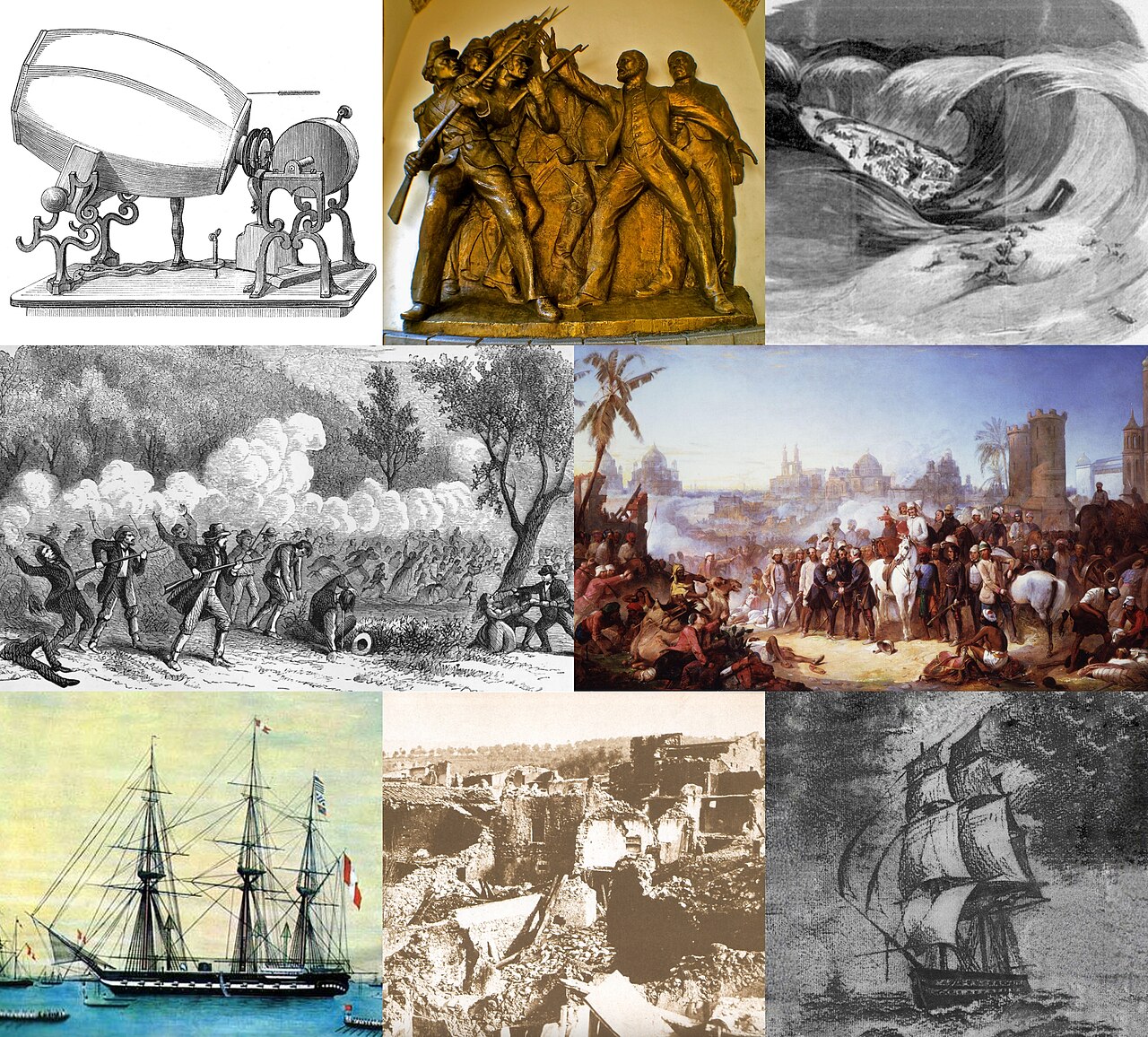
From a variety of images credited above. · CC BY 4.0
The Indian Rebellion of 1857 was a large-scale revolt against the British East India Company, which ruled much of India as a sovereign power on behalf of the British Crown. It started on May 10, 1857, when sepoys—Indian soldiers employed by the Company—mutinied at the garrison in Meerut, about 40 miles northeast of Delhi. From there, the uprising spread to other mutinies and civilian revolts, mainly across the upper Gangetic plain and central India, with some outbreaks further north and east. The rebellion seriously threatened British military control in the region and was only suppressed after the rebels were defeated at Gwalior on June 20, 1858. On November 1, 1858, the British offered amnesty to all rebels except those involved in murder, though they did not officially declare hostilities over until July 8, 1859.
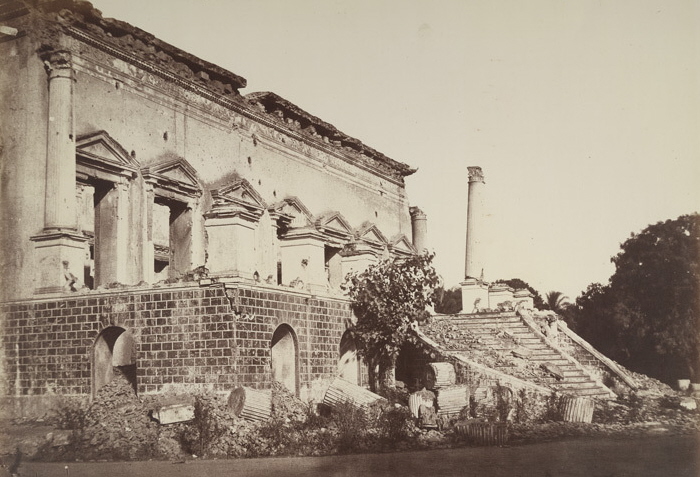
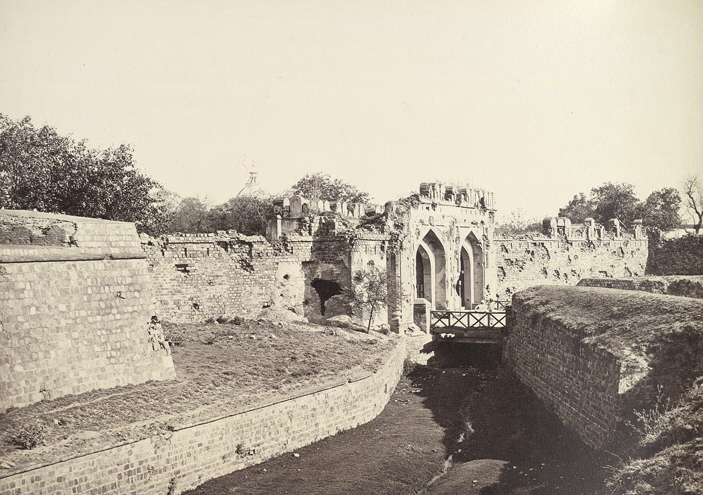
The revolt is known by many names, including the Sepoy Mutiny, the Indian Mutiny, the Great Rebellion, the Revolt of 1857, the Indian Insurrection, and the First War of Independence. It was fueled by a mix of grievances: invasive British social reforms, heavy land taxes, harsh treatment of wealthy landowners and princes, and widespread doubt that British rule was improving India’s economy. Many Indians rose up against the British, but many also fought on their side, and most of the population remained seemingly compliant. Violence was brutal on both sides—rebels killed British officers and civilians, including women and children, while British reprisals targeted rebels and their supporters, sometimes wiping out entire villages. The cities of Delhi and Lucknow were devastated by fighting and retaliation.
After the Meerut mutiny, rebels quickly seized Delhi, where the elderly Mughal emperor, Bahadur Shah Zafar, was proclaimed Emperor of Hindustan. They soon captured large parts of the North-Western Provinces and Awadh. The Company responded swiftly. With reinforcements, they retook Kanpur by mid-July 1857 and Delhi by the end of September. However, it took the rest of 1857 and much of 1858 to crush the rebellion in Jhansi, Lucknow, and especially the Awadh countryside. Other Company-controlled regions—the Bengal, Bombay, and Madras Presidencies—stayed largely calm. In the Punjab, Sikh princes provided crucial support, supplying soldiers and aid. Major princely states like Hyderabad, Mysore, Travancore, and Kashmir, along with smaller states in Rajputana, did not join the revolt, acting, as Governor-General Lord Canning put it, as “breakwaters in a storm.”
In some areas, particularly Awadh, the rebellion took on the character of a patriotic struggle against British oppression. Yet the rebel leaders offered no clear vision for a new political system. Still, the uprising was a major turning point for both India and the British Empire. It led to the dissolution of the East India Company and forced the British to overhaul the army, financial system, and administration in India through the Government of India Act 1858. After that, India was ruled directly by the British government in what became the British Raj. On November 1, 1858, Queen Victoria issued a proclamation to Indians that, while not legally binding, promised rights similar to those of other British subjects. In later decades, when those rights were not always granted, Indians would repeatedly cite the Queen’s proclamation as they increasingly embraced a new nationalism.
The East India Company had been in India since 1612, initially running trading posts. Its firm control in eastern India began with victory at the Battle of Plassey in 1757, solidified at the Battle of Buxar in 1764, when it defeated Mughal Emperor Shah Alam II. After that defeat, the emperor granted the Company the right to collect revenue in Bengal, Bihar, and Odisha—known as the “Diwani.” The Company then expanded from its bases in Bombay and Madras, and through the Anglo-Mysore Wars (1766–1799) and Anglo-Maratha Wars (1772–1818), it gained control over even more territory. In 1806, the Vellore Mutiny broke out over new uniform regulations that angered both Hindu and Muslim sepoys. Early in the 19th century, Governor-General Lord Wellesley pursued a policy of territorial expansion, using military conquest and subsidiary alliances with Indian rulers. Under these alliances, local princes accepted British protection and stationed Company troops in exchange for giving up control of their foreign affairs. This strategy extended Company dominance over many princely states ruled by Hindu maharajas and Muslim nawabs. After the Anglo-Nepalese War (1814–1816), Nepal remained independent but signed a treaty establishing a British resident and beginning a close military relationship, including the recruitment of Gurkha soldiers. Following the First Anglo-Sikh War in 1846, the Treaty of Amritsar transferred Kashmir to Gulab Singh, creating the princely state of Jammu and Kashmir under the Dogra dynasty. After the Second Anglo-Sikh War in 1849, the Company annexed the Punjab.
- location
- India, chiefly upper Gangetic plain and central India
- participants
- Sepoys of the East India Company, civilian rebels, British forces
- outcome
- Rebel defeat; dissolution of the East India Company; establishment of British Ra
- key_leaders
- Bahadur Shah Zafar (declared Emperor of Hindustan)
Verified Timeline
Quick Facts
- Conflict
- Indian Rebellion of 1857
- Date
- df=yes · 1857 · 05 · 10 – df=yes · 1858 · 11 · 01 / (month1=05 · day1=01 · year1=1857 · month2=11 · day2=01 · year2=1858)
- Location
- India
- Territory
- Some princely states annexed into British India. Other princely states retain their dominions and autonomy.
- Result
- British victory
- Combatant2
- United Kingdom of Great Britain and Ireland · East India Company / Rajputana Agency / Patiala / Kapurthala / Rampur / Jodhpur / Nabha / Kingdom of Nepal
- Commander1
- Bahadur Shah II · Nana Sahib · Rani Lakshmibai · Tatya Tope · Bakht Khan · Begum Hazrat Mahal · Kunwar Singh
Facts from the source article.
Lore & Background
The rebellion was fed by resentments born of diverse perceptions, including invasive British-style social reforms, harsh land taxes, summary treatment of some rich landowners and princes, and scepticism about British claims of material improvement. Many Indians rose against the British; however, many also fought for the British, and the majority remained seemingly compliant. Violence, which sometimes betrayed exceptional cruelty, was inflicted on both sides: on British officers and civilians, including women and children, by the rebels, and on rebels and their supporters, including sometimes entire villages, by British reprisals; the cities of Delhi and Lucknow were laid waste in the fighting and the British retaliation. After the outbreak of the mutiny in Meerut, the rebels quickly reached Delhi, whose 81-year-old Mughal ruler, Bahadur Shah Zafar, was declared the Emperor of Hindustan. Soon, the rebels had captured large tracts of the North-Western Provinces and Awadh. The East India Company's response came rapidly as well. With help from reinforcements, Kanpur was retaken by mid-July 1857, and Delhi by the end of September. However, it then took the remainder of 1857 and the better part of 1858 for the rebellion to be suppressed in Jhansi, Lucknow, and especially the Awadh countryside. Other regions of Company-controlled India—the Bengal Presidency, the Bombay Presidency, and the Madras Presidency—remained largely calm. In the Punjab, the Sikh princes crucially helped the British by providing both soldiers and support. The large princely states, Hyderabad, Mysore, Travancore, and Kashmir, as well as the smaller ones of Rajputana, did not join the rebellion, serving the British, in Governor-General Lord Canning's words, as 'breakwaters in a storm'.
Reader's Guide
The rebellion proved to be an important watershed in Indian and British Empire history. It led to the dissolution of the East India Company and forced the British to reorganize the army, the financial system, and the administration in India through passage of the Government of India Act 1858. India was thereafter administered directly by the British government in the new British Raj. On 1 November 1858, the British granted amnesty to all rebels not involved in murder, though they did not declare the hostilities to have formally ended until 8 July 1859. On 1 November 1858, Queen Victoria issued a proclamation to Indians, which, while lacking the authority of a constitutional provision, promised rights similar to those of other British subjects. In the following decades, when admission to these rights was not always forthcoming, Indians were to pointedly refer to the Queen's proclamation in growing avowals of a new nationalism. The name of the revolt is contested, and it is variously described as the Sepoy Mutiny, the Indian Mutiny, the Great Rebellion, the Revolt of 1857, the Indian Insurrection, and the First War of Independence.
Did You Know?
- The rebellion began on 10 May 1857 as a mutiny of sepoys of the company's garrison in Meerut, 40 miles northeast of Delhi.
- The 81-year-old Mughal ruler Bahadur Shah Zafar was declared Emperor of Hindustan by the rebels.
- The rebellion was contained only with the rebels' defeat in Gwalior on 20 June 1858.
- The British did not declare hostilities formally ended until 8 July 1859.
- The large princely states of Hyderabad, Mysore, Travancore, and Kashmir did not join the rebellion.
Gallery
Frequently Asked Questions
What is the Indian Rebellion of 1857?
It was a broad-based uprising in 1857 across the upper Gangetic plain and central India, in which East India Company sepoys and civilian insurgents rose against British colonial authority. It is commonly referred to as the First War of Indian Independence.
Who are the key participants and leaders in the Indian Rebellion of 1857?
The revolt was driven by Company sepoys, civilian rebels, and allied princely states, with the Mughal emperor Bahadur Shah Zafar proclaimed as Emperor of Hindustan to serve as a unifying symbolic figure against the British.
How does the Indian Rebellion of 1857 end?
The uprising was ultimately crushed by British military forces, resulting in a decisive rebel defeat. In the political aftermath, the East India Company was dissolved and direct Crown rule over India—the British Raj—was instituted.
Why is the Indian Rebellion of 1857 important?
It was the first large-scale, coordinated challenge to British dominance across the subcontinent and permanently altered the structure of colonial governance. Its suppression led to the transfer of power from a trading company to the British Crown, a shift that shaped Indian politics for the next century.
Where did the Indian Rebellion of 1857 take place?
The fighting was concentrated along the upper Gangetic plain and spread into central India, with major engagements occurring in cities such as Delhi, Kanpur, Lucknow, and Jhansi.
More in Revolutions And Conflicts 1-20
Spotted an error? Know more?
This is a living reference — every entry is fact-audited, and reader corrections feed straight into our audit queue. Suggest an edit · See this site's audit record