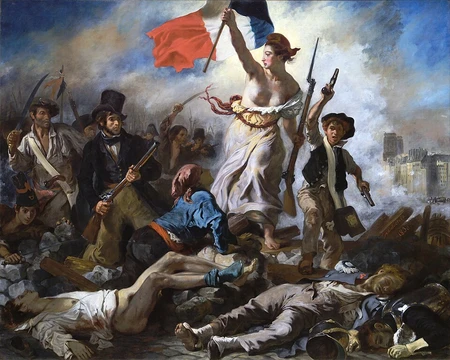
Greek War of Independence

George E. Koronaios · CC BY-SA 4.0
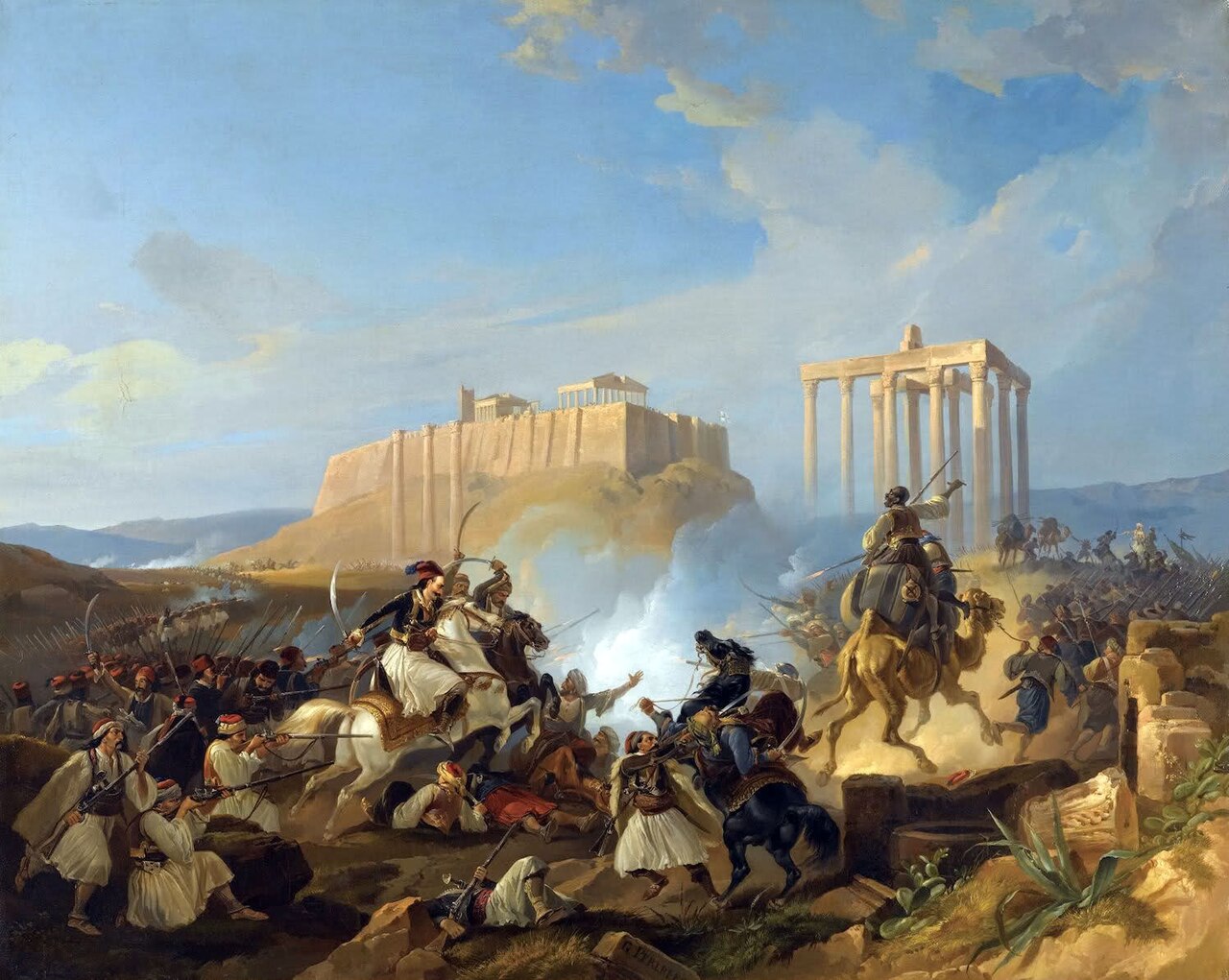
From 1821 to 1829, Greek revolutionaries fought a successful war for independence against the Ottoman Empire, known as the Greek War of Independence, the Greek Revolution, or the Greek Revolution of 1821. The British, French, and Russian empires aided the Greeks from 1826 onward, while the Ottomans received support from their vassals, notably the Eyalet of Egypt. This conflict established modern Greece, a nation later expanded to its present borders. Greeks in Greece and abroad commemorate the revolution each year on 25 March, their Independence Day.
All Greek lands, except the Ionian Islands, fell under Ottoman control during the 15th century, around the time of Constantinople’s fall. Sporadic but unsuccessful Greek uprisings occurred over the following centuries. In 1814, a secret group called the Filiki Eteria (Society of Friends) formed to liberate Greece, planning revolts in the Peloponnese, the Danubian Principalities, and Constantinople. The insurrection was set for 25 March 1821, the Orthodox Feast of the Annunciation, but Ottoman authorities discovered the plans, forcing an earlier start.
The first revolt began on 21 February 1821 in the Danubian Principalities but was quickly suppressed. This spurred Greeks in the Peloponnese into action, and on 17 March 1821, the Maniots declared war first. In September 1821, Greeks under Theodoros Kolokotronis captured Tripolitsa. Revolts in Crete, Macedonia, and Central Greece broke out but were crushed. Greek fleets succeeded against the Ottoman navy in the Aegean, blocking Ottoman reinforcements by sea. Tensions among Greek factions led to two civil wars. The Ottoman Sultan called on Muhammad Ali of Egypt, who sent his son Ibrahim Pasha with an army to crush the revolt in exchange for territory. Ibrahim landed in the Peloponnese in February 1825 and controlled most of the peninsula by year’s end. Although an Ottoman-Egyptian invasion of Mani failed, Athens fell, and revolutionary morale dropped.
Russia, Britain, and France decided to intervene, sending naval squadrons to Greece in 1827. They destroyed the Ottoman-Egyptian fleet at the Battle of Navarino, shifting the war’s momentum. In 1828, a French expeditionary force pressured the Egyptian army to withdraw. Ottoman garrisons in the Peloponnese surrendered, and Greek revolutionaries retook central Greece. The Ottoman Empire declared war on Russia, allowing the Russian army to move into the Balkans. This forced the Ottomans to accept Greek autonomy in the Treaty of Adrianople, along with semi-autonomy for Serbia and the Romanian principalities. After nine years of war, Greece was recognized as an independent state under the London Protocol of February 1830. Further talks in 1832, through the London Conference and the Treaty of Constantinople, set the new state’s final borders and made Prince Otto of Bavaria its first king. The revolution’s slogan, *Eleftheria i thanatos* (“Freedom or death”), became Greece’s national motto.
**Background**
**Ottoman Rule over Greece**
Constantinople’s fall on 29 May 1453, along with the later collapse of Byzantine successor states, ended Byzantine sovereignty. The Ottoman Empire then ruled the Balkans and Anatolia (Asia Minor), with few exceptions. Orthodox Christians had some political rights under Ottoman rule but were considered inferior subjects. Most Greeks were called *Rayah* by the Turks, a term for the large non-Muslim subject population.
Meanwhile, Greek intellectuals and humanists who had migrated west before or during the Ottoman invasions—such as Demetrios Chalkokondyles and Leonardos Philaras—began calling for their homeland’s liberation. Demetrius Chalcondyles urged Venice and “all of the Latins” to aid the Greeks against “the abominable, monstrous, and impious barbarian Turks.” Yet Greece remained under Ottoman rule for several more centuries.
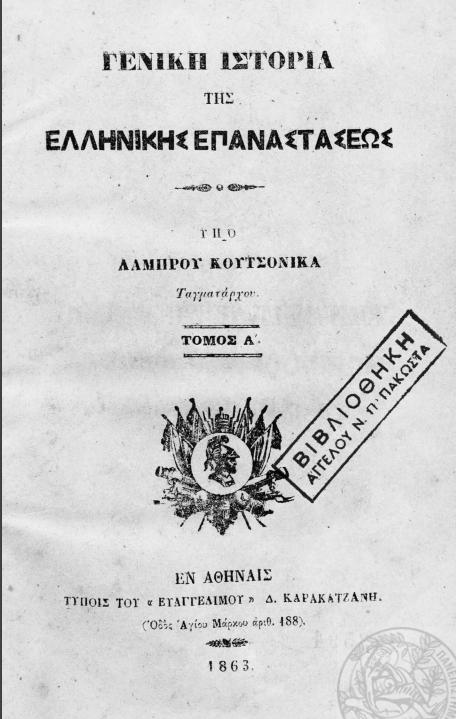
The Greek Revolution was not an isolated event; many failed independence attempts occurred throughout the Ottoman era. In the 17th century, resistance in the Morea and elsewhere was strong, as seen in revolts led by Dionysius the Philosopher. After the Morean War, the Peloponnese came under Venetian rule for 30 years, remaining in turmoil as bands of klephts multiplied. The first major uprising was the Russian-backed Orlov Revolt of the 1770s, which was crushed after limited success. Following its suppression, Muslim Albanians ravaged many parts of mainland Greece. However, the Maniots continually resisted Ottoman rule, defeating several incursions, most famously in 1770. During the Second Russo-Turkish War, the Greek community of Trieste funded a small fleet under Lambros Katsonis, which harassed the Ottoman navy; klephts and armatoloi (mountain guerilla fighters) also rose again.
At the same time, some Greeks held privileged positions in the Ottoman state as members of its bureaucracy. Greeks controlled the Orthodox Church through the Ecumenical Patriarchate of Constantinople, whose higher clergy was mostly Greek. Thus, under the Ottoman millet system, the Patriarchate’s predominantly Greek hierarchy enjoyed control over the empire’s Orthodox subjects.
- field
- War of Independence
- nationality
- Greek
- known_for
- Successful revolt against Ottoman rule, leading to the establishment of modern Greece
Quick Facts
- Conflict
- Greek War of Independence
- Part Of
- the revolutions during the 1820s
- Date
- 21 February 1821 – 12 September 1829 / (month1=02 · day1=22 · year1=1821 · month2=09 · day2=12 · year2=1829)
- Location
- Ottoman Greece (present-day Greece)
- Territory
- Independence of Greece / The Peloponnese, Saronic Islands, Cyclades, Sporades and Continental Greece ceded to the independent Greek state / Crete ceded to Egypt
- Result
- Greek victoryLondon Protocol (1830), / London Conference (1832), / Treaty of Constantinople (1832)
- Combatant2
- Ottoman Empire · 1793
- Casualties3
- 240,000+ total casualties
- Notes
- group=nb
Facts from the source article.
Lore & Background
The Greek War of Independence, also known as the Greek Revolution, was a successful war of independence fought by Greek revolutionaries against the Ottoman Empire from 1821 to 1829. In 1826, the British Empire, the Kingdom of France, and the Russian Empire intervened on the side of the Greeks, while the Ottomans were aided by their vassals, particularly the Eyalet of Egypt. The war resulted in the formation of modern Greece, a state later expanded to its current size. The revolution is commemorated annually on 25 March as Greek Independence Day. All Greek territory except the Ionian Islands had come under Ottoman rule in the 15th century, following the Fall of Constantinople. Sporadic but unsuccessful Greek uprisings occurred over the following centuries. In 1814, the secret Filiki Eteria (Society of Friends) was founded to liberate Greece, planning revolts in the Peloponnese, the Danubian Principalities, and Constantinople. The insurrection was originally set for 25 March 1821, the Feast of the Annunciation, but Ottoman discovery forced an earlier start. The first revolt began on 21 February 1821 in the Danubian Principalities but was quickly suppressed. This spurred Greeks in the Peloponnese into action; the Maniots declared war on 17 March 1821. In September 1821, Greeks under Theodoros Kolokotronis captured Tripolitsa. Revolts in Crete, Macedonia, and Central Greece broke out but were suppressed. Greek fleets achieved success against the Ottoman navy in the Aegean Sea, preventing Ottoman reinforcements by sea. Tensions among Greek factions led to two consecutive civil wars. The Ottoman Sultan called on Muhammad Ali of Egypt, who sent his son Ibrahim Pasha with an army to suppress the revolt in exchange for territorial gains. Ibrahim landed in the Peloponnese in February 1825 and brought most of the peninsula under Egyptian control by year’s end. Though an Ottoman–Egyptian invasion of Mani failed, Athens fell, and revolutionary morale declined. The three great powers—Russia, Britain, and France—intervened, sending naval squadrons to Greece in 1827. They destroyed the Ottoman–Egyptian fleet at the Battle of Navarino, turning the tide. In 1828, the Egyptian army withdrew under pressure from a French expeditionary force. Ottoman garrisons in the Peloponnese surrendered, and Greek revolutionaries retook central Greece. The Ottoman Empire declared war on Russi
Reader's Guide
The Greek War of Independence ended centuries of Ottoman rule over most Greek territory, which had been under Ottoman control since the 15th century following the fall of Constantinople. During the Ottoman period, sporadic but unsuccessful uprisings occurred, and Greek intellectuals in the West began calling for liberation. The revolution was not an isolated event; earlier revolts, such as the Russian-sponsored Orlov Revolt, had failed. In 1814, a secret organization called the Filiki Eteria was founded to plan revolts in the Peloponnese, the Danubian Principalities, and Constantinople. The insurrection was planned for the Orthodox Christian Feast of the Annunciation, but Ottoman discovery forced an earlier start. The first revolt began in the Danubian Principalities in February 1821 but was quickly suppressed, prompting Greeks in the Peloponnese to act; the Maniots declared war in March. Greek forces captured Tripolitsa later that year, while Greek fleets succeeded against the Ottoman navy in the Aegean. However, internal tensions led to two civil wars. The Ottoman sultan enlisted Muhammad Ali of Egypt, whose son Ibrahim Pasha landed in the Peloponnese in 1825 and brought most of it under Egyptian control, though an invasion of Mani failed. The three great powers—Russia, Britain, and France—intervened in 1827, destroying the Ottoman-Egyptian fleet at Navarino. An Egyptian withdrawal followed French pressure, and Ottoman garrisons surrendered. Russia’s war with the Ottomans forced acceptance of Greek autonomy. Greece was recognized as an independent state under the London Protocol of 1830, with final borders set in 1832, and Prince Otto of Bavaria became its first king. The slogan ‘Eleftheria i thanatos’ became the national motto.
Gallery
Frequently Asked Questions
What is the Greek War of Independence?
It was a successful armed revolt by Greek revolutionaries against Ottoman rule, fought primarily between 1821 and 1829. The conflict ultimately resulted in the recognition of an independent Greek state and the formation of modern Greece.
Who are the key figures of the Greek War of Independence?
The revolution was driven by Greek nationalist leaders and military commanders who organized uprisings across the Peloponnese and other regions. International figures and European powers also contributed diplomatic and military support that helped secure Greek sovereignty.
How does the story of the Greek War of Independence end?
The war concluded with the Treaty of Constantinople in 1832, which formally recognized Greek independence. In the years that followed, the new Greek state gradually expanded its territory to reach its modern borders.
Why is the Greek War of Independence important?
It marked the successful overthrow of centuries of Ottoman dominion over Greek lands and established the foundation for the modern Greek nation-state. The event is widely regarded as a landmark moment in 19th-century nationalist movements across Europe.
How is the Greek War of Independence remembered today?
Greeks in Greece and across the diaspora mark 25 March each year as Independence Day to honor the revolution. The date serves as a national holiday celebrating the birth of modern Greece.
More in Revolutions And Conflicts 1-20
Spotted an error? Know more?
This is a living reference — every entry is fact-audited, and reader corrections feed straight into our audit queue. Suggest an edit · See this site's audit record