Iranian Revolution
Overthrow of the Pahlavi dynasty and establishment of an Islamic republic.

Bagher Nasir · CC BY 4.0
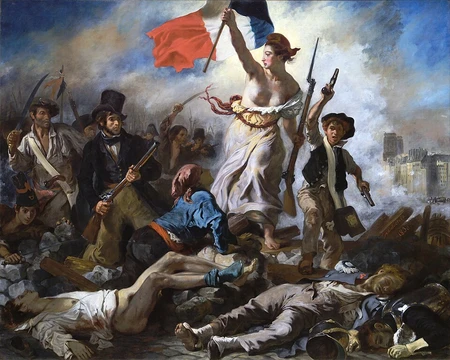
In 1979, the Iranian Revolution—often called the Islamic Revolution—brought down the Pahlavi dynasty. The Imperial State of Iran was replaced by the Islamic Republic, ending centuries of monarchy. Shah Mohammad Reza Pahlavi, the last monarch, was ousted, and power shifted to Ruhollah Khomeini, an Islamist cleric who led one of the rebel factions and became the country’s supreme leader.
The roots of the revolution trace back to 1953, when a coup backed by the CIA and MI6 removed Prime Minister Mohammad Mossadegh after he nationalized the Anglo-Persian Oil Company. This reinstated the Shah as an absolute ruler and deepened U.S. influence over Iran. In 1963, the Shah launched the White Revolution—a top-down modernization and land reform program that angered many, especially the clergy. Khomeini became a vocal critic and was exiled in 1964.
Tensions between the Shah and Khomeini grew, and anti-government protests began in October 1977. These evolved into a civil resistance campaign involving communists, socialists, and Islamists. A key event was the Cinema Rex fire on 19 August 1978, which killed around 400 people. Islamic militants were responsible, but many believed it was a false flag operation by SAVAK, the Shah’s secret police, meant to discredit the opposition. This fueled widespread outrage and mobilization. By the end of 1978, the uprising had paralyzed the country.
On 16 January 1979, the Shah left Iran for exile, leaving duties to a Regency Council and Prime Minister Shapour Bakhtiar. Khomeini returned on 1 February 1979, invited by the government, and was greeted by millions in Tehran. By 11 February, the monarchy fell as guerrillas and rebel troops defeated Pahlavi loyalists. A March 1979 referendum saw 98% approval for an Islamic republic, and a new constitution was drafted. Khomeini became absolute supreme leader in December 1979.
The revolution was driven by widespread views of the Shah’s regime as corrupt, repressive, and too reliant on foreign powers—especially the U.S. and UK—at the cost of Iran’s sovereignty and cultural identity. Yet some saw the revolution as unusual because it lacked typical causes like war defeat, financial crisis, peasant rebellion, or military discontent. It occurred during relative prosperity, brought rapid, deep change, and led to a massive exile that forms much of the Iranian diaspora. It replaced a pro-Western, secular, authoritarian monarchy with an anti-Western Islamic republic based on Velâyat-e Faqih (Guardianship of the Islamic Jurist), a system between authoritarianism and totalitarianism. Post-revolutionary Iran declared the destruction of Israel a core goal and sought to undermine Sunni leaders by supporting Shi’ite political ascendancy and exporting Khomeinist doctrines. It backed Shia militancy across the region to expand its influence and establish an Iranian-led Shia order in the Middle East.
The event is also called the 1979 Revolution, the Islamic Revolution, or the Islamic Revolution of 1979.
Background factors include backlash against forced Westernization and imperialism, the 1953 coup, rising expectations from 1973 oil revenue, an overly ambitious economic program, autocratic rule, anger over a sharp economic contraction in 1977–1978, and other failures of the previous regime. The Shah’s government was seen by some as oppressive, brutal, corrupt, and lavish, and suffered from economic bottlenecks, shortages, and inflation. Many viewed the Shah as beholden to—or a puppet of—a non-Muslim Western power (the U.S.), whose culture was affecting Iran. Support for the Shah may have also waned among Western politicians and media, especially under U.S. President Jimmy Carter, due to the Shah’s support for OPEC oil price increases. Carter’s human rights policy, which threatened to cut arms or aid to countries with violations, encouraged some Iranians to post open letters and petitions, hoping repression might ease.
The revolution is partly credited to the spread of Shi’a Islamic revival. While often described as a religious revolt, it also grew from nationalist goals, political populism, and religious radicalism. It resisted Westernization and saw Khomeini as following the Shi’a Imam Husayn ibn Ali, with the Shah cast as the tyrant Yazid I. Another factor was the underestimation of Khomeini’s Islamist movement.
- Start Year
- 1977
- End Year
- 1979
- Type
- Revolution
- Location
- Iran
- Key Figure
- Ruhollah Khomeini
- Outcome
- Establishment of Islamic Republic of Iran
Verified Timeline
Lore & Background
Anti-government demonstrations began in October 1977, developing into a campaign of civil resistance that included communists, socialists, and Islamists. Mass protests were underway. A key turning point occurred on 19 August 1978, when the Cinema Rex fire by Islamic militants killed around 400 people. However a large portion of the public believed it was a false flag operation by SAVAK, the Shah's secret police, to discredit the opposition and justify a crackdown, fueling nationwide outrage and mobilization. By the end of 1978, the revolution had become a broad-based uprising that paralyzed the country for the remainder of that year. On 16 January 1979, Pahlavi left Iran for exile, leaving his duties to Iran's Regency Council and Shapour Bakhtiar, the opposition-based prime minister. On 1 February 1979, Khomeini returned, following an invitation by the government; several million greeted him as he landed in Tehran. By 11 February, the monarchy was brought down and Khomeini assumed leadership while guerrillas and rebel troops overwhelmed Pahlavi loyalists in armed combat.
Reader's Guide
The revolution was fueled by widespread perceptions of the Shah's regime as corrupt, repressive, and overly reliant on foreign powers, particularly the United States and the United Kingdom, at the expense of Iran's sovereignty and cultural identity. However others perceived the revolution's success as unusual, since it lacked customary causes of revolutionary sentiment, e.g. defeat in war, financial crisis, peasant rebellion, or disgruntled military. It occurred in a country experiencing relative prosperity, produced profound change at great speed, and resulted in a massive exile that characterizes a large portion of Iranian diaspora, and replaced a pro-Western secular but authoritarian monarchy with an anti-Western Islamic republic based on the concept of Velâyat-e Faqih (Guardianship of the Islamic Jurist), straddling between authoritarianism and totalitarianism. In addition to declaring the destruction of Israel as a core objective, post-revolutionary Iran aimed to undermine the influence of Sunni leaders in the region by supporting Shi'ite political ascendancy and exporting Khomeinist doctrines abroad. In the aftermath of the revolution, Iran began to back Shia militancy across the region to expand its influence in the Arab world, seeking to establish an Iranian-led Shia political and military order in the Middle East.
Did You Know?
- The Cinema Rex fire on 19 August 1978 killed around 400 people, and a large portion of the public believed it was a false flag operation by SAVAK.
- On 1 February 1979, several million greeted Ruhollah Khomeini as he landed in Tehran.
- The March 1979 Islamic Republic referendum saw 98% approve the shift to an Islamic republic.
- The revolution replaced a pro-Western secular monarchy with an anti-Western Islamic republic based on the concept of Velâyat-e Faqih.
- In 1953, a CIA- and MI6-backed coup d'état overthrew Prime Minister Mohammad Mossadegh and reinstated Mohammad Reza Pahlavi as an absolute monarch.
The Road to Revolution
The seeds of the 1979 upheaval were planted decades earlier. In 1953, a CIA- and MI6-backed coup toppled Prime Minister Mohammad Mossadegh, who had nationalized the Anglo-Persian Oil Company, and restored Mohammad Reza Pahlavi to absolute monarchical power while deepening American influence over Tehran. A generation later, the Shah's 1963 White Revolution—a sweeping program of top-down modernization and land reform—alienated broad swaths of society, particularly the clerical establishment. Ayatollah Ruhollah Khomeini, who had spoken out forcefully against the reforms, was exiled in 1964, but his ideas continued to circulate underground. By October 1977, anti-government demonstrations had erupted into a sustained campaign of civil resistance drawing communists, socialists, and Islamists alike. The tragedy at the Cinema Rex on 19 August 1978, in which roughly four hundred people perished in a fire set by Islamic militants, became a flashpoint: a large share of the public was convinced it was a SAVAK false-flag operation designed to justify a crackdown, and the resulting outrage accelerated nationwide mobilization. By year's end, the uprising had paralyzed the country.
The Fall of the Monarchy
The final act unfolded with startling speed. On 16 January 1979, Mohammad Reza Pahlavi departed Iran for exile, handing his responsibilities over to the Regency Council and opposition-based Prime Minister Shapour Bakhtiar. Barely two weeks later, on 1 February, Khomeini landed in Tehran at the government's own invitation, and several million people poured into the streets to greet the returning cleric. By 11 February, the monarchy was effectively over: guerrilla fighters and rebel troops overwhelmed Pahlavi loyalists in armed combat, and Khomeini assumed leadership of the country. The political consolidation that followed was swift. A national referendum held in March 1979 saw an overwhelming 98 percent of voters endorse the transition to an Islamic republic, legitimizing the new order in the eyes of the state. The government then set about drafting what would become the present-day constitution of the Islamic Republic of Iran. By December 1979, Khomeini had crystallized his position as the absolute supreme leader, a role that would define the country's governance structure for decades to come.
The Architecture of the New State
The revolution did not merely change who held power; it fundamentally restructured the nature of the Iranian state. The Imperial State of Iran, a pro-Western secular monarchy that had long operated under authoritarian constraints, was replaced by an anti-Western Islamic republic built upon the doctrine of Velâyat-e Faqih—the Guardianship of the Islamic Jurist. This theological-political framework placed ultimate authority in the hands of a supreme religious leader rather than an elected head of state, producing a system that straddled the line between authoritarianism and totalitarianism. The new regime's foreign-policy orientation was equally transformative. Post-revolutionary Iran declared the destruction of Israel a core objective of its state policy. Beyond that, the government sought to undermine the influence of Sunni leaders across the region by actively supporting Shi'ite political ascendancy and exporting Khomeinist doctrines abroad. In the years following 1979, Iran began backing Shia militancy throughout the Arab world, with the stated aim of establishing an Iranian-led Shia political and military order in the Middle East.
A Revolution Without a Blueprint
Historians have long struggled to explain why the Iranian Revolution happened when and how it did. It lacked the customary preconditions of revolutionary upheaval: there was no crushing military defeat, no catastrophic financial crisis, no peasant rebellion, and no disgruntled army turning on its rulers. Instead, the revolution erupted in a country experiencing relative prosperity, and it produced profound societal change at a speed that defied conventional expectations. The movement drew from a complex blend of nationalist resentment against forced Westernization, political populism, and Shi'a religious radicalism. Khomeini was cast by his followers as a modern-day Imam Husayn ibn Ali, with the Shah playing the role of the tyrant Yazid I. The revolution also benefited from a critical misjudgment: both the Shah's advisors—who dismissed the Islamist movement as a minor threat compared to Marxists and Islamic socialists—and the secular opposition, who believed the Khomeinists could be sidelined, underestimated the cleric's mobilizing power. The revolution's aftermath produced a massive wave of exile that still characterizes a large portion of the Iranian diaspora today.
Gallery
Frequently Asked Questions
What is the Iranian Revolution?
The Iranian Revolution, also called the Islamic Revolution, was a 1977–1979 domestic uprising in Iran that dismantled the Pahlavi monarchy and installed the Islamic Republic of Iran in its place.
Who was the key figure in the Iranian Revolution?
Ruhollah Khomeini, an Islamist cleric who headed one of the principal rebel factions, rose to become the revolution's defining leader and the nation's first supreme head of state.
How does the Iranian Revolution's story end?
The conflict closed in 1979 when Shah Mohammad Reza Pahlavi was formally removed from power and Khomeini assumed the role of supreme leader, cementing a theocratic republic over the old imperial system.
Why is the Iranian Revolution important?
It permanently terminated Iran's long-standing monarchy and radically reoriented the country's governance around Islamic clerical authority, making it one of the most consequential political upheavals of the twentieth century.
What type of event was the Iranian Revolution?
It was a homegrown popular revolution rather than a foreign invasion or inter-state war, driven by broad domestic opposition that collectively overthrew the existing regime and restructured the state.
More in Revolutions And Conflicts 1-20
Spotted an error? Know more?
This is a living reference — every entry is fact-audited, and reader corrections feed straight into our audit queue. Suggest an edit · See this site's audit record