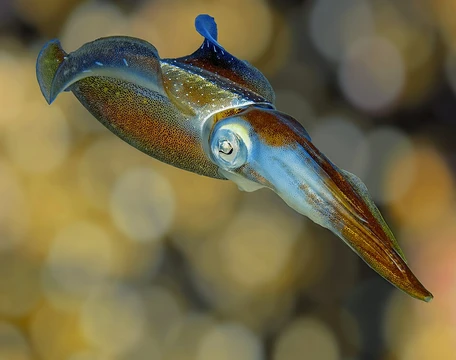
Scaeurgus unicirrhus
A cryptic deep-sea octopus of the Mediterranean and eastern Atlantic.

Scaeurgus unicirrhus is a benthic deep-sea octopus belonging to the family Octopodidae, widely distributed throughout the Mediterranean Sea and the eastern Atlantic Ocean. It is notable for its cryptic lifestyle, morphological adaptations to deep-sea environments, and its role as a biogeographic indicator across continental slope ecosystems and oceanic islands such as the Azores and Madeira.
Quick Facts
- Genus
- Scaeurgus
- Species
- unicirrhus
Facts from the source article.
Lore & Background
Scaeurgus unicirrhus was described as the type species of the genus Scaeurgus by Alcide d'Orbigny in 1840. Subsequent revisions confirmed it as the only Mediterranean representative of the genus, with three additional Pacific species—S. patagiatus, S. tuber, and S. jumeau—recognized. The species name 'unicirrhus' refers to the single cirrus above each eye, a distinctive morphological trait. Its oval, muscular body reaches a mantle length of up to 12 cm and arms extending to about 40 cm, with irregular papillae on the skin providing camouflage on sandy or rocky bottoms. The species is typically reddish-brown, with robust arms and two rows of suckers, a skin keel around the body margin, and males possess the hectocotylus on the third left arm, unlike most other octopus species.
Reader's Guide
Scaeurgus unicirrhus is a relevant species for studies of cephalopod evolution and adaptation to deep-sea environments. Its wide distribution across the Mediterranean and eastern Atlantic makes it a useful biogeographic indicator. The species plays an important ecological role in continental slope ecosystems, inhabiting sandy, muddy, or rubble substrates between 30 and 600 m depth, and has been recorded around oceanic islands such as the Azores and Madeira. In the Azores Archipelago, specimens were collected on upper-slope habitats mostly between 200 and 600 m, and the species is listed among confirmed Atlantic records around oceanic islands by FAO (2016). In the Madeira Archipelago, records from upper-slope environments suggest continuity across the Macaronesian islands. FAO (2016) provides detailed taxonomic keys, distribution data, and anatomical drawings for accurate identification. The species is primarily nocturnal, shelters in crevices or under stones, and is a benthic predator feeding mainly on crustaceans, bivalves, gastropods, and occasionally small fish. Females produce small eggs, brooding them until hatching, after which planktonic young emerge; the species likely has a biennial life cycle with spawning in spring and early summer.
Did You Know?
- Scaeurgus unicirrhus has a single cirrus above each eye, giving it the species name 'unicirrhus'.
- Males of this species have the hectocotylus on the third left arm, unlike most other octopus species where it is on the third right.
- The species was first reported in the Azores Archipelago in a regional synopsis of the local Octopoda fauna.
- Females produce small eggs about 3 mm in diameter and brood them until hatching.
More in Reef Cephalopods 1-24
Spotted an error? Know more?
Reader corrections go straight into our review queue. Suggest an edit · How this site is sourced