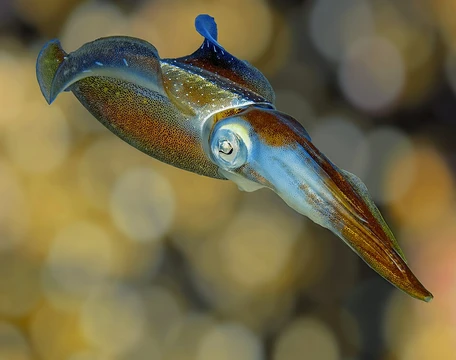
Giant Pacific octopus
The largest octopus species, inhabiting the coastal North Pacific.

The giant Pacific octopus (Enteroctopus dofleini), sometimes called the North Pacific giant octopus, is a large marine cephalopod in the genus Enteroctopus and the family Enteroctopodidae. It holds the title of the largest octopus species on the planet, and it is commonly seen in both public aquariums and research labs, not just in the wild. Its range covers much of the coastal North Pacific, stretching from Baja California in Mexico, up the U.S. West Coast (California, Oregon, Washington, and Alaska, including the Aleutian Islands) and British Columbia in Canada, across the northern Pacific to the Russian Far East (Kamchatka and the Sea of Okhotsk), and down to the East China Sea, the Yellow Sea, the Sea of Japan, Japan’s Pacific coast, and around the Korean Peninsula. This octopus lives from the intertidal zone down to depths of 2,000 meters (6,600 feet), and it is best suited to cold waters rich in oxygen and nutrients.
The species was first described in 1910 by Gerhard Wülker of Leipzig University in his work *Über Japanische Cephalopoden*. Wülker detailed its morphology and noted considerable variation within the species. He chose the specific name *dofleini* in honor of German scientist Franz Theodor Doflein. In 1998, Eric Hochberg reclassified it into the genus *Enteroctopus*.
In terms of size, *E. dofleini* stands out for its sheer bulk. Adults typically weigh about 15 kg (33 lb) and have an arm span up to 4.3 meters (14 feet). The largest recorded individual weighed 600 lb (270 kg) with a radial span of 32 feet (9.8 meters). British zoologist G. H. Parker found that the biggest suckers on this species measure about 6.4 cm (2.5 inches) across and can each support 16 kg (35 lb).
When it comes to diet, *E. dofleini* eats shrimp, crabs, scallops, abalones, cockles, snails, clams, lobsters, fish, squid, and even other octopuses. It grabs prey with its suckers and then bites it with a tough, chitinous beak. In captivity, it has been observed catching spiny dogfish (*Squalus acanthias*) up to 1.2 meters (4 feet) long, and carcasses of the same shark species have been found in wild octopus middens, strongly suggesting they hunt small sharks in nature.
Quick Facts
- Taxon
- Enteroctopus dofleini
Facts from the source article.
Lore & Background
The giant Pacific octopus was first described in 1910 by Gerhard Wülker of Leipzig University in Über Japanische Cephalopoden. He described the species' morphology in detail and noted much variation within the species. The specific name dofleini was chosen by Wülker in honor of German scientist Franz Theodor Doflein. It was moved to genus Enteroctopus by Eric Hochberg in 1998. Adults usually weigh around 15 kg with an arm span up to 4.3 m, though the largest individual weighed 270 kg with a radial span of 9.8 m. British zoologist G. H. Parker found that the largest suckers are about 6.4 cm and can support 16 kg each. E. dofleini are den dwellers, using dens as central points for foraging and protection. Dens range from caves and holes beneath rock to trash such as bottles, tires, pipes, and barrels. Den selection is influenced by foraging behavior and preferred prey. The octopus can compress through spaces as small as 50 mm. They prefer to occupy the same shelter for at least one month, often longer, and relocate to new dens within an average distance of 13.2 meters.
Reader's Guide
E. dofleini play an important role in maintaining the health and biodiversity of deep sea ecosystems, cognitive research, and the fishing industry. They are a significant source of protein for human consumption, with about 3.3 million tonnes commercially fished annually, worth $6 billion. Humans have caught them using lures, spears, pot traps, nets, and bare hands. The species is also parasitized by the mesozoan Dicyemodeca anthinocephalum, which lives in its renal appendages. In captivity, they have been observed catching spiny dogfish up to 1.2 m in length, and consumed carcasses of this shark have been found in wild middens, providing strong evidence of predation on small sharks in their natural habitat. In May 2012, a wild giant Pacific octopus was photographed attacking and drowning a seagull, demonstrating that this species may eat any available source of food within its size range, even birds. Their movement patterns include direct relocations to new areas and central-tendency movements to return to familiar habitats, influenced by use of familiar cliff edges, substrates, and topography as well as visual navigation.
Did You Know?
- The giant Pacific octopus can lay between 120,000 and 400,000 eggs.
- The female dies soon after the young hatch, having subsisted on her own body fats for about 6 months.
- The largest sucker on a giant Pacific octopus can support 16 kg (35 lb).
Position in the Cephalopod Size Spectrum
The Giant Pacific Octopus occupies a remarkable position within the cephalopod family, a group whose members span an almost incomprehensible range of body sizes. At one extreme, the smallest cephalopods reach maturity at barely a centimetre in length and weigh under a single gram. At the other, the giant squid stretches beyond ten metres and the colossal squid tips the scales near five hundred kilograms, earning them the title of largest living invertebrates. Between these poles, living cephalopod species differ in mass by more than three billion times—nine full orders of magnitude. The fossil record deepens this picture further: enormous ammonoids, belemnoids, nautiloids, orthoceratoids, teuthids, and vampyromorphids all hint at an ancient era when shelled cephalopods dwarfed anything swimming today. The giant shelled ammonoids and endocerid nautiloids likely held the mass record, though tissue mass alone might still favour modern giants. Even more fantastical claims, such as the multi-tonne St. Augustine carcass that beached in Florida in 1896, have been conclusively traced to whale blubber collagen, a reminder that the sea's true monsters sometimes turn out to be something else entirely.
Echoes in Myth and Maritime Legend
Long before modern science catalogued the ocean's largest invertebrates, sailors and ancient naturalists were already sketching their silhouettes in the collective imagination. Aristotle and Pliny the Elder both committed to writing descriptions of extraordinarily large squids, and from those early observations grew a web of tentacled sea monsters that spans every inhabited continent. In Nordic lore, the kraken is a beast the size of an island, capable of swallowing whole ships in its grip. Japan's Akkorokamui and New Zealand's Te Wheke-a-Muturangi carry the same eight- or ten-armed terror into Pacific storytelling. In the Caribbean, the Lusca haunts fishing communities, while Greek mythology's Scylla may owe its serpentine form to a misread squid sighting. Even the vague, writhing sea serpents of European folklore likely trace back to mariners glimpsing a giant squid's trailing tentacles in the deep. For the Giant Pacific Octopus, these legends matter: they remind us that the creature's sheer scale has always struck a primal chord, long before a single scientific paper measured its mantle.
From Novel to Museum: The Octopus in Popular Culture
Few animals have infiltrated the popular imagination as thoroughly as the giant cephalopods. Jules Verne's 1870 novel Twenty Thousand Leagues Under the Seas placed a colossal squid at the heart of one of literature's most beloved submarine adventures, and the story has been adapted into films repeatedly since. In 1955, the monster movie It Came from Beneath the Sea brought a giant octopus to cinema audiences, cementing the eight-armed predator as a staple of mid-century horror. Peter Benchley followed in 1991 with his novel Beast and its television adaptation, keeping the giant-squid threat alive for a new generation. Beyond fiction, the giant squid's status as a charismatic megafaunal species has led to its proposal as an emblematic animal for marine invertebrate conservation. Life-sized models of the creature are a familiar sight in natural history museums worldwide, and well-preserved specimens remain highly sought after for public display. For the Giant Pacific Octopus, this cultural footprint ensures that its story reaches far beyond the cold-water reefs where it actually lives.
The Delicate Science of Measuring a Giant
Pinpointing the true size of a giant octopus is far trickier than it sounds. In teuthology, mantle length is the standard metric for coleoid cephalopods, but for eight-armed species the measurement presents unique challenges. Because the head and mantle are so thoroughly fused in Octopodiformes, the anterior edge of the mantle cannot be clearly identified dorsally; instead, scientists measure from the midpoint between the eyes to the posterior end of the mantle. Total length, taken along the dorsal midline with limbs fully extended, is another common figure, yet it is easily inflated if tentacles are stretched beyond their natural rest length or if damaged arms are missing from a preserved specimen. For octopuses specifically, arm span—sometimes called radial spread—often dwarfs every other measurement, since the arms typically account for the vast majority of the animal's overall extent. Standard length, which combines mantle, head, and arms while excluding the longest feeding tentacles, offers a useful middle ground. Even so, certain benthic octopuses can elongate or retract their mantles, making any single measurement a snapshot rather than a fixed truth.
Frequently Asked Questions
Who is Giant Pacific octopus?
The Giant Pacific octopus (Enteroctopus dofleini) is the heaviest and largest octopus species on Earth, a member of the family Enteroctopodidae. It was first formally described by Gerhard Wülker in 1910 and is also known by the nickname North Pacific giant octopus.
What are Giant Pacific octopus's powers or abilities?
This cephalopod can stretch its arms to a span of about 9.8 meters and has been documented at a staggering 270 kg, although a typical adult hovers around 15 kg. It is a highly intelligent, camouflaging predator that wields all eight arms to grasp prey, solve problems, and navigate rocky coastal terrain.
Why is Giant Pacific octopus important?
As the planet's biggest octopus, it acts as a keystone predator in North Pacific coastal food webs and is a go-to subject in public aquariums and marine research laboratories. Its remarkable size and cognitive abilities make it a central model for understanding cephalopod intelligence and behavior.
Where does Giant Pacific octopus live?
Its home range covers the coastal waters of the North Pacific, running from Baja California northward along the U.S. West Coast through California, Oregon, Washington, and Alaska (including the Aleutian chain), and over to British Columbia and the broader northern Pacific. It favors rocky reefs, kelp forests, and tidal zones along these shores.
More in Reef Cephalopods 1-24
Spotted an error? Know more?
Reader corrections go straight into our review queue. Suggest an edit · How this site is sourced