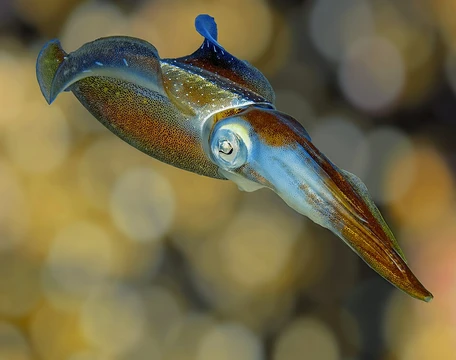
Enteroctopus magnificus
A large octopus native to waters off Namibia and South Africa.

The southern giant octopus, *Enteroctopus magnificus*, is a member of the *Enteroctopus* genus and lives in the waters off Namibia and South Africa. Like others in its genus, it has longitudinal folds on its body and large, paddle-shaped papillae. It can grow up to 1.8 metres long and weigh 11.4 kilograms.
Its range extends from Namibia to Port Elizabeth, South Africa, where it lives on sand and mud flats from shallow subtidal areas down to about 1,000 metres deep. The South African fur seal and the leafscale gulper shark are known predators of this octopus.
A generalist predator, *E. magnificus* feeds mainly on the deep-sea portunid crab *Bathynectes piperitus*. Other prey includes the Cape hagfish, the crab *Pontophilus gracilis*, and hermit crabs in the genus *Parapagurus*.
The octopus is only collected by trawl and in lobster pots, and harvest is small, mostly as by-catch in finfish trawl fisheries.
Quick Facts
- Taxon
- Enteroctopus magnificus
Facts from the source article.
Lore & Background
Enteroctopus magnificus bears the distinctive characteristics of the genus Enteroctopus, including longitudinal folds on the body and large, paddle-like papillae. It is a large octopus, reaching total lengths of up to 1.8 metres and a mass of 11.4 kilograms. The species occurs from Namibia to Port Elizabeth, South Africa, and is found primarily on sand and mud flats from shallow subtidal areas to about 1,000 metres depth. Like many octopuses, E. magnificus is a generalist predator. Its chief food source is the deep-sea portunid crab Bathynectes piperitus, with other major prey items including the Cape hagfish (Myxine capensis), the crab species Pontophilus gracilis, and hermit crabs in the genus Parapagurus. The octopus is predated on by the South African fur seal (Arctocephalus pusillus pusillus) and the leafscale gulper shark (Centrophorus squamosus).
Reader's Guide
Enteroctopus magnificus is a large octopus in the genus Enteroctopus, native to waters off Namibia and South Africa. It is notable for its size, reaching total lengths of up to 1.8 metres and a mass of 11.4 kilograms, and for its distinctive longitudinal folds and paddle-like papillae. The species is found primarily on sand and mud flats from shallow subtidal areas to about 1,000 metres depth. As a generalist predator, its chief food source is the deep-sea portunid crab Bathynectes piperitus, and it is predated on by the South African fur seal and the leafscale gulper shark. Harvest of this octopus is small, mainly as a finfish trawl fisheries by-catch, collected only by trawl and in lobster pots. Its significance lies in its role as a large predator in deep-sea benthic ecosystems off southern Africa, though it remains little-studied and primarily known from by-catch records.
Frequently Asked Questions
What is Enteroctopus magnificus?
Enteroctopus magnificus, commonly called the southern giant octopus, is a cephalopod belonging to the Enteroctopus genus and is found in the Atlantic waters off southern Africa. Like its genus-mates, it displays longitudinal body folds and large, paddle-shaped papillae across its skin.
How big can Enteroctopus magnificus get?
This octopus can reach a total length of up to 1.8 metres (roughly 5 ft 11 in) and a body mass of about 11.4 kilograms (25 lb), placing it among the larger octopuses in its home waters.
Where does Enteroctopus magnificus live and at what depths?
Its native range runs from the Namibian coast southward to Port Elizabeth, South Africa, where it settles on sand and mud flats. It is found from the shallow subtidal zone down to approximately 1,000 metres (3,300 ft).
What does Enteroctopus magnificus eat?
It is a generalist predator that takes a variety of prey, with the deep-sea portunid crab Bathynectes piperitus being a particularly important food source.
More in Reef Cephalopods 1-24
Spotted an error? Know more?
Reader corrections go straight into our review queue. Suggest an edit · How this site is sourced