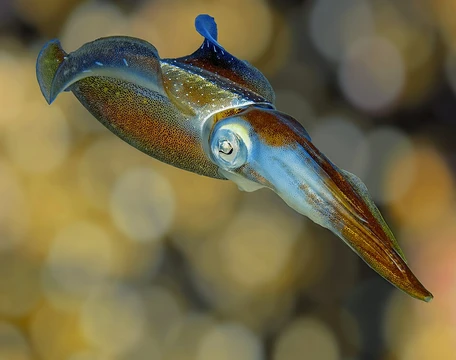
Bathypolypus arcticus
A cold-water octopus with the longest known brooding period.

Bathypolypus arcticus—called the North Atlantic octopus, deep sea octopus, or spoonarm octopus—is a small, bottom-dwelling octopus from the North Atlantic. It typically lives at depths between 200 and 600 meters (660–1,970 ft), where water temperatures range from 2 to 6 °C (36–43 °F).
This octopus is small and has short arms, measuring 6 to 10 cm (2.4–3.9 in) in length. Adults average about 45 g (1.6 oz) in weight, with a maximum of 300 g (11 oz). Like other deep-sea octopuses, it lacks an ink sac. Its mantle is globular, nearly as wide as it is long, and the mantle, head, arms, and web are covered in warts, especially around the eyes. The arms are short and arranged irregularly, with two rows of small suckers.
Bathypolypus arcticus has low fecundity, laying fewer but relatively larger eggs than many other octopuses. The young hatch as benthic juveniles. The female broods her eggs for more than 400 days, during which she stops eating and slowly metabolizes her own body to guard them. This was the longest known brooding period for any octopus until Graneledone boreopacifica surpassed it.
Unusually for octopuses, this species mainly eats brittle stars, though this may depend on what is available; in captivity, it prefers crustaceans. It also consumes polychaetes, sipunculid worms, foraminiferans, and bivalves in smaller amounts. Adults can be housed together without showing the aggressive, cannibalistic behavior seen in many other octopuses.
This octopus has a longer lifespan than many others, living six years or more. By comparison, many shallow-water octopuses live only about a year. Higher water temperatures speed up growth but shorten lifespan. Temperatures above 10 °C (50 °F) are usually lethal to this cold-water species, though specimens have survived at 11 °C (52 °F) if slowly acclimated.
Bathypolypus arcticus hosts the dicyemid parasite Dicyemennea canadensis, which lives in the renal appendage of the infected octopus.
Its range spans the North Atlantic from the Florida Straits north along the eastern seaboard to Greenland, Iceland, and Spitsbergen, then south along the European coast into the North Sea, including Great Britain and Ireland. Though mainly found between 200 and 600 m (660–1,970 ft), it has been recorded in shallower waters and as deep as 1,543 m (5,062 ft).
Quick Facts
- Taxon
- Bathypolypus arcticus
Facts from the source article.
Lore & Background
Bathypolypus arcticus is a small, short-armed octopus with a globular mantle nearly as wide as it is long. Its mantle, head, arms, and web are covered in warts, especially around the eyes. Like other deep-sea octopuses, it lacks an ink sac. The arms are in an irregular order with two rows of small suckers.
This species has low fecundity, laying fewer, relatively larger eggs from which benthic young hatch. The female broods her eggs for over 400 days, fasting and wasting away. This was considered the longest brooding period for an octopus until surpassed by Graneledone boreopacifica. Unusually, it mainly feeds on brittle stars, though captives prefer crustaceans; other food items include polychaetes, sipunculid worms, foraminiferas, and bivalves. Adults can be housed together without aggression or cannibalism.
Bathypolypus arcticus may live for six years or more, longer than many shallow-water octopuses. Higher water temperatures increase growth rates but shorten lifespan; temperatures above 10 °C are typically lethal, though specimens have survived at 11 °C if slowly acclimated. It is the host for the dicyemid parasite Dicyemennea canadensis, which lives in the renal appendage.
Reader's Guide
Bathypolypus arcticus is significant for its extreme reproductive strategy: a brooding period of over 400 days, during which the female starves and metabolizes her own body. This was the longest known for any octopus until surpassed by Graneledone boreopacifica. Its low fecundity and large eggs contrast with many other octopuses. The species also exhibits an unusually long lifespan of six years or more, compared to the one-year lifespan of many shallow-water octopuses. Its diet is notable for primarily consisting of brittle stars, though it adapts to available prey. The species' tolerance for cold water and lethality above 10 °C highlight its specialization to deep, cold environments. Its distribution spans the North Atlantic from the Florida Straits to Greenland, Iceland, Spitsbergen, and south to the North Sea. The presence of the parasite Dicyemennea canadensis in its renal appendage adds to its ecological context.
Did You Know?
- Bathypolypus arcticus females brood their eggs for over 400 days without eating.
- Temperatures above 10 °C are typically lethal to this cold-water species.
Frequently Asked Questions
What is Bathypolypus arcticus?
It is a tiny, cold-water octopus that lives on the seafloor of the North Atlantic, often nicknamed the spoonarm octopus or deep sea octopus by enthusiasts. It has a rounded, nearly spherical mantle and notably short, stubby arms.
How big does Bathypolypus arcticus get?
Adults are only about 6 to 10 cm in arm span and typically weigh around 45 grams, with the heaviest known individual topping out near 300 grams. It is one of the smaller deep-sea octopus species you will encounter.
Where does Bathypolypus arcticus live?
This strictly benthic species occupies the ocean floor between roughly 200 and 600 meters in water that hovers between 2 and 6 °C, though a single specimen has been recorded at an extraordinary 1,543 meters. It never leaves the bottom to swim in the open water column.
What is special about Bathypolypus arcticus's breeding?
Females of this species hold the record for the longest known egg-brooding period among cephalopods, guarding their clutch for more than 400 days. That extended parental commitment is especially striking for such a small, cold-adapted animal.
Why do fans consider Bathypolypus arcticus noteworthy?
It combines an ink-sac-less body plan, extreme cold tolerance, and a record-breaking brooding duration in a package that is barely 10 cm long. That mix of traits makes it a standout reference point in any discussion of deep-sea octopus biology.
More in Reef Cephalopods 1-24
Spotted an error? Know more?
Reader corrections go straight into our review queue. Suggest an edit · How this site is sourced