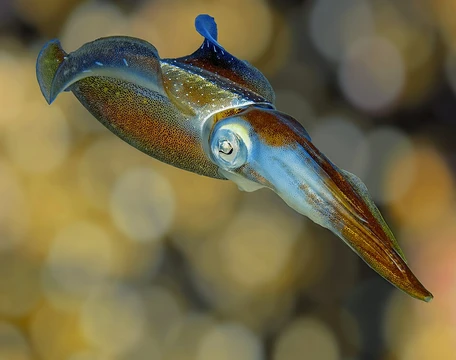
Graneledone yamana
A deep-sea octopus with cartilaginous warts and two eye horns.

Graneledone yamana belongs to the octopus genus Graneledone. Like other members of this group, it lacks an ink sac and a crop, has cartilaginous warts covering the body cavity, uniserial suckers along the arms, and a reduced radula. Its distinctive features include papillose skin, two horn-like projections above the eyes, small gills, and five to seven lamellae on the outer side of the demibranch. Females have 35 to 80 suckers on each arm, while males have 26 to 70. This species closely resembles Graneledone verrucosa, but the cartilaginous warts on the body cavity differ between the two. G. verrucosa also lives in the North Atlantic, whereas G. yamana is found in the southwest Atlantic Ocean, off the coasts of Uruguay, Argentina, and southern Brazil. It is the fifth species of Graneledone recorded from southern oceans, and members of this genus are known from deep waters near hydrothermal vents.
Quick Facts
- Taxon
- Graneledone yamana
Facts from the source article.
Lore & Background
Graneledone yamana is assigned to the genus Graneledone due to the absence of an ink sac and crop, the presence of cartilaginous warts covering the body cavity, uniserial suckers on the arms, and a reduced radula. Its identifying characteristics include papillose skin, two horns located above the eyes, small gills, and five to seven lamellae on the outside of the demibranch. The arms of G. yamana have 35–80 suckers on females and 26–70 on males.
This species physically resembles Graneledone verrucosa, except the cartilaginous warts on the body cavities of both species differ. G. verrucosa is found in the North Atlantic Ocean instead of the South. G. yamana is known from the southwest Atlantic Ocean off the coasts of Uruguay, Argentina, and southern Brazil, and it is the fifth species of Graneledone found in the southern oceans. The genus has been found in deep waters near hydrothermal vents.
Reader's Guide
Graneledone yamana contributes to the understanding of deep-sea octopus diversity in the southern Atlantic. Its placement in the genus Graneledone is based on shared morphological traits such as the absence of an ink sac and crop, cartilaginous warts, uniserial suckers, and a reduced radula. The species is distinguished from its close relative Graneledone verrucosa by differences in the cartilaginous warts and geographic distribution—G. yamana occurs in the southwest Atlantic, while G. verrucosa is found in the North Atlantic. As the fifth species of Graneledone recorded in southern oceans, it expands the known range of the genus into deep waters near hydrothermal vents. Its physical features, including papillose skin, two eye horns, small gills, and specific sucker counts on arms, provide key diagnostic criteria for field identification. The species' presence off Uruguay, Argentina, and southern Brazil highlights the biodiversity of cephalopods in these understudied regions.
Did You Know?
- Graneledone yamana lacks an ink sac and crop.
- It has two horns located above the eyes.
- Females have 35–80 suckers on the arms; males have 26–70.
Frequently Asked Questions
What is Graneledone yamana?
It is a deep-sea octopus in the genus Graneledone, native to the cold southwest Atlantic waters off Uruguay, Argentina, and southern Brazil. Like its close relatives, it has no ink sac, no crop, and a reduced radula, making it quite distinct from the shallow-water octopuses most people picture.
What makes Graneledone yamana visually distinctive?
The most eye-catching traits are the pair of small horn-like projections perched above its eyes and the papillose, bumpy texture of its skin. Combined with the cartilaginous warts lining the body cavity and its notably small gills, these features give it a rugged, almost armored appearance.
How is Graneledone yamana different from Graneledone verrucosa?
The two species are easy to confuse at a glance, but the decisive difference lies in the specific structure and arrangement of the cartilaginous warts inside the body cavity. Apart from that internal detail, their overall body plans and external ornamentation are nearly identical.
Where can you find Graneledone yamana in the wild?
Its range is limited to the deep waters of the southwest Atlantic Ocean, specifically along the continental shelves and slopes off Uruguay, Argentina, and southern Brazil. It is a true deep-sea dweller rather than a shallow reef or coastal species.
How do male and female Graneledone yamana differ?
The most measurable distinction is sucker count: females bear between 35 and 80 suckers on each arm, whereas males carry a smaller range of 26 to 70. Both sexes share the same five-to-seven lamellae on the outer demibranch and the same pair of eye horns.
More in Reef Cephalopods 1-24
Spotted an error? Know more?
Reader corrections go straight into our review queue. Suggest an edit · How this site is sourced