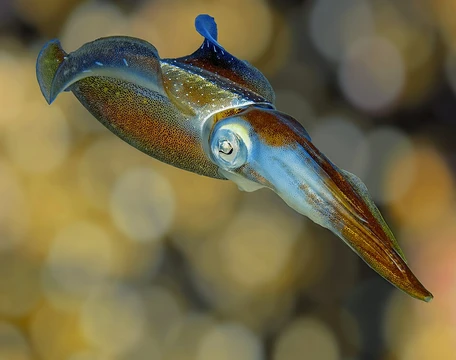
Pinnoctopus ornatus
A wide-ranging tropical octopus with nocturnal habits and long front arms.

Pinnoctopus ornatus, commonly known as the ornate octopus, white-striped octopus, or night octopus, is a tropical species native to the Indo-Pacific region. It is notable for its wide distribution, large size, and nocturnal hunting habits.
Quick Facts
- Genus
- Pinnoctopus
- Species
- ornatus
Facts from the source article.
Lore & Background
Pinnoctopus ornatus was previously known as Polypus ornatus. It was recorded in a Hawaiian market in 1914 by S. S. Berry. The upper arms are much longer and thicker than the others, pink to red with paired white spots and short longitudinal white stripes on the mantle. The body is oval-shaped to elongate with large eyes, and the arms are about six times the body length. Each arm has two rows of suckers, and the webs are shallow. The skin is fairly smooth with long flaps that can be raised in the white stripes on the sides of the body.
Adults are usually found on coral reefs, with lairs consisting of deep vertical holes excavated in coral rubble, sealed during the day with rubble. They hunt at night, eating mainly fish and crustaceans, and their stomach contents regularly contain beaks of other octopus species. Other night-active octopuses flee in an explosion of ink if touched by a single arm of this species.
Females lay up to 35,000 small eggs, and hatchlings swim up into the plankton, carried by surface currents until they settle on a new coral reef. Nothing is known of mating behaviour. The species is harvested by subsistence hunters throughout its range; historically, Polynesian Hawaiians used torches to find foraging animals at night and killed them with hand spears.
Reader's Guide
Pinnoctopus ornatus holds significance as one of the most widely distributed octopus species, attributed to the planktonic life stage of its hatchlings. Its presence across the Indo-Pacific, from Hawaii and Easter Island to South Africa, and in Australian waters from northern New South Wales to Perth, underscores its ecological breadth. The species is limited to tropical waters within the 20 °C isotherm, though specimens in warm temperate New South Wales likely result from juveniles carried south by the East Australian Current. Its nocturnal hunting behavior, probing long arms into holes and enveloping small coral heads, highlights its role as a predator of fish, crustaceans, and even other octopus species. The defensive reaction of other night-active octopuses—fleeing in an ink explosion upon contact—illustrates its dominance in its habitat. Historically, it was recorded in a Hawaiian market in 1914, and its use by subsistence hunters, including Polynesian Hawaiians who used torches and hand spears, reflects its ongoing cultural and practical importance. The species' legacy is tied to its adaptability, wide range, and the unique reproductive strategy of producing numerous small eggs that disperse via plankton.
Did You Know?
- The ornate octopus was previously known as Polypus ornatus.
- Females lay up to 35,000 small eggs, each about 2 millimetres long.
More in Reef Cephalopods 1-24
Spotted an error? Know more?
Reader corrections go straight into our review queue. Suggest an edit · How this site is sourced