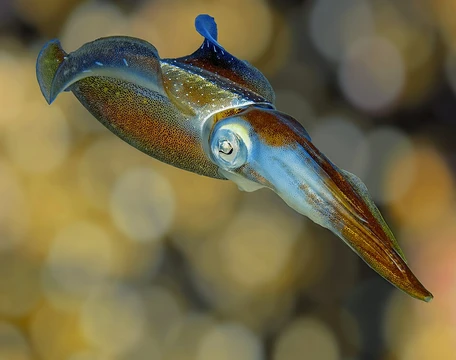
Pareledone
A cold-adapted octopus genus with RNA editing capabilities.

Pareledone is a genus of octopuses belonging to the family Megaleledonidae. Its species include *Pareledone adelieana*, *P. aequipapillae*, *P. albimaculata*, *P. antarctica* (considered questionable and requiring further study), *P. aurata*, *P. charcoti*, *P. cornuta*, *P. felix*, *P. framensis*, *P. harrissoni*, *P. panchroma*, *P. polymorpha*, *P. prydzensis*, *P. serperastrata*, *P. subtilis*, and *P. turqueti* (Turquet's octopus). Some of these octopuses can survive in extremely cold environments. Research on a *Pareledone* specimen collected near McMurdo Station, Antarctica, showed that it uses RNA editing to adjust how its potassium channels open and close. In cold water, the potassium channel's gating kinetics speed up, matching the less temperature-sensitive sodium ion exchange. This editing involves converting an adenosine nucleotide to inosine, which changes a single amino acid in the voltage sensor of the potassium channel, making the open state less stable. Scientists are investigating whether individual octopuses can alter their protein synthesis in response to temperature changes, or if this adaptation is fixed across the species over long periods. If individuals can make these adjustments, the octopuses might be able to respond rapidly to shifting climate conditions.
Quick Facts
- Taxon
- Pareledone
Facts from the source article.
Lore & Background
The genus Pareledone was described within the family Megaleledonidae and includes 16 listed species, such as Pareledone adelieana, Pareledone aequipapillae, and Pareledone turqueti (Turquet's octopus). One species, Pareledone antarctica, is marked with an asterisk as questionable, requiring further study to determine if it is a valid species or a synonym. Researchers at the University of Puerto Rico's Institute of Neurobiology collected a member of this genus from McMurdo Station, Antarctica, to study its cold-water adaptations. They found that this octopus can speed up the gating kinetics of its potassium channels in cold water to keep up with sodium ion exchange, whose channel is less temperature sensitive. This alteration is accomplished through RNA editing, specifically the deamination of an adenosine nucleotide to inosine, resulting in a change in a single amino acid in the potassium channel's voltage sensor, destabilizing the open state.
Reader's Guide
The significance of Pareledone lies in its demonstrated ability to use RNA editing to adapt to extreme cold, a mechanism that allows it to alter the speed of sodium and potassium ion movement across cell membranes. This adaptation was observed in a single individual collected from McMurdo Station, Antarctica, and researchers are now investigating whether individuals can alter their protein synthesis in response to changing temperatures, or if this change occurs species-wide over long-term adaptations. If individual-level plasticity is possible, these octopuses might be able to adapt quickly to changing climate scenarios. The genus also presents taxonomic uncertainty, with one species (Pareledone antarctica) flagged as questionable, highlighting the need for further study to resolve species validity. This combination of physiological innovation and unresolved taxonomy makes Pareledone a subject of ongoing scientific interest.
Did You Know?
- Pareledone is a genus of octopuses in the family Megaleledonidae.
- A member of Pareledone collected from McMurdo Station, Antarctica can speed up potassium channel gating in cold water via RNA editing.
- The RNA editing involves deamination of an adenosine nucleotide to inosine, changing a single amino acid in the potassium channel's voltage sensor.
- One species, Pareledone antarctica, is considered questionable and needs further study to determine if it is a valid species or a synonym.
More in Reef Cephalopods 1-24
Spotted an error? Know more?
Reader corrections go straight into our review queue. Suggest an edit · How this site is sourced