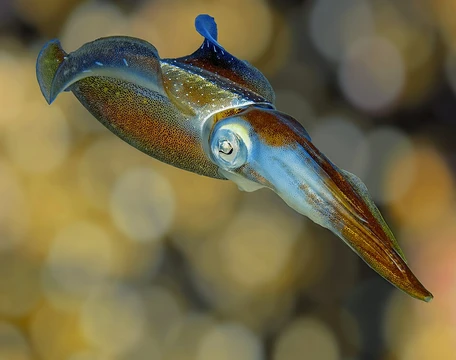
Octopus variabilis
A benthic octopus of economic and dietary importance in East Asia.

The whiparm octopus (*Octopus variabilis*) is a bottom-dwelling species found in the northwest Pacific, mainly in the East China Sea and near Korea. It prefers shallow, muddy waters, especially during breeding season. As a member of the Octopodidae family—the group containing the most familiar octopus species—it plays an important economic role in coastal China, where it helps stabilize local fishing communities. Along with *Amphioctopus fangsiao*, it is one of the key cephalopod species in the East China Sea.
In many Asian countries, including South Korea, this small octopus is a popular seafood because it is low in fat and rich in polyunsaturated fatty acids. Because it filter-feeds and lives in tidal flat sediments, it often carries a variety of microorganisms. When eaten raw, this can lead to food-borne illnesses.
**Identification** In 1929, Madoka Sasaki listed eighteen cephalopod species from Taiwan, including *O. variabilis*. This species has often been confused with *Octopus minor* (described by Sasaki in 1920), a common benthic species in northeast Asia, due to their similar appearance. However, the two differ in their tolerance to environmental conditions and ability to disperse. Because of these similarities and taxonomic confusion, regional fishermen and older scientific literature often use the names interchangeably.
**Distribution and characteristics** *O. variabilis* is one of the most abundant species along the northwest Pacific, especially in China, Korea, and Japan. Adults have limited dispersal ability—aside from occasional moves between upper and lower tidal zones, they are mostly sedentary, crawling along the seabed. This limited movement leads to weak genetic flow and differentiation among populations. The species lives in shallow, muddy environments and burrows during breeding. Its depth range is 1 to 200 meters.
**Life cycle and mating behavior** Like other cephalopods, *O. variabilis* is gonochoristic (separate sexes). Males attract mates with various displays. During copulation, the male inserts a specialized arm (hectocotylus) into the female’s mantle cavity to fertilize her eggs. Males die shortly after spawning, while females die after the brooding period. Juveniles hatch directly from benthic-attached eggs, with no planktonic larval stage.
**Consumption** *O.
Quick Facts
- Genus
- Octopus
- Species
- variabilis
Facts from the source article.
Lore & Background
Historically, Octopus variabilis has been confused with Octopus minor due to morphological similarities, and regional fishermen and earlier scientific literature often refer to the two species interchangeably. The two differ in tolerance to environmental conditions and dispersal ability. Madoka Sasaki noted eighteen species of cephalopods in Taiwan in 1929, though O. variabilis was among them.
This species exhibits limited dispersal potential, with adults largely sessile and moving along seabeds, except for occasional movements between upper and lower tidal zones. As a result, weak genetic flow has led to differentiation among populations. O. variabilis inhabits shallow, muddy environments and burrows during breeding periods.
As a gonochoristic cephalopod, males perform displays to attract mates and use a hectocotylus to fertilize females. Males die shortly after spawning, while females die after the brooding period. Juveniles hatch directly from benthic-attached eggs with no planktonic larval stage.
Reader's Guide
Octopus variabilis is a key fishery resource in East Asian waters, particularly the Yellow and East China Seas, where it is fished alongside Amphioctopus fangsiao. Since the 1990s, cephalopod production in the region has increased, accompanied by changes in species composition driven by large-scale environmental variations. Climate projections indicate that suitable habitat for O. variabilis is likely to extend northward, posing challenges for long-term management.
In South Korea and other Asian countries, O. variabilis is a popular seafood due to its low fat content and high proportions of polyunsaturated fatty acids. It is sold raw in fish markets, often with a sauce, and can also be grilled, braised, or cooked in stews. However, because it is often consumed raw, the microorganisms it hosts from filter-feeding in tidal flat sediments can cause food-borne illnesses, and in rare cases, anaphylaxis. Its role in stabilizing local fishery communities in coastal China underscores its economic significance.
Did You Know?
- Octopus variabilis is commonly known as the whiparm octopus.
- Adults are largely sessile with limited dispersal potential, leading to genetic differentiation among populations.
- It is often consumed raw in South Korea, but can cause food-borne illnesses due to hosted microorganisms.
More in Reef Cephalopods 1-24
Spotted an error? Know more?
Reader corrections go straight into our review queue. Suggest an edit · How this site is sourced