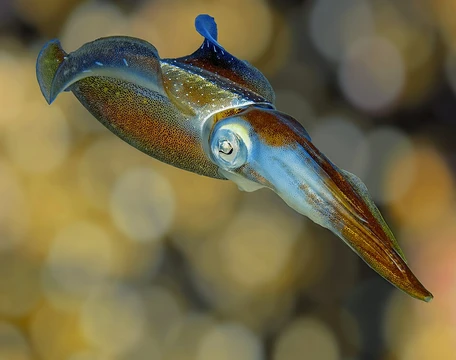
Octopus sinensis
A benthic octopus separated from Octopus vulgaris in 2017.

Octopus sinensis, commonly known as the East Asian common octopus, is a shallow-water cephalopod found in coastal temperate waters of Japan, South Korea, and China. It is notable for being morphologically similar to the Atlantic and Mediterranean common octopus, Octopus vulgaris, and was considered a population of that species until 2017, when molecular and morphological evidence proved it to be a separate species.
Quick Facts
- Taxon
- Octopus sinensis
Facts from the source article.
Lore & Background
Octopus sinensis was first described by Alcide d'Orbigny in 1834. For many years it was considered a population of Octopus vulgaris due to their morphological similarity, but in 2016 zoologist Ian G. Gleadall designated a neotype, and in 2017 molecular and morphological features confirmed it as a distinct species. In 2015, taxonomists Amanda Reid and Nerida Wilson described a new species, Octopus jollyorum, based on specimens from Raoul Island in the Kermadec Islands, noting morphological similarities to O. sinensis but creating a new description because no type specimen of O. sinensis was available; O. jollyorum was recognized as a junior synonym of O. sinensis in 2020.
The East Asian common octopus is adapted to benthic life, with long arms bearing many suckers, a mantle without a rigid skeleton, horizontal pupils, and skin capable of changing color and camouflage. Compared to O. vulgaris, O. sinensis has a broader mantle, relatively shorter arms, and about 80 fewer suckers. The third right arm of mature males is hectocotylized, with far fewer suckers (120–140 vs. 150–190) and possesses erectile tissue and a channel for sperm packets, used during copulation.
Reader's Guide
Octopus sinensis is commercially important as a food source in China, along with Octopus vulgaris, and both are vulnerable to overfishing. Delineating the two species is important for sustainable fisheries management, as some researchers claim that misidentification of O. sinensis as O. vulgaris may be masking the decline of octopus populations worldwide. Catches of octopus have been steadily declining globally. Due to its rapid growth rate and high commercial value, O. sinensis is of particular interest in aquacultural cultivation, though attempts to rear it aquaculturally since the 1960s have met with little success. Current studies focus on developing gene expression profiles to better understand the metabolic processes and nutritional requirements of O. sinensis during its paralarval stage, aiming to improve aquacultural production.
Did You Know?
- Octopus sinensis was considered a population of Octopus vulgaris until 2017.
- The species name sinensis is Latin for 'Chinese'.
- Mature males have a hectocotylized third right arm with 120–140 suckers, compared to 150–190 in Octopus vulgaris.
- Octopus jollyorum was recognized as a junior synonym of Octopus sinensis in 2020.
More in Reef Cephalopods 1-24
Spotted an error? Know more?
Reader corrections go straight into our review queue. Suggest an edit · How this site is sourced