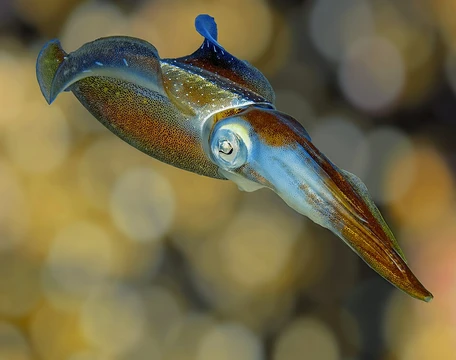
Octopus minor
Small benthic octopus valued in Korean cuisine and culture.

Octopus minor, commonly known as the long arm octopus or Korean common octopus, is a small-bodied benthic cephalopod found in coastal waters bordering China, Japan, and the Korean Peninsula. It is notable for its economic and cultural importance in Korea, where it is called nakji and contributes to a $35 million octopus industry, as well as for its physiological adaptability and mapped genome.
Quick Facts
- Taxon
- Octopus minor
Facts from the source article.
Lore & Background
Octopus minor was first described as a subgroup of Polypus macropus var. minor by Japanese malacologist Madoka Sasaki in 1920. It was later moved to Polypus variabilis var. minor, and in 1965 Iwao Taki transferred it to the genus Octopus. Kaneko et al. (2011) reclassified it as Callistoctopus minor based on morphological and phylogenetic evidence, though the World Register of Marine Species still lists it as Octopus minor, and some researchers retain the older name due to the paraphyletic nature of the genus Octopus.
This octopus is small and soft-bodied with long, unequal arms; the first arm is about 80% of total length. Its body surface is mostly smooth with small pimples on the dorsal side, and live specimens show red-brown with light yellow spots. It can shift coloration to dark red when threatened. Males have a hectocotylized right third arm used for mating, with a large spoon-shaped ligula. O. minor hosts three species of dicyemid parasites in its renal sac: Dicyema clavatum, Dicyema sphyrocephalum, and Dicyema dolichocephalum.
Reader's Guide
Octopus minor carries significant cultural and economic value in the countries where it is found, particularly in Korea, where it is known as nakji and is a common seafood served both cooked and raw, often as a snack during sporting events. It is commercially important to fishing communities and contributes to the $35 million octopus industry. The species has drawn scientific interest due to its ability to adapt its morphology to a wide range of environmental conditions and because it hosts a dangerous parasite; its genome has been mapped as a result. Taxonomically, O. minor remains a subject of debate, with some researchers placing it in the genus Callistoctopus while others retain the name Octopus minor. Its benthic nature and presence in mudflats and rocky areas like Jeju Island expose it to significant environmental variation, and its feeding behavior—preying on fish, shellfish, and crustaceans—varies by sex and ovarian maturation. The octopus uses chromatophores for color change and jet propulsion for escape, and its long arms provide a streamlined swimming shape.
Did You Know?
- Octopus minor is known as nakji in Korean and is commonly eaten as a snack during sporting events.
- Its first arm is about 80% of total length, twice the length of the third or fourth arms.
More in Reef Cephalopods 1-24
Spotted an error? Know more?
Reader corrections go straight into our review queue. Suggest an edit · How this site is sourced