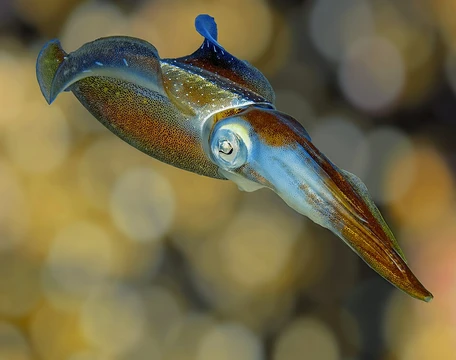
Octopus australis
A medium-sized octopus with a male reproductive arm.

Octopus australis, commonly known as the hammer octopus or southern octopus, is a species of octopus first described by William Evans Hoyle in 1885 based on a specimen from Port Jackson in New South Wales. It is notable for the modified arm possessed by males, which is used in reproduction and gives the species its common name.
Quick Facts
- Genus
- Octopus
- Species
- australis
Facts from the source article.
Lore & Background
Octopus australis was first described by William Evans Hoyle in 1885, based on a specimen found in Port Jackson in New South Wales. It is medium-sized, with males having a mature mantle length of around 20 to 25 millimeters and females 50 to 60 millimeters, an arm span of around 40 centimeters, and a maximum total length of 49.9 centimeters. Males weigh around 210 grams and females around 105 grams. The head is narrow and egg-shaped with small eyes, and it is typically a sandy cream color.
The species is found in coastal waters and bays along the eastern coast of Australia from central Queensland to southern New South Wales, most commonly in subtropical inshore waters, at depths of around 3 to 140 meters. It tends to live on sand or mud seafloors, among sponges, ascidians, or mollusks, or in seagrass. Its diet is mostly composed of isopods, but also includes other crustaceans, other octopuses, bristle worms, gastropods, and bivalves. It usually forages at night and hides in trash, shells, or the seafloor during the day.
Females lay around 50 to 130 eggs per brood, each about 11 millimeters long, normally in the summer. Eggs take over 100 days to hatch. The estimated lifespan is 18 to 20 months.
Reader's Guide
Octopus australis is significant as a species first described from a specimen collected in Port Jackson, New South Wales, by William Evans Hoyle in 1885. Its common name, hammer octopus, derives from a modified arm in males used for reproduction, a distinctive trait noted in the original description. The species is medium-sized, with notable sexual dimorphism: males have a smaller mantle length (20–25 mm) and greater weight (around 210 g) compared to females (50–60 mm mantle length, around 105 g). Its distribution along the eastern Australian coast from central Queensland to southern New South Wales, in subtropical inshore waters at depths of 3 to 140 meters, places it in a range of habitats including sand or mud seafloors, among sponges, ascidians, or mollusks, and in seagrass. The diet is primarily isopods but includes a variety of other prey, and the species is nocturnal forager that hides during the day. Its reproductive strategy involves laying 50 to 130 eggs per brood in summer, with an incubation period over 100 days, and a lifespan of 18 to 20 months. These details contribute to understanding the ecology and life history of this reef-dwelling cephalopod.
Did You Know?
- The common name 'hammer octopus' comes from a modified arm in males used in reproduction.
- It was first described by William Evans Hoyle in 1885 from a specimen found in Port Jackson, New South Wales.
More in Reef Cephalopods 1-24
Spotted an error? Know more?
Reader corrections go straight into our review queue. Suggest an edit · How this site is sourced