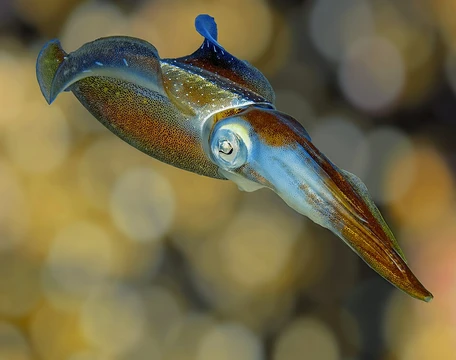
Macroctopus
A large, robust octopus of New Zealand and southern Australian waters.

Macroctopus is a monospecific genus of cephalopod in the family Octopodidae, containing only the species Macroctopus maorum, known as the Māori octopus or New Zealand octopus (wheke in Māori). It is notable as one of the largest octopus species in the waters around New Zealand and southern Australia, with an arm span that can exceed 3 metres.
Quick Facts
- Genus
- Macroctopus
- Species
- maorum
Facts from the source article.
Lore & Background
Macroctopus was first proposed as a subgenus of Octopus in 1928 by Guy Coburn Robson, with Octopus maorum as its type species. The species was first formally described in 1880 by Frederick Hutton, with the type locality given as Dunedin. Some authorities regard this taxon as conspecific with Pinnoctopus cordiformis, making M. maorum a junior synonym, while others consider P. cordiformis a synonym of Enteroctopus zealandicus.
Macroctopus maorum is a member of the Octopus macropus species complex, characterized by a high number of gill lamellae, a robust conical copulatory organ, and arms of varying length with long unequal dorsal arms four to six times longer than the mantle. The mantle is broadly ovoid with a skin pattern of longitudinal ridges, and the dorsum has five rows of unbranched papillae with two additional papillae above the eyes. Coloration varies between orange-brown and dark purple-grey, with numerous small iridescent white spots on the web, arms, and dorsal arm crown, but none on the mantle.
Reader's Guide
Macroctopus maorum is significant as one of the largest octopus species in New Zealand and Australian waters, with an arm span exceeding 3 metres and a body mass up to 12 kilograms. It is commonly found in temperate to sub-antarctic waters around New Zealand and southern Australia, including the coasts of both North and South Islands, as well as Campbell, Chatham, and Auckland Islands. In Southeast Tasmania, Eaglehawk Bay is the only known inshore location where they gather in large numbers year-round.
The species lives in benthic soft-sediment and rubble habitats at depths of 0–549 metres, using temporary shelters rather than permanent dens. Its diet includes crustaceans, fish, and bivalves, with a preference for lobster, crabs, and scallops. Cannibalism is common, and small M. maorum have been known to attack larger Octopus tetricus where habitats overlap. Females lay approximately 7,000 eggs in clusters of 3–12, cemented to the substratum, and brood them without feeding until hatching. The species is regarded as a synonym of Pinnoctopus cordiformis by some authorities, reflecting ongoing taxonomic uncertainty.
Did You Know?
- Macroctopus maorum can regrow arms when one has been lost.
- Females lay approximately 7,000 eggs and stop eating during the brooding period.
- The species has 12–14 gill lamellae per demibranch.
- Hatchlings are planktonic with 7–8 suckers per arm.
More in Reef Cephalopods 1-24
Spotted an error? Know more?
Reader corrections go straight into our review queue. Suggest an edit · How this site is sourced