
Basuto Gun War
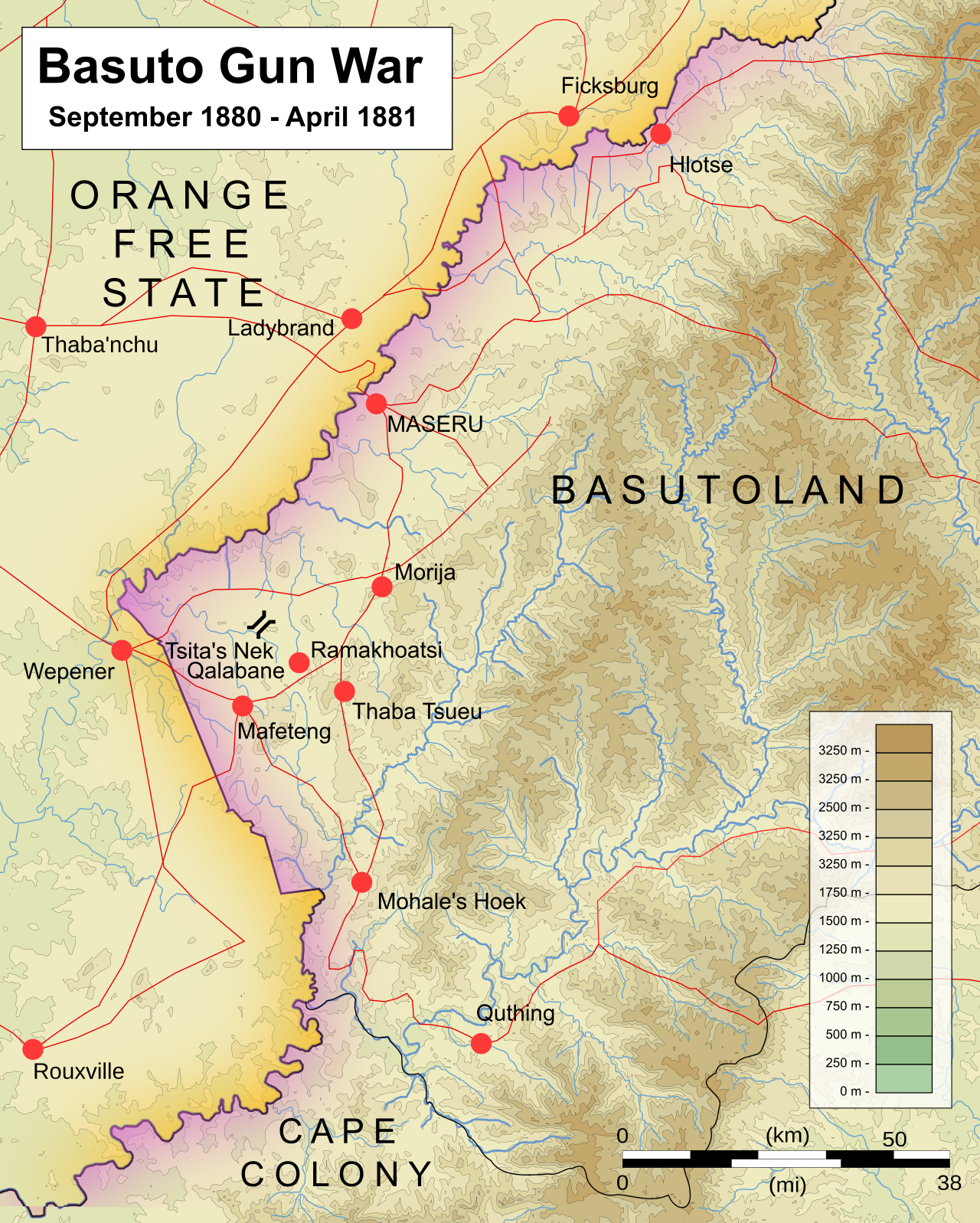
Basuto victory against the Cape Colony over gun confiscation.

Amitchell125 · CC BY-SA 4.0
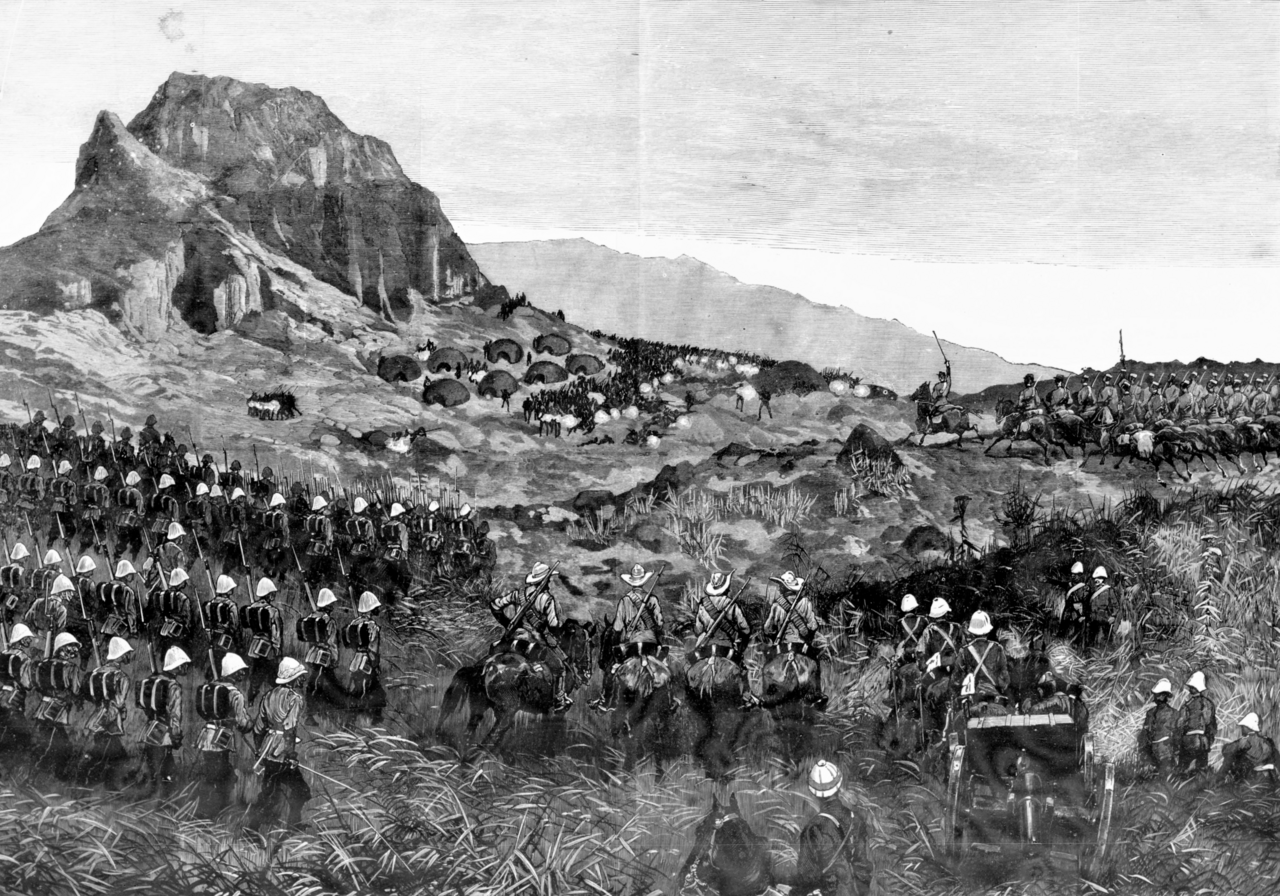
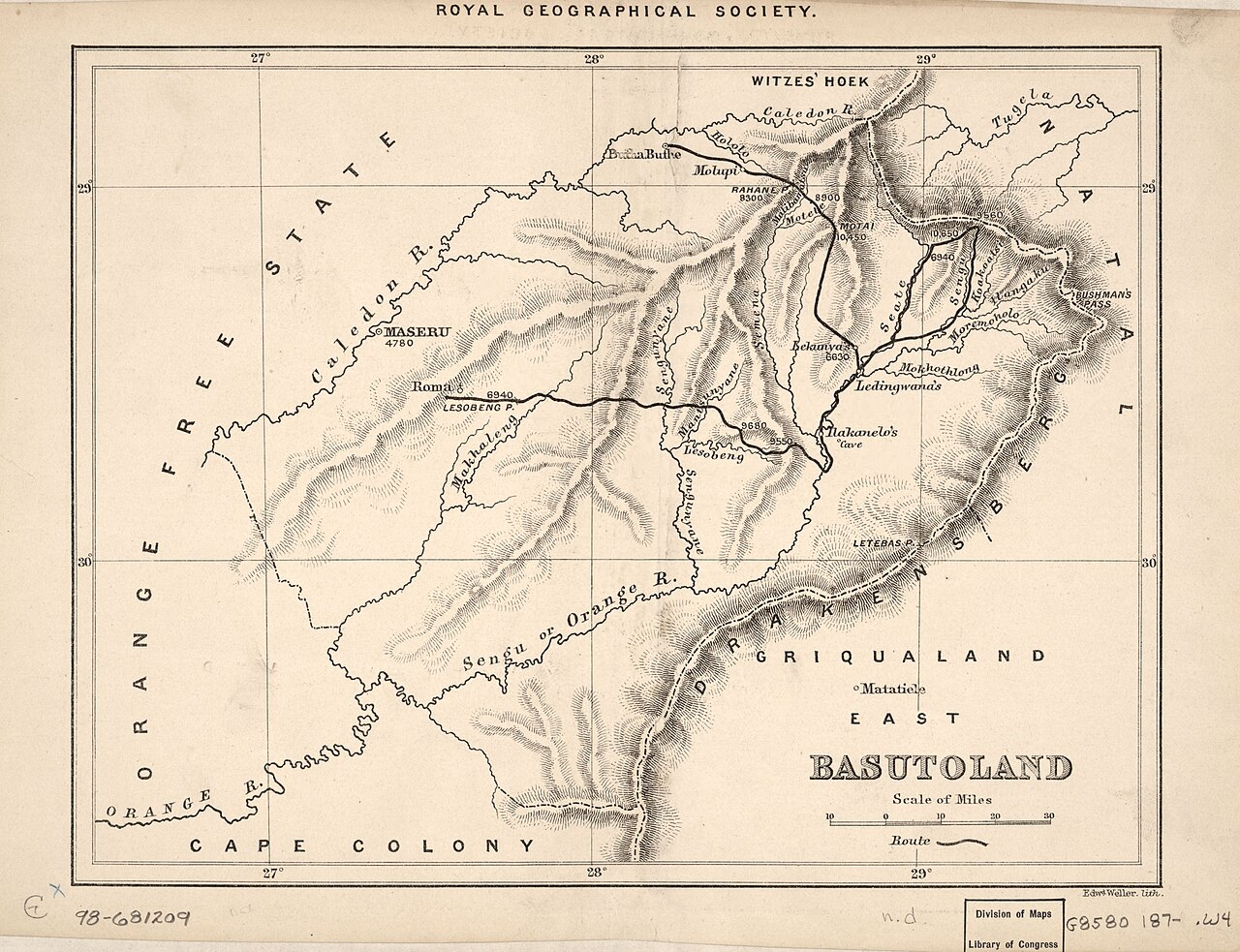
The Basuto Gun War, sometimes called the Basutoland Rebellion, was a fight between the Basuto and the British Cape Colony. It began on 13 September 1880 and ended on 29 April 1881, with the Basuto emerging victorious.
Basutoland became a British dominion on 12 March 1868. After that, the Cape Colony administration pushed rapid westernization. In 1879, the Cape Parliament applied the Peace Preservation Act to Basutoland, aiming to take away the Basuto’s guns. Guns were deeply important in Basuto society, and combined with past grievances, this led to a rebellion. Chiefs Lerotholi and Masopha led the uprising, which started on 13 September 1880. The Cape Colonial Forces were heavily outnumbered and also dealing with other revolts, so they could not win a clear military victory.
The war reached a military stalemate, and the high cost made it unpopular among Cape politicians. On 29 April 1881, High Commissioner for Southern Africa Sir Hercules Robinson announced a peaceful settlement. The Cape then tried to enforce disarmament and restore law in Basutoland, but Masopha and his supporters resisted strongly. Unable to control the Basuto, the Cape Parliament passed the Disannexation Act in September 1883. This war is a rare case of an African nation defeating a colonial power militarily, and the Basuto kept their guns. Under the Disannexation Act, Basutoland became a British High Commission Territory, so it was not later included in the Union of South Africa.
In the early 1800s, various Sotho-, Nguni-, and Tswana-speaking tribes settled near the Caledon River. The Nguni and Tswana were a minority and were gradually absorbed by the dominant Sotho culture. King Moshoeshoe I united the Sotho-speaking chieftainships into one nation during the Lifaqane period of turmoil. He turned the insulting name "Sotho" into the name of the Basuto nation. In 1833, missionaries from the Paris Evangelical Missionary Society set up outposts in Basuto lands at Moshoeshoe’s invitation. They promoted Christianity, Western civilization, and commerce. They saw Basuto customs—like obligatory labor and dependence on chiefs—as evil. They tried to weaken these by encouraging private property, commodifying production, and building closer economic ties with European settlers.
In the 1820s, the Basuto faced cattle raids from the Koranna and first encountered horses and guns in battle.
Quick Facts
- Conflict
- Basuto Gun War
- Part Of
- the South African Wars (1879-1915)
- Date
- 13 September 1880 – 29 April 1881
- Location
- Cape Colony (modern day Lesotho)
- Result
- Basuto victory
- Territory
- Basutoland re-established as a separate colony
Facts from the source article.
Lore & Background
The Basuto Gun War arose from the Cape Colony's attempt to disarm the Basuto people under the Peace Preservation Act of 1879. Guns held immense significance in Basuto society, and past grievances, including the violent suppression of Moorosi's Revolt, fueled resistance. The rebellion was led by chiefs Lerotholi and Masopha, erupting on 13 September 1880. The Cape Colonial Forces, heavily outnumbered and stretched thin by other revolts, failed to achieve a decisive military victory, leading to a stalemate.
Reader's Guide
The war's military stalemate and high cost made it increasingly unpopular among Cape politicians. On 29 April 1881, High Commissioner Sir Hercules Robinson announced a peaceful settlement. However, the Cape's subsequent efforts to enforce disarmament met stiff resistance from Masopha and his supporters. Unable to control the Basuto, the Cape Parliament passed the Disannexation Act in September 1883, transforming Basutoland into a British High Commission Territory, which prevented its later incorporation into the Union of South Africa. The Basuto Gun War is significant as a rare instance of an African nation successfully resisting colonial disarmament and retaining its guns.
Did You Know?
- The Basuto Gun War lasted from 13 September 1880 to 29 April 1881.
- The war ended in a Basuto victory, allowing them to retain their guns.
- The Cape Parliament passed the Disannexation Act in September 1883, making Basutoland a British High Commission Territory.
- The conflict was preceded by Moorosi's Revolt, during which Moorosi's severed head was paraded in King William's Town.
The Disarmament Crisis and the Eruption of War
The decision by the Cape Parliament in 1879 to extend the Peace Preservation Act into Basutoland struck at the very heart of Basuto identity. Firearms were not merely weapons in Basuto society; they carried deep cultural and social weight, making any attempt to confiscate them an existential affront. Compounding this was a long catalogue of grievances accumulated under colonial rule. When the order to disarm took hold, chiefs Lerotholi and Masopha rallied their followers, and on 13 September 1880 armed resistance erupted across the territory. The Cape Colonial Forces, already stretched dangerously thin by the simultaneous outbreak of other revolts in the region, found themselves heavily outnumbered in every engagement. Despite their superior equipment, the colonial troops could not deliver the decisive blow that would break Basuto resistance, and the conflict ground into a costly stalemate that would ultimately reshape the political landscape of the entire region.
A Stalemate That Broke the Cape's Will
The inability of the Cape Colonial Forces to crush the rebellion quickly turned the Gun War into a political liability. Every additional month of fighting drained treasury funds and deepened resentment among Cape politicians, who had never fully supported the costly military campaign in the first place. The stalemate persisted until 29 April 1881, when Sir Hercules Robinson, the High Commissioner for Southern Africa, formally announced the peaceful settlement of the conflict, effectively conceding that the Cape could not win by force. Yet the settlement did not bring lasting calm. The Cape administration immediately moved to enforce disarmament and reassert its legal authority over Basutoland, but Masopha and his supporters mounted stiff, sustained resistance to every attempt to strip the Basuto of their firearms or impose colonial courts. The colony simply could not control the territory, and this failure would prove decisive in the years that followed.
Disannexation and the Riddle of Sovereignty
The ultimate consequence of the Gun War was not a treaty or a border adjustment but a fundamental reclassification of Basutoland's political status. After the Cape Parliament demonstrated its inability to govern the territory, it passed the Disannexation Act in September 1883, formally severing Basutoland from the Cape Colony. Under this act, Basutoland was reconstituted as a British High Commission Territory, a status that placed it under direct Crown oversight rather than colonial administration. This single legal distinction would prove enormously consequential: because Basutoland was never part of the Cape Colony, it was not subsequently incorporated into the Union of South Africa when that union was formed. The Basuto Gun War thus stands as a rare and remarkable example in colonial history of an African people achieving a military victory over a European power and, crucially, retaining their firearms. The conflict demonstrated that armed resistance, even without a conventional battlefield triumph, could alter the trajectory of a nation's sovereignty for generations.
The Erosion of Basuto Autonomy Under the Cape
The road to the Gun War was paved with years of systematic colonial encroachment. After Basutoland became a British dominion on 12 March 1868, the Cape Colony administration moved swiftly to reshape the territory along Western lines. The Mercantile Law of 1871 restricted all trade to those holding a government license, while the introduction of responsible government in 1872 transferred legislative authority to the Cape Parliament without consulting the Basuto. Participation in that parliament was offered only on the condition that Basuto representatives abandon their traditional laws and customs entirely, a demand they found intolerable. King Letsie I and the Governor's Agent, Colonel Griffith, found themselves locked in a bitter power struggle, while Cape-appointed magistrates increasingly intruded into land allocation, marriage disputes, and other matters that had long been under Basuto jurisdiction. The Basuto, who had embraced British protection out of desperation after decades of conflict with the Orange Free State, came to view any form of colonial governance as a snake in the house, a sentiment that would fuel the rebellion to come.
Gallery
Frequently Asked Questions
What is the Basuto Gun War?
The Basuto Gun War, sometimes referred to as the Basutoland Rebellion, was an armed confrontation in which the Basuto people rose up against the British Cape Colony administration. It is remembered as a successful resistance against colonial attempts to strip the Basuto of their firearms.
When did the Basuto Gun War take place?
Hostilities began on 13 September 1880 and were resolved by 29 April 1881, giving the conflict a duration of roughly seven and a half months.
Who were the key leaders on each side?
Chiefs Lerotholi and Masopha organized and directed the Basuto resistance, while Sir Hercules Robinson represented the British as High Commissioner overseeing the Cape Colony's interests in the region.
What caused the Basuto to rebel?
After Basutoland was made a British dominion in 1868, the Cape Colony pushed aggressive westernization, and in 1879 the Cape Parliament extended the Peace Preservation Act to seize Basuto firearms. Because guns carried profound cultural weight in Basuto society, this policy—layered on top of earlier colonial grievances—ignited the uprising.
How did the Basuto Gun War end?
The Basuto came out victorious, successfully defending their right to keep their guns against the Cape Colony's confiscation drive. The outcome is widely cited as a rare case of a colonial subject people defeating imperial authorities on their own terms.
More in Rebellions against the British Empire 1-24
Spotted an error? Know more?
Reader corrections go straight into our review queue. Suggest an edit · How this site is sourced