
Bambatha Rebellion
Zulu chief who led a 1906 rebellion against colonial taxation.

Unknown author · Public domain
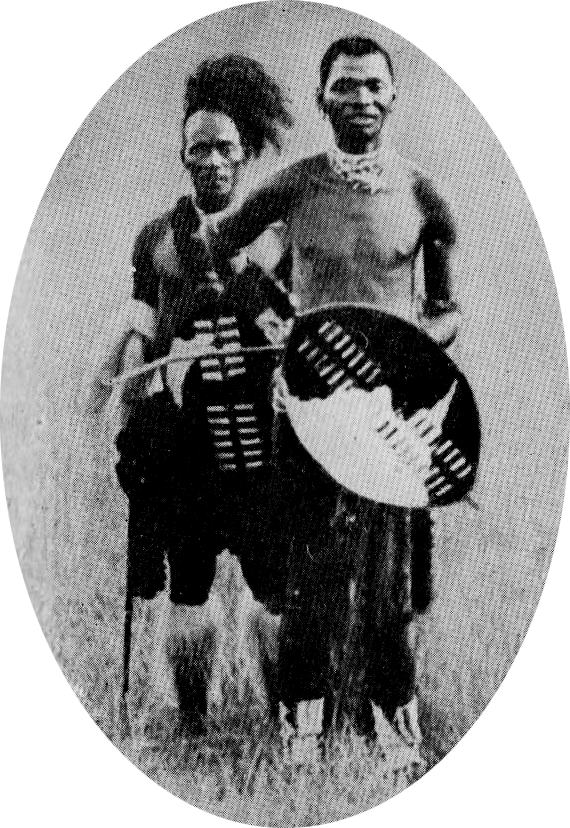
The Bambatha Rebellion (also known as the Zulu Rebellion) was a 1906 uprising against colonial rule in the British colony of Natal, led by the Zulu chief Bhambatha. It was sparked by unpopular taxation policies that exacerbated ongoing economic crises, and its suppression resulted in thousands of deaths and contributed to the formation of the Union of South Africa in 1910.
Quick Facts
- Conflict
- Bambatha rebellion
- Part Of
- the aftermath of the Anglo-Zulu War
- Date
- 1906
- Location
- Natal, South Africa
- Result
- British victory
Facts from the source article.
Lore & Background
Bhambatha, suspected of discontent over the tax, was summoned to Greytown but fled to Dinuzulu's palace. Returning to the Mpanza Valley, he found he had been deposed as chief. He gathered a small force and from 3 April launched guerrilla attacks using the Nkandla forest as a base. Colonial forces under Colonel Duncan McKenzie surrounded his rebels at Mome Gorge on 10 June, attacking at sunrise and inflicting heavy casualties. Bhambatha was reported killed, but supporters disputed this, believing he escaped to Portuguese Mozambique. The rebellion continued under Chief Mehlokazulu (also known as Mehlokazulu kaSihayo) until 11 July, then was suppressed.
Reader's Guide
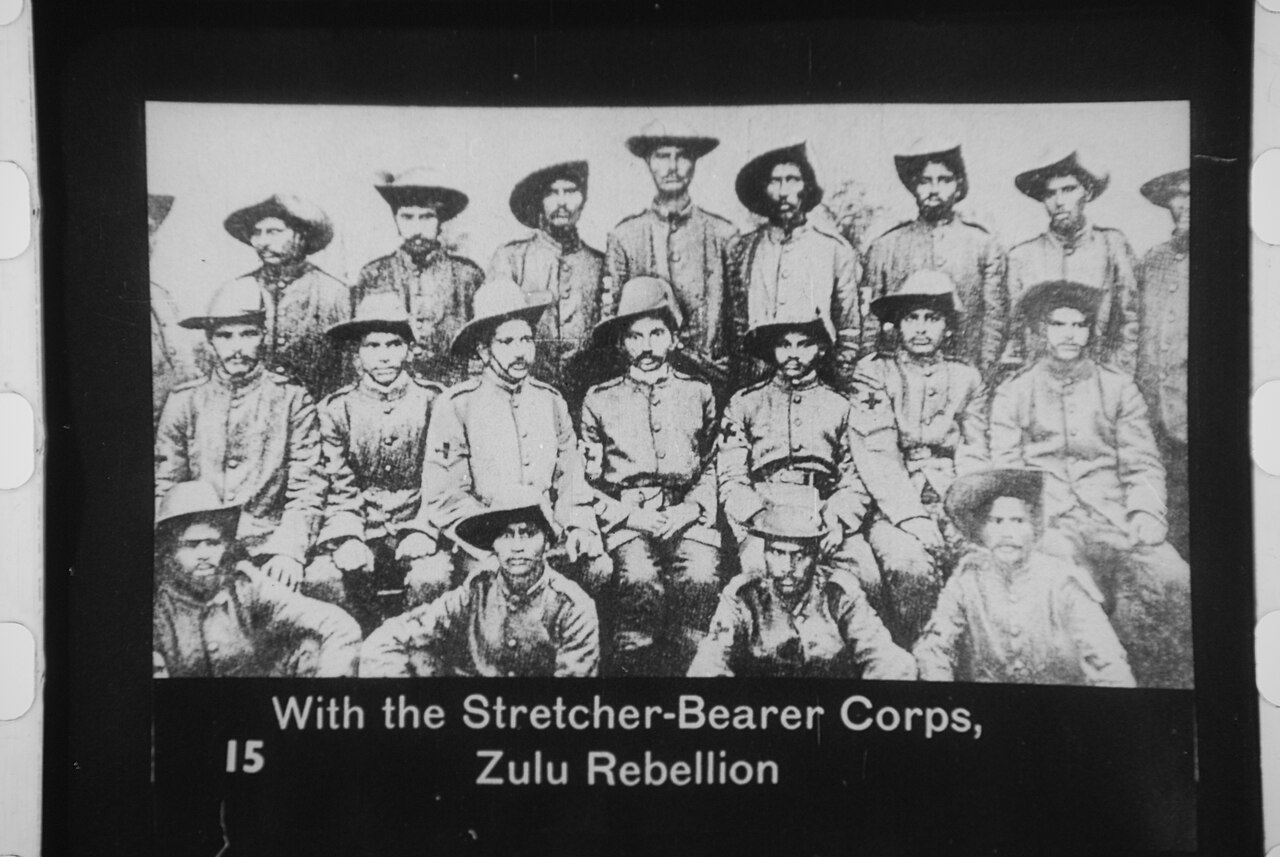
The Bambatha Rebellion is significant as a major uprising against colonial rule in Natal, sparked by regressive taxation and economic hardship. Its suppression was brutal: between 3,000 and 4,000 Zulus were killed, over 7,000 imprisoned, and 4,000 flogged, while only 36 colonial soldiers died. The rebellion cost the Natal government £883,576 and led to increased support among white colonists for uniting Southern African colonies to maintain white supremacy, culminating in the Union of South Africa in 1910. The rebellion also involved Mohandas Karamchand Gandhi, who led a stretcher bearer corps of Indian volunteers to treat wounded white soldiers, though he later called it 'No war but a man hunt.' In 2006, Chief Bambatha was declared a national hero of post-Apartheid South Africa, with a stamp and street renamed in his honor. The hip-hop musician Afrika Bambaataa takes his name from Bambatha and his rebellion.
Did You Know?
- The rebellion was sparked by a poll tax of £1 (equivalent to £110 in 2025) added to the existing hut tax.
- Mahatma Gandhi led a corps of 21 Indian volunteers as stretcher bearers during the rebellion's suppression.
Economic Desperation and the Spark of Resistance
In the years following the Second Boer War's conclusion in 1902, Natal's European employers faced a severe labour shortage as Witwatersrand gold mines siphoned off Black farmworkers. To compel Zulu men back into the wage economy, the colonial government imposed a poll tax of one pound—approximately £110 in 2025 terms—stacked on top of the existing hut tax. The burden fell disproportionately on the poorest families, making it a deeply regressive policy. The crisis deepened as European landowners evicted African tenants to cultivate the land themselves, forcing the African majority into increasingly overcrowded reserves. An epidemic between 1896 and 1897 destroyed ninety percent of local cattle, devastating rural subsistence. The 1897 return of King Dinuzulu KaCetshwayo from his Saint Helena exile fuelled rumours that he planned to restore African rule and expel white settlers. When the poll tax took effect, it united young Zulu men in defiance, even though some chiefs and elders counselled against open rebellion.
Guerrilla Warfare and the Colonial Counteroffensive
Bambatha, a Zulu chief in the Mpanza Valley near Greytown, had long been under suspicion from the Natal administration for voicing discontent over the new tax. Summoned to Greytown, he feared arrest and instead sought counsel at King Dinuzulu's palace. Upon returning home, he discovered the government had stripped him of his chieftaincy. From 3 April 1906, he rallied a small band of followers and launched a series of guerrilla raids from the dense Nkandla forest. The colonial response was massive: Natal authorities called in reinforcements from the Transvaal and Cape colonies, assembling a force of 4,316 men under Colonel Duncan McKenzie. On 10 June, McKenzie's troops encircled the rebels at Mome Gorge and, at sunrise, attacked the poorly armed fighters, inflicting devastating casualties. Reports declared Bambatha killed, though his supporters insisted he escaped to Portuguese Mozambique. Chief Meseni carried the fight in the lower Thukela Valley until 11 July. The remainder of 1906 saw indiscriminate counterinsurgency operations that killed between 3,000 and 4,000 Zulu men, imprisoned over 7,000, and flogged 4,000, while 36 colonial soldiers perished. The entire suppression cost the Natal government £883,576—roughly £93 million in 2025 money.
Gandhi's Controversial Involvement
The young Indian lawyer Mohandas Karamchand Gandhi, then practising in South Africa, took an active and controversial role in the rebellion's suppression. He lobbied colonial authorities to recruit Indian South Africans into the war effort, arguing that military service would strengthen the community's claims to full citizenship. Although officials refused to permit Indians to serve as combatants, they accepted Gandhi's proposal for a volunteer stretcher-bearer corps of twenty-one men, which he personally commanded to treat wounded white soldiers. Through his newspaper Indian Opinion, Gandhi urged the broader Indian population to back the colonial campaign, writing that the government was wasting a "reserve force" and should give Indians "the opportunity of a thorough training for actual warfare." Yet his stance evolved dramatically. By 1927, in his autobiography The Story of My Experiments with Truth, Gandhi recast the entire episode, describing it not as a war at all but as "a man hunt"—a stark reversal that acknowledged the brutality of the colonial counterinsurgency against Zulu communities.
Legacy, Commemoration, and the Road to Union
The suppression of the Bambatha Rebellion had consequences far beyond Natal. Among white colonists across Southern Africa, the uprising intensified calls to unite the region's separate colonies under a single political structure to preserve white supremacy. That aspiration materialised in 1910 with the formation of the Union of South Africa. For the Zulu people, the rebellion's memory endured as a painful symbol of colonial violence, with thousands dead, imprisoned, or flogged. In 2006, on the centenary, a national ceremony declared Chief Bambatha a hero of post-Apartheid South Africa. His likeness was placed on a postage stamp, and a street was renamed in his honour. During that ceremony, speakers raised the long-standing belief that the beheaded body recovered at Mome Gorge was not truly Bambatha's and that the chief had in fact fled to Mozambique. A DNA test of the remains yielded no conclusive answer, leaving the question open. The rebellion's cultural echo persists: the pioneering hip-hop artist Afrika Bambaataa chose his stage name as a direct tribute to the Zulu chief and his 1906 stand against colonial power.
Gallery
Frequently Asked Questions
Who was Bambatha?
Bhambatha was a Zulu chief in the British colony of Natal who rose in 1906 to lead armed resistance against colonial authority. He is remembered as the central figure of the Bambatha Rebellion, also called the Zulu Rebellion.
What caused the Bambatha Rebellion?
The uprising was triggered by the imposition of unpopular poll taxes and other colonial levies that deepened an existing economic hardship among Zulu communities. Bhambatha and his followers viewed these policies as an intolerable extension of British control over their lives.
How did the Bambatha Rebellion end?
British colonial forces crushed the revolt, and Bhambatha is reported to have been killed in combat at Mome Gorge on 10 June 1906, though his supporters have long argued he fled into Portuguese Mozambique instead. Thousands of Zulu fighters and civilians lost their lives during the suppression campaign.
Why is the Bambatha Rebellion historically significant?
The brutal suppression of the uprising became a lasting symbol of colonial violence and a rallying point for later anti-colonial movements across southern Africa. It also contributed to the political pressures that shaped the formation of the Union of South Africa in 1910.
Where did the Bambatha Rebellion take place?
The conflict unfolded in the British colony of Natal, which is the modern KwaZulu-Natal province of South Africa. The final and most decisive fighting is associated with the Mome Gorge area, where Bhambatha's last stand is said to have occurred.
More in Rebellions against the British Empire 1-24
Spotted an error? Know more?
Reader corrections go straight into our review queue. Suggest an edit · How this site is sourced