
Aden Emergency
Armed rebellion ending British rule in Aden and South Arabia.

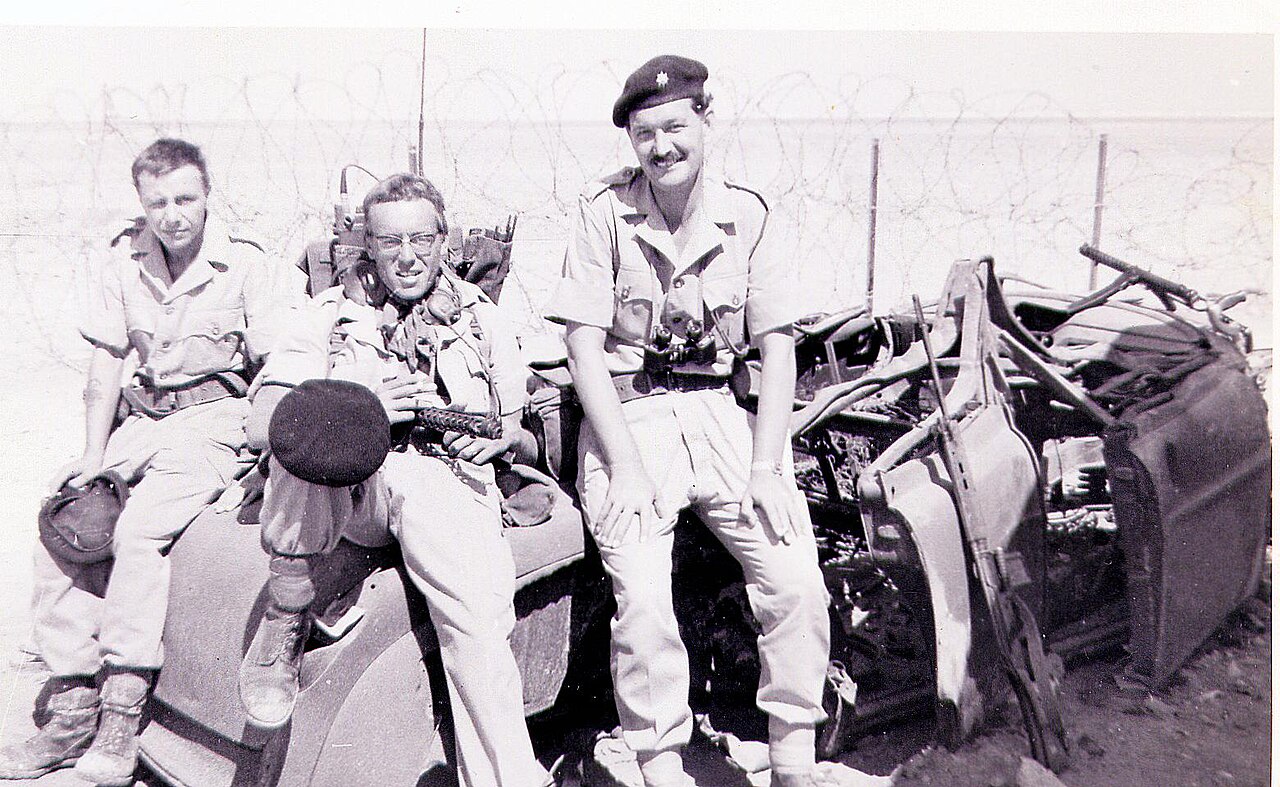
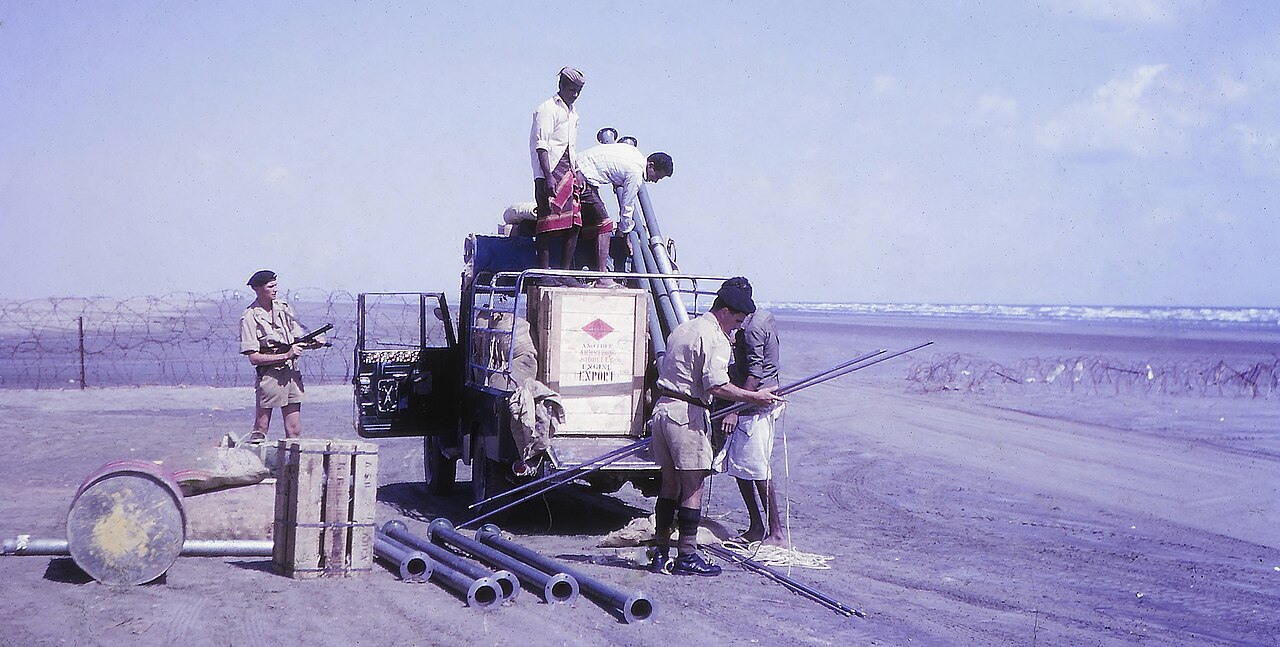
Brian Harrington Spier from Shanghai, China · CC BY-SA 2.0
The Aden Emergency, sometimes called the 14 October Revolution or the Aden Insurgency, was a revolt against British control in the Federation of South Arabia. It was primarily carried out by the National Liberation Front (NLF) and the Front for the Liberation of Occupied South Yemen (FLOSY). The rebellion started on 14 October 1963, when a landmine attack on a British military convoy marked the first incident, and it concluded when the People's Republic of Southern Yemen declared independence. The British had already imposed a state of emergency after a grenade was thrown at a gathering of British officials at RAF Khormaksar on 10 December 1963. The situation grew more intense in 1967, which accelerated the end of British authority in the area—a presence that had started in 1839.
Quick Facts
- Conflict
- Aden Emergency
- Part Of
- the Cold War, the Arab Cold War, and the decolonization of Asia
- Location
- Western and Eastern Protectorates, Aden Protectorate
- Result
- Yemeni NLF victory · British withdrawal / Independence of South Yemen
Facts from the source article.
Lore & Background
Arab nationalism, beginning in Egypt in 1952, fueled anti-colonial sentiment. In 1962, a coup in Yemen established the Yemen Arab Republic, inspiring the formation of the NLF and FLOSY. The NLF drew support from rural areas like Radfan, while FLOSY was backed mainly by Aden citizens. The emergency began on 14 October 1963 with a landmine attack on a British military convoy, and escalated after a grenade attack on British officials on 10 December 1963. The conflict involved multiple nationalist groups that often fought each other, including the South Arabian League, the Organization for the Liberation of the Occupied South, and the People's Socialist Party, with shifting alliances and splits throughout the war.
Reader's Guide
The Aden Emergency marked the final phase of British withdrawal from South Arabia, ending 128 years of British presence that began in 1839. The rebellion, driven by nationalist groups like the NLF and FLOSY, exploited the fragmentation of local tribal structures that the British had long used to maintain control. The emergency escalated in 1967, hastening the end of British rule and leading to the proclamation of the People's Republic of Southern Yemen. The conflict demonstrated the limits of British indirect rule and the power of anti-colonial nationalism in the Arab world, influenced by the 1962 coup in Yemen and Egyptian support. The legacy includes the establishment of an independent state, though the internal rivalries among nationalist groups foreshadowed future instability in the region.
Did You Know?
- The emergency began on 14 October 1963 when a landmine attack targeted a British military convoy.
- A state of emergency was declared after a grenade was thrown at a gathering of British officials on 10 December 1963 at RAF Khormaksar.
- The British spent substantial sums annually in subsidies to secure the loyalty of 25 sultans in the region.
- FLOSY was formed by the NLF and other factions in January 1966; the NLF initially cooperated but never merged with it, breaking away in December 1966.
The Long Road to British Control
The British first made contact with Yemeni territory in 1799, dispatching a naval force alongside Indian troops to occupy Perim island during the French invasion of Egypt. The barren, waterless island proved unsuitable for garrisoning, and the Sultan of Lahej temporarily hosted the detachment at Aden, proposing a permanent alliance that was declined. A treaty was nonetheless concluded in 1802. By the early 1800s, Britain sought a coaling station for steamships traveling between the Suez Canal and the Raj. Negotiations to purchase Socotra from the Mahra Sultanate collapsed when the sultan declared the island a divine gift to his people. In 1835, an attempt to buy Aden from Sultan Muhsin Bin Fadl also fell through. The turning point arrived in 1837, when the Indian ship Duria Dawla crashed near Aden and was looted by tribesmen. Demanding 12,000 Maria Theresa thalers in compensation, the sultan could not pay and was forced to cede Aden for an annual payment of 8,700 MTT. On 19 January 1839, Royal Marines landed to secure the port and safeguard shipping routes to India.
The Protectorate System and Tribal Fragmentation
Following the 1839 landing, Britain established informal protection treaties with nine sheikhdoms and sultanates surrounding Aden. This arrangement served partly as a buffer against the Imams of Yemen, whom the local rulers feared would overrun the port. The British exploited the region's deep tribal fragmentation—no single ruler commanded enough authority to unify the tribes—meaning organized resistance was unlikely. The system proved remarkably economical: Britain spent roughly $5,435 annually in subsidies to secure the loyalty of 25 sultans. By 1914, treaties covered nearly every sultan in the region. This policy of strategic dependence, avoiding direct administration while leveraging existing tribal structures, allowed Britain to expand influence at minimal cost. However, the same fragmentation that prevented opposition also delayed the emergence of a broader national identity among the people of the region, a gap that would later be filled by nationalist movements.
The 1963 Uprising and Escalation
The armed rebellion that would become known as the Aden Emergency, the 14 October Revolution, or the Aden Insurgency, erupted on 14 October 1963 when tribes from Radfan attacked British troops. The conflict was driven primarily by two organizations: the National Liberation Front (NLF) and the Front for the Liberation of Occupied South Yemen (FLOSY), both of which opposed the British Protectorate and the Federation of South Arabia. Tensions escalated sharply on 10 December 1963, when a grenade was thrown at a gathering of British officials at RAF Khormaksar. In response, the British government imposed a state of emergency over the Crown colony of Aden and the surrounding Aden Protectorate. The emergency intensified further in 1967, a development that accelerated the withdrawal of British rule—a presence that had stretched back to 1839. The conflict ultimately concluded with the proclamation of independence for the People's Republic of Southern Yemen.
The Interwar Shift and Road to Federation
Between the World Wars, Aden's strategic importance grew considerably. Its position near the entrance to the Persian Gulf made it vital for protecting Suez Canal shipping routes, and its proximity to newly discovered Arabian oil reserves added further value. In 1937, Britain formally designated Aden as a Crown Colony and imposed a full colonial administrative apparatus, a move that significantly curtailed the authority of local rulers and centralized governance in British hands. This centralization provoked small-scale uprisings, which were met with harsh suppression, often carried out by Yemeni leaders backed by British forces. By 1952, the wave of Arab nationalism sweeping from Egypt carried strong anti-colonial sentiment into the region. Under this pressure, the rulers of the Aden Protectorate states renewed efforts toward federation. On 11 February 1959, six states signed an accord creating the Federation of the Emirates of South Arabia; over the next three years, nine more sheikhdoms joined. On 18 January 1963, Aden Colony was merged into the federation.
Gallery
Frequently Asked Questions
What was the Aden Emergency?
The Aden Emergency was an armed insurgency in the Federation of South Arabia aimed at ending British colonial authority over the Aden Protectorate. It is also commonly known as the 14 October Revolution or the Aden Insurgency.
When did the Aden Emergency begin and end?
The conflict erupted on 14 October 1963, when tribesmen from the Radfan region launched attacks against British military personnel. It concluded in 1967 with the formal proclamation of independence for the People's Republic of Southern Yemen.
Which groups fought against the British during the Aden Emergency?
The principal rebel forces were the National Liberation Front (NLF) and the Front for the Liberation of Occupied South Yemen (FLOSY). They contested the British Protectorate and the Federation of South Arabia throughout the campaign.
What triggered the outbreak of the Aden Emergency?
The immediate catalyst was the 14 October 1963 assault by Radfan tribesmen on British soldiers, though underlying tensions had already escalated after the British declared a state of emergency following a grenade thrown at a gathering of British officials.
Why is the Aden Emergency significant in the history of anti-colonial rebellions?
It stands as one of the final major armed struggles to dismantle British imperial governance in the Middle East and the Arabian Peninsula. Its 1967 resolution marked the definitive end of British military and administrative rule in South Yemen.
More in Rebellions against the British Empire 1-24
Spotted an error? Know more?
Reader corrections go straight into our review queue. Suggest an edit · How this site is sourced