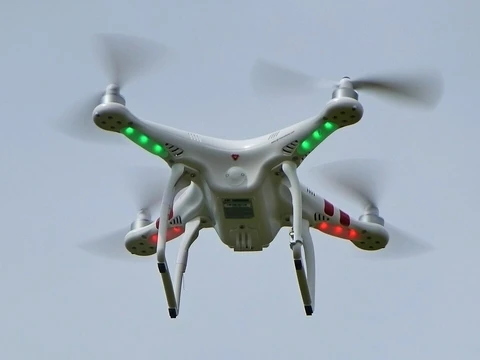
Ryze Tello
A lightweight, teleoperated quadcopter developed by Ryze Tech and DJI.

The Ryze Tello is a small, remotely controlled quadcopter drone, the result of a partnership between Chinese firms Ryze Tech and DJI. Weighing just 80 grams, it closely resembles the larger DJI Spark. Designed primarily for indoor flight, it struggles in windy conditions, but its low weight means it does not require registration with U.S. drone regulations.
The Tello was first shown at CES in January 2018 and went on sale in Asia the following month. It features a 5-megapixel camera that records 720p video, a collision avoidance system, and an Intel Movidius Myriad 2 vision processing unit.
A programmable version called the Tello EDU arrived in November 2018, aimed at STEM education. It works with Python, Scratch, and Swift. Another educational model, the RoboMaster TT (or Tello Talent), was released in May 2021 under DJI’s RoboMaster brand. Like the EDU, it supports Python, Scratch, and Swift, and adds an 8×8 LED display, a built-in ESP32 microcontroller, and an infrared time-of-flight sensor.
In January 2024, DJI announced it would stop selling its educational products, including the Tello and RoboMaster series, in the United States. Sales in Asia had already ended in December 2023.
The original Tello (model TLW004) has a 5MP camera, Intel Movidius Myriad 2 processor, and collision avoidance. The Tello EDU is the educational variant, compatible with Python, Scratch, and Swift. The RoboMaster TT (also model TLW004) is an improved EDU with an ESP32, 8×8 LED display, and infrared time-of-flight sensor.
- Mass
- 80 g
- Camera
- 5-megapixel, capable of shooting 720p video
- Vision processing unit
- Intel Movidius Myriad 2
- Collision avoidance
- Yes
- Company designation
- Model TLW004
- Announced
- January 2018
- Released
- February 2018 (Asia)
Lore & Background
The Tello was announced at CES in January 2018 and released in Asia the following month. It is a collaboration between Ryze Tech and DJI, weighing 80 g and featuring a 5-megapixel camera capable of shooting 720p video. The drone includes a collision avoidance system and an integrated Intel Movidius Myriad 2 vision processing unit. Designed for indoor use, it struggles in windy conditions, but its light weight exempts it from drone registration regulations in the United States.
A programmable version, the Tello EDU, was released in November 2018 for STEM programs, compatible with Python, Scratch, and Swift. Another educational variant, the RoboMaster TT (Tello Talent), was released in May 2021 under DJI's RoboMaster brand. It adds an ESP32 microcontroller, an 8×8 LED display, and an infrared time-of-flight sensor, and can be programmed with the same languages.
In January 2024, DJI announced the discontinuation of its educational products, including the Tello and RoboMaster series, in the United States. The company had already ceased sales of these products in Asia in December 2023.
Reader's Guide
The Ryze Tello represents a notable entry in the consumer drone market as a low-cost, lightweight quadcopter developed through a collaboration between Ryze Tech and DJI. Its 80 g mass exempts it from US drone registration, making it accessible to casual users and beginners. The inclusion of an Intel Movidius Myriad 2 vision processing unit and a collision avoidance system in such a small platform was distinctive at its launch. The Tello's educational variants—the Tello EDU and the later RoboMaster TT—extended its relevance into STEM education, offering programmability in Python, Scratch, and Swift. The RoboMaster TT added hardware features like an LED display and an ESP32 microcontroller for more advanced projects. However, DJI's discontinuation of its educational product lines, including the Tello series, in the United States in January 2024 (following a cessation of Asian sales in December 2023) marked the end of its official availability. The Tello's legacy lies in its role as an affordable, programmable drone that bridged consumer fun and educational coding, though its indoor-only design and wind sensitivity limited its outdoor utility.
Did You Know?
- The Tello weighs 80 g, exempting it from US drone registration regulations.
- The Tello EDU variant supports programming in Python, Scratch, and Swift.
More in Quadcopters and Multirotor Drones 1-23
Spotted an error? Know more?
Reader corrections go straight into our review queue. Suggest an edit · How this site is sourced