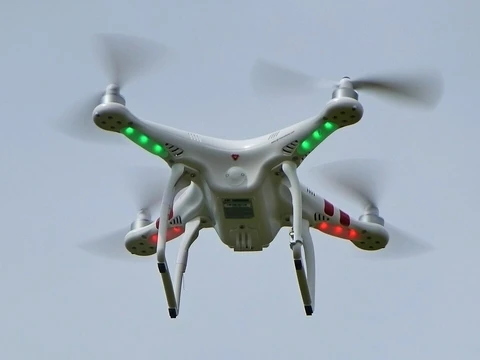
GoPro Karma
A folding quadcopter with a detachable gimbal, discontinued after poor sales.

The GoPro Karma is a foldable quadcopter drone designed for aerial photography and videography, launched in 2016 by the American company GoPro. It was a direct competitor to DJI’s Mavic series, but faced significant problems and was pulled from the market less than two years after its release due to weak sales.
GoPro first looked into making a drone in early 2013, after DJI released a GoPro-compatible Phantom. DJI’s CEO had proposed a partnership, but talks broke down when GoPro insisted the drone carry the GoPro brand. GoPro then worked with 3D Robotics on a drone for the HERO camera, which came out in 2015 as the 3D Robotics Solo. Despite that, GoPro continued developing its own drone, announcing the Karma in May 2015. Its development was reportedly rushed, and the planned June 2016 launch was delayed to late 2016.
The Karma was released in September 2016 alongside the HERO5 camera. Like the DJI Mavic Pro (released a week later), it had folding arms for portability, but unfolded it was roughly twice the size and weight of its rival. Unlike the Mavic, its 3-axis camera gimbal could be removed and used as a handheld “Karma Grip.” The gimbal worked with several GoPro cameras, including the HERO4 Silver, HERO4 Black, HERO5 Black, and HERO5 Session. The Karma was slower (by 5 mph), had half the range, and a shorter flight time (18 minutes versus the Mavic’s 27). It also lacked obstacle avoidance and downward sensors. However, reviewers found it easier to operate, especially for beginners.
Problems emerged quickly. Within six days of launch, users reported motors cutting off mid-flight, causing drones to fall. GoPro recalled all 2,500 sold units and stopped shipments in November 2016. In January 2017, the CEO explained that the battery was disconnecting from its connector. The front-heavy gimbal placement was thought to cause vibrations that shook the battery loose. The recall led to about 15% of GoPro employees being laid off. Other issues included poor stabilization, in-flight drift, camera horizon tilt, and high battery drain.
Shipments resumed in February 2017 after a redesigned battery latch. But GoPro struggled to make a profit, and in January 2018 announced it would stop making the Karma and exit the drone market once remaining stock sold.
- Release year
- 2016
- Manufacturer
- GoPro
- Type
- quadcopter
- Flight time
- 18 minutes
- Camera gimbal
- 3-axis, detachable for handheld use
- Competitor
- DJI Mavic series
- Discontinuation year
- 2018
Lore & Background
GoPro first attempted to enter the drone market in February 2013 after Chinese drone manufacturer DJI released their GoPro-compatible Phantom quadcopter. DJI CEO Frank Wang had approached GoPro CEO Nick Woodman about partnering to create a new drone, but talks fell through when Woodman wanted the new drone to be branded as a GoPro product. GoPro later approached 3D Robotics to create a drone specifically designed for the GoPro HERO camera, which was released in 2015 as the 3D Robotics Solo. Despite the partnership, GoPro proceeded to develop its own drone, which was officially announced in May 2015 as the Karma. The Karma, which was reported to have had a rushed development, was originally supposed to release in June 2016. In May 2016, GoPro pushed back the release of the Karma to late 2016.
GoPro released the Karma alongside its HERO5 camera in September 2016. Like the competing DJI Mavic Pro, which was released a week later, the Karma is a quadcopter with folding arms for increased portability, though when unfolded it is about twice the size and weight of its competitor. Unlike the Mavic, the Karma's 3-axis camera gimbal can be detached and mounted onto a handheld 'Karma Grip'. The gimbal is compatible with several GoPro cameras, including the HERO4 Silver, HERO4 Black, HERO5 Black, and HERO5 Session. The Karma was noted to have inferior flight performance compared to the Mavic Pro, being 5 mph slower and having half the range of its competitor in addition to its shorter flight time of 18 minutes compared to the 27 minutes of the Mavic. The Karma also lacks obstacle avoidance and downward-facing sensors. However, the Karma was also noted to be easier to use than the Mavic Pro, especially for beginners.
Reader's Guide
The GoPro Karma's significance lies in its attempt by a major action-camera company to enter the consumer drone market, directly challenging the dominant DJI Mavic series. Its key differentiator was the detachable 3-axis gimbal that could be used as a handheld stabilizer, a feature not offered by its competitor. However, the Karma's legacy is defined by its troubled history: a rushed development, a recall of all 2,500 sold units just weeks after launch due to motors cutting off mid-flight, and a subsequent battery latch redesign. The crashes were caused by the battery becoming decoupled from the connector, possibly exacerbated by the front-heavy placement of the camera gimbal causing vibrations. The recall led to about 15% of GoPro employees being laid off. After shipments resumed in February 2017, GoPro struggled to make a profit on the drone, and in January 2018 the company announced it would discontinue the Karma and leave the drone market after its final inventory was sold. Two years after discontinuation, remaining Karma drones were temporarily grounded by a GPS-related glitch caused by the GPS week number rollover phenomenon, which GoPro addressed with a firmware update. As of 2024, GoPro has not released any new drones since the Karma's discontinuation.
Did You Know?
- The Karma was recalled after only six days on the market due to motors cutting off mid-flight.
- The Karma's 3-axis camera gimbal could be detached and used as a handheld 'Karma Grip'.
- The Karma had a flight time of 18 minutes, compared to the DJI Mavic Pro's 27 minutes.
- A GoPro Karma hit a seat at Petco Park in San Diego during a baseball game in May 2017.
Frequently Asked Questions
What is the GoPro Karma?
It is a foldable quadcopter drone that GoPro released in 2016, built specifically for aerial photography and videography. The design emphasized portability so hobbyists could toss it in a bag and take it along on trips.
What makes the GoPro Karma's camera gimbal special?
The 3-axis gimbal is fully detachable from the airframe and can be used as a standalone handheld stabilizer. That dual-use setup meant one accessory covered both drone-mounted and ground-level shooting.
How long can the GoPro Karma stay in the air on one battery?
A single charge delivers roughly 18 minutes of flight time. That figure put it squarely in line with other consumer quadcopters of that generation.
Why was the GoPro Karma discontinued?
GoPro pulled the drone from shelves less than two years after its 2016 debut because sales fell far short of expectations. It simply could not keep pace with DJI's Mavic line in the foldable-drone market.
Who was the GoPro Karma's main competitor, and how did that rivalry start?
The DJI Mavic series was its most direct rival in the portable consumer drone segment. The tension traces back to early 2013, when DJI's CEO proposed a partnership that collapsed after GoPro demanded the drone carry its own brand name.
More in Quadcopters and Multirotor Drones 1-23
Spotted an error? Know more?
Reader corrections go straight into our review queue. Suggest an edit · How this site is sourced